Explore the World Through Geography, Natural Resources & Daily History
Clear, reliable and engaging guides that help you understand our planet — from UK geography education to global natural resources and On This Day history events.
Explore, discover, and learn about the wonders of our world! At Earth Site, we’re passionate about bringing geography, history, and science to life for curious minds of all ages. Whether you’re delving into historical events, uncovering the mysteries of the natural world, or seeking interactive resources, you’re in the right place.
Here, you can uncover the stories behind historical events, explore the natural wonders of our planet, and gain valuable insights into how the Earth’s systems shape our daily lives. From the towering peaks of mountain ranges to the far-reaching impacts of human innovation, we aim to make every topic both engaging and informative.
Start your journey of discovery with us today, and let’s make learning an adventure!
What We Cover
Earth Site brings together engaging and accessible educational content designed to help you understand the world, its history, and its natural systems.
🌍 Geography Education (UK & Worldwide)
We publish clear, easy-to-understand geography resources for students, teachers and curious learners. Our guides support geography education in the UK and cover physical geography, climate, ecosystems, population, and global development.
⛏️ Natural Resources & Environmental Geography
Explore detailed country profiles covering natural resources, mining, energy, geology and global environmental challenges. We show how nations manage minerals, water, land and ecosystems, and why these resources matter.
📅 On This Day in History
Every day has a story. Our On This Day history series features major events, anniversaries, traditions, and cultural milestones from around the world — with timelines, context, and fun facts.
TIMELINE
The Fall of the Berlin Wall and the Beginning of the End
Right then, let’s get straight to it. The Berlin Wall falling on 9th November 1989 wasn’t just a big moment for Germany; it signalled the start of the unravelling of the entire Soviet Bloc, fundamentally reshaping the political landscape of Europe and beyond. It was a crack in the dam that led to a flood of changes. For nearly three decades, the Berlin Wall stood as the most stark and brutal symbol of the Cold War’s division. It wasn’t just a barrier; it was a wound slicing through a city, a nation, and indeed, a continent. Why the Wall Went Up In the years after World War II, Germany was split into four occupation zones. Berlin, deep within the Soviet zone, was similarly divided. As the Western zones (Federal Republic of Germany, or West Germany) began to prosper, fuelled by Marshall Plan aid, and offered more personal freedoms, many East Germans started to vote with their feet – literally. The Brain Drain: Professionals, skilled workers, and educated individuals were steadily fleeing East Germany (German Democratic Republic, or GDR) for the West. This wasn’t just an inconvenience; it was a critical drain on the GDR’s workforce and economy. Political Embarrassment: The sheer number of people leaving was a huge propaganda problem for the communist regime. It exposed the lie that their system was superior and attractive. So, on 13th August 1961, almost overnight, the border between East and West Berlin was sealed off with barbed wire, quickly replaced by a substantial concrete wall. The official line was that it was to protect East Germany from ‘fascist elements’ in the West....
Warren G. Harding: The Return to Normalcy President
Warren G. Harding, the 29th President of the United States, is perhaps best known for his promise of a “Return to Normalcy” after the tumultuous years of World War I. This wasn’t just a catchy slogan; it encapsulated a widespread public desire for an end to the crusading zeal and wartime austerity that had defined the preceding era. In essence, he offered America a chance to breathe, to scale back the grand ambitions, and to focus on domestic stability and economic prosperity. Harding’s journey to the White House wasn’t through a meteoric rise but rather a steady, almost plodding, ascension through the ranks of Ohio politics. Born in 1865 in Blooming Grove, Ohio, his early life was, by all accounts, quite ordinary. Humble Beginnings and Newspaper Roots Harding’s family had modest means, and he received a fairly standard education for the period. He wasn’t a child prodigy or a budding intellectual. Instead, he found his footing in the world of journalism, purchasing the Marion Star newspaper at the young age of 19. This proved to be a pivotal decision. Running a local paper not only provided him with a platform but also immersed him in the community, allowing him to understand its concerns and connect with its people. He was known for his genial nature and approachable demeanour, qualities that served him well in both his journalistic and political careers. Stepping Stone to Wider Politics His success with the Marion Star eventually propelled him into politics. He served as an Ohio State Senator from 1899 to 1903, and then as Lieutenant Governor of Ohio from 1903 to 1905. These...
The Battle of Stalingrad and the Turning Point of the War
So, has the Battle of Stalingrad truly earned its reputation as the turning point of World War II? In a nutshell, yes. It wasn’t just a single battle; it was a monumental clash that bled the German war machine dry on the Eastern Front and irrevocably shifted the momentum of the entire conflict in favour of the Allies. What happened at Stalingrad wasn’t just a defeat for Hitler; it was a crushing blow that he never truly recovered from. It’s easy to look back and see Stalingrad as an inevitable confrontation, but the path that led both sides to this brutal city was a complex mix of strategic ambition, propaganda, and sheer brute force. Hitler’s Summer Offensive of 1942: Operation Blue After the initial shock of Operation Barbarossa in 1941 didn’t deliver the quick victory Hitler craved, Germany regrouped for a more focused offensive in the summer of 1942. This was Operation Blue, or Fall Blau in German. The primary objectives were to secure the oil-rich regions of the Caucasus. These oil fields were absolutely vital for Germany’s continued war effort. Without them, their tanks, planes, and U-boats would eventually grind to a halt. Stalingrad: More Than Just Oil But why Stalingrad, specifically? This industrial city on the Volga River was named after Stalin himself – a fact that made it a potent propaganda prize for Hitler. Capturing it would be a massive symbolic victory, a supposed vindication of his entire invasion. It also sat astride the Volga, a crucial transportation artery for supplies reaching the Soviet Union, including vital Lend-Lease aid from the Americans and British. So, strategically,...
Birth Rates and Death Rates
So, you’re wondering about birth rates and death rates, are you? It’s a pretty fundamental part of how societies change, and understanding them gives you a real insight into what’s going on. In a nutshell, birth rate is the number of live births per 1,000 people in a year, and death rate is the number of deaths per 1,000 people in a year. The difference between these two – called the natural increase or decrease – is a major driver of population growth or decline. The Basics of Birth and Death Rates Let’s break this down a bit. When we talk about birth rates, we’re usually looking at the “crude birth rate,” which is the most straightforward measure. What’s a Crude Birth Rate? Simply put, it’s the number of babies born alive in a given year for every 1,000 people in the total population. So, if a country has a crude birth rate of 12, it means for every 1,000 people, there were 12 live births that year. It’s a broad measure, and it’s important to remember it includes everyone, not just women of childbearing age. And the Crude Death Rate? Similarly, the crude death rate is the number of deaths in a year per 1,000 people in the population. A rate of 9 would mean 9 deaths for every 1,000 people. Again, it’s a crude measure because it doesn’t account for age structure – a younger population will naturally have a lower death rate than an older one, even if healthcare is the same. Natural Increase: The Core Equation The real magic (or lack thereof, depending on your...
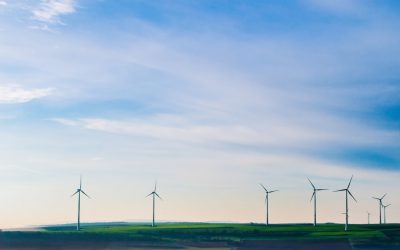
Nations Leading the World in Wind Power Per Capita
When we talk about countries really leaning into wind power, it’s not always about who has the biggest turbines or the most megawatts overall. Sometimes, it’s about how much wind energy they’re generating for each person living there. This per capita view gives us a clearer picture of how embedded wind power is in a nation’s energy strategy and daily life. You might be surprised to learn that some smaller nations are actually punching well above their weight in this arena. The Unsung Heroes of Renewable Energy It’s common to hear about China or the US in discussions about total wind power capacity, and rightly so, given their sheer scale. However, when you divide that capacity or generation by the number of people, a very different set of leaders emerges. These countries, often with smaller populations but a strong commitment to clean energy, are the real frontrunners in integrating wind into their national grids. Their per capita achievements highlight a genuine drive towards decarbonisation and energy independence, rather than just impressive headline figures. Why Per Capita Matters Looking at wind power per capita offers a nuanced perspective. It tells us not just about raw capacity, but about how much of a nation’s energy needs are being met by wind for each individual citizen. This metric is particularly useful for comparing countries of vastly different sizes, giving smaller nations the recognition they deserve for their renewable energy efforts. It’s also a good indicator of policy effectiveness and public acceptance of wind as a viable power source. Top Contenders and Their Strategies So, who are these nations showing the rest of...
The History of Chelmsford: Essex’s County City Explained
Chelmsford, Essex’s county city, has a history that stretches back well over a thousand years, evolving from a humble market town to a significant administrative and commercial hub. Essentially, its story is one of steady growth and adaptation, shaped by everything from Roman occupation to industrial revolution and modern-day development. It’s had its moments of importance and its periods of quietude, but it’s always been a place with a sense of place. Like many important settlements in Britain, Chelmsford’s origins are rooted in the Roman presence. The Romans were pragmatic builders, and where they went, roads and fortifications followed. The Foundation of Caesaromagus The Romans established a settlement here, believing it to be a strategically important crossing point over the River Chelmer. They called it Caesaromagus, which translates to “Caesar’s Field” or “Caesar’s Market.” While it wasn’t as grand as some of the larger Roman cities in Britain, it served as a vital hub on their network of roads, connecting other significant settlements in the region. Archaeological evidence suggests it was more of a villa and market town than a major military garrison. Evidence of Roman Life Excavations over the years have unearthed pottery, coins, and building foundations, giving us a glimpse into daily life. They found evidence of a forum and basilica, suggesting a centre of public and commercial life, along with surrounding villas. This initial Roman footprint laid the groundwork for future development, even after their departure. The Roman Road Network The Romans built roads that crisscrossed Britain, and the area around Chelmsford was no exception. These arteries facilitated trade and troop movements and likely influenced the...
The East India Company’s Impact on India’s Economy and Society
The East India Company (EIC) undeniably left a profound and multifaceted mark on India’s economy and society. In a nutshell, its impact was largely characterised by a shift from a relatively self-sufficient, agrarian economy to one increasingly geared towards resource extraction and Britain’s industrial needs. This fundamentally reshaped Indian industries, drained wealth, and disrupted traditional social structures, ultimately laying the groundwork for British colonial rule. The EIC’s economic activities weren’t just about trade; they were about systematically reorienting India’s entire economic system to benefit Britain. This involved a deliberate and often brutal process of transformation. Deindustrialisation: The Demise of Indian Crafts One of the most devastating economic impacts was the systematic destruction of India’s thriving textile and manufacturing industries. Before the EIC, India was a global leader in producing high-quality textiles – cotton, silk, and more – which were renowned for their craftsmanship and were highly sought after. Undermining Local Artisans The EIC initially profited from these existing industries, but their agenda soon shifted. They began to favour manufactured goods from Britain, especially as the Industrial Revolution took hold. British textiles, produced much cheaper and in larger quantities, flooded the Indian market. The EIC actively discouraged and even prohibited the export of Indian finished goods to Britain while simultaneously forcing India to import British manufactures. This created an uneven playing field that local artisans simply couldn’t compete with. The Opium Trade as a Double-Edged Sword Perhaps the most infamous example of the EIC’s economic machinations was the opium trade. The Company monopolised opium cultivation in India and smuggled it into China. This trade was incredibly profitable for the EIC,...
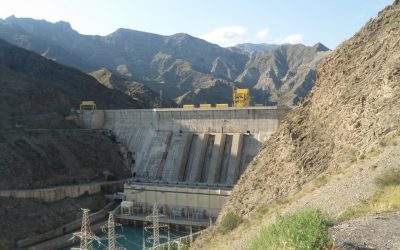
The Countries That Generate the Most Hydroelectric Power Per Person
When we talk about hydroelectric power, it’s often about the sheer volume a country generates. But what if we look at it differently – how much of that watery might is being harnessed for each individual citizen? It’s a question that shifts the focus from vast industrial output to domestic energy availability. Essentially, we’re asking which nations are making the most out of their rivers and rain, from a personal perspective. This isn’t about the biggest dams, but about the most pervasive and readily available clean energy for everyday life. Exploring the “Per Capita” Advantage The idea of “per capita” generation is like looking at a nation’s energy budget spread out amongst its people. A country might have massive total hydropower output, but if that output is spread thinly across a gigantic population, the individual benefit is less pronounced. Conversely, a smaller nation with significant river resources and a smaller population can achieve a much higher per capita figure. This metric gives us a more intimate understanding of how much hydropower is theoretically on tap for the average person living there. It’s a useful way to gauge a country’s reliance on and development of this renewable resource, not just in absolute terms, but in how it translates to the individual. The Giants of Hydropower: A Quick Look Before diving into the per capita figures, it’s worth acknowledging the countries that are simply the biggest players in overall hydropower generation. China, Canada, Brazil, the United States, and Russia all boast enormous installed capacities. These are nations with vast geographical areas, significant river systems, and often long histories of developing large-scale...
The Mystery of Rasputin and the End of the Romanovs
The story of Rasputin and the Romanovs isn’t just a historical footnote; it’s a tangled web of prophecy, power, and ultimately, tragedy that arguably played a significant role in the downfall of the Russian Empire. While it’s tempting to see Rasputin as a lone, villainous actor, his influence was more a symptom of a decaying aristocracy and a desperate Imperial family clinging to what they believed was a divine connection. His presence provided a focus for discontent and suspicion, weakening the Romanovs’ already tenuous grip on power and paving the way for revolution. The Romanov dynasty, by the early 20th century, was facing immense pressure from within and without. Tsar Nicholas II, a man of deep religious conviction but often seen as hesitant and ill-prepared for his role, presided over a vast empire grappling with modernity. Nicholas II: Unwilling Autocrat Nicholas ascended to the throne in 1894, inheriting a system resistant to change. He genuinely believed in the principle of absolute monarchy, seeing himself as God’s chosen representative. This conviction, however, often translated into an inability to adapt to the burgeoning demands for political reform and social justice. He was a devoted family man, but his private virtues didn’t translate into effective public leadership. Alexandra Feodorovna: The German Empress Empress Alexandra, a granddaughter of Queen Victoria, was equally religious and possessed a strong will. Her German heritage and perceived aloofness didn’t endear her to the Russian people or the nobility. She was fiercely protective of her family, particularly her only son, Alexei. The Shadow of Haemophilia This medical condition was the critical factor that opened the door to Rasputin....
Presidential Nicknames: The Stories Behind Them
Ever wonder where those presidential nicknames come from? It’s a bit like tracing the origins of old family heirlooms – some are passed down, some are earned, and a few are just plain strange. Essentially, presidential nicknames are shorthand, a way for the public and the press to summarise a president’s personality, achievements, or even their perceived flaws. They can be affectionate, critical, or just descriptive. Let’s dive into a few of the more interesting ones. Sometimes, a nickname isn’t just a catchy phrase; it’s a badge of honour, earned through significant deeds and a lasting impact on the nation. These are the ones that stick because they genuinely reflect a president’s legacy. “Old Hickory” –...
How Ethnic Nationalism Contributed to Yugoslavia’s Collapse
So, you’re wondering how ethnic nationalism played a role in Yugoslavia’s break-up? Essentially, it was a huge, defining factor. While many things contributed to the country’s unravelling – economic woes, political power struggles, and external influences – the rise and manipulation of ethnic nationalist sentiments created the deep divisions and intense animosity that ultimately tore Yugoslavia apart. It wasn’t just a background hum; it was the engine driving the conflict. Yugoslavia, or the “land of South Slavs,” was always a bit of a balancing act. From its inception after World War I as the Kingdom of Serbs, Croats and Slovenes, and then its rebirth as socialist Yugoslavia after World War II, the idea was to unite various South Slavic peoples under one banner. On paper, it sounded promising, but below the surface, historical grievances and distinct national identities simmered. Forging a New Identity After World War II, under Tito’s leadership, Yugoslavia tried to build a new, overarching “Yugoslav” identity. This involved promoting a sense of shared South Slavic heritage while also acknowledging, to an extent, the distinct cultures within the federation. The idea was to create a melting pot, or at least a carefully blended salad, where people identified with the state first and their ethnicity second. The Myth of Brotherhood and Unity “Bratstvo i jedinstvo” – Brotherhood and Unity – was the official slogan and guiding principle of Tito’s Yugoslavia. It was a powerful message, aimed at overcoming centuries of division and animosity. For a while, it seemed to work, or at least suppress overt conflict. People of different ethnic backgrounds lived, worked, and even married together. However,...
The MPLA, UNITA, and FNLA: Understanding Angola’s Political Movements
So, you’re curious about the MPLA, UNITA, and FNLA, and how they shaped Angola? In a nutshell, these were the three main political movements that fought for Angola’s independence from Portugal, and then unfortunately, against each other for control of the new nation. Their rivalry plunged Angola into a devastating civil war that lasted for decades, leaving a deep and lasting impact on the country. Understanding these groups is key to grasping Angola’s complex history and its present-day political landscape. Roots of Angolan Nationalism: A Shared Goal, Divergent Paths Angola’s journey to independence wasn’t a neat, unified effort. While the desire to break free from Portuguese colonial rule was widespread, different factions emerged with distinct ideologies, leadership, and external support. This fragmentation would prove to be a tragic precursor to the post-independence conflict. Early Stirrings and Formative Ideologies Before these movements became household names, there were various intellectual and political currents brewing in Angola. Many Angolans, particularly those educated in Portuguese schools or in exile, began to question the legitimacy of colonial rule. These early intellectual circles were fertile ground for nationalist ideas, drawing inspiration from other independence movements across Africa. Some leaned towards socialist ideals, seeing a correlation between economic exploitation and colonial oppression, while others prioritised a broader, more inclusive nationalism. The Role of External Influences It’s impossible to discuss these movements without acknowledging the significant role played by international powers. The Cold War was in full swing, and Angola became another battleground for proxy conflicts. The various liberation movements each found patrons who offered military aid, financial support, and political backing, often with their own strategic...