The geography of the Israeli-Palestinian conflict isn’t just about lines on a map; it’s a fundamental, deeply ingrained aspect of nearly every challenge and conversation surrounding security. From ancient trade routes to modern-day checkpoints, the physical landscape has always played a critical role in shaping strategies, fears, and daily realities for both Israelis and Palestinians. Understanding these geographical elements is key to grasping the complexities of the conflict, as they directly influence everything from military defence to civilian movement and resource allocation. It’s not just a backdrop; it’s an active participant.
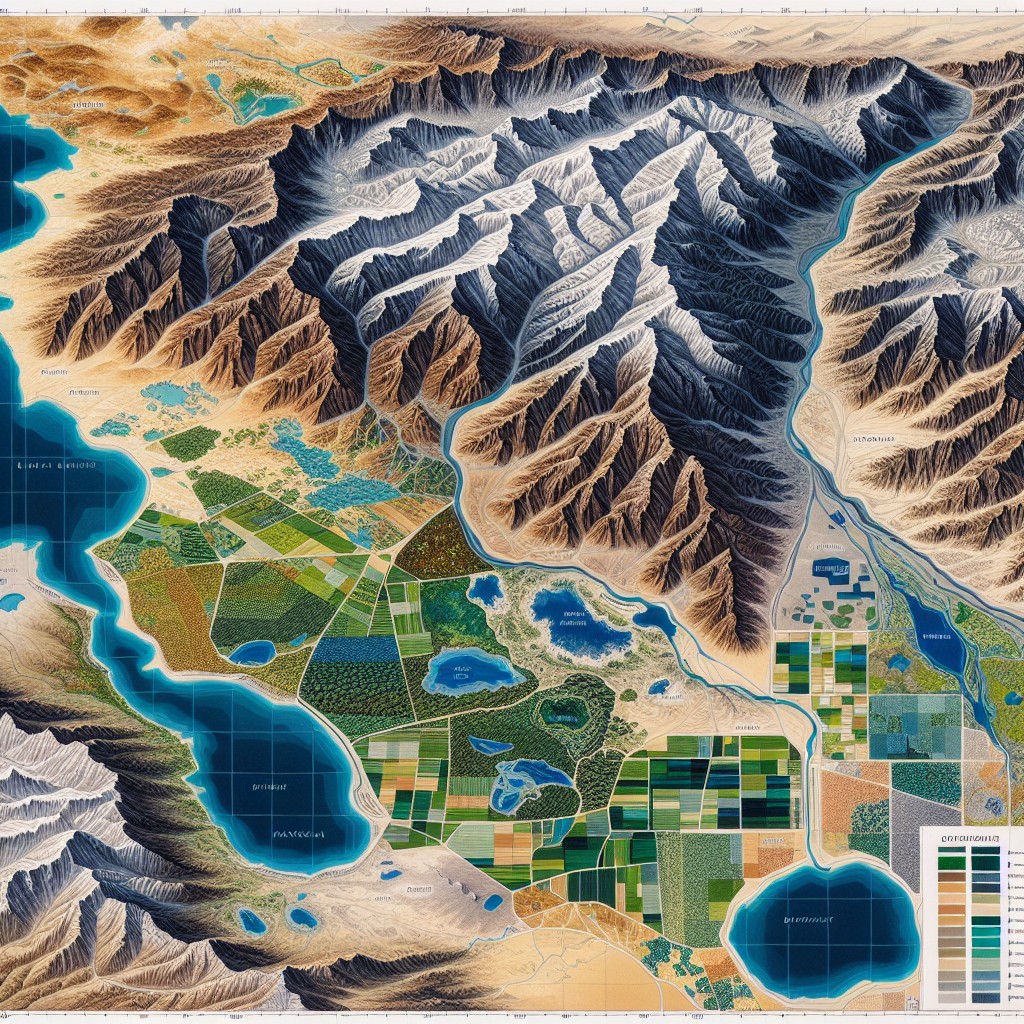
When we talk about the geography of this region, we’re discussing a surprisingly diverse and strategically significant area packed into a relatively small space. This isn’t just flat desert; it’s a mix of fertile plains, rugged mountains, arid valleys, and coastal strips, each presenting its own challenges and opportunities, particularly when it comes to security.
Historical Crossroads and Strategic Chokepoints
This land has historically been a critical nexus between three continents: Africa, Asia, and Europe. This has meant countless invasions, trade routes, and empire-building efforts, all of which left their mark. The same geographical features that once made it a hub for commerce now make it a focal point for conflict. Think of the coastal plain, relatively flat and easy to traverse, a natural route for armies and merchants alike. Then contrast that with the mountainous spine, offering natural defences but also creating isolated communities.
Water: A Precious and Contested Resource
The semi-arid climate of the region means water is, and always has been, a hot commodity. The Jordan River, the Sea of Galilee (also known as Lake Kinneret), and the underground aquifers are not just geographical features; they are sources of life and, consequently, sources of intense political and security tension. Control over these resources is directly linked to power, agriculture, and the ability to sustain populations. Droughts and increasing populations only exacerbate this already critical issue, turning every drop into a potential flashpoint.
Varied Terrain, Varied Challenges
From the fertile Jezreel Valley to the barren Negev Desert, the varied terrain dictates different security requirements. The mountains of Judea and Samaria (the West Bank) offer excellent defensive positions but also provide cover for irregular fighters. The urban centres, with their dense populations, present a completely different set of security challenges compared to the more open, agricultural areas.
Physical Boundaries and Their Evolution
The boundaries in this conflict are rarely static or universally accepted. They’ve shifted dramatically over time, influenced by wars, peace treaties, and unilateral actions. These lines on the map—or lack thereof—are paramount to understanding the current security doctrines and the daily lives of millions.
The 1949 Armistice Lines (Green Line)
Following the 1948 Arab-Israeli War, armistice agreements established temporary ceasefire lines, often referred to as the Green Line. These lines effectively demarcated Israel from the West Bank (then under Jordanian control) and the Gaza Strip (under Egyptian control). Critically, these were not intended as permanent international borders, but they quickly became the de facto separation. For decades, the Green Line represented a significant, albeit porous, security challenge for Israel. Its irregular shape, with numerous salients and narrow points, meant that Israeli population centres were often very close to the armistice lines, creating inherent vulnerabilities.
The Impact of 1967: Occupation and Expansion
The 1967 Six-Day War dramatically altered the geographical landscape. Israel occupied the West Bank, Gaza Strip, East Jerusalem, the Golan Heights, and the Sinai Peninsula. This occupation, particularly of the West Bank and Gaza, brought millions of Palestinians under Israeli control and sparked the beginning of Israeli settlement construction in these territories. From a security perspective, this gave Israel significantly more strategic depth, particularly in the West Bank, pushing back the immediate threat to its heartland. However, it also created new security challenges: managing a large, resentful Palestinian population and protecting settlements dispersed throughout the occupied territories.
The Separation Barrier (West Bank Barrier)
Perhaps one of the most physically tangible manifestations of borders and security is Israel’s Separation Barrier, primarily constructed after the Second Intifada (early 2000s). This complex system of fences, walls, patrol roads, and electronic sensors was built by Israel with the stated aim of preventing terrorist attacks from the West Bank into Israel.
Controversy and Humanitarian Impact
While Israel credits the barrier with a significant reduction in attacks, it has been highly controversial. Its route, often deviating from the Green Line to encompass Israeli settlements, has been deemed illegal by the International Court of Justice and has drawn widespread international condemnation. For Palestinians, it physically cuts off communities from their farmland, schools, and hospitals, restricting movement and isolating villages. It’s a stark physical manifestation of the conflict, a concrete division that dictates daily routines and exacerbates humanitarian issues, particularly for those living on the “seam zone” side.
Security Considerations vs. Political Implications
From a purely security standpoint, Israeli officials argue its effectiveness is undeniable. However, the barrier is more than just a security fence; it effectively annexes land and creates new de facto borders, making a future two-state solution based on the 1967 lines increasingly difficult to implement.
Strategic Depth and Military Considerations
Geographical factors are paramount in military planning and doctrine in the region. The small size of Israel, coupled with its geopolitical neighbourhood, means that every hill, valley, and stretch of coastline has strategic significance.
Israel’s Reliance on Strategic Depth
Compared to many of its neighbours, Israel is tiny. This lack of strategic depth (the distance between the front lines and vital population or industrial centres) has historically been a major concern for Israeli military planners. In 1948 and 1967, enemy forces were often within artillery range of major Israeli cities. The pre-1967 Green Line left Israel’s narrow waist (the area between Netanya and Tulkarem) highly vulnerable.
The West Bank Highlands: A Protective Barrier
The occupation of the West Bank in 1967 significantly altered this. The Judean and Samarian mountains provide a natural high ground overlooking Israel’s coastal plain, offering vital early warning and defensive positions. Israeli control of these highlands is seen by many in Israel as indispensable for national security, providing a crucial buffer against potential attacks from the East. Any withdrawal from these areas, from this perspective, would re-expose Israel to unacceptable risk.
The Gaza Strip: A Unique Security Challenge
The Gaza Strip presents a distinct geographical and security challenge. It’s a densely populated coastal enclave, cut off from the West Bank, and largely isolated. After Israel’s unilateral disengagement in 2005, withdrawing its settlements and military presence, Gaza became a self-governing entity under Hamas control.
Blockade and Border Management
The subsequent Israeli-Egyptian blockade, coupled with various conflicts, has made Gaza a perpetual security concern. The border fence around Gaza is heavily fortified, with advanced surveillance technology and patrol roads. Tunnels dug by militant groups beneath the border into Israel have added another layer of security complexity, leading to extensive counter-tunnel operations. The maritime border also requires constant monitoring to prevent the smuggling of weapons or infiltration attempts.
The Golan Heights: Overlooking Galilee
To the north, the Golan Heights, conquered from Syria in 1967 and annexed by Israel, provides a crucial strategic advantage. The plateau overlooks the Sea of Galilee and much of northern Israel, offering a commanding defensive position and early warning capability. Losing control of the Golan would expose northern Israeli communities to direct artillery fire and observation, similar to the situation before 1967. Given the ongoing instability in Syria, its strategic importance remains undiminished.
Population Distribution and Demographic Realities
Beyond the physical features, how people are distributed across the land is an equally critical aspect of security. Demographics and settlement patterns directly impact perceived threats, control, and the potential for a peaceful resolution.
Israeli Settlements in the West Bank
The approximately 500,000 Israeli settlers living in the West Bank (excluding East Jerusalem) are not just a political issue; they are a geographical and security issue. These settlements, ranging from small outposts to large towns, are often strategically located on hilltops, near major roads, or surrounding Palestinian population centres.
Security Needs of Settlements
Protecting these dispersed settlements requires a significant Israeli military presence, extensive road networks (“bypass roads” for settlers to avoid Palestinian towns), and numerous checkpoints. This military footprint, in turn, impacts Palestinian movement and freedom, further fuelling resentment and resistance. The very existence and growth of settlements are seen by many as a geopolitical strategy to solidify Israeli control over the West Bank, making any future border demarcation more difficult.
The Fragmented Palestinian Landscape
For Palestinians, the geography is one of fragmentation and isolation. The West Bank is divided into Areas A, B, and C under the Oslo Accords, with varying degrees of Palestinian and Israeli control. Area C, comprising over 60% of the West Bank, is under full Israeli military and administrative control, severely limiting Palestinian development and movement.
Checkpoints, Permits, and Restricted Movement
The intricate network of Israeli checkpoints, roadblocks, and a permit system severely restricts the movement of Palestinians, both within the West Bank and between the West Bank and Israel, and between Gaza and the West Bank. These restrictions, while justified by Israel as essential for security, have a profound impact on the Palestinian economy, social life, and access to basic services. They create what some describe as an archipelago of disconnected communities, making governance and a contiguous Palestinian state a significant challenge.
East Jerusalem: A Contested Urban Core
East Jerusalem, captured by Israel in 1967 and subsequently annexed, is another intense geographical flashpoint. Home to significant holy sites for Jews, Christians, and Muslims, its status is central to any peace agreement. The physical demarcation of Israeli and Palestinian neighbourhoods, often separated by walls or highly militarised zones, adds to the complexity. Israeli settlement expansion in and around East Jerusalem is also seen by Palestinians as an attempt to “Judaise” the city and encircle Palestinian communities, further complicating any potential division.
Future Prospects and Geographical Dilemmas
| Metrics | Data |
|---|---|
| Length of Israeli West Bank barrier | 712 km |
| Number of checkpoints in the West Bank | Around 100 |
| Number of Israeli settlements in the West Bank | Over 200 |
| Length of Israel-Gaza barrier | 65 km |
| Number of Palestinian refugees | Over 5 million |
Looking ahead, the geographical realities continue to shape the parameters of any potential resolution. Ignoring these deeply embedded factors would be a recipe for continued conflict.
The “Security First” Paradigm
For many Israelis, the bitter lessons of history and repeated conflicts mean a “security first” approach is paramount. This often translates into retaining control over strategic geographical features like the West Bank highlands, the Jordan Valley (as an eastern security buffer), and much of the Golan Heights. The argument is that in such a small, vulnerable state, territorial concessions cannot come at the expense of national survival.
The Palestinian Quest for Contiguity
Conversely, Palestinians seek a viable and contiguous state, based on the 1967 lines with East Jerusalem as its capital. This requires a significant reversal of current geographical realities, including the dismantling of Israeli settlements that fragment the West Bank, and free movement between the West Bank and Gaza. Without territorial contiguity, they argue, a Palestinian state would be unsustainable, effectively becoming a collection of isolated enclaves.
Resource Allocation: Land and Water
Beyond security lines, the allocation of vital resources will determine the long-term viability of any arrangement. Control over water resources, particularly the West Bank’s aquifers, is a non-negotiable for both sides. Similarly, access to arable land, particularly in Area C of the West Bank, and coastal access for Gaza, are essential for economic development and self-sufficiency. Any future solution must find a way to equitably share, or at least manage, these critical geographical assets.
The intricate interplay of mountains, valleys, coastlines, and the human desire for security, land, and self-determination means that geography is not just a backdrop to the Israeli-Palestinian conflict; it is woven into its very fabric. Understanding these complexities and their impact on daily lives and strategic thinking is essential for anyone hoping to make sense of, or contribute to, a future resolution. Ignoring the geographical realities, or attempting to impose solutions that fly in the face of them, only ensures the perpetuation of borders and barriers, both physical and metaphorical.
FAQs
What is the Israeli-Palestinian conflict?
The Israeli-Palestinian conflict refers to the ongoing struggle between Israelis and Palestinians for control over the land of Israel/Palestine. It is a complex and multifaceted conflict with historical, religious, and political dimensions.
How does geography play a role in the Israeli-Palestinian conflict?
Geography plays a significant role in the Israeli-Palestinian conflict, as the land of Israel/Palestine is a relatively small area with a diverse and contested landscape. The physical geography, including borders, barriers, and natural resources, has a direct impact on the security and territorial claims of both Israelis and Palestinians.
What are some of the borders and barriers in the Israeli-Palestinian conflict?
Some of the borders and barriers in the Israeli-Palestinian conflict include the Green Line, the West Bank Barrier, the Gaza-Israel border, and the Jordan River. These physical and political boundaries have been sources of contention and conflict between Israelis and Palestinians.
How does security factor into the Israeli-Palestinian conflict?
Security is a central concern in the Israeli-Palestinian conflict, as both Israelis and Palestinians seek to protect themselves and their territories from violence, terrorism, and military threats. Security measures such as checkpoints, walls, and military operations are implemented by both sides to safeguard their populations.
What are the implications of geography and security in the Israeli-Palestinian conflict?
The implications of geography and security in the Israeli-Palestinian conflict are far-reaching, affecting the daily lives of people on both sides, as well as the prospects for peace and resolution. The physical and political landscape of Israel/Palestine shapes the dynamics of the conflict and presents significant challenges to achieving a lasting peace agreement.