Explore the World Through Geography, Natural Resources & Daily History
Clear, reliable and engaging guides that help you understand our planet — from UK geography education to global natural resources and On This Day history events.
Explore, discover, and learn about the wonders of our world! At Earth Site, we’re passionate about bringing geography, history, and science to life for curious minds of all ages. Whether you’re delving into historical events, uncovering the mysteries of the natural world, or seeking interactive resources, you’re in the right place.
Here, you can uncover the stories behind historical events, explore the natural wonders of our planet, and gain valuable insights into how the Earth’s systems shape our daily lives. From the towering peaks of mountain ranges to the far-reaching impacts of human innovation, we aim to make every topic both engaging and informative.
Start your journey of discovery with us today, and let’s make learning an adventure!
What We Cover
Earth Site brings together engaging and accessible educational content designed to help you understand the world, its history, and its natural systems.
🌍 Geography Education (UK & Worldwide)
We publish clear, easy-to-understand geography resources for students, teachers and curious learners. Our guides support geography education in the UK and cover physical geography, climate, ecosystems, population, and global development.
⛏️ Natural Resources & Environmental Geography
Explore detailed country profiles covering natural resources, mining, energy, geology and global environmental challenges. We show how nations manage minerals, water, land and ecosystems, and why these resources matter.
📅 On This Day in History
Every day has a story. Our On This Day history series features major events, anniversaries, traditions, and cultural milestones from around the world — with timelines, context, and fun facts.
TIMELINE

Cultural or Historical Sites of New Zealand: Important Cultural Landmarks or Historical Sites In New Zealand
New Zealand boasts a wealth of cultural and historical sites that reflect the diverse heritage of its populace. From ancient Māori landmarks to European settlement sites and natural cultural landmarks, the country offers a wide array of historical and cultural experiences for visitors to explore. The preservation and protection of these sites are of paramount importance to the New Zealand government, as they play a crucial role in narrating the nation’s past and present. This article shall delve into the various cultural and historical sites in New Zealand, exploring their significance and the experiences they offer to visitors. New Zealand’s cultural and historical sites are not only vital for preserving the nation’s heritage but also for providing a deeper understanding of the country’s identity and the people who have shaped it over the centuries. Whether it be the ancient Māori landmarks that speak of a rich indigenous culture, the European settlement sites that reflect the impact of colonialism, or the natural cultural landmarks that showcase the country’s stunning landscapes, each site has a unique story to tell. Visitors to New Zealand have the opportunity to immerse themselves in these stories, gaining a deeper appreciation for the country’s history and culture. The following sections shall explore some of the most significant cultural and historical sites in New Zealand, shedding light on their importance and the experiences they offer to those who visit them. Summary New Zealand is home to a rich tapestry of cultural and historical sites, reflecting the country’s diverse heritage and unique identity. Maori cultural landmarks and historical sites, such as the Waitangi Treaty Grounds and Te Puia,...

Terrain and Topography of New Zealand: mountains, valleys, and plains.
The Southern Alps of New Zealand are a remarkable sight, with their lofty peaks and magnificent glaciers. This mountain range extends along the length of the South Island and is home to some of the country’s most renowned peaks, including Aoraki/Mount Cook, New Zealand‘s highest mountain. The Southern Alps are a haven for outdoor enthusiasts, offering a wide array of activities such as tramping, skiing, and mountaineering. The region also encompasses several national parks, including Fiordland National Park and Mount Aspiring National Park, which boast stunning landscapes and diverse wildlife. The Southern Alps are not only a playground for adventurers but also hold spiritual significance for the indigenous Māori people, who have long revered the mountains as sacred. The Southern Alps are a paradise for those seeking adventure and natural beauty. The region’s rugged terrain and unspoilt wilderness make it an ideal destination for outdoor pursuits such as tramping, mountain biking, and rock climbing. The Southern Alps are also home to some of New Zealand’s most famous glaciers, including the Franz Josef and Fox glaciers, which attract visitors from across the globe. In addition to its natural splendour, the Southern Alps are rich in Māori culture and history, with numerous sites of cultural significance scattered throughout the region. Whether one is an adrenaline enthusiast seeking their next thrill or a nature lover in search of solitude in the mountains, the Southern Alps offer something for everyone. Summary The Southern Alps offer majestic and breathtaking views, with towering peaks and stunning glaciers. The Rugged Volcanic Plateau is a dramatic landscape of volcanic cones, craters, and geothermal activity. Fiordland is a...

History of New Zealand
New Zealand, also known as Aotearoa in the Māori language, has a rich history dating back to the arrival of the Māori people around 1250-1300 CE. The Māori are Polynesian navigators who travelled by canoe from other Pacific islands, such as Tahiti and the Cook Islands, to settle in New Zealand. They brought with them their unique culture, language and traditions, which have had a lasting impact on the country. The Māori settled throughout the North and South Islands, establishing tribal communities and developing a deep connection to the land and sea. The Māori people were skilled hunters, gatherers and farmers, and they developed a complex social structure based on kinship ties and tribal affiliations. They also had a rich oral tradition, passing down their history, myths and legends through storytelling and song. The arrival of the Māori marked the beginning of human habitation in New Zealand, and their influence remains evident in the country today. Their arrival also marked the beginning of a unique bicultural society, with the Māori and European settlers eventually coming together to form the modern nation of New Zealand. The Māori people’s arrival in New Zealand was a significant event that shaped the country’s history and culture. Their settlement and development of tribal communities laid the foundation for the rich and diverse society that exists in New Zealand today. The Māori’s deep connection to the land and sea, as well as their unique cultural traditions, have become an integral part of the country’s identity. Their arrival also set the stage for future interactions with European explorers and settlers, leading to a complex and multifaceted...

Population Density of New Zealand
New Zealand, a picturesque island nation situated in the southwestern Pacific Ocean, is renowned for its breathtaking landscapes, vibrant Maori culture, and diverse fauna. With a population of approximately 5 million inhabitants, New Zealand exhibits a comparatively low population density relative to numerous other countries. The population density of New Zealand stands at roughly 18 people per square kilometre, rendering it one of the most sparsely populated nations globally. Notwithstanding its low overall population density, there exist substantial variations in population distribution within the country, with the majority of inhabitants concentrated in urban centres such as Auckland, Wellington, and Christchurch. Comprehending the factors influencing population density in New Zealand, the ramifications of this distribution on infrastructure and services, and the ensuing challenges and opportunities is paramount for efficacious urban and regional planning and development. Summary New Zealand has a relatively low population density compared to other countries, with most of its population concentrated in urban areas. Factors influencing population density in New Zealand include geographical features, economic opportunities, and government policies. Urban population density in New Zealand is higher than rural population density, leading to different infrastructure and service needs. Population density has a significant impact on infrastructure and services, including transportation, healthcare, and education. Managing population density in New Zealand presents challenges such as housing affordability and infrastructure strain, but also opportunities for sustainable development and innovation. Factors Influencing Population Density in New Zealand Geographical Factors One of the key factors is the country’s geography. New Zealand is comprised of two main islands, the North Island and the South Island, as well as numerous smaller islands. Historical Settlement...

Political Boundaries of Nepal: Provinces, Districts, or Historical Boundaries.
Nepal, a landlocked nation in South Asia, is renowned for its varied geography, rich culture and ancient history. The political boundaries of Nepal have evolved over centuries, shaping the country’s administrative structure and governance. The nation is bordered by India to the south, east and west, and by China to the north. Nepal’s political boundaries are defined by its 7 provinces, 77 districts and numerous local administrative units. These boundaries play a crucial role in the governance and development of the country, as they determine the allocation of resources, representation and decision-making processes. Understanding the political boundaries of Nepal is essential to comprehend the country’s complex administrative system and the challenges it faces in maintaining unity and diversity. Nepal’s political boundaries have been shaped by historical, cultural and ethnic factors, reflecting the country’s diverse population and complex social dynamics. The federal structure of Nepal, established in 2015, redefined the political boundaries by dividing the country into 7 provinces, each with its own government and legislative assembly. This restructuring aimed to decentralise power and resources, empowering local communities and ensuring inclusive development. However, the implementation of federalism has been a complex and contentious process, leading to debates and controversies surrounding the delineation of provincial boundaries and distribution of resources. The political boundaries of Nepal continue to be a subject of debate and negotiation, reflecting the country’s ongoing efforts to balance unity and diversity within its administrative framework. Summary Nepal’s political boundaries have evolved over time and have significant cultural and ethnic significance. The provinces of Nepal have their own structure and function within the country’s political system. Districts in Nepal...

Natural Resources of Nepal: Where Natural Resources are Located in Nepal
Nepal, a landlocked nation in South Asia, boasts a wealth of natural resources. The country’s varied topography, encompassing the Himalayas, hills and plains, contributes to its abundant natural resources. Nepal is renowned for its mineral, water, forest, agricultural and energy resources. These assets play a vital role in the nation’s economy and the livelihoods of its citizens. However, sustainable management and conservation of these resources are crucial to ensure their availability for future generations. Nepal’s natural resources have been a source of sustenance for its people for centuries. The nation’s unique geographical position and climate have contributed to the diversity of its natural resources. From the snow-capped mountains in the north to the fertile plains in the south, Nepal’s natural resources have supported its population for generations. However, with a growing populace and increasing demand for resources, there is a need for sustainable management and conservation to ensure the long-term availability of these assets. This article will examine the various natural resources in Nepal and the efforts being made to conserve and manage them for future generations. Summary Nepal is rich in natural resources, including minerals, water, forests, agriculture, and energy. The mineral resources in Nepal include limestone, coal, iron ore, copper, and cobalt, among others. Nepal’s water resources are abundant, with numerous rivers and lakes providing opportunities for hydropower generation and irrigation. The forest resources in Nepal are diverse, with a wide variety of flora and fauna, and play a crucial role in the country’s ecosystem and economy. Agricultural resources in Nepal are vital for the country’s economy, with a focus on subsistence farming and cash crops like...

Cultural or Historical Sites of Nepal: Important Cultural Landmarks or Historical Sites In Nepal
The Kathmandu Valley is home to three remarkable Durbar Squares, each possessing its own distinct character and historical importance. The first of these is the Kathmandu Durbar Square, also referred to as Hanuman Dhoka. This UNESCO World Heritage Site comprises a complex of palaces, courtyards and temples dating back to the 12th century. The square serves as a living museum of Newari architecture, featuring intricately carved wooden windows, doors and struts adorning the buildings. The Hanuman Dhoka Palace, formerly the royal residence, stands as the centrepiece of the square and exemplifies traditional Nepalese architecture. The second Durbar Square is situated in the city of Patan, also known as Lalitpur. This ancient city is renowned for its well-preserved palaces, temples and shrines, which showcase the finest examples of Newari architecture in the valley. Patan Durbar Square is home to the celebrated Krishna Mandir, a stone temple dedicated to Lord Krishna, adorned with exquisite carvings and sculptures. The square also houses the Patan Museum, which contains a notable collection of traditional Nepalese art and artefacts. The third Durbar Square is located in the city of Bhaktapur, also known as Bhadgaon. This well-preserved medieval city serves as a living museum of Newari culture and architecture, with its narrow streets, traditional brick houses and ancient temples. Bhaktapur Durbar Square features the 55-Window Palace, the Golden Gate and the Nyatapola Temple, all of which are fine examples of Newari craftsmanship. The square is also renowned for its intricate woodcarvings, stone sculptures and metalwork, which adorn the buildings and temples. The Durbar Squares of Kathmandu Valley are not only architectural marvels but also significant cultural...

Climate Zones of Nepal: Different climate regions Of Nepal
Nepal is renowned for its diverse climate zones, ranging from tropical lowlands to frigid mountain regions, including subarctic and arctic alpine areas. These zones are influenced by the country’s geographical features, most notably the Himalayan mountain range, which plays a crucial role in shaping the region’s climate. The varied climate zones significantly impact Nepal‘s flora, fauna and the lifestyles of its inhabitants. A thorough understanding of these zones is essential for those wishing to explore or comprehend the country’s natural splendour and cultural diversity. The climate zones of Nepal can be broadly categorised into five main regions: the tropical lowland Terai region, the temperate hill region, the cold mountain region, and the subarctic and arctic alpine region. Each of these areas possesses its own distinct climate, vegetation and wildlife, rendering Nepal a truly diverse and captivating country to explore. From the lush jungles of the Terai to the snow-capped peaks of the Himalayas, Nepal’s climate zones offer a wealth of experiences for nature enthusiasts and adventurers alike. Summary Nepal’s climate zones range from tropical lowlands to subarctic and arctic alpine regions. The Tropical Lowland Terai Region experiences hot and humid weather with a monsoon season from June to September. The Temperate Hill Region has a moderate climate with distinct seasons and is known for its lush greenery. The Cold Mountain Region is characterized by cold temperatures and snowfall, making it suitable for winter sports. The Subarctic and Arctic Alpine Region has harsh, cold weather and is home to some of the world’s highest peaks, including Mount Everest. The monsoon season in Nepal brings heavy rainfall, which can lead to...

Terrain and Topography of Nepal: mountains, valleys, and plains.
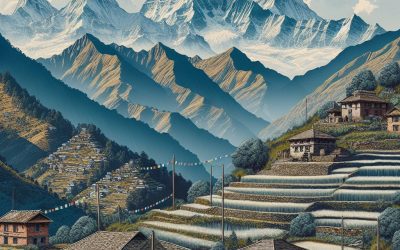
Nepal, a landlocked country in South Asia, is renowned for its diverse and striking terrain and topography. The nation is situated between the imposing Himalayas to the north and the verdant plains of the Terai region to the south. Nepal‘s terrain is characterised by its craggy mountains, profound valleys, and fertile lowlands, resulting in considerable geographical diversity. The topography of Nepal is also influenced by its position at the boundary of the Indian and Eurasian tectonic plates, leading to frequent seismic activity and the presence of numerous mountain ranges and river systems. This unique combination of geographical features has moulded the landscape of Nepal and has significantly impacted its culture, society, and economy. Nepal’s terrain and topography have also established it as a favoured destination for adventure enthusiasts and nature aficionados. The country is home to several of the world’s highest peaks, including Mount Everest, the highest point on Earth. The rugged mountains and deep valleys of Nepal provide an ideal setting for trekking, mountaineering, and other outdoor pursuits. The diverse topography of Nepal also supports a rich variety of flora and fauna, making it a biodiversity hotspot. From dense forests to alpine meadows, Nepal’s terrain encompasses a wide range of ecosystems that harbour myriad plant and animal species. This makes Nepal a haven for nature lovers and wildlife enthusiasts, attracting tourists from across the globe. Summary Nepal’s terrain and topography are incredibly diverse, ranging from the majestic mountains to the lush plains. The mountains of Nepal, including Mount Everest, are some of the highest in the world and attract adventurers and trekkers from around the globe. The beautiful...

History of Nepal
Nepal, situated in the heart of the Himalayas, boasts a rich and ancient history dating back to the 6th century BCE. The earliest known inhabitants of the region were the Kirats, who are believed to have settled in the area around 900 BCE. They were succeeded by the Lichhavis, who established the first documented ruling dynasty in the Kathmandu Valley. The Lichhavis were renowned for their patronage of the arts and their significant contributions to the development of Buddhism in the region. The Malla dynasty, which reigned from the 12th to the 18th century, witnessed a flourishing of art, culture, and architecture in Nepal. The Malla kings were notable patrons of the arts and constructed many of the impressive temples and palaces that remain standing today. The Kathmandu Valley emerged as a centre of trade and culture, attracting merchants and scholars from across Asia. The Newar people, indigenous to the valley, played a crucial role in shaping Nepal’s unique cultural heritage. Summary Ancient Nepal was the birthplace of a rich and diverse civilization, with evidence of advanced urban settlements and cultural achievements. The Gorkha Kingdom rose to power in the 18th century, expanding its territory and influence before eventually succumbing to internal conflicts and external pressures. British influence in Nepal led to the rise of the Rana Dynasty, which ruled with an iron fist and exploited the country’s resources for their own gain. The 20th century saw Nepal transition to a republic, with the monarchy eventually being abolished in the wake of the People’s Movement. Nepal’s modern era is marked by both progress and challenges, including political instability, economic...

Population Density of Nepal
Population density refers to the number of people living in a specific area, typically measured in square kilometres or square miles. It is a crucial demographic indicator that aids in understanding the distribution of people within a given region. In the context of Nepal, a small landlocked country in South Asia, population density plays a significant role in shaping the social, economic and environmental landscape of the nation. With a diverse topography ranging from the flat plains of the Terai region to the towering peaks of the Himalayas, Nepal‘s population density varies considerably across different regions. Understanding the factors influencing population density, the challenges it presents and the efforts to manage it is essential for sustainable development and resource management in Nepal. Summary Population density refers to the number of people living in a specific area, usually measured in square kilometres. Factors affecting population density in Nepal include topography, climate, economic opportunities, and government policies. Urban areas in Nepal have higher population density compared to rural areas due to better job opportunities and access to amenities. High population density in Nepal leads to challenges such as strain on resources, inadequate infrastructure, and environmental degradation. Population density in Nepal has significant impacts on the environment, including deforestation, air and water pollution, and loss of biodiversity. Factors Affecting Population Density in Nepal Geographical Factors The availability of arable land and water resources significantly impacts settlement patterns in Nepal. The fertile plains of the Terai region, for instance, boast a higher population density due to their suitability for agriculture. Conversely, the mountainous regions have lower population densities owing to limited arable land...
Nepal
Nepal (Sanghiya Loktantrik Ganatantra Nepal (Federal Democratic Republic of Nepal)) Capital: Kathmandu Population (Estimated July 2012): 29,890,686 Area: 147,181km2 or 56,827mi2 Currency: Nepalese Rupee (NRs) Official Language: Nepali Political Information: Federal Democratic Republic Official Religion: No Official Religion(approximately 80.6% of the population are Hindu, 10.7% are Buddhist, 4.2% are Muslim, 3.6% are Kirant and 0.9% follow other religions) Highest Mountain: Mount Everest (highest in the world above sea level) at 8,848m or 29,029ft DP Official Exchange Rate (OER is more precise at gauging a countries economic power) (Estimated 2011): $18.3 billion (US$) or (GBP) GDP (OER) Per Capita (per member of the population estimated 2011): (US$) or (GBP) GDP Purchasing Power Parity (PPP is good for gauging living conditions and use of resources but not as accurate as OER. This data has been calculated based on the sum value of all goods and services produced in the country valued at prices prevailing in the United States) (Estimated 2011): $37.74 billion (US$) or (GBP) GDP (PPP) Per Capita (per member of the population estimated 2011): $1,300 (US$) or (GBP) Time Zone (GMT/UTC): +5:45 Wildlife: Counties/Provinces/States: 14 zones (anchal, singular and plural); Bagmati, Bheri, Dhawalagiri, Gandaki, Janakpur, Karnali, Kosi, Lumbini, Mahakali, Mechi, Narayani, Rapti, Sagarmatha, Seti Leaders: President Ram Baran Yadav; Prime Minister Baburam Bhattarai. Sources: CIA World Fact Book, Encyclopaedia Britannica. Nepal Nepal, officially known as the Federal Democratic Republic of Nepal, is a landlocked country situated in South Asia. It shares borders with China to the north and India to the south, east and west. Kathmandu, the capital and largest city, serves as the country’s political and cultural centre. Nepal is renowned for its breathtaking natural landscapes, including the imposing Himalayas, verdant forests...