Explore the World Through Geography, Natural Resources & Daily History
Clear, reliable and engaging guides that help you understand our planet — from UK geography education to global natural resources and On This Day history events.
Explore, discover, and learn about the wonders of our world! At Earth Site, we’re passionate about bringing geography, history, and science to life for curious minds of all ages. Whether you’re delving into historical events, uncovering the mysteries of the natural world, or seeking interactive resources, you’re in the right place.
Here, you can uncover the stories behind historical events, explore the natural wonders of our planet, and gain valuable insights into how the Earth’s systems shape our daily lives. From the towering peaks of mountain ranges to the far-reaching impacts of human innovation, we aim to make every topic both engaging and informative.
Start your journey of discovery with us today, and let’s make learning an adventure!
What We Cover
Earth Site brings together engaging and accessible educational content designed to help you understand the world, its history, and its natural systems.
🌍 Geography Education (UK & Worldwide)
We publish clear, easy-to-understand geography resources for students, teachers and curious learners. Our guides support geography education in the UK and cover physical geography, climate, ecosystems, population, and global development.
⛏️ Natural Resources & Environmental Geography
Explore detailed country profiles covering natural resources, mining, energy, geology and global environmental challenges. We show how nations manage minerals, water, land and ecosystems, and why these resources matter.
📅 On This Day in History
Every day has a story. Our On This Day history series features major events, anniversaries, traditions, and cultural milestones from around the world — with timelines, context, and fun facts.
TIMELINE

Cultural or Historical Sites of Republic of the Congo Brazzaville: Important Cultural Landmarks or Historical Sites in Republic of the Congo Brazzaville
Congo Brazzaville, officially known as the Republic of the Congo, is a country located in Central Africa. It is often overshadowed by its larger neighbor, the Democratic Republic of the Congo, but it is a country rich in history and culture. Exploring the cultural and historical landmarks of Congo Brazzaville is not only a way to learn about the country’s past, but also to appreciate its vibrant present. Summary The National Museum of Congo Brazzaville houses a vast collection of cultural artifacts. Brazzaville Cathedral is a stunning example of colonial architecture. The Presidential Palace is a symbol of Congo Brazzaville’s political history. The Pierre Savorgnan de Brazza Memorial honors the founder of Brazzaville. The Congo River is a vital waterway for trade and transport. The National Museum of Congo Brazzaville: A Treasure Trove of Cultural Artifacts The National Museum of Congo Brazzaville is a must-visit for anyone interested in the country’s rich cultural heritage. The museum houses a vast collection of artifacts that showcase the diverse history and traditions of Congo Brazzaville. From ancient pottery and sculptures to traditional masks and musical instruments, the museum offers a comprehensive look into the country’s cultural heritage. One of the highlights of the museum is its collection of traditional Congolese art. Visitors can admire intricate wood carvings, vibrant textiles, and beautiful beadwork that reflect the artistic traditions of different ethnic groups in Congo Brazzaville. The museum also has a section dedicated to contemporary Congolese art, showcasing the works of local artists who are pushing boundaries and exploring new artistic expressions. Brazzaville Cathedral: A Stunning Example of Colonial Architecture Brazzaville Cathedral, also known...

Population Density of Republic of the Congo Brazzaville
The Republic of the Congo Brazzaville, also known as Congo-Brazzaville, is a country located in Central Africa. It is bordered by Gabon to the west, Cameroon and the Central African Republic to the north, the Democratic Republic of the Congo to the east, and Angola and the Atlantic Ocean to the south. The country has a rich history and culture, with influences from various ethnic groups such as the Kongo, Teke, and Mbochi. Geographically, the Republic of the Congo Brazzaville is characterized by dense rainforests, savannahs, and rivers. The capital city, Brazzaville, is situated on the banks of the Congo River. The country has a population of approximately 5 million people, with a diverse mix of ethnicities and languages spoken. Understanding population density is crucial in the context of the Republic of the Congo Brazzaville due to its impact on various aspects of development and planning. Population density refers to the number of people living in a specific area, usually measured in terms of persons per square kilometer. By understanding population density, policymakers and planners can make informed decisions regarding resource allocation, infrastructure development, and social services provision. Summary The Republic of the Congo Brazzaville is a country located in Central Africa. Population density is the number of people living in a specific area and is important for resource allocation and planning. Factors affecting population density in the Republic of the Congo Brazzaville include urbanization, migration, and natural disasters. Population distribution is uneven, with higher densities in urban areas and lower densities in rural areas. There are regional differences in population density, with the highest densities in the capital...

Republic of the Congo Brazzaville
Republic of the Congo Brazzaville (République du Congo (Republic of the Congo)) Capital: Brazzaville Population (Estimated July 2012): 4,366,266 Area: 342,000 km2 or 132,047 mi2 Currency: CFA franc (CFAF) Official Language: French Political Information: Presidential Republic Official Religion: No Official Religion (approximately 50% of the population are Christian, 48% are Animist and 2% are Muslim) Highest Mountain: Mount Berongou at 903m or 2,963ft GDP Official Exchange Rate (OER is more precise at gauging a country’s economic power) (Estimated 2011): $15.1 billion (US$) or (GBP) GDP (OER) Per Capita (per member of the population estimated 2011): (US$) or (GBP) GDP Purchasing Power Parity (PPP is good for gauging living conditions and the use of resources but is not as accurate as OER. This data has been calculated based on the sum value of all goods and services produced in the country valued at prices prevailing in the United States) (Estimated 2011): $18.36 billion (US$) or (GBP) GDP (PPP) Per Capita (per member of the population estimated 2011): $4,600 (US$) or (GBP) Time Zone (GMT/UTC): +1:00 Wildlife: Counties/Provinces/States: 10 regions (regions, singular – region) and 1 commune*; Bouenza, Brazzaville*, Cuvette, Cuvette-Ouest, Kouilou, Lekoumou, Likouala, Niari, Plateaux, Pool, Sangha Leaders: President is Denis Sassou Nguesso Additional: Gained Independence from France on the 15th of August 1960. Sources: CIA World Fact Book, Encyclopaedia Britannica. Congo Brazzaville Congo Brazzaville, officially known as the Republic of the Congo, is a country located in Central Africa. It is bordered by Gabon to the west, Cameroon and the Central African Republic to the north, the Democratic Republic of the Congo to the east, and Angola and the Atlantic Ocean to the south. With a population...

Terrain and Topography of Democratic Republic of the Congo: mountains, valleys, and plains.
The Democratic Republic of Congo (DRC) is a country located in Central Africa, known for its vast and diverse terrain. From towering mountains to expansive plains, the DRC’s landscape plays a crucial role in the country’s development. Understanding the topography of the DRC is essential for various sectors, including agriculture, mining, transportation, and disaster preparedness. By examining the different regions of the DRC and the challenges they present, we can gain a deeper understanding of the country’s potential and the need for sustainable development practices. Summary The Democratic Republic of Congo has a diverse terrain and topography, including mountains, valleys, plains, and the Congo River Basin. The mountainous regions of the DRC are home to active volcanoes and have a significant impact on the country’s landscape. The valleys of the DRC are important agricultural areas and are home to many of the country’s rivers. The plains of the DRC are vast and largely undeveloped, but have potential for future agricultural and industrial development. The Congo River Basin is a vital part of the DRC’s topography, providing water and resources for millions of people. The Mountainous Regions of the DRC: A Closer Look The DRC is home to several major mountain ranges, including the Rwenzori Mountains, Virunga Mountains, and Mitumba Mountains. These mountainous regions are not only breathtakingly beautiful but also hold significant importance for the country’s development. The fertile slopes of these mountains provide ideal conditions for agriculture, with crops such as coffee, tea, and potatoes thriving in these high-altitude areas. Additionally, these regions are rich in mineral resources, including gold, tin, and coltan, making them valuable for mining...

History of Democratic Republic of the Congo
The Democratic Republic of the Congo, often referred to as Congo, is a country located in Central Africa. It is the second-largest country in Africa by land area and is rich in natural resources such as diamonds, gold, copper, and cobalt. However, the history of Congo is marred by colonization, exploitation, and conflict. In order to understand the present-day challenges and opportunities facing the country, it is crucial to delve into its complex history. Summary The Congo people have a rich pre-colonial history that dates back centuries. Belgian colonial rule was marked by the exploitation of Congo’s vast natural resources and the brutal treatment of its people. Patrice Lumumba led the fight for independence, but his government was overthrown in a coup and he was assassinated. The Mobutu era was characterized by dictatorship and corruption, which left the country in economic ruin. The First and Second Congo Wars were complex conflicts involving regional and international actors, resulting in millions of deaths and displacement. Joseph Kabila’s rise to power marked a transition to a democratic republic, but his rule was also marked by controversy and allegations of corruption. The 2006 elections were the first free and fair elections in 40 years, but the country still faced challenges in establishing a stable democracy. The UN peacekeeping mission played a crucial role in stabilizing the country’s fragile peace. The 2018 elections were controversial, with allegations of fraud and irregularities, raising questions about the future of Congo’s democracy. Congo’s history has left the country with many challenges, but also opportunities for growth and development. The Pre-Colonial Era: The Origins of the Congo People...

History of Democratic Republic of the Congo
The Democratic Republic of Congo (DRC), located in Central Africa, has a rich and complex history that has shaped its present-day reality. Understanding the country’s past is crucial in order to comprehend the challenges it faces today. From pre-colonial societies and kingdoms to European exploration and colonization, from resistance against colonialism to the struggle for independence, and from the era of authoritarian rule to the ongoing political challenges, the DRC’s history is a tapestry of triumphs and tragedies. Summary The Congo region had early societies and kingdoms before European explorers arrived. Belgian colonial rule exploited the Congo’s resources, leading to resistance and rebellion. Patrice Lumumba played a significant role in the struggle for independence. The Cold War and foreign intervention worsened the Congo crisis. Mobutu Sese Seko’s authoritarian rule lasted for years before the transition to democracy in the 1990s. The pre-colonial era: early societies and kingdoms in the Congo region Before European arrival, the Congo region was home to various societies and kingdoms. The Kongo Kingdom, for example, was a powerful state that existed from the 14th to the 19th century. It was known for its sophisticated political structure, trade networks, and artistic achievements. The kingdom had a centralized government led by a king, and it engaged in trade with European powers such as Portugal. Trade and commerce played a significant role in the pre-colonial era. The Congo River served as a vital transportation route, connecting different regions and facilitating trade between communities. Ivory, copper, salt, and slaves were among the commodities exchanged. The region’s economic prosperity attracted the attention of European explorers who sought to exploit its...

Political Boundaries of Democratic Republic of the Congo: Provinces, Districts, or Historical Boundaries.
The Democratic Republic of the Congo (DRC) is a vast country located in Central Africa. It is the second-largest country in Africa by land area and has a population of over 80 million people. The DRC is known for its rich natural resources, including minerals such as copper, cobalt, and diamonds. The political system of the DRC is a semi-presidential republic, with a President as the head of state and a Prime Minister as the head of government. The country is divided into 26 provinces, each with its own governor and provincial assembly. These provinces are further divided into districts and territories. Summary The Democratic Republic of the Congo is divided into 26 provinces with distinct names and locations. The country’s political boundaries have evolved from the Belgian Congo to present day, with historical and colonial influences. Districts play a crucial role in the DRC’s political system, contributing to the maintenance of political boundaries. Ethnic and linguistic diversity is an important factor in shaping the DRC’s political boundaries. Conflict and instability pose significant challenges to maintaining political boundaries in the DRC, with international actors playing a role in shaping the country’s future prospects for change and stability. The 26 Provinces of the DRC: Names and Locations The DRC is divided into 26 provinces, each with its own unique characteristics. Here is a list of the provinces and their locations on a map: 1. Bas-Uele – Located in the northeastern part of the country, bordering South Sudan and Uganda.2. Haut-Uele – Also located in the northeastern part of the country, bordering South Sudan.3. Ituri – Located in the northeastern part...

Climate Zones of Democratic Republic of the Congo: Different climate regions Of Democratic Republic of the Congo
The Democratic Republic of the Congo, located in Central Africa, is a country known for its vast and diverse geography. From dense rainforests to expansive savannas, the country is home to a wide range of climate zones. Understanding these different climate zones is crucial for various reasons, including agriculture, conservation efforts, and tourism. Summary Democratic Republic of the Congo has a diverse range of climate zones. Equatorial climate zone is characterized by high temperatures and rainfall throughout the year. Tropical savanna climate zone experiences distinct wet and dry seasons. Humid subtropical climate zone has mild winters and hot summers with high humidity. Highland climate zone has cooler temperatures due to its higher elevation. Equatorial Climate Zone in Democratic Republic of the Congo The equatorial climate zone is characterized by high temperatures and heavy rainfall throughout the year. This climate zone covers a significant portion of the Democratic Republic of the Congo, particularly in the central and eastern regions. The equatorial rainforest, also known as the Congo Basin, is one of the largest tropical rainforests in the world and is found within this climate zone. The equatorial rainforest is home to a diverse range of flora and fauna. It is known for its towering trees, such as mahogany and ebony, as well as various species of orchids and ferns. The rainforest is also home to a wide variety of animal species, including gorillas, chimpanzees, elephants, and numerous bird species. Tropical Savanna Climate Zone in Democratic Republic of the Congo The tropical savanna climate zone in the Democratic Republic of the Congo is characterized by distinct wet and dry seasons. This...

Population Density of Democratic Republic of the Congo
The Democratic Republic of the Congo (DRC), located in Central Africa, is the second-largest country on the continent and one of the most populous. It is bordered by nine countries and has a diverse geography that includes rainforests, savannas, and mountains. The DRC has a rich history, with indigenous tribes inhabiting the region for thousands of years before European colonization in the late 19th century. The country gained independence from Belgium in 1960 and has since faced numerous challenges, including political instability, armed conflict, and economic struggles. Despite these challenges, the DRC is home to a vibrant and resilient population. Summary The Democratic Republic of the Congo is a country located in Central Africa with a population of over 100 million people. Population density is the number of people living in a specific area and is important for understanding resource allocation and development planning. The DRC has a long history of population density, with indigenous groups and colonial powers impacting the population distribution. Currently, the DRC has a population density of 37 people per square kilometer, with higher densities in urban areas. Factors affecting population density in the DRC include natural resources, conflict, and migration patterns. Understanding Population Density and Its Importance Population density refers to the number of people living in a specific area, usually measured per square kilometer or square mile. It is an important indicator for understanding a country’s development as it provides insights into how resources are distributed, infrastructure needs, and social dynamics. High population density can put pressure on resources such as water, food, and housing, leading to increased competition and potential conflicts. On...

Natural Resources of Democratic Republic of the Congo: Where Natural Resources are located In Democratic Republic of the Congo
The Democratic Republic of the Congo (DRC), located in Central Africa, is a country rich in natural resources. It is the second-largest country in Africa by land area and is known for its vast reserves of minerals, forests, water, agriculture, wildlife, and human resources. These resources play a crucial role in the country’s economy and have significant implications for the global economy. The DRC’s natural resources are diverse and abundant. The country is known for its mineral wealth, including copper, cobalt, diamonds, gold, tin, and coltan. It is estimated that the DRC has over $24 trillion worth of untapped mineral resources, making it one of the richest countries in terms of mineral reserves. In addition to minerals, the DRC is home to the second-largest rainforest in the world, known as the Congo Basin. This vast greenery is a vital carbon sink and provides habitat for numerous species of plants and animals. The Congo River and its tributaries also offer significant water resources, while the fertile land supports agricultural activities. The natural resources of the DRC are of great importance to the global economy. The country’s mineral wealth contributes significantly to the global supply of minerals such as copper and cobalt. These minerals are essential for various industries, including electronics, automotive, construction, and renewable energy. The DRC is one of the world’s largest producers of cobalt, accounting for more than 60% of global production. Its copper reserves are also substantial, making it a key player in the global copper market. The Congo Basin’s rainforest plays a crucial role in mitigating climate change by absorbing carbon dioxide from the atmosphere. It...

Cultural or Historical Sites of Democratic Republic of the Congo: Important Cultural Landmarks or Historical Sites In Democratic Republic of the Congo
The Democratic Republic of Congo, located in Central Africa, is a country known for its rich cultural heritage, diverse wildlife, and stunning natural landscapes. Despite facing numerous challenges, including political instability and economic struggles, the country has immense potential for tourism. Tourism plays a crucial role in the development of the country, providing employment opportunities and contributing to the overall economy. In this article, we will explore some of the most captivating attractions in the Democratic Republic of Congo that make it a must-visit destination for travelers. Summary Virunga National Park is a UNESCO World Heritage Site with diverse wildlife and stunning landscapes. Stanleyville is a city with a rich colonial heritage, including historic buildings and monuments. Ituri Forest’s rock paintings offer a glimpse into the past and the culture of the indigenous people. The Congo River is a lifeline for the nation, providing transportation, food, and hydroelectric power. The Kasai River is a cultural and historical icon, with traditional fishing practices and important archaeological sites. The Majestic Virunga National Park: A UNESCO World Heritage Site Virunga National Park is a UNESCO World Heritage Site located in the eastern part of the Democratic Republic of Congo. Spanning over 7,800 square kilometers, it is one of the most biologically diverse areas in Africa. The park is home to a wide range of wildlife, including endangered mountain gorillas, chimpanzees, elephants, and hippos. Visitors to Virunga National Park can embark on thrilling gorilla trekking expeditions, where they can observe these magnificent creatures in their natural habitat. In addition to its incredible wildlife, Virunga National Park also boasts stunning landscapes, including active volcanoes...
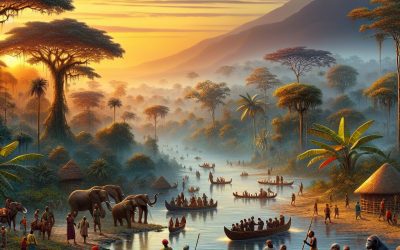
Democratic Republic of the Congo
Democratic Republic of the Congo (République Democratique du Congo (Democratic Republic of the Congo)) Capital: Kinshasa Population (Estimated July 2012): 73,599,190 Area: 2,345,410 km2 or 905,568 mi2 Currency: Congolese franc (FC) Official Language: French Political Information: Semi-Presidential Republic Official Religion: No Official Religion (approximately 50% of the population are Roman Catholic, 20% are Protestant, 10% are Kimbanguist, 10% are Muslim and 10% have other religious beliefs) Highest Mountain: Mont Ngaliema (Mount Stanley) 5,110m or 16,765ft GDP Official Exchange Rate (OER is more precise at gauging a country’s economic power) (Estimated 2011): $15.3 billion (US$) or (GBP) GDP (OER) Per Capita (per member of the population estimated 2011): (US$) or (GBP) GDP Purchasing Power Parity (PPP is good for gauging living conditions and use of resources but not as accurate as OER. This data has been calculated based on the sum value of all goods and services produced in the country valued at prices prevailing in the United States) (Estimated 2011): $25.19 billion (US$) or (GBP) GDP (PPP) Per Capita (per member of the population estimated 2011): $300 (US$) or (GBP) Time Zone (GMT/UTC): Between +1:00 to +2:00 Wildlife: Counties/Provinces/States: 10 provinces (provinces, singular – province) and 1 city* (ville); Bandundu, Bas-Congo (Lower Congo), Equateur, Kasai-Occidental (West Kasai), Kasai-Oriental (East Kasai), Katanga, Kinshasa*, Maniema, Nord-Kivu (North Kivu), Orientale, Sud-Kivu (South Kivu) Leaders: President Joseph Kabila with Adolphe Muzito as Prime Minister. Additional: Independence from Belgium on the 30th of June 1960 Sources: CIA World Fact Book, Encyclopaedia Britannica. Democratic Republic of the Congo The Democratic Republic of the Congo, commonly referred to as DRC or Congo-Kinshasa, is a country located in Central Africa. It is the second-largest country...