Explore the World Through Geography, Natural Resources & Daily History
Clear, reliable and engaging guides that help you understand our planet — from UK geography education to global natural resources and On This Day history events.
Explore, discover, and learn about the wonders of our world! At Earth Site, we’re passionate about bringing geography, history, and science to life for curious minds of all ages. Whether you’re delving into historical events, uncovering the mysteries of the natural world, or seeking interactive resources, you’re in the right place.
Here, you can uncover the stories behind historical events, explore the natural wonders of our planet, and gain valuable insights into how the Earth’s systems shape our daily lives. From the towering peaks of mountain ranges to the far-reaching impacts of human innovation, we aim to make every topic both engaging and informative.
Start your journey of discovery with us today, and let’s make learning an adventure!
What We Cover
Earth Site brings together engaging and accessible educational content designed to help you understand the world, its history, and its natural systems.
🌍 Geography Education (UK & Worldwide)
We publish clear, easy-to-understand geography resources for students, teachers and curious learners. Our guides support geography education in the UK and cover physical geography, climate, ecosystems, population, and global development.
⛏️ Natural Resources & Environmental Geography
Explore detailed country profiles covering natural resources, mining, energy, geology and global environmental challenges. We show how nations manage minerals, water, land and ecosystems, and why these resources matter.
📅 On This Day in History
Every day has a story. Our On This Day history series features major events, anniversaries, traditions, and cultural milestones from around the world — with timelines, context, and fun facts.
TIMELINE
How Karl Bushby Crossed the Dangerous Darién Gap on Foot
So, you’re wondering how Karl Bushby managed to leg it through the Darién Gap, that infamous stretch of untamed jungle between Panama and Colombia? It’s a serious question, as this isn’t a walk in the park; it’s more like a gauntlet thrown at the feet of the determined. In short, Karl Bushby achieved this monumental feat by meticulously planning, assembling a highly skilled and experienced team, and pushing his own physical and mental limits to an extraordinary degree. This wasn’t a spontaneous adventure, but a calculated, ultra-endurance expedition backed by robust logistics and a deep understanding of the immense dangers involved. Let’s get one thing straight from the off: the Darién Gap isn’t just a bit of overgrown wilderness. It’s a gaping hole in the Pan-American Highway, a notoriously difficult and dangerous region that travellers typically avoid. It’s a place where dense rainforest meets swampland, crisscrossed by rivers that can swell into raging torrents. A Geographical NightmaRe Imagine a vast, undeveloped expanse of land, roughly 100 miles wide, plunging right into the churning waters of the Caribbean Sea. There are no roads, no bridges, no established trails for much of it. It’s a natural barrier that has, for decades, forced travellers to seek alternative routes, usually by air or sea, to complete the journey between North and South America. Its remoteness and sheer impenetrability are its defining characteristics. Beyond the Jungle: The Human Element While the terrain is a formidable adversary, the Darién Gap is also home to significant human dangers. Navigating this region means encountering elements that are often unpredictable and unadvertised. It’s a place where the law...
The Roman Empire Timeline: From Republic to Collapse
Right, so you’re curious about the Roman Empire’s timeline, from its early days as a Republic right up to its eventual collapse. Let’s get straight to it. The Roman story is a long and fascinating one, spanning well over a thousand years. It didn’t just appear fully formed; it evolved from a small city-state into a vast empire, and that transformation, along with its eventual decline, is what we’ll be looking at. Think of it as a huge historical arc, full of ingenuity, ambition, and, ultimately, internal and external pressures that led to its end. Rome wasn’t always an empire. It started small, like any other city. The traditional founding date of Rome is 753 BCE, established by brothers Romulus and Remus – a story that, while mythical, sets the stage for a city with big aspirations. The Roman Monarchy (c. 753 BCE – 509 BCE) Initially, Rome was ruled by kings. We don’t have a huge amount of reliable historical detail from this period, as much of it comes down to us through later Roman writers looking back. What we do know is that there were seven traditional kings, and the last of them, Lucius Tarquinius Superbus, was apparently a bit of a tyrant. His expulsion in 509 BCE is a pivotal moment, leading directly to the establishment of the Republic. It marked a conscious decision by the Romans to avoid single-person rule. Birth of the Roman Republic (509 BCE – 27 BCE) With the kings out of the picture, Rome wasn’t quite sure how to govern itself. They settled on a Republic, a system designed to distribute...
Why Albania Became One of Europe’s Most Isolated Countries
Albania’s isolation wasn’t an accident or a fleeting phase; it was a deliberate and deeply entrenched policy born from a complex mix of historical anxieties, ideological convictions, and a fierce, almost paranoiac, desire for self-reliance. While many countries in the mid-20th century navigated the Cold War by aligning with major blocs, Albania, under Enver Hoxha, chose a path less travelled: complete and utter self-imposed isolation. This wasn’t just about severing ties; it was about building a nation entirely immune to external influences, both political and cultural. Ultimately, this left Albania as one of Europe’s most enigmatic and cut-off nations for decades. Albania’s geographical position has historically made it a tempting prize for larger powers. Situated at the crossroads of empires – Roman, Byzantine, Ottoman – and later, amidst the vying interests of modern European states, a deep-seated suspicion of outsiders became ingrained in the national psyche. This vulnerability, coupled with a history of being dominated, created fertile ground for a leader like Hoxha to preach self-sufficiency as the ultimate form of protection. A History of Foreign Domination For nearly 500 years, Albania was under Ottoman rule. This long period left a lasting impact, fostering a strong sense of national identity often defined in opposition to external control. Following the collapse of the Ottoman Empire, Albania briefly gained independence in 1912, only to be plunged into the chaos of the Balkan Wars and then World War I, where it was occupied by various powers. This constant struggle against foreign interference deeply influenced the country’s political outlook. The Trauma of World War II World War II was particularly brutal for Albania....
The Cold War: America vs the Soviet Union Explained
Right then, let’s talk about the Cold War. In a nutshell, it was a half-century-long global rivalry between the United States and the Soviet Union, not a hot war with direct military conflict between them, but a battle of ideologies, influence, and nerves. It kicked off shortly after World War II concluded in 1945 and limped to an end with the collapse of the Soviet Union in 1991. Think of it as a chess match played on a global scale, with each side trying to outmanoeuvre the other without actually turning the board over. The Dawn of Division: From Allies to Adversaries After the dust settled from World War II, the world was a very different place. The ‘Big Three’ – the USA, Britain, and the USSR – had been allies, but their wartime cooperation quickly unravelled. The Soviet Union, having borne the brunt of the Nazi invasion, wanted security and created a buffer zone of friendly communist states in Eastern Europe. The US, on the other hand, was pushing for democracy and free markets everywhere. These fundamental differences in ideology – communism versus capitalism – became the bedrock of the conflict. The Yalta and Potsdam conferences in 1945, initially meant to carve up post-war Europe, instead solidified these divisions. The Soviet Union’s actions in Eastern Europe, particularly its refusal to hold free elections in Poland as promised, raised red flags in the West. Winston Churchill famously declared that an “iron curtain” had descended across the continent, dividing it into two hostile blocs. This wasn’t just about political systems; it was about two entirely different ways of life and...
Why Is Greenland Strategically Important?
You might be wondering why such a vast, icy place like Greenland pops up in discussions about geopolitics and national interests. After all, it’s not exactly overflowing with population centres or bustling industries. However, Greenland’s strategic importance isn’t about its current economic output; it’s about its unique geography, its untapped resources, and its increasingly prominent role in a changing world. Essentially, Greenland matters because of its location, its potential, and the shifting global dynamics that are making that location and potential far more valuable than they used to be. Greenland’s position smack-bang in the Arctic is its primary claim to strategic relevance. Think of it as a massive land bridge connecting North America and Europe, sitting atop a region that is rapidly transforming. The North Atlantic Gateway This isn’t just a casual mention; Greenland’s position acts as a key choke point for transatlantic shipping and military movements. Any nation looking to project power or maintain influence in the North Atlantic needs to consider Greenland. It’s a stepping stone, if you will, with significant implications for naval access and control of vital sea lanes. Proximity to Major Powers Greenland’s sheer proximity to North America, particularly Canada and the United States, is undeniable. This closeness fosters certain defence and security considerations, often leading to cooperation and dialogue between Greenland, Denmark (its sovereign state), and these North American neighbours. The Arctic is becoming a more contested space, and Greenland’s location makes it a critical observation post and potential staging area. Emerging Arctic Routes As the Arctic ice melts, new shipping routes are opening up. The Northern Sea Route along Russia’s coast and...
Why Greenland Has Become One of the World’s Most Important Geopolitical Hotspots
Greenland, a vast, ice-covered landmass, might seem like a remote, icy outpost, but it’s quickly emerging as a major player on the global geopolitical stage. Its strategic location, immense untapped resources, and the accelerating impact of climate change are propelling it into the spotlight, making it a critical area of interest for a growing number of world powers. Forget its historical image as a quiet, Danish-administered territory; Greenland is now a key piece in the intricate puzzle of international relations. The melting ice caps aren’t just a grim environmental forecast; they’re fundamentally altering the Arctic landscape, and with it, global shipping routes and resource extraction possibilities. This transformation is at the heart of Greenland’s growing geopolitical importance. Shorter Shipping Routes: The Lure of the Northwest Passage For centuries, the dream of a quicker route between the Atlantic and Pacific oceans has captivated explorers and merchants alike. The Suez and Panama canals are vital, but imagine cutting thousands of miles off a journey. The melting of Arctic sea ice is making this a reality. Saving Time and Fuel: As ice recedes, the fabled Northwest Passage and other Arctic routes become increasingly navigable for longer periods each year. This translates directly into significant time and fuel savings for shipping companies. For example, a journey from Europe to Asia via the Arctic can be weeks shorter than transiting the Suez Canal. This efficiency gain is a powerful economic incentive for nations with major maritime trade, such as China and many European countries. Reduced Piracy Risk: Unlike some established maritime choke points that are notorious for piracy, the Arctic routes currently offer a...
Europe’s Defence Industry Boom: How Conflict Is Reshaping Manufacturing
Okay, so the big question people are asking is how Europe’s defence industry is suddenly booming, and the honest answer is: conflict. It sounds a bit grim, but that’s the reality driving current manufacturing shifts on the continent. The ongoing war in Ukraine, coupled with a general sense of unease in global security, has really shaken things up, forcing governments and companies alike to rethink their defence capabilities and production. This isn’t just about making more bullets; it’s a fundamental reshaping of how Europe builds and supplies its security needs. For decades, following the end of the Cold War, many European countries saw defence spending as a bit of a necessary evil, something to be managed rather than heavily invested in. The so-called “peace dividend” meant that military budgets were often trimmed, and defence manufacturers, while still active, weren’t operating at peak capacity. Many had even downsized their operations, having anticipated a prolonged period of relative global stability. This was understandable; who wanted to be geared up for major conflict when the world seemed to be moving in a different direction? The Ukrainian Spark: A Wake-Up Call The invasion of Ukraine in February 2022 was, without a doubt, the turning point. It wasn’t just a regional conflict; it was a stark reminder that large-scale, conventional warfare was back on the European continent. Suddenly, the equipment that had been deemed sufficient for peacekeeping or limited interventions was proving inadequate against a determined aggressor. This immediately put a spotlight on dwindling national stockpiles and a manufacturing base that hadn’t been tested by sustained demand for years. Re-evaluating Security Commitments Beyond Ukraine,...
Why Does the United States Want Greenland?
So, why does the United States have such an interest in Greenland? The simple, immediate answer is that Greenland, despite being geographically closer to Canada, holds significant geopolitical, economic, and strategic value that the US has recognised for a long time. It’s not a new fascination, but rather a long-standing consideration with renewed relevance in the modern world. The idea of the US acquiring Greenland isn’t some recent, whimsical thought. It’s been floated around for well over a century, which might surprise some. Early Inquiries and Perceptions Back in 1867, US Secretary of State William Seward, known for orchestrating the Alaska purchase, reportedly expressed interest in Greenland, alongside Iceland. He saw the strategic value of Arctic territories even then. Fast forward to 1946, and President Truman actually offered Denmark $100 million for the island. The Danes politely declined, but the interest was clearly there, rooted in more than just a fleeting notion. This historical context is vital; it highlights that the US views Greenland not as a sudden opportunity, but as a consistent point of strategic importance. World War II Significance During World War II, Greenland became incredibly important. When Denmark was occupied by Nazi Germany, the US took on the responsibility of defending Greenland, establishing military bases there. This was primarily to prevent its use by the Axis powers and to protect shipping lanes in the North Atlantic. This period cemented Greenland’s role as a vital outpost for US security and projecting power across the Atlantic. It demonstrated, in a very practical sense, why control or strong influence over Greenland mattered. Geopolitical Advantage: A Strategic Chess Piece Greenland’s...
The Future of Russian Oil Exports: Asia, Europe, and Global Energy Markets
Russia’ FAQs What are the current trends in Russian oil exports? Russian oil exports are currently shifting towards Asia, with China becoming a major importer of Russian oil. This trend is driven by the growing energy demand in Asia and Russia’s efforts to diversify its export markets. How does the future of Russian oil exports look like in Asia? The future of Russian oil exports in Asia looks promising, with Russia aiming to strengthen its energy ties with countries like China, India, and Japan. The development of new pipelines and infrastructure projects will further facilitate the growth of Russian oil exports to Asia. What is the outlook for Russian oil exports to Europe? Russian oil exports to Europe are expected to remain significant, as Europe continues to be a major market for Russian oil. However, geopolitical tensions and the European Union’s efforts to diversify its energy sources may impact the future of Russian oil exports to Europe. How do Russian oil exports impact global energy markets? Russian oil exports have a significant impact on global energy markets, as Russia is one of the world’s largest oil producers. The dynamics of Russian oil exports influence global oil prices and supply, and any changes in Russian oil exports can have ripple effects on the global energy landscape. What are the challenges and opportunities for the future of Russian oil exports? Challenges for the future of Russian oil exports include geopolitical tensions, competition from other oil-producing countries, and the need for continued investment in infrastructure. However, opportunities lie in the growing energy demand in Asia, potential for new partnerships, and advancements in...
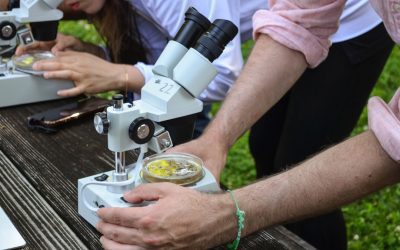
The Future of Climate Science: Breakthroughs That Could Change Everything
So, what’s next for climate science? It might sound a bit daunting, but honestly, it’s a field buzzing with innovation. The breakthroughs aren’t just about more complex models; they’re about genuinely new ways of understanding, predicting, and even tackling the challenges of our changing planet. Think of it as moving from just diagnosing the illness to developing some really promising treatments. We’re talking about things that could fundamentally shift how we approach climate change, making our efforts more effective and, dare we hope, more successful. Climate science has always been about piecing together a colossal, intricate puzzle. For decades, we’ve relied on sophisticated computer models to simulate the Earth’s systems, but these models are only as good as the data we feed them and the understanding we have. The real game-changer here is the explosive growth of artificial intelligence (AI) and machine learning (ML). These aren’t just buzzwords; they’re tools that are allowing us to see patterns and connections in climate data that were previously invisible or too complex for humans to discern. Supercharging Climate Models Traditional climate models are often computationally intensive, requiring massive supercomputers and taking weeks to run. AI and ML are starting to speed this up dramatically. By learning from vast datasets – think decades of satellite imagery, atmospheric readings, and oceanographic data – AI can help build more efficient and accurate models. It’s like having a super-analyst who can process information at a speed and scale far beyond human capability. Predictive Power Boost One of the key areas where AI is making a difference is in improving the accuracy and resolution of climate predictions....
Which European Countries Are Most Vulnerable to Climate Change?
Okay, so you’re wondering which European countries are really feeling the heat when it comes to climate change. It’s a pretty unavoidable topic these days, and frankly, some parts of Europe are definitely more exposed than others. The short answer is that countries with long coastlines, significant reliance on agriculture, and those situated in warmer or more arid regions tend to be the most vulnerable. Think of the Mediterranean, the low-lying delta regions, and areas already prone to extreme weather events. It’s not a case of one-size-fits-all, but rather a mosaic of interconnected risks. Southern Europe: The Sun-Baked Frontline Southern Europe, with its famously warm climate, is unfortunately also on the frontline of many climate change impacts. The Mediterranean basin, in particular, is a hotspot for rising temperatures and changing rainfall patterns. Heatwaves and Health Risks We’re already seeing more frequent and intense heatwaves across countries like Spain, Italy, Greece, and Portugal. These aren’t just inconveniently warm spells; they have serious consequences. Increased mortality: Older people, young children, and those with pre-existing health conditions are particularly at risk during prolonged periods of extreme heat. Hospitals can become overwhelmed, and public health systems are stretched thin. Workplace dangers: Outdoor workers, especially in sectors like agriculture and construction, face significant health hazards. Adapting working hours and providing adequate protection are becoming increasingly crucial. Impact on daily life: Simple things like going for a walk or enjoying outdoor activities become difficult and potentially dangerous. This affects tourism, local economies, and the overall quality of life. Water Scarcity and Drought Another major concern for Southern Europe is the dwindling availability of fresh water....
The Orange Revolution Explained: Ukraine’s Political Turning Point
Right, let’s get into the nitty-gritty of the Orange Revolution. If you’re wondering what it was, in a nutshell, it was a series of protests and political events in Ukraine during late 2004 that ultimately led to the annulment of a rigged presidential election and a rerun vote. It was a pretty big deal, marking a significant shift in Ukraine’s post-Soviet trajectory towards a more democratic, European future. Imagine a country where the stakes are incredibly high, and the upcoming presidential election feels like it could genuinely steer its future trajectory. That’s pretty much where Ukraine was in 2004. The election was a showdown between two very different visions for the nation. The Contenders: Two Worlds Apart On one side, you had Viktor Yanukovych, the incumbent Prime Minister. He was widely seen as the pro-Russian, establishment candidate, backed by the sitting President Leonid Kuchma. His support base was largely concentrated in the industrial east and south of Ukraine, regions with strong historical ties to Russia. Then, there was Viktor Yushchenko, an opposition leader and former Prime Minister. He was campaigning on a platform of closer ties with the West, democratic reforms, and tackling widespread corruption. His support was strongest in the western and central parts of Ukraine, which leaned more towards Europe. The First Round: Setting the Stage The initial round of voting in October 2004 didn’t produce a clear winner, so it went to a run-off. This was always going to be the crunch point, where the real battle would be fought. Both sides knew it, and so did the international community. The Second Round and the Suspicions...