Explore the World Through Geography, Natural Resources & Daily History
Clear, reliable and engaging guides that help you understand our planet — from UK geography education to global natural resources and On This Day history events.
Explore, discover, and learn about the wonders of our world! At Earth Site, we’re passionate about bringing geography, history, and science to life for curious minds of all ages. Whether you’re delving into historical events, uncovering the mysteries of the natural world, or seeking interactive resources, you’re in the right place.
Here, you can uncover the stories behind historical events, explore the natural wonders of our planet, and gain valuable insights into how the Earth’s systems shape our daily lives. From the towering peaks of mountain ranges to the far-reaching impacts of human innovation, we aim to make every topic both engaging and informative.
Start your journey of discovery with us today, and let’s make learning an adventure!
What We Cover
Earth Site brings together engaging and accessible educational content designed to help you understand the world, its history, and its natural systems.
🌍 Geography Education (UK & Worldwide)
We publish clear, easy-to-understand geography resources for students, teachers and curious learners. Our guides support geography education in the UK and cover physical geography, climate, ecosystems, population, and global development.
⛏️ Natural Resources & Environmental Geography
Explore detailed country profiles covering natural resources, mining, energy, geology and global environmental challenges. We show how nations manage minerals, water, land and ecosystems, and why these resources matter.
📅 On This Day in History
Every day has a story. Our On This Day history series features major events, anniversaries, traditions, and cultural milestones from around the world — with timelines, context, and fun facts.
TIMELINE
The History of Palestine and Israel: From the Ottoman Empire to Modern Conflict
A quick heads-up: understanding the history of Palestine and Israel, from the Ottoman Empire right up to today’s conflicts, is a deep dive into centuries of intertwined narratives, shifting populations, and competing claims. It’s not a simple story with a clear ‘start’ and ‘end’, but rather a complex tapestry woven with religious, cultural, and political threads. Essentially, it’s about a land with ancient roots, various empires leaving their mark, and the eventual rise of distinct national aspirations that often found themselves in direct opposition. This article aims to lay out the key stages and events that have shaped the region. Before the modern conflicts, Palestine was an integral part of the Ottoman Empire for roughly 400 years. This wasn’t a static period; there was significant change and a degree of local autonomy within the broader imperial structure. Administering the Region The Ottomans divided their vast empire into administrative units, and Palestine fell largely within what was known as ‘Syria’. It wasn’t a single, unified province, but rather a collection of sub-provinces, often called sanjaks. Jerusalem, Nablus, and Acre were prominent centres. Local rulers, or mutasarrifs, held power under the watchful eye of the Ottoman Porte in Istanbul. For much of this period, the region was relatively peaceful and diverse. Demographics and Society During the Ottoman period, the population of Palestine was predominantly Arab, encompassing both Muslim and Christian communities. There was also a continuous Jewish presence, particularity in the four holy cities of Jerusalem, Hebron, Tiberias, and Safed. These communities lived alongside each other, often with their own distinct religious and social structures, but generally integrated within the Ottoman...
Why Afghanistan Is Called the Graveyard of Empires
So, why do they call Afghanistan the ‘Graveyard of Empires’? Simply put, it’s a place where numerous powerful foreign occupying forces have gone to assert their dominance, only to find themselves bogged down, depleted, and eventually forced to withdraw, often in disarray. It’s a harsh lesson in military and political overreach, taught repeatedly over centuries. Afghanistan’s physical terrain isn’t just picturesque; it’s a formidable natural defence system that has played a huge role in shaping its history of resistance. Mountainous Maze Imagine trying to fight a war across the Himalayas, but even more fractured and unforgiving. That’s Afghanistan. The country is dominated by the Hindu Kush mountain range, which features peaks over 7,000 metres high. These aren’t just big hills; they’re a maze of narrow passes, deep valleys, and treacherous terrain. Logistical Nightmares: Moving troops, equipment, food, and medical supplies through these mountains is a logistical nightmare. Roads are scarce, often unpaved, and easily ambushed or destroyed. Every mile gained is a struggle, every supply convoy a target. Insurgent Sanctuaries: The mountains provide perfect cover for local resistance fighters. They know every cave, every hidden path, every vantage point. They can melt away into the landscape, re-emerge to strike, and then disappear again, making it incredibly difficult for a conventional army to pin them down. Fragmented Control: These geographical barriers naturally fragment the country into numerous isolated pockets. Even if an occupying force controls the major cities and valleys, truly pacifying the vast, mountainous regions is an almost impossible task. Harsh Climate Extremes It’s not just the mountains that are a problem; Afghanistan’s climate swings from one extreme to...
Who Is Karl Bushby? The Incredible Story of the Man Walking Around the World
So, you’ve probably stumbled across mentions of Karl Bushby and his absolutely bonkers mission to walk around the entire world. It sounds like something out of a Jules Verne novel, doesn’t it? The short answer to “Who is Karl Bushby?” is that he’s a regular bloke who decided to do something extraordinary: he set out to walk every single inch of the Earth’s landmass. No shortcuts, no planes, just his own two feet against the tarmac, dirt tracks, and sometimes, well, whatever else he had to navigate. He’s not a celebrity, not a driven businessman, just someone who had this relentless idea and the sheer grit to see it through. It all started with a fairly simple, yet profound, question: could it actually be done? For many of us, the idea of traversing continents on foot is just that – an idea, a fleeting thought. But for Karl, it became an obsession, a challenge he felt compelled to answer. It wasn’t born out of a desire for fame or fortune, but more from a deep-seated curiosity about the world and humanity’s place within it. He wanted to experience the planet not as a tourist, but as a truly ground-level observer. A Personal Quest Bushby wasn’t fueled by a grand philanthropic agenda from the outset, though his journey has undoubtedly touched many lives. His initial motivation was intensely personal. He saw the world as this vast, magnificent entity, often reduced to headlines and soundbites. He wanted to peel back those layers and understand it through direct, unfiltered experience. This quest wasn’t about proving anything to others, but about proving something...
Who Were the Romans? A Complete Beginner’s Guide
So, who were the Romans, really? If you’re just dipping your toes into history and wondering about this ancient civilisation that pops up everywhere from language to law, it’s a fair question. In a nutshell, the Romans were an ancient Italic people who, over centuries, built a powerful empire that dominated the Mediterranean world. They weren’t just about legions and togas, though; they left a massive mark on pretty much every aspect of Western society – from how we build things to how we govern ourselves. This guide will break down who they were, where they came from, and what made them so influential, all without making your eyes glaze over. It all started much smaller than you might imagine. For a long time, Rome was just a collection of huts on seven hills along the Tiber River in central Italy. The traditional founding date is 753 BC, which, while likely a bit legendary, gives us a starting point. The Myth and the Reality The most famous story of Rome’s founding involves Romulus and Remus, twin brothers suckled by a she-wolf. Romulus, according to the legend, ended up killing Remus and founding the city, naming it after himself. While a good story, historians generally believe Rome grew organically from the settlements of Latin tribes. Early Influences: Greeks and Etruscans Those early Romans weren’t operating in a vacuum. They were neighbours with more established cultures. The Etruscans: A Mysterious Power To their north were the Etruscans, a sophisticated civilisation who had a significant impact on early Roman culture. They influenced Roman religion, architecture (think arches and temples), and even some...
The Rise of the United States as a Global Superpower
Alright, let’s dive into how the United States became such a dominant force on the global stage. Generally speaking, America’s journey to superpower status wasn’t a single event but a gradual accumulation of economic, political, and military might, significantly accelerated by the two World Wars and the subsequent Cold War. Before it could even think about being a superpower, the US had to get its own house in order and build a solid foundation. This involved a lot of internal growth and consolidation. Geographic Advantage and Natural Resources You can’t really overstate the luck of the draw when it comes to geography. The US had vast, fertile lands, a massive coastline for trade, and was geographically insulated from the constant squabbles and wars of Europe. Abundant Resources: Think about it – coal, iron ore, oil, timber. These weren’t just nice-to-haves; they were the absolute bedrock of industrialisation. Without them, building factories and a modern economy would have been an uphill battle. Two Ocean Buffer: Being sandwiched between the Atlantic and Pacific meant a degree of security that many European nations could only dream of. This allowed for internal development without the constant threat of immediate invasion. Rapid Industrialisation and Innovation The 19th century was a period of incredible growth for the US, largely driven by an embrace of technology and a willingness to innovate. Technological Leapfrogging: While Britain was the first industrial giant, the US quickly caught up and, in many areas, surpassed it. Things like the expansive railway networks, mass production techniques (think Henry Ford a bit later), and the rise of powerhouse corporations made the US an...
Europe and Russia: A New Era of Tension and Strategic Competition
The relationship between Europe and Russia is definitely in a new phase, and it’s fair to say it’s marked by tension and a lot more strategic competition than we’ve seen in a good while. Gone are the days when we could optimistically talk about a “reset” or deep integration. Now, it’s more about navigating a complex landscape where security, economics, and ideology are all points of friction. This isn’t just a superficial spat; it’s a fundamental shift impacting everything from energy security and defence spending to political discourse and international alliances. It’s easy to look at current events and think this is all spontaneous, but the truth is, the current tensions between Europe and Russia have deep historical roots. Understanding these echoes helps make sense of why we are where we are today. The Legacy of the Cold War While the Soviet Union collapsed decades ago, the geopolitical patterns and mistrust forged during the Cold War haven’t entirely vanished. You can still see the underlying anxieties about spheres of influence and the strategic positioning of military assets. NATO Expansion: For Russia, the eastward expansion of NATO is often perceived as a direct security threat, a historical grievance that continues to shape its strategic thinking. Ideological Divides: The fundamental differences in political systems – parliamentary democracy versus Putin’s more authoritarian model – create an ongoing ideological chasm. Post-Soviet Disillusionment The hope that Russia would fully embrace democratic and market principles after 1991 didn’t quite materialise as many in the West had hoped. This often left a sense of disillusionment and a feeling that Russia was struggling to find its place...
How the Ukraine War Changed Russia’s Economy Forever
It’s a big question, isn’t it? How has the war in Ukraine fundamentally reshaped Russia’s economy? The short answer is: profoundly and likely permanently. It’s not just about sanctions, though they’ve taken a huge bite. It’s about a forced, and often bumpy, pivot away from the West, a shift in how goods move, who Russia trades with, and what its own industries are focused on. Think of it as a seismic event that fractured existing economic relationships and is now forcing Russia to build something new, with a limited toolbox and under significant strain. So, right from the get-go, the international response to the invasion was swift and severe. Western nations, along with allies, unleashed a barrage of economic sanctions that were unprecedented in their scope and ambition. These weren’t just targeted measures against a few individuals or companies; they aimed to cripple key sectors of the Russian economy. Cutting Off the Financial Lifeline One of the most impactful moves was the freezing of a significant chunk of Russia’s foreign currency reserves. Imagine a country having its savings account locked down – that’s essentially what happened. This meant Russia had fewer dollars and euros to use for international trade and to support its currency. SWIFT Restrictions: Beyond freezing assets, major Russian banks were kicked out of SWIFT, the global messaging system that facilitates international financial transactions. This made it incredibly difficult and costly for these banks to communicate with financial institutions worldwide. Think of it like cutting off the phone lines for a huge portion of the business world. Targeting Key Industries: Sanctions were also slapped on crucial Russian...
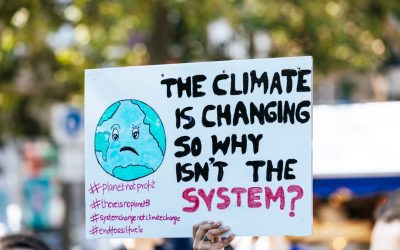
Can Climate Change Be Reversed? What Science Says in 2026
Let’s get straight to it: can climate change be reversed? The short answer, as of 2026, is that a complete reversal to pre-industrial conditions isn’t just around the corner, and probably won’t happen within our lifetimes. However, that doesn’t mean we’re powerless. Science overwhelmingly indicates we can – and absolutely must – slow it down significantly, adapt to its impacts, and even actively remove some of the excess greenhouse gases from the atmosphere. It’s less about a magic “undo” button and more about managing a complex, long-term situation. We’re talking about mitigating the worst effects and aiming for a more stable climate, rather than hitting the reset button. Think of our atmosphere as a giant bathtub. For centuries, we’ve been pouring greenhouse gases – primarily carbon dioxide (CO2), methane (CH4), and nitrous oxide (N2O) – into it at an ever-increasing rate. These gases don’t just disappear overnight. They have varying lifespans, and CO2, a major culprit, can linger in the atmosphere for hundreds, even thousands, of years. The Long Residence Time of CO2 Once CO2 is up there, it’s pretty stubbornly staying put for a long time. Even if we stopped all emissions tomorrow, the CO2 we’ve already released would continue to trap heat for generations. This lag effect is a critical reason why a quick “reversal” is off the table. We’re not just dealing with current emissions; we’re also grappling with the accumulated legacy of centuries of industrial activity. Positive Feedback Loops Adding another layer of complexity are positive feedback loops. As the planet warms, these loops amplify the initial warming. For example, melting Arctic ice reduces the...
The Russian Revolution of 1917 Explained
The 1917 Russian Revolution was a seismic event that utterly reshaped Russia and, by extension, the 20th century. In essence, it was a two-stage revolution that saw the overthrow of the centuries-old Tsarist autocracy and its replacement, after a brief and tumultuous interim, by a Bolshevik-led socialist state. Things weren’t great for the average Russian for a long while leading up to this, and a cocktail of social, economic, and political pressures finally boiled over. Understanding the revolution means looking at the kind of country Russia was before 1917. It wasn’t exactly a picture of stability and contentment. The Autocratic Tsar For centuries, Russia was ruled by an absolute monarch, the Tsar, who held immense power. Nicholas II, the last Tsar, was a well-meaning but ultimately ineffective leader. He believed in his divine right to rule, which put him out of touch with the growing desire for reform among his people. His wife, Tsarina Alexandra, was equally stubborn and prone to listening to dubious advisors, most notably the controversial mystic Rasputin. This didn’t exactly instill confidence in the monarchy. A Backward Economy and Society While other European powers were industrialising at pace, Russia lagged significantly. Its economy was predominantly agrarian, with a vast peasantry living in often dire poverty. Industrialisation did occur in pockets, creating a new, burgeoning working class – the proletariat – who faced harsh working conditions, low wages, and lived in overcrowded cities. This created a fertile ground for revolutionary ideas. The Humiliation of War Russia’s involvement in several conflicts trước 1917 proved disastrous. The humiliating defeat in the Russo-Japanese War (1904-1905) exposed the Tsar’s military...
Which European Countries Support Ukraine Most Strongly?
So, you’re wondering which European countries are really digging deep to support Ukraine? It’s a big question, and the answer isn’t a simple “yes” or “no” for one single nation. Instead, it’s a patchwork of consistent, significant backing from a few key players, with others chipping in in their own ways. Ultimately, it boils down to a combination of financial aid, military assistance, and humanitarian help. Leading the Charge: The Big Three and Their Contributions When we talk about strong support, a few countries immediately spring to mind. These are the ones consistently at the top of the lists, whether you’re looking at military hardware, financial packages, or welcoming refugees. Poland: A Neighbour’s Neighbour Being Ukraine’s immediate neighbour comes with a unique perspective and set of challenges. Poland hasn’t just offered symbolic gestures; they’ve been a frontline state in providing tangible support. Generous Military Aid Poland has been incredibly proactive in sending military equipment. We’re talking about everything from tanks and armoured vehicles to drones and ammunition. They’ve played a crucial role in facilitating the transit of weapons from other nations to Ukraine, acting as a vital logistical hub. This isn’t just about donating what they have; it’s about seeing the immediate implications of the conflict on their doorstep. A Haven for Refugees The sheer scale of Ukrainian refugees arriving in Poland has been staggering. The Polish government and its people have opened their doors, providing shelter, social services, and an infrastructure to help integrate them. This humanitarian effort is a massive undertaking, requiring significant resources and unwavering commitment. It’s a testament to their solidarity and understanding of the...
NATO, Russia, and Ukraine: The Growing Conflict Explained
So, you’re wondering what’s going on with NATO, Russia, and Ukraine, right? It’s a bit of a thorny situation, and frankly, it’s been brewing for a while. In a nutshell, the conflict is largely about Ukraine’s desire to align more closely with the West, specifically with NATO, which Russia views as a direct threat to its security interests. This has led to Russia’s forceful actions, including the invasion of Ukraine. It’s complex, with a lot of historical baggage and differing perspectives, but we’ll try to break it down. Looking back, it’s easy to see how things got to where they are now. The relationship between Russia and Ukraine, and by extension NATO, isn’t a new one, and it’s always been coloured by the shadows of the past. Soviet Legacy and Independence For decades, Ukraine was a Soviet Socialist Republic. This meant it was deeply intertwined with Moscow’s political and economic systems. After the collapse of the Soviet Union in 1991, Ukraine declared its independence. This was a massive shift, and while many Ukrainians embraced it, the relationship with Russia remained complex. Russia, historically, has seen Ukraine as part of its sphere of influence, a perspective that’s rooted in centuries of shared history and cultural ties. This ingrained viewpoint has made it difficult for Russia to fully accept Ukraine charting its own course, especially one that drifts away from Moscow’s orbit. NATO’s Expansion: A Red Line for Moscow? The North Atlantic Treaty Organisation (NATO) was formed after World War II as a defence alliance primarily against the Soviet Union. After the Cold War ended, NATO began to expand eastward, incorporating...
Artificial Intelligence in 2026: The Biggest Breakthroughs Changing the World
Alright, so what’s the deal with Artificial Intelligence in 2026? Will it actually be doing anything truly groundbreaking, or just more fancy chatbots and slightly better Spotify recommendations? Well, buckle up, because by 2026, AI isn’t just going to be tinkering around the edges. We’re talking about some genuinely significant shifts that will be noticeably changing how we live, work, and even think. The biggest breakthroughs aren’t going to be a single “super-intelligence” moment, but rather a series of interconnected advancements that are already gaining momentum. Think of it less as a sudden explosion and more as a powerful, accelerating wave. AI’s Grip on Scientific Discovery Tightens One of the most profound areas where AI is poised to make a substantial impact by 2026 is within scientific research and discovery. We’re moving beyond AI as a simple data analysis tool; it’s becoming an active collaborator, capable of generating hypotheses, designing experiments, and even interpreting complex results in ways that could accelerate breakthroughs across multiple disciplines. Accelerating Drug Development The painstaking and incredibly expensive process of developing new drugs is a prime candidate for AI-driven transformation. By 2026, AI will be significantly more adept at identifying potential drug candidates, predicting their efficacy and potential side effects, and even designing novel molecular structures from scratch. Pattern Recognition in Biological Data: AI’s ability to sift through vast datasets of genomic, proteomic, and clinical information is reaching new levels of sophistication. This allows researchers to identify subtle patterns associated with diseases and potential treatment pathways that are currently invisible to human analysis. Imagine algorithms spotting correlations between a patient’s genetic makeup and their...