You’re wondering about Earth’s magnetic field, right? Basically, it’s this invisible shield around our planet, generated deep within its core, that’s crucial for life as we know it. It deflects harmful solar radiation and cosmic rays, acting like a planetary bodyguard. Without it, our atmosphere would be stripped away, and the surface would be bombarded by particles that are pretty nasty for living things. So, while you can’t see it, it’s doing a massive job keeping us safe.
So, what are we actually talking about when we say “Earth’s magnetic field”? It’s not a giant bar magnet buried inside the planet, as some might imagine. Instead, it’s a much more dynamic and complex phenomenon. Think of it as a force field, originating from the churning molten iron in Earth’s outer core.
The Geodynamo: The Engine Room
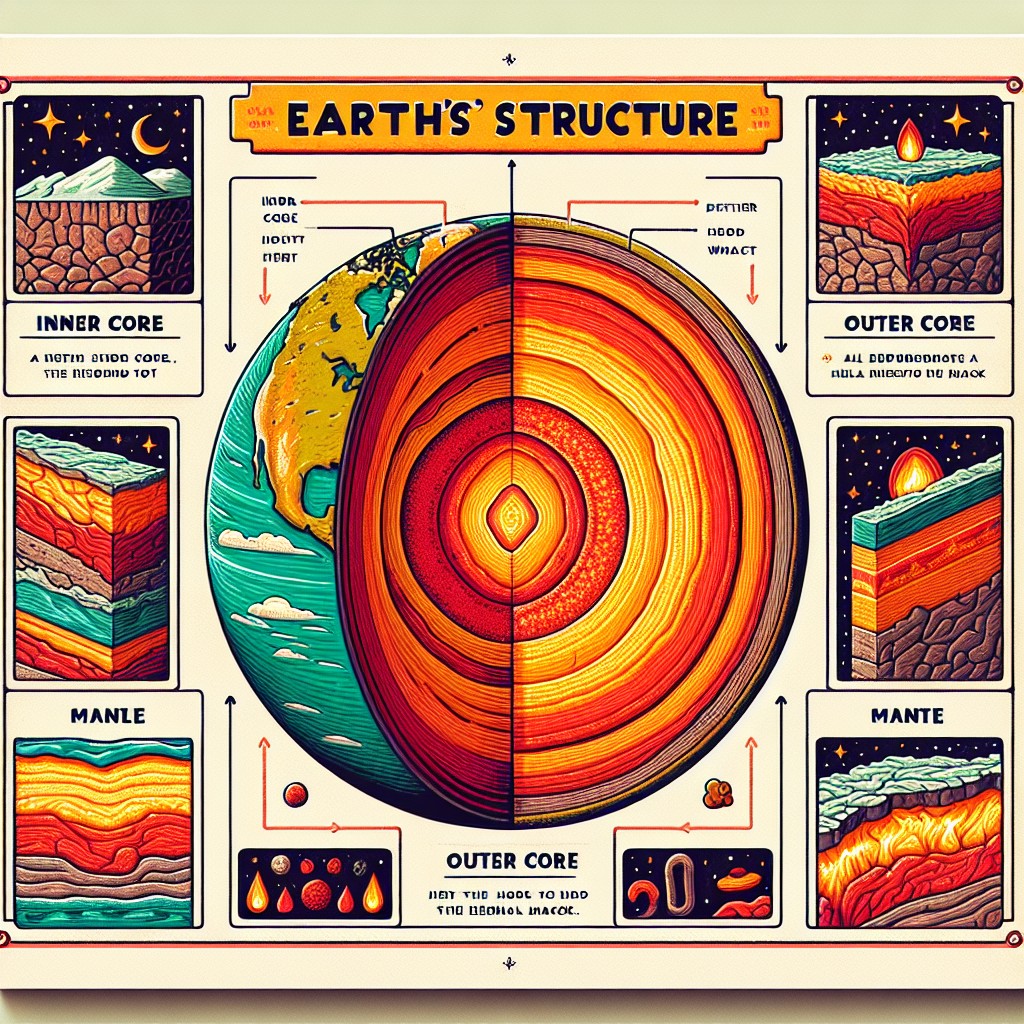
The real magic happens in the Earth’s core. We’ve got two parts here: the solid inner core and the liquid outer core. The outer core is where the action is. It’s a swirling, convective ocean of super-hot, electrically conductive molten iron and nickel.
Convection Currents: The Stirring Pot
This molten metal isn’t static. It’s constantly moving, driven by heat escaping from the inner core and the Earth’s rotation. These movements, much like water boiling in a pot, create large-scale electrical currents.
Electromagnetism Takes Over: Generating the Field
Now, here’s where physics comes in. When you have electrically conductive fluid moving, it generates a magnetic field. This is a fundamental principle of electromagnetism. The massive scale of these currents in the outer core translates into a magnetic field that extends far out into space. It’s a self-sustaining process, often called the “geodynamo.”
A Dipole, Mostly: The Basic Shape
For the most part, Earth’s magnetic field resembles that of a simple bar magnet, with a north and a south magnetic pole. These poles aren’t perfectly aligned with the geographic poles (the points around which the Earth spins), but they’re generally in the ballpark. This dipole shape is the dominant feature of our field.
Why We Need This Magnetic Shield
It’s easy to take Earth’s magnetic field for granted, but its role in protecting us is absolutely vital. We’re talking about something that underpins the very existence of life on this planet.
Deflecting the Solar Wind: The Big Job
Every second, the Sun is spewing out a stream of charged particles – electrons and protons – called the solar wind. This wind travels at incredibly high speeds. Without the magnetic field to push it around, this solar wind would directly hit our atmosphere.
Atmospheric Erosion: A Slow Sucking
If the solar wind were constantly bombarding our atmosphere without any deflection, it would gradually strip lighter gases away into space. Over millions of years, this could lead to a drastically thinner atmosphere, like we see on Mars, for instance. Mars lost much of its atmosphere after its magnetic field weakened significantly.
Cosmic Ray Barrage: The Invisible Danger
Beyond the Sun, there are also high-energy particles coming from deep space, known as cosmic rays. These are incredibly energetic and can damage DNA and living tissues. The magnetic field also plays a role in deflecting a good portion of these, especially those with lower energies.
Radiation Protection: A Healthier Planet
This deflection means less harmful radiation reaches the Earth’s surface. This is crucial for the evolution and survival of complex life, as high levels of radiation can cause mutations and cancer. It makes our planet a much more pleasant place to live.
The Magnetic Poles: Not So Static
As mentioned, Earth’s magnetic field behaves somewhat like a bar magnet, with a North and South Magnetic Pole. However, these aren’t fixed points like the geographic poles. They’re constantly on the move.
Wandering Poles: A Constant Drift
The magnetic poles “wander” over time. This isn’t a rapid, jerky movement, but a gradual drift. Think of it as a slow dance across the surface. Scientists track this movement very carefully.
The North Magnetic Pole: A Speedy Traveler
The North Magnetic Pole, in particular, has been accelerating its movement in recent decades, moving from northern Canada towards Siberia. This has caught scientists’ attention and requires regular updates to navigation systems.
The South Magnetic Pole: A Slower Pace
The South Magnetic Pole is also moving, but at a generally slower pace than its northern counterpart. Its movement is influenced by the same underlying processes in the core.
Geographical vs. Magnetic Poles: A Key Distinction
It’s really important to remember the difference between the geographic poles and the magnetic poles. The geographic poles are the points where Earth’s axis of rotation intersects the surface. The magnetic poles are where the magnetic field lines are vertical. They don’t always coincide.
Magnetic Field Reversals: The Flip Side
Perhaps one of the most fascinating aspects of Earth’s magnetic field is that it doesn’t just wander; it can actually reverse its polarity altogether. This has happened many times throughout Earth’s history.
Evidence from Rocks: A Geologic Record
We know this from studying rocks. When molten lava cools, magnetic minerals within it align themselves with the prevailing magnetic field at that time. This creates a permanent “record” of the field’s direction. By dating these rocks, scientists can chart the history of magnetic reversals.
The Last Reversal: A Look Back
The most recent full reversal of Earth’s magnetic field, known as the Brunhes-Matuyama reversal, occurred about 780,000 years ago. Before that, there have been dozens, even hundreds, of reversals over hundreds of millions of years.
Not a Sudden Catastrophe: A Gradual Shift
When a reversal happens, it’s not an instantaneous flip. It’s a process that can take thousands of years to complete. During this time, the magnetic field weakens significantly and can become much more complex, with multiple poles appearing.
What Happens During a Reversal?: A Period of Weakness
During the transition, the magnetic field might weaken to perhaps 10% of its normal strength. This period of weakness is what raises questions about potential impacts on life. With a weaker shield, more solar and cosmic radiation would reach the surface.
Impact of a Weakened Field: Practical Concerns
“`html
| Aspect | Metric |
|---|---|
| Strength | 25 to 65 microteslas |
| Inclination | 0 to 90 degrees |
| Declination | 0 to 360 degrees |
| Reversals | Occurs every few hundred thousand years |
“`
While a full magnetic reversal is a geological event that takes a long time, the field does fluctuate in strength. Understanding these fluctuations, and the potential impacts of a significantly weakened field, is an area of ongoing research.
Navigation Systems: The Compass Problem
Historically, we’ve relied on magnetic compasses for navigation. If the magnetic field changes significantly, or if the poles move dramatically, the accuracy of these compasses is affected. This is why navigational charts are regularly updated with magnetic declination information.
Satellites and Technology: A More Modern Concern
More critical for our modern world is the impact on technology. Satellites, communication systems, and even power grids are vulnerable to increased solar and cosmic radiation. During periods of intense solar activity, like solar flares and coronal mass ejections, a weaker magnetic field offers less protection.
Aurorae: The Visible Spectacle
The beautiful aurora borealis and aurora australis are a direct result of Earth’s magnetic field at work. Charged particles from the Sun interact with gases in the atmosphere, guided by the magnetic field lines, particularly near the magnetic poles. A stronger or weaker field, or a different field configuration, would alter the appearance and location of these displays.
Animal Migration: An Instinctual Navigation
Many animals, like birds, turtles, and even some insects, have an innate ability to sense Earth’s magnetic field and use it for navigation. Changes in the magnetic field could potentially disorient them, though the extent of this impact is not fully understood.
Life’s Resilience: A Long History
It’s worth noting that life on Earth has survived many magnetic field reversals in the past. While a stronger magnetic field is certainly beneficial, life has proven remarkably resilient and adaptable over geological timescales. The question is more about the rate of change and the degree of weakening during transitions.
What are we doing about it?: Monitoring and Research
Scientists aren’t just passively observing Earth’s magnetic field; they’re actively studying it and monitoring its changes. This research is crucial for everything from understanding our planet’s interior to ensuring the safety of our technological infrastructure.
Ground-Based Observatories: The Boots on the Ground
We have networks of magnetic observatories located all over the world. These facilities continuously measure the strength and direction of Earth’s magnetic field. This data forms the backbone of our understanding of field behavior.
Satellites in Orbit: A Wider Perspective
Satellites play a vital role in measuring the magnetic field from above. Missions like ESA’s Swarm constellation provide a global, three-dimensional view of the field, allowing scientists to track its changes with unprecedented detail and accuracy.
Computer Modelling: Simulating the Dynamo
Advanced computer models are used to simulate the geodynamo processes happening in the Earth’s core. These models help us understand the complex fluid dynamics and electromagnetism that generate the field and predict its future behavior.
Studying Other Planets: Comparative Magnetism
By studying the magnetic fields (or lack thereof) on other planets, like Mars and Venus, we gain valuable insights into what makes a planetary magnetic field strong or weak, and how it evolves over time. This comparative approach helps us understand Earth’s unique situation.
Predicting Geomagnetic Storms: Protecting Our Infrastructure
A significant area of research is focused on predicting geomagnetic storms, which are caused by intense solar activity interacting with Earth’s magnetic field. Better prediction allows us to take measures to protect satellites, power grids, and other critical infrastructure from potential damage.
The Future of Earth’s Magnetic Field
Predicting the future of something as complex as Earth’s magnetic field is a challenge, but scientists are making progress. It’s less about predicting an exact date for the next reversal and more about understanding the trends and processes at play.
Ongoing Weakening?: A Cause for Observation
There’s evidence that the Earth’s magnetic field has been weakening over the last couple of centuries. While this doesn’t automatically mean a reversal is imminent, it’s a significant observation that scientists are closely monitoring.
The South Atlantic Anomaly: A Patchy Field
One area where the field is particularly weak is the South Atlantic Anomaly, a region stretching between South America and Africa. In this area, charged particles from space can penetrate closer to the Earth’s surface, posing a risk to low-orbiting satellites.
Reversals are Natural: Part of the Cycle
It’s important to remember that magnetic field reversals are a natural and recurring part of Earth’s history. They aren’t indicators of impending doom but rather a testament to the dynamic nature of our planet.
Long-Term Stability: Still Our Shield
Despite the wandering poles and potential reversals, Earth’s magnetic field is expected to continue to exist. The geodynamo is a robust process that has kept our planet shielded for billions of years. While the details might change, the fundamental shield is likely to remain.
In essence, Earth’s magnetic field is a fundamental, dynamic force that is literally essential for our planet’s habitability. It’s a product of the incredible processes happening deep within the Earth, and understanding it helps us appreciate the delicate balance that supports life on our home world.
FAQs
What is Earth’s magnetic field?
Earth’s magnetic field is a protective shield that surrounds the planet and extends into space. It is generated by the movement of molten iron in the outer core of the Earth.
What is the importance of Earth’s magnetic field?
Earth’s magnetic field plays a crucial role in protecting the planet from harmful solar radiation and cosmic rays. It also helps in navigation for animals and humans, and is essential for the functioning of compasses and navigation systems.
How does Earth’s magnetic field affect the planet?
Earth’s magnetic field influences the behaviour of charged particles in the atmosphere and in space. It also affects the orientation and migration patterns of animals, and can cause disturbances in electronic systems and communication networks.
Is Earth’s magnetic field constant?
No, Earth’s magnetic field is not constant. It has undergone numerous reversals in the past, where the magnetic north and south poles have switched places. The strength and orientation of the magnetic field also vary over time.
What are the potential consequences of a weakening magnetic field?
A weakening of Earth’s magnetic field could lead to increased exposure to solar radiation and cosmic rays, which may have adverse effects on human health and technological systems. It could also impact animal migration patterns and navigation systems.