Agricultural geography, at its heart, is about understanding where and why farming happens the way it does. It’s the study of how physical environments, human societies, and economic forces come together to shape agricultural practices and features across the globe. Think of it as peeling back the layers to see the intricate connections between a farm, its surroundings, and the wider world.
To truly grasp agricultural geography, we need to look at the bedrock elements that influence how and where we grow our food. It’s rarely just one thing, but a cocktail of factors.
The Lay of the Land: Physical Environment
Nature plays a colossal role, obviously. You can’t grow pineapples in the Arctic, and you won’t find vast wheat fields in the middle of a desert without serious intervention.
Climate and Weather Patterns
Temperature, rainfall, sunlight hours – these are the non-negotiables. Different crops thrive under different conditions. Rice needs warmth and plenty of water; olives prefer Mediterranean climates; apples need a cold snap in winter to fruit properly. Understanding these climatic zones helps us predict what can be grown where. We also look at things like frost-free days and the risk of extreme weather events, which are becoming increasingly important with climate change.
Soils: The Earth’s Foundation
Not all dirt is created equal. Soil type, fertility, and drainage are critical. Clay soils retain water well but can be heavy; sandy soils drain quickly but might need more nutrients; loamy soils are often considered ideal. The presence of organic matter and specific minerals can make or break a crop. This isn’t just about what’s in the soil, but also its structure and depth.
Topography and Relief
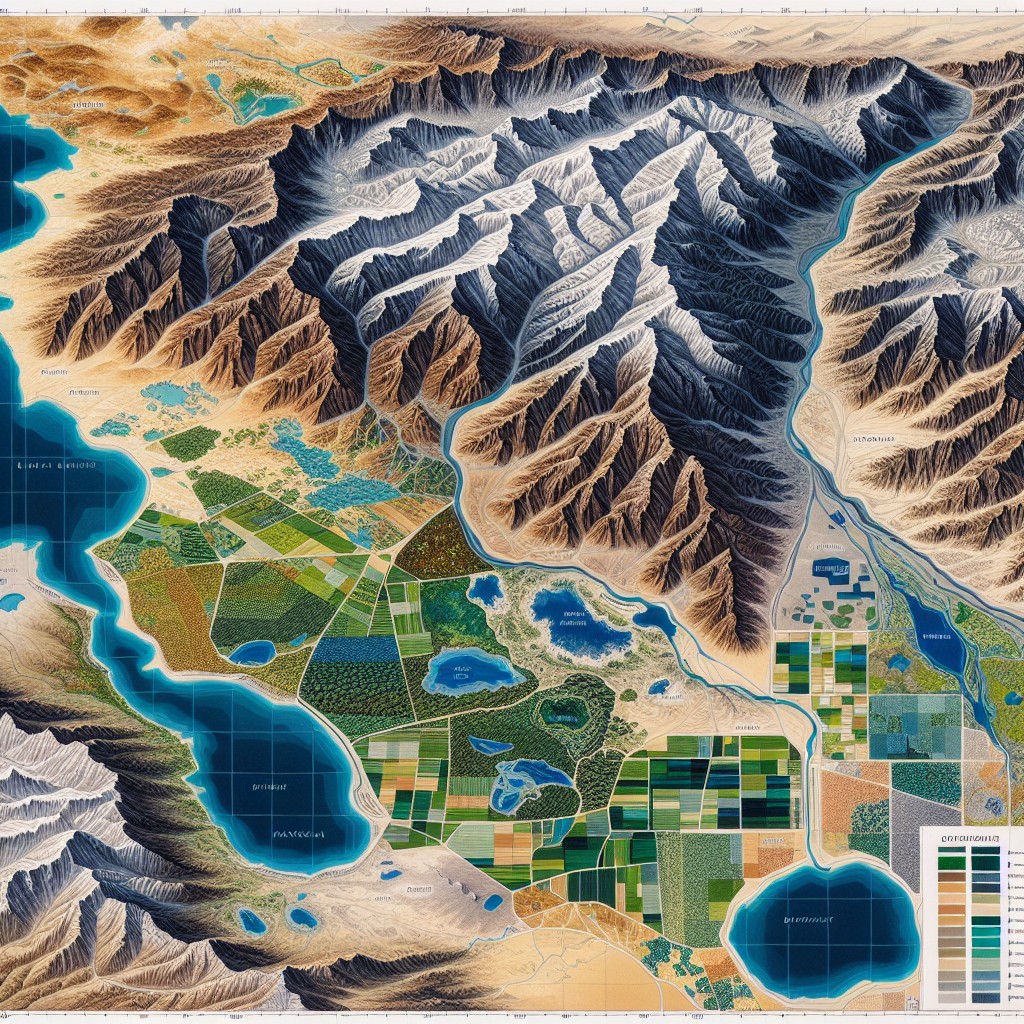
Is the land flat, hilly, or mountainous? This affects everything from erosion risk to the use of machinery. Flat plains are great for large-scale mechanised farming, while steep slopes might only be suitable for terracing and manual labour, if farmed at all. Altitude also impacts temperature and growing seasons.
Water Resources
Access to fresh water, whether from rainfall, rivers, or underground aquifers, is fundamental. Regions with abundant water can support thirsty crops or irrigation-intensive farming. Water scarcity, on the other hand, dictates the choice of drought-resistant crops or limits agricultural potential altogether. This isn’t just about presence, but also reliability and quality.
Human Hands: Cultural and Social Factors
Beyond the natural world, human decisions, traditions, and societal structures heavily influence agricultural landscapes.
Tradition and Knowledge
Generations of farming practices are passed down. What’s considered “normal” to grow in one region might be completely alien in another, even if the physical conditions are similar. Local knowledge about specific soil types, pest management, and cultivation techniques is invaluable. This includes traditional crop varieties adapted to local conditions.
Land Ownership and Tenure Systems
Who owns the land and how it’s managed makes a huge difference. Large corporate farms operate differently from small family holdings or communal land. Systems of tenancy, inheritance laws, and land reform efforts all influence farm sizes, investment, and productivity. This also ties into how land is valued and used.
Demographic Factors
Population density, age of farmers, and migration patterns all play a part. A young, growing population might demand more food and provide more labour, while an ageing rural population could lead to land abandonment or changes in farming intensity. The availability of labour, particularly for labour-intensive crops, is a key consideration.
The Economic Engine: Market Forces and Policies
Farming isn’t just about growing things; it’s about making a living, and that means engaging with the wider economy.
Market Demand and Prices
What people want to buy, and how much they’re willing to pay, directs what farmers choose to grow. High demand for a certain crop can lead to specialisation, while falling prices can force diversification or abandonment. Local, national, and international markets all exert influence. Think about the global demand for coffee, cocoa, or palm oil.
Transport Infrastructure
How easily can produce get from the farm to the consumer? Roads, railways, ports, and air freight all open up different market opportunities. Poor transport can limit farmers to local markets or crops that are non-perishable. The cost of transport also affects profitability.
Government Policies and Subsidies
Agricultural subsidies, quotas, tariffs, and environmental regulations can profoundly shape what’s grown and how. Policies can protect local farmers, encourage specific crops, or promote sustainable practices. Trade agreements also open or close markets. Think of the EU’s Common Agricultural Policy (CAP) as a prime example.
Technology and Innovation
From new seed varieties and fertilisers to advanced machinery, irrigation systems, and precision farming techniques, technology continuously reshapes agriculture. This can increase yields, reduce labour, or allow farming in previously unsuitable areas. The spread and adoption of technology is uneven across the globe.
Understanding Agricultural Systems
Once we know the foundational elements, we can start categorising and understanding different agricultural systems that emerge from their interplay.
Subsistence vs. Commercial Farming
This is a fundamental distinction, though the lines can blur.
Subsistence Agriculture
Here, farming is primarily for the farmer’s own consumption or for their immediate community. Surplus, if any, is usually small. This often involves traditional methods, diverse crops to ensure food security, and minimal reliance on external inputs. Examples include shifting cultivation, nomadic herding, and intensive subsistence farming (like most rice paddies in Asia). The goal is often survival, not profit.
Commercial Agriculture
The primary aim here is profit. Crops are grown to be sold in markets, often on a large scale. This typically involves specialisation, mechanisation, and significant investment in fertilisers, pesticides, and seeds. Examples include large-scale grain farming, plantation agriculture, and livestock ranching. Efficiency and market responsiveness are key drivers.
Intensive vs. Extensive Farming
This relates to the amount of input (labour, capital, fertilisers) per unit of land.
Intensive Farming
Characterised by high inputs per unit area to achieve high yields. This can be labour-intensive (like market gardening in densely populated areas) or capital-intensive (like modern greenhouse horticulture). Often found in areas with high population density or high market demand, where land is a valuable commodity.
Extensive Farming
Involves low inputs per unit area and typically results in lower yields per unit. This is common in regions with abundant land, often with less fertile soils or challenging climates, such as wheat farming on large prairies or nomadic pastoralism in arid regions. The focus might be on total production over vast areas rather than yield per acre.
Types of Agricultural Regions
Building on the systems, we can identify various distinct agricultural regions around the world, each with its own characteristics.
Shifting Cultivation (Slash and Burn)
Found primarily in tropical and subtropical regions with low population density. Farmers clear small plots of land, cultivate them for a few years until soil fertility drops, and then move to a new plot, allowing the old one to regenerate. It’s often associated with indigenous communities.
Pastoral Nomadism
The rhythmic movement of livestock herders and their animals in search of pasture and water. Common in arid and semi-arid regions of North Africa, the Middle East, and Central Asia. Animals are a source of food, clothing, and shelter.
Mixed Crop and Livestock Farming
Widespread in Europe and North America. Farmers grow crops (like grains for feed) and raise livestock (for meat, milk, and eggs) on the same farm. The crops feed the animals, and animal manure fertilises the crops, creating a symbiotic relationship that uses resources efficiently.
Mediterranean Agriculture
Characterised by hot, dry summers and mild, wet winters. Specialises in crops like olives, grapes, citrus fruits, and figs. Often involves extensive vineyards and orchards, sometimes with practices like transhumance (seasonal movement of livestock).
Plantation Agriculture
Large farms, often in tropical or subtropical regions, specialising in one or two cash crops for export. Examples include coffee, tea, sugar cane, bananas, and rubber. Historically linked to colonialism, often relies on intensive labour and large capital investment.
Challenges and Futures in Agricultural Geography
Agricultural geography isn’t static; it’s constantly evolving, facing new pressures and opportunities.
Environmental Degradation
Intensive farming practices can lead to soil erosion, depletion of water resources (especially aquifers), pesticide runoff polluting water bodies, and loss of biodiversity. Understanding the geographical patterns of these issues is crucial for sustainable solutions.
Food Security and Global Trade
The uneven distribution of food production and consumption, coupled with complex global supply chains, raises questions about food security. How do trade policies, geopolitical events, and climate change in one region affect food availability in another?
Climate Change Impacts
Changing rainfall patterns, increased frequency of extreme weather events (droughts, floods, heatwaves), and shifting temperature zones directly impact crop suitability and yields. Agricultural geography helps assess vulnerabilities and potential adaptation strategies.
Technological Advancements and Precision Agriculture
New technologies, from GPS-guided tractors and drone-based crop monitoring to genetically modified organisms (GMOs) and vertical farming, are transforming agricultural landscapes. These innovations can increase efficiency but also raise questions about access, equity, and environmental impact.
Urbanisation and Land Use Change
As cities expand, agricultural land is often lost to urban development. This puts pressure on remaining farmland to produce more or forces agricultural production further afield, altering traditional land use patterns and increasing transport costs.
In essence, agricultural geography provides the framework to understand these intricate connections. It helps us decipher why a particular region grows what it does, the challenges it faces, and the potential paths for a more sustainable and equitable food future. It’s a dynamic field that connects the micro-scale of a single farm to the macro-scale of global food systems.
FAQs
What is agricultural geography?
Agricultural geography is a subfield of human geography that focuses on the spatial patterns and processes of agriculture and the relationship between agriculture and the environment.
What are the main areas of study in agricultural geography?
The main areas of study in agricultural geography include agricultural land use, agricultural systems and practices, agricultural sustainability, food security, and the impact of agriculture on the environment.
How does agricultural geography contribute to our understanding of food production?
Agricultural geography helps us understand how different factors such as climate, soil, topography, and human activities influence the distribution and productivity of crops and livestock. It also examines the social, economic, and political aspects of food production and distribution.
What are some key concepts in agricultural geography?
Key concepts in agricultural geography include agribusiness, agricultural landscapes, food deserts, food miles, food sovereignty, and the global food trade.
What are some current issues in agricultural geography?
Current issues in agricultural geography include the impact of climate change on agriculture, the sustainability of agricultural practices, food security and access, land use conflicts, and the globalisation of food production and distribution.