🧪 Introduction to Chemistry
Unlocking the Secrets of Matter and Change
Chemistry is the science of matter—what it’s made of, how it behaves, and how it changes. It explores everything from the tiniest atoms and molecules to the vast chemical reactions that fuel stars, power engines, and sustain life itself. Often called the “central science,” chemistry connects physics with biology, medicine, geology, environmental science, and even engineering.
At its core, chemistry seeks to answer questions like:
-
What is this substance made of?
-
How does it interact with other substances?
-
Why do some materials burn, rust, or dissolve?
-
How can we create new materials, medicines, or fuels?
From the food we eat to the air we breathe, from cleaning products to smartphones, chemistry is everywhere. It helps explain natural phenomena like fire, digestion, and photosynthesis, while also driving innovations in technology, health, and sustainability.
By studying chemistry, we gain a deeper understanding of the world at a molecular level—and the tools to change it for the better.



Exploring the Fascinating World of Coordination Chemistry: Understanding the Bonding and Properties of Metal Complexes
Coordination chemistry is a branch of chemistry that deals with the study of compounds formed between metal ions and other molecules or ions, known as ligands. These compounds are called metal complexes and they play a crucial role in various fields such as catalysis, materials science, bioinorganic chemistry, and medicine. The history of coordination chemistry can be traced back to the early 19th century when chemists began to study the properties of metal complexes. The field gained significant attention in the late 19th and early 20th centuries with the discovery of complex ions and the development of coordination theory by Alfred Werner. Werner’s work laid the foundation for our understanding of coordination compounds and earned him the Nobel Prize in Chemistry in 1913. Coordination chemistry is important in various fields due to the unique properties exhibited by metal complexes. These compounds often have distinct colors, magnetic properties, and reactivity compared to their individual components. This makes them useful in a wide range of applications such as catalysis, where metal complexes can accelerate chemical reactions, and materials science, where they can be used to design new materials with specific properties. Key Takeaways Coordination chemistry is the study of metal complexes and their properties. Metal complexes are important in many fields, including catalysis, materials science, and bioinorganic chemistry. Ligands and coordination numbers play a key role in the bonding of metal complexes. Spectroscopic techniques are used to study the properties of metal complexes. Coordination polymers have potential applications in areas such as gas storage and drug delivery. What are Metal Complexes and Why are They Important? Metal complexes are compounds formed...

Exploring the Versatility of Transition Metals in Modern Science and Technology
Transition metals are a group of elements that are found in the middle of the periodic table, between the main group elements and the inner transition metals. They are characterized by their unique properties, which set them apart from other elements. Transition metals have partially filled d orbitals, which allows them to exhibit a wide range of oxidation states and form complex compounds. They also have high melting and boiling points, good electrical conductivity, and are often highly resistant to corrosion. One of the key properties of transition metals is their ability to form stable coordination complexes with ligands. This property is due to the presence of empty d orbitals, which can accept electron pairs from ligands. These coordination complexes have a wide range of applications in various fields, including electronics, telecommunications, automotive industry, sustainable energy technologies, medicine, agriculture, environmental science, and materials science. Key Takeaways Transition metals have unique properties such as high melting and boiling points, variable oxidation states, and magnetic properties. Transition metals are used in electronics and telecommunications for their conductivity and magnetic properties. Transition metals are used in the automotive industry as catalysts for emissions control and as materials for lightweight construction. Transition metals play a crucial role in sustainable energy technologies such as solar cells and fuel cells. Transition metals have diagnostic and therapeutic applications in medicine, and are used in agriculture as fertilizers and pesticides. Applications of Transition Metals in Electronics and Telecommunications Transition metals play a crucial role in the field of electronics and telecommunications. They are used in the production of electronic devices such as transistors, integrated circuits, and memory...

Exploring the Fascinating World of Organometallic Chemistry: An Insight into the Bonding and Reactivity of Metal-Carbon Compounds
Organometallic chemistry is a branch of chemistry that focuses on the study of compounds containing bonds between carbon and a metal. These compounds play a crucial role in various fields, including catalysis, drug discovery, and industry. Organometallic chemistry has revolutionized the way we understand chemical reactions and has led to the development of new materials and processes. Key Takeaways Organometallic chemistry involves the study of compounds containing metal-carbon bonds. Metal-carbon bonds play a crucial role in the reactivity of organometallic compounds. Organometallic compounds are important catalysts in various industrial processes. Recent advances in organometallic chemistry research have led to new applications in drug discovery. The future of organometallic chemistry presents both opportunities and challenges for sustainability and environmental impact. The Role of Metal-Carbon Bonds in Organometallic Chemistry Metal-carbon bonds are the foundation of organometallic chemistry. These bonds occur when a carbon atom forms a direct bond with a metal atom. The metal can be any element from the periodic table, such as iron, copper, or platinum. Metal-carbon bonds can be classified into three main types: sigma (σ), pi (π), and delta (δ) bonds. Sigma bonds occur when there is direct overlap between the atomic orbitals of the metal and carbon atoms. Pi bonds occur when there is lateral overlap between the p orbitals of the metal and carbon atoms. Delta bonds occur when there is overlap between the d orbitals of the metal and carbon atoms. Metal-carbon bonds are essential in organometallic chemistry because they determine the reactivity and stability of organometallic compounds. These bonds can undergo various reactions, such as oxidative addition, reductive elimination, and insertion reactions. The...

Exploring the Fascinating World of Main Group Chemistry: From Elements to Applications
Main group chemistry refers to the study of elements in the s and p blocks of the periodic table. These elements are also known as representative elements, as they exhibit a wide range of chemical properties and play a crucial role in various fields. Main group elements include metals, nonmetals, and metalloids, and they are essential for understanding the fundamental principles of chemistry. Main group chemistry is important in many areas, including materials science, medicine, environmental sustainability, energy technologies, and more. By studying the properties and behavior of main group elements, scientists can develop new materials, improve existing technologies, and find solutions to global challenges. Key Takeaways Main group chemistry involves the study of elements in groups 1, 2, and 13-18 of the periodic table. The periodic table is a useful tool for understanding the properties and behavior of main group elements. Bonding and structure are important concepts in main group chemistry, influencing the properties and reactivity of compounds. Main group elements have a wide range of applications in everyday life, from medicine to energy technologies. Research in main group chemistry is focused on emerging trends and addressing challenges for future generations. The Periodic Table: A Comprehensive Guide to Main Group Elements The periodic table is a systematic arrangement of elements based on their atomic number and chemical properties. It is divided into several blocks, with the s and p blocks containing the main group elements. The s block consists of groups 1 and 2, while the p block consists of groups 13 to 18. Main group elements can be classified into metals, nonmetals, and metalloids. Metals are typically...

Ozone
Ozone Ozone is an allotrope (an allotrope is another form of an element for example graphite and diamond are allotropes of carbon) of oxygen with the chemical symbol O3. Normal oxygen which has only 2 atoms is colourless and tasteless while ozone which contains three atoms is blue and said to smell of sparks or gun powder. It is very reactive and at even small concentration it is toxic and an irritant. Ozone is far more reactive than 02 as the extra oxygen atoms readily attaches to other particles causing oxidization of that particle. Its oxidizing properties are utilized in deodorants and bleaches as the process neutralizes pollutants. For this purpose ozone is produced by passing electric currents through 02 gas or dry air replicating the process of lightning. In our upper atmosphere, the ozone layer protects the inhabitants of earth from harmful U.V. rays released by the sun. Ozone is also found much closer to the earth’s surface where its effects can cause respiratory problems for people especially those who suffer from asthma etc. In our upper atmosphere, the ozone layer protects the inhabitants of earth from harmful U.V. rays released by the sun. Ozone is also found much closer to the earth’s surface where its effects can cause respiratory problems for people especially those who suffer from asthma etc. Ozone that is found at ground level (tropospheric level from 0-10 kilometers up) is created through chemical reactions between volatile organic compounds and oxides of nitrogen commonly produced by cars and some factories. Nitrogen dioxide and oxygen react together with UV light to produce Ozone but in...
Periodic Table Test
Your Periodic Table Test may take a minute to load. If you have to navigate away from this page for any reason, don’t worry, you will have the option to resume your test from the point you left upon your return. The test may have multiple choice, multiple answer or true/false questions and is timed but has no time limit. It should be considered an aid to study for exams or merely a test of your knowledge base giving you indication of areas you may need further study in. Once you have completed your test you will be able to review your results. This will give you some indication of the area you need further study or which areas you are proficient. We recommend you take the Periodic Table Test before reading the subject matter. If you score 80% or more than you have the option of skipping the section but if you score less than 80% we recommend you read the material associated. Then try the test again until you are able to gain a passing result of 80% correct. Error: Embedded data could not be displayed. Why Use the Periodic Table Test? As previously stated tests give the user indication of their strengths and weaknesses. This allows them to spend less time studying things they are proficient in and spend more time improving their knowledge where they may have gaps. Tests are also a great tool for revision because they require the user to recall information they may have previously learnt, be it recently or some...
Periodic Table of Elements
Oxygen
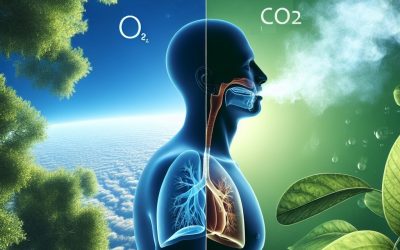
Oxygen is the third most abundant element in the universe and highly reactive forming compounds with almost all the other elements Basic Information Discovery Sources The Ozone Layer Uses of Oxygen Living Organisms Oxygen rich combustion Fuel Cells Cell Structure Absorption Lines Emission Lines Oxygen Basic Information Classification: non-metal Atomic Mass: 15.99 u Density: 1.429 g/l Colour: None Boiling Point: 90.188 K (-182.962°C) Melting Point: 54.36 K (-218.79°C) Discovery Oxygen was discovered in 1774 by English chemist Joseph Priestly, which he isolated by heating mercuric oxide (HgO). Sources Oxygen is the third most abundant element in the universe and highly reactive forming compounds with almost all the other elements. At the creation of earth it combined with silicon to create our crust, hydrogen to create water and it makes up 20.8 % of the air in atmosphere. The Ozone Layer Ozone is an allotrope (an allotrope is another form of an element for example graphite and diamond are allotropes of carbon) of oxygen with the chemical symbol O3. In our upper atmosphere the ozone layer protects the inhabitants of earth from harmful U.V. rays released by the sun. Ozone layer is also found much closer to the earth’s surface where its effects can cause respiratory problems for people especially those who suffer from asthma etc. Uses Living Organisms Oxygen is necessary for all life. It is used by every cell in living organisms, except somatic cells (sperm and egg cells), to produce the energy they require through aerobic...
Nuclear Fusion
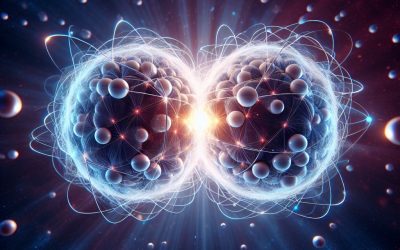
Nuclear Fusion is the name given to the the event when the nuclei of two atoms combine creating a new heavier atomic nucleus. What is Nuclear Fusion? Overcoming the Electromagnetic Force Nuclear Fusion in Stars Energy Production through Nuclear Fusion What is Nuclear Fusion? Nuclear Fusion is a phenomenon where by the nucleus of two atoms fuse together creating a new heavier atomic nucleus. When two relatively small atomic nuclei have very high energies they are able to bond or fuse together making larger atoms. The atomic nuclei require a lot of energy to overcome the effects of the electromagnetic force before it is possible for nuclear fusion to occur. Overcoming the Electromagnetic Force Normally the electromagnetic force causes atomic nuclei to repel each other due to their positive charge, much like the same poles on a magnet. Electromagnetic force which causes the repulsive action quadruples as the distance between the two protons halves. This means that it takes a lot of energy to get these two protons, and two nuclei together. If they are able to get close enough another fundamental force, The Strong Force, comes into play and this force is much stronger than the electromagnetic force. It is the force that holds all nucleons together but they must be within one femtometres (the nucleus of an average atom is 4 femtometres in diameter). A = The Nucleus of the atom contains the protons and neutrons. Despite accounting for the majority of an atom’s mass, the nucleus procures a minute proportion of the total space. The Diameter of the nucleus is approximately 4 femtometres or 4...

Nitrogen Cycle
The Nitrogen cycle refers to the process that recycles nitrogen on earth ensuring this important commodity remains abundant. What is the Nitrogen Cycle? Nitrogen Cycle in Plants Nitrogen Cycle in Animals Nitrogen Cycle in Aquatic Life What is the Nitrogen Cycle? The Nitrogen cycle refers to the process that recycles nitrogen on earth ensuring this important commodity remains abundant. For healthy growth, plants need a good supply of nutrients and the most important of these is nitrogen. If these nutrients are depleted from the soil plant life is unable to thrive so maintaining a healthy nutrient rich soil is very important for both the plants and animals that depend on them. Nature can continue to thrive via recycling these valuable nutrients through various processes. Nitrogen is recycled throughout life forms in a process known as the Nitrogen Cycle. (Environmental Protection Agency All EPA images are in the public domain) Nitrogen Cycle in Plants Plants are unable to take up nitrogen in its basic form but instead they can use compounds of nitrogen such as nitrates and ammonia which are general produced by microorganisms in the soil and around the roots of legumes. The microorganism use an enzyme called Nitrogenase to convert the nitrogen into ammonia. The enzyme does not work with oxygen and so these bacteria have adapted the parts of the cells required for nitrogen fixing (conversion of nitrogen into nitrogen compounds) to ensure anaerobic conditions exist. Nitrogen Cycle in Animals Plants take up nitrate ions from the soil through their roots and use these nitrates...

Nitrogen
Nitrogen is the most abundant gas in our atmosphere making up approximately 78% with 21% oxygen, 0.93% argon, and rest is made up other various gases. Basic Information Discovery of Nitrogen Sources of Nitrogen Uses of Nitrogen Liquid Nitrogen The Nitrogen Cycle Atmospheric Nitrogen Causing Aurora Nitrogen’s Cell Structure Absorption Lines of Nitrogen Emission Lines of Nitrogen Nitrogen (from the Latin words “nitron” meaning native soda and “gene” meaning from) Classification: Non-Metallic Atomic Mass: 14.0067 g/mol Density: 1.251g/l Colour: No Colour Boiling Point: 77.36K (-195.79°C) Melting Point: 63.05K (-210.1°C) Critical Temperature: 126.2K (-146.9°C) Discovery of Nitrogen Discovered by Scottish Physician Daniel Rutherford in 1772. Rutherford isolated nitrogen when he was studying carbon dioxide. Sources Nitrogen is the most abundant gas in our atmosphere making up approximately 78% with 21% oxygen, 0.93% argon, 0.039% carbon dioxide and 0.031% makes up other various gases. Nitrogen is obtained from the fractional distillation of liquefied air. This process requires the air to be cooled to -200°c so it becomes a liquid. The Liquefied air is then pumped into a chamber where the temperature increases by several degrease. When the air reaches -190°c the nitrogen in the air boils and becomes a gas once more separating into the top chamber. The remaining liquid is a mixture of Liquid oxygen with a small amount of liquid argon. These two are then separated in a second chamber through the same process. Uses Liquid Nitrogen is nitrogen gas that has been cooled sufficiently enough for it to revert to...

Meteorology – Understanding Weather
Meteorology is the study of weather; its patterns, causes and effects. The Study of meteorology has enabled us to predict the weather with remarkable accuracy. Temperature variations Airflow and Winds Rain The Water Cycle Evaporation Sublimation Transpiration Condensation Clouds Temperature variations Based on data from the World Meteorological Organization temperatures on dry land range from -89.2˚C (-128.6˚F), recorded at Vostok Station in Antarctica, to 56.7˚C (136.4˚F), recorded at Death Valley in the US. Temperatures in the ocean vary from around 36˚C (96.8˚F) in the Persian Gulf to -2˚C (28.5˚F) Antarctic waters (water on the deep ocean is between 0 to 3˚C). This means that temperatures on land vary by approximately 68˚C (with an average of 16˚C) while oceans vary 38˚C (with an average of 17˚C). Airflow and Winds Temperature variations are the main source of the winds that drive the movement of rain clouds and create hurricanes. As the hot and cold air attempt to equalise it moves and this creates the winds. When these temperature variations are extreme the hot and cold air encircle each other creating a cyclone When atoms or molecules are supplied with heat energy they move around and the more energy supplied the more they move. This movement causes the molecules to take up more space than their colder counterparts. The illustration above shows the relationship between the increase in temperature (energy) and the motion of the air molecules. The molecules do not move in such a uniform pattern but as shown they do take up more space when supplied with heat energy....