So, the big question that keeps popping into our heads: could there be life out there, beyond Earth? It’s a natural curiosity, isn’t it? And the short answer, while not a definitive “yes,” is that the universe is so vast and the building blocks for life are so common that it’s becoming increasingly plausible. We’re not talking about little green men zipping around in flying saucers just yet, but the scientific evidence is pointing towards a real possibility of microbial life, and who knows what else, existing elsewhere.
What Do We Mean by “Life”?
Before we start hunting for aliens, it’s worth defining what we’re even looking for. When scientists talk about life elsewhere, they’re generally thinking about life as we know it – that is, carbon-based organisms that require liquid water. This is because carbon is incredibly versatile, forming complex molecules, and water is an excellent solvent, facilitating the chemical reactions necessary for life to arise and thrive.
However, it’s also important to acknowledge that life could exist in forms we haven’t even imagined. Perhaps silicon-based life, or life that uses a different solvent than water. These are more speculative, but the possibility does exist and is something scientists are keeping in mind. For now, though, focusing on carbon-based life in liquid water gives us a concrete starting point for our search.
The Ingredients for Life: Are They Common?
The good news is that the fundamental ingredients needed for life, as we understand it, are found everywhere in the universe.
Carbon and Other Elements
Carbon, nitrogen, oxygen, hydrogen – these are some of the most abundant elements in the cosmos. They’re forged in stars and scattered throughout galaxies when those stars die. So, the raw materials are definitely not in short supply. Think of it like this: if you’re baking a cake, you need flour, sugar, and eggs. If those ingredients are readily available in every supermarket, then the potential for cake-making is pretty high, everywhere. The universe is like a giant pantry filled with those essential ingredients.
Water, Water Everywhere?
Liquid water is the next crucial element. We’ve discovered that water is more common in the universe than we once thought. It’s found as ice on planets and moons within our own solar system, and as vapor in the atmospheres of distant exoplanets. The real challenge is finding places where that water exists in liquid form, which typically requires a certain temperature range.
Icy Moons in Our Solar System
Within our own solar system, there are a few compelling candidates: Jupiter’s moon Europa and Saturn’s moon Enceladus are prime examples. Both are thought to have vast oceans of liquid water beneath their icy shells.
- Europa: Its surface is crisscrossed with cracks and ridges, suggesting geological activity and movement of the ice. Beneath that, models indicate a deep ocean that could be warmed by tidal forces from Jupiter. The presence of salts detected on its surface hints at interaction between the ocean and its rocky seafloor, which could provide necessary minerals.
- Enceladus: This moon actively sprays water plumes into space, which gives us a direct way to sample its subsurface ocean. Analysis of these plumes has revealed salts, organic molecules, and even silica nanoparticles, which are signs of hydrothermal activity on its ocean floor. This is incredibly exciting because hydrothermal vents on Earth are havens for life, thriving in the absence of sunlight.
Mars: The Red Planet’s Past Prowess
Mars is another place that sparks interest, particularly for its past. Evidence strongly suggests that Mars once had liquid water on its surface, with ancient riverbeds, lakebeds, and even a possible ocean. While it’s much colder and its atmosphere is thinner now, there’s still a possibility of liquid water existing underground, perhaps in briny pockets.
Energy Sources: Keeping Life Going
Life needs energy to function. On Earth, most life gets its energy from the Sun through photosynthesis, or from chemical reactions.
Photosynthesis and Chemosynthesis
- Photosynthesis: This process uses sunlight to convert carbon dioxide and water into energy. For other planets to support life using photosynthesis, they would need a star and a suitable orbit where liquid water can exist.
- Chemosynthesis: This is where life uses chemical reactions to produce energy. This is the type of energy source that fuels life around hydrothermal vents on Earth’s ocean floor. This opens up possibilities for life on subsurface ocean worlds like Europa and Enceladus, where sunlight doesn’t penetrate.
Stable Environments: A Home for Life
Beyond just having the ingredients, life needs a relatively stable environment to emerge and evolve. This means having a place that isn’t constantly being bombarded by radiation or experiencing extreme temperature fluctuations.
Planetary Atmospheres
A substantial atmosphere can help regulate temperature, shield the surface from harmful radiation, and even provide protection from smaller meteoroids. Earth’s atmosphere is a perfect example of this.
Magnetic Fields: Cosmic Bodyguards
A planetary magnetic field acts like a shield, deflecting charged particles from the star (like solar wind) that could strip away an atmosphere and be harmful to life.
The Search for Exoplanets: Looking for New Homes
In recent decades, our ability to find planets outside our own solar system, known as exoplanets, has exploded. Telescopes like Kepler and now the James Webb Space Telescope are revolutionising our understanding of these distant worlds.
How We Find Exoplanets
We don’t typically “see” exoplanets directly. Instead, we infer their presence using a few clever techniques:
The Transit Method
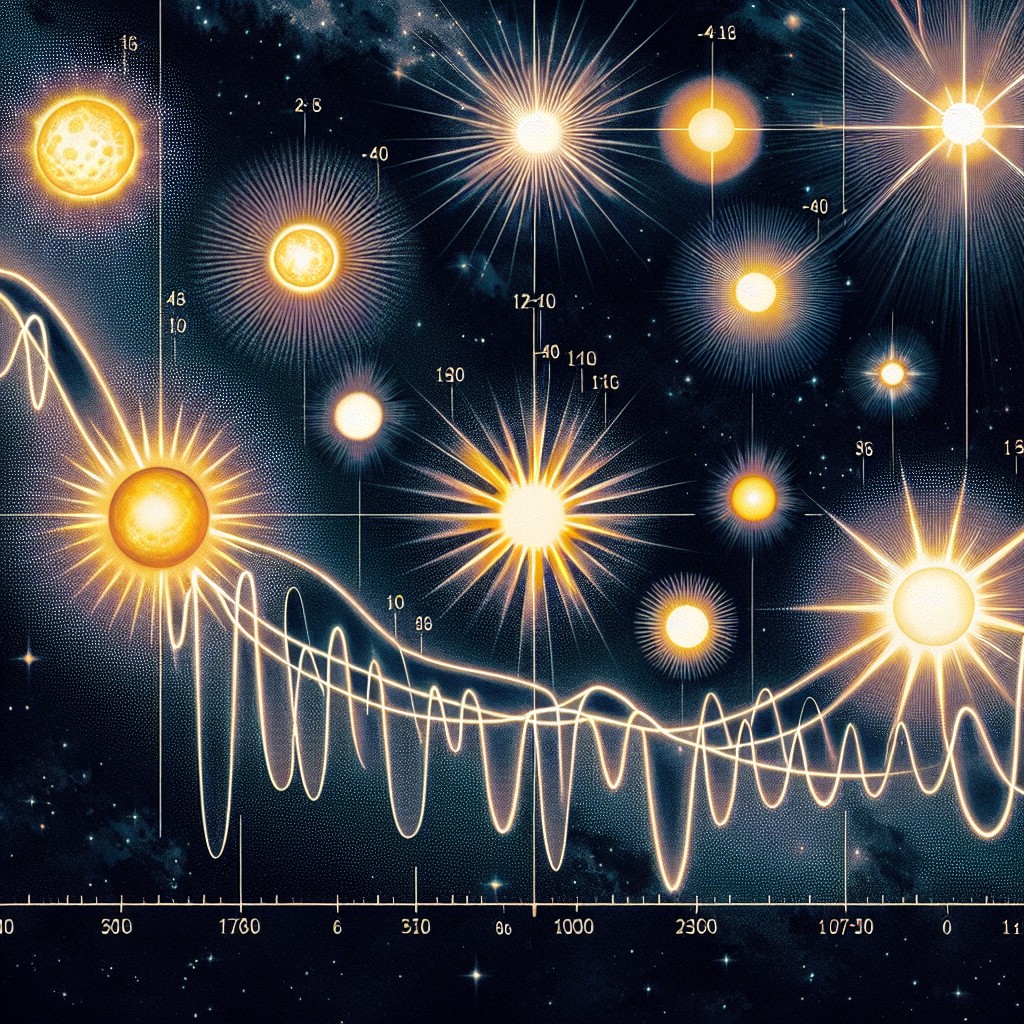
This is the most common method. When an exoplanet passes in front of its star from our perspective, it causes a slight dip in the star’s brightness. By measuring these dips, we can deduce the planet’s size and its orbital period (how long it takes to go around its star).
The Radial Velocity Method (Wobble Method)
As a planet orbits a star, its gravity causes the star to wobble slightly. We can detect this wobble by observing tiny shifts in the star’s light spectrum. This helps us estimate the planet’s mass.
The Habitable Zone: The Goldilocks Principle
When we talk about exoplanets, the concept of the “habitable zone” often comes up. This is the region around a star where temperatures are just right for liquid water to exist on a planet’s surface. It’s like the Goldilocks zone – not too hot, not too cold, but just right.
Factors Beyond the Habitable Zone
It’s important to remember that the habitable zone is a simplified concept. Factors like the planet’s atmosphere, its geological activity, and the type of star all play a role in whether liquid water can actually exist. A planet in the habitable zone of a very active star, for instance, might not be able to hold onto water if its atmosphere is constantly being eroded.
Studying Exoplanet Atmospheres: A Peek Inside
The really exciting part is when we can start to analyse the atmospheres of exoplanets. This is where the James Webb Space Telescope is truly excelling. By studying the light that passes through an exoplanet’s atmosphere as it transits its star, we can identify the gases present.
Biosignatures: The Fingerprints of Life
Scientists are looking for “biosignatures” – gases or combinations of gases in an exoplanet’s atmosphere that are strongly indicative of biological activity. For example, finding both oxygen and methane in significant quantities together is interesting because on Earth, these gases are produced by different biological processes and tend to destroy each other. Their co-existence suggests a constant biological source is replenishing them.
Other potential biosignatures include gases like nitrous oxide, phosphine (though its presence on Venus is debated), or even complex organic molecules.
Are We Alone? The Statistical Argument
Given the sheer scale of the universe, it’s almost statistically improbable that Earth is the only place where life has arisen.
The Drake Equation: A Framework for Thinking
While it’s not a precise calculation, the Drake Equation is a famous thought experiment that tries to estimate the number of advanced civilisations in our galaxy with which we might be able to communicate. It involves multiplying several factors, such as the rate of star formation, the fraction of stars with planets, the average number of planets per star that can potentially support life, the fraction of those planets that actually develop life, the fraction of planets with life that develop intelligent life, the fraction of civilisations that develop advanced technology, and the average lifespan of such a civilisation.
- The Unknowns: The biggest challenge with the Drake Equation is that many of these factors are currently unknown or highly speculative. We’re getting better data on some of them (like the number of planets), but others (like the fraction of planets that develop life) are pure guesswork.
The Vastness of Space
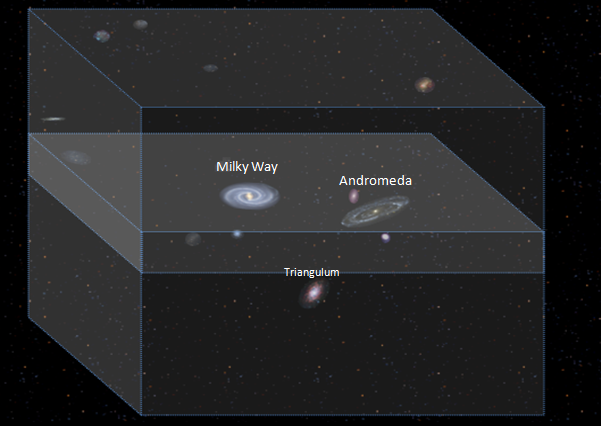
Consider this: our Milky Way galaxy alone is estimated to contain 100 to 400 billion stars. And there are potentially trillions of galaxies in the observable universe. Even if the chance of life arising on any given planet is incredibly small, the sheer number of potential locations makes it likely that life has emerged elsewhere.
The Fermi Paradox: If Life is Common, Where Is Everyone?
This brings us to the Fermi Paradox, named after physicist Enrico Fermi. If the universe is teeming with life, and potentially advanced civilisations, why haven’t we seen any evidence of them?
Possible Explanations for the Silence
There are many proposed solutions to the Fermi Paradox:
The Great Filter
This theory suggests that there’s some kind of “great filter” – a barrier or challenge that life needs to overcome – that makes intelligent, spacefaring civilisations extremely rare. This filter could be in our past (meaning life rarely gets beyond microbial stages) or in our future (meaning advanced civilisations tend to self-destruct).
Rare Earth Hypothesis
This hypothesis argues that the specific conditions that allowed life to arise and evolve on Earth are extremely rare, making Earth a unique or near-unique planet. This includes factors like our Moon’s stabilising influence, our planet’s specific size and position, and the presence of plate tectonics.
We Haven’t Looked Hard Enough (Yet)
It could simply be that we haven’t been searching for long enough or in the right way. Our current methods for detecting life, especially microbial life, are still in their infancy. For example, sending probes to other star systems is incredibly challenging due to the immense distances involved.
Advanced Civilisations Are Too Far Away or Not Interested
Perhaps advanced civilisations are out there, but they are so far away that their signals haven’t reached us yet, or they simply have no interest in contacting us. They might be observing us from afar, or have transcended physical communication methods as we understand them.
They Are Here, But We Don’t Recognise Them
Another idea is that alien life, particularly if it’s very alien, might be so different from us that we wouldn’t even recognise it as life, or they might be observing us in ways we can’t detect.
The Future of the Search
The search for extraterrestrial life is a continuously evolving field. With new technologies and a deeper understanding of the universe, we’re getting closer to answering this age-old question.
Continued Exoplanet Discovery and Characterisation
Telescopes like the James Webb Space Telescope will continue to discover and characterise exoplanets, looking for those in habitable zones and analysing their atmospheres for biosignatures. Future telescopes are already planned that will have even greater capabilities for detecting smaller, Earth-like planets and analysing their atmospheres in more detail.
Probes to Icy Moons and Mars
Missions to places like Europa and Enceladus are on the horizon, with the goal of directly searching for signs of life in their subsurface oceans. Mars exploration will also continue, with a focus on searching for past or present microbial life.
SETI and Beyond
The Search for Extraterrestrial Intelligence (SETI) continues its work, listening for radio signals from other civilisations. While we haven’t detected anything yet, the ongoing improvements in radio astronomy and the sheer number of stars being monitored mean the search is more promising than ever.
Ultimately, the question of whether life exists elsewhere is one of the most profound we can ask. While we don’t have a definitive answer yet, the scientific evidence is increasingly suggesting that the universe is a vast and dynamic place, and it would be quite extraordinary if Earth were the only place where life found a foothold. The journey of discovery is ongoing, and it’s an incredibly exciting time to be contemplating these possibilities.
FAQs
1. What is the possibility of life existing elsewhere in the universe?
There is a strong possibility that life could exist elsewhere in the universe. Scientists have discovered thousands of exoplanets, some of which are located in the “habitable zone” where conditions could be suitable for life to exist.
2. What are the conditions necessary for life to exist on other planets?
The conditions necessary for life to exist on other planets include the presence of liquid water, a stable atmosphere, and a source of energy. These conditions are similar to those found on Earth, where life thrives.
3. What evidence supports the idea of extraterrestrial life?
There is evidence to support the idea of extraterrestrial life, including the discovery of organic molecules in space, the potential for microbial life on Mars, and the existence of extremophiles on Earth that can survive in extreme conditions similar to those found on other planets.
4. How do scientists search for signs of extraterrestrial life?
Scientists search for signs of extraterrestrial life by studying exoplanets for habitable conditions, analyzing the atmospheres of distant planets for signs of life, and searching for microbial life in our own solar system, such as on Mars or the moons of Jupiter and Saturn.
5. What are the implications of discovering extraterrestrial life?
The discovery of extraterrestrial life would have profound implications for our understanding of the universe and our place in it. It could provide insights into the origins of life, the potential for life to exist in diverse environments, and the possibility of communicating with other intelligent beings.