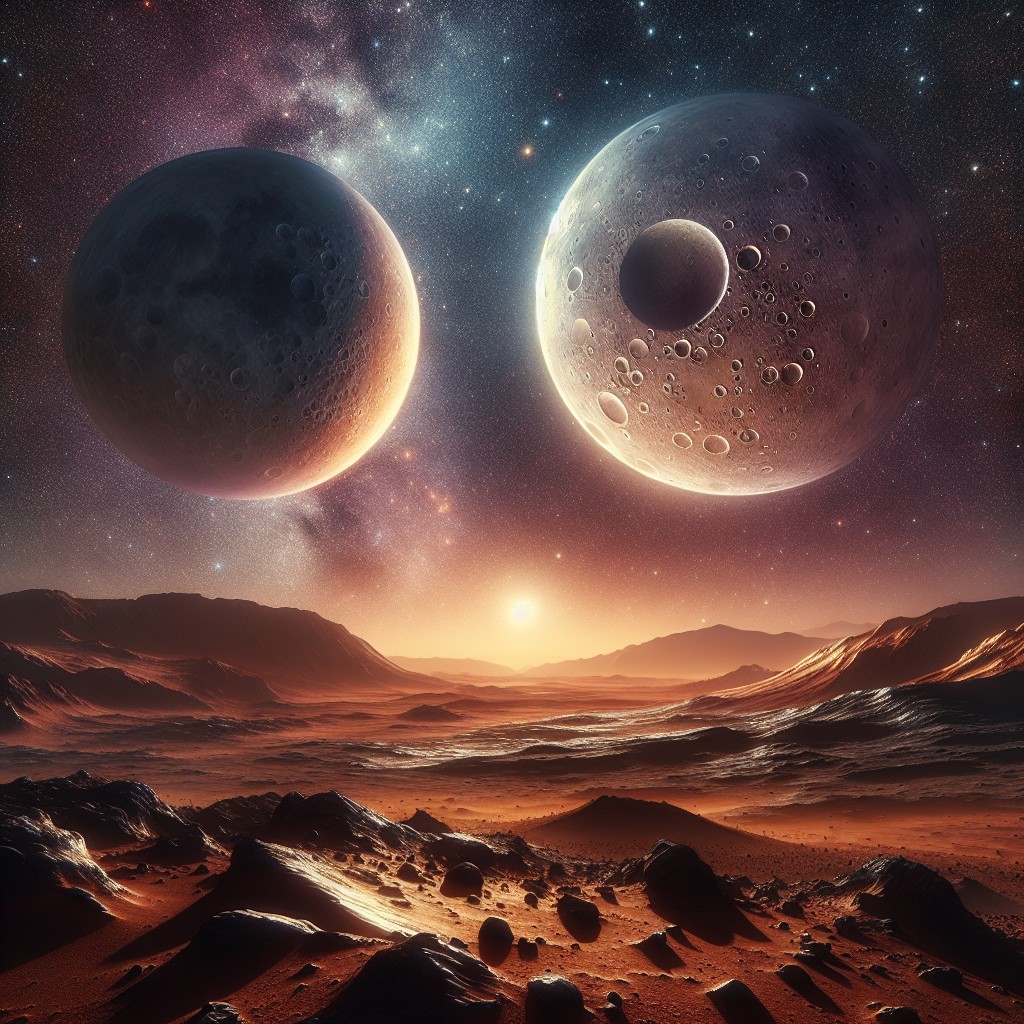
So, you’re wondering what an exoplanet is? Simply put, an exoplanet is any planet located outside of our Solar System. We used to think our corner of the universe was unique, but it turns out there are a whole lot of other planetary systems out there, many with planets that are truly mind-boggling in their diversity. These days, finding an exoplanet isn’t particularly rare; it’s practically routine. The real challenge, and the truly exciting part, is figuring out what these distant worlds are actually like.
Why Do We Care About Exoplanets?
Well, primarily because they offer us a fresh perspective on our own place in the universe. Are we unique? Is Earth a cosmic anomaly, or are there countless other habitable worlds out there? Exoplanets are the key to answering these huge questions. By studying them, we learn more about how planetary systems form and evolve, the conditions necessary for life, and just how common (or uncommon) life might be beyond our own planet. It’s about expanding our understanding of the cosmos, one distant world at a time.
Spotting a tiny planet orbiting a faraway star is no easy feat. Imagine trying to see a firefly buzzing around a lighthouse from hundreds of miles away – that’s roughly the scale we’re talking about. We can’t just point a telescope and see them directly in most cases. Instead, we rely on clever indirect methods that infer their presence.
The Transit Method: Watching a Star Wink
This is probably the most successful and well-known method. It’s a bit like watching a tiny insect fly across a bright light bulb.
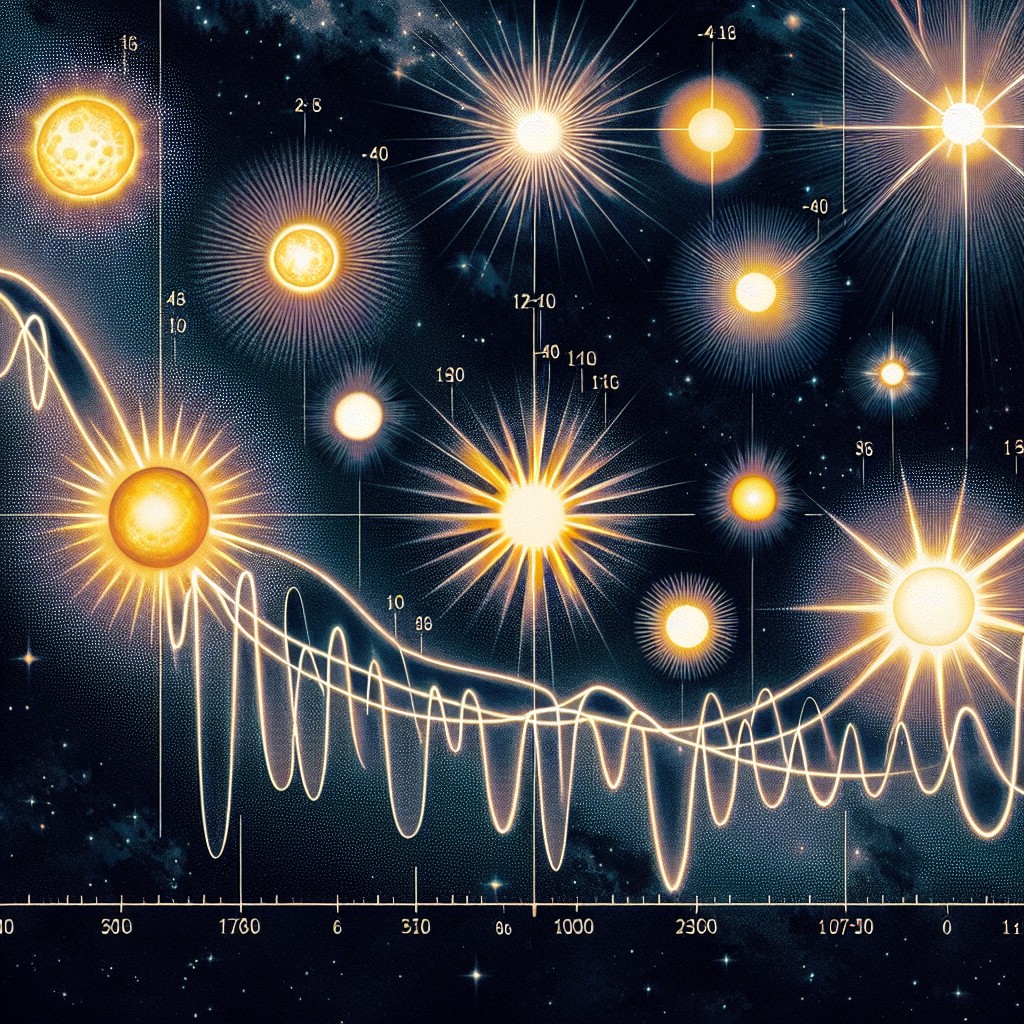
- How it works: When an exoplanet passes directly in front of its host star from our perspective, it causes a slight, temporary dip in the star’s brightness. This dip is usually very small, perhaps only a fraction of a percent, but it’s detectable with sensitive instruments.
- What it tells us: The amount of dip tells us the planet’s size relative to its star. The time it takes for the transit to repeat tells us the planet’s orbital period (how long its “year” is), and from that, we can calculate its distance from the star. If we detect multiple transits, it gives us confidence that we’re seeing an orbiting planet.
- Limitations: This method only works if the planet’s orbit is perfectly aligned with our line of sight. If the planet doesn’t pass directly between us and the star, we won’t see a transit. It also works best for larger planets orbiting relatively close to their star, as they cause a more noticeable dip.
The Radial Velocity Method: The Stellar Wobble
This method relies on the gravitational tug-of-war between a star and its orbiting planets. Even though a star is much more massive, a planet’s gravity still has a subtle effect.
- How it works: As a planet orbits a star, its gravity pulls on the star, causing the star to “wobble” slightly. This wobble changes the star’s light that we observe due to the Doppler effect – much like the pitch of an ambulance siren changes as it moves towards or away from you. When the star wobbles towards us, its light is shifted slightly to the blue end of the spectrum (blueshift). When it wobbles away, its light shifts to the red end (redshift).
- What it tells us: The amount of redshift or blueshift tells us the star’s velocity change, which in turn allows us to calculate the planet’s minimum mass. The period of the wobble tells us the planet’s orbital period.
- Limitations: This method is more sensitive to massive planets orbiting close to their stars because they exert a stronger gravitational tug. It can also be challenging to distinguish a planetary wobble from other stellar activities.
Direct Imaging: Catching Them Red-Handed (Sometimes)
This is exactly what it sounds like – actually taking a picture of an exoplanet. It’s incredibly difficult, but when it works, it’s spectacular.
- How it works: Imagine trying to spot a tiny glowworm next to a powerful searchlight. Stars are incredibly bright, and planets are relatively dim and very close to their parent star from our perspective. Specialized instruments, like coronagraphs, are used to block out the overwhelming light of the star, allowing the much fainter planet to be seen. Adaptive optics also helps by correcting for distortions caused by Earth’s atmosphere.
- What it tells us: Direct imaging provides visual confirmation and can offer insights into the planet’s atmosphere and composition if we can analyse its light. We can often get a sense of its orbital path over time.
- Limitations: This method is predominantly successful for very large, very hot (and thus very bright in infrared light), and very widely separated planets, typically young gas giants, orbiting relatively young stars. Most exoplanets are too small, too dim, and too close to their star to be directly imaged with current technology.
Other Clever Techniques
While less common, these methods also contribute to our exoplanet catalogue:
- Gravitational Microlensing: This uses the gravity of a foreground star (or planet) to magnify the light of a background star. If an orbiting planet is present, it can cause an additional, shorter boost in brightness, revealing its presence. It’s a bit like using a cosmic magnifying glass.
- Astrometry: This method involves precisely measuring the tiny shifts in a star’s position on the sky caused by the gravitational tug of an orbiting planet. It requires extremely precise measurements over long periods.
What Are Exoplanets Made Of?
The variety of exoplanets we’ve discovered is truly astounding, far exceeding the modest diversity in our own Solar System. They are generally categorised by their size and composition, and often differ wildly from the gas giants and rocky planets we’re familiar with.
Gas Giants: Beyond Jupiter
We’ve found plenty of planets reminiscent of Jupiter and Saturn, but often in extraordinary configurations.
- Hot Jupiters: These are gas giants orbiting incredibly close to their stars, often completing an orbit in just a few Earth days. They are superheated, with scorching temperatures, and present a puzzle to planetary formation theories since gas giants were thought to form much further out. Their existence challenges our understanding of how planets migrate.
- Eccentric Gas Giants: Many gas giants have highly elliptical orbits, unlike the nearly circular orbits of Jupiter and Saturn. This can lead to extreme seasonal variations and dramatic temperature swings.
Super-Earths and Mini-Neptunes: Our Most Common Neighbours
These are by far the most common types of exoplanets discovered so far, and we don’t have direct analogues in our own Solar System.
- Super-Earths: These are rocky planets, like Earth, but more massive – typically between 1 and 10 times Earth’s mass. Their density suggests they’re solid. Some might have thick atmospheres or even oceans.
- Mini-Neptunes: These are smaller than Neptune but larger than Earth, with substantial atmospheres of hydrogen and helium, possibly overlying a rocky or icy core. They likely don’t have well-defined solid surfaces.
Ocean Worlds, Lava Worlds, and Eyeball Planets: The Exotics
The sheer number of exoplanets means a huge range of conditions and thus, a huge range of potential compositions and appearances.
- Ocean Worlds: Some super-Earths or even mini-Neptunes might be entirely covered in deep oceans, with water making up a significant fraction of their mass. This contrasts with Earth, where water is a tiny fraction of our planet’s mass.
- Lava Worlds: Planets orbiting extremely close to their stars can have surfaces constantly molten with oceans of lava. Metals might rain down from their atmosphere.
- Eyeball Planets: If a planet is tidally locked (always showing the same face to its star), one side is perpetually hot and lit, while the other is in eternal darkness and cold. The habitable zone might exist in a ring around the terminator (the line between light and dark), potentially forming an “eyeball” shape with an ice cap on the dark side and a molten side facing the star.
- Diamond Planets: While speculative, some exoplanets with high carbon content and specific formation conditions could theoretically have vast quantities of diamond.
The Search for Habitable Worlds: Is Anyone Else Out There?
This is arguably the most compelling aspect of exoplanet research. We’re not just looking for any planet, but specifically for those that resemble Earth enough to potentially host life.
Defining “Habitable”
It’s a bit of a tricky word. When astronomers talk about habitable, they usually mean a planet where liquid water could potentially exist on its surface. Liquid water is considered essential for life as we know it.
The Goldilocks Zone (or Habitable Zone)
- Just right: This is the region around a star where temperatures are neither too hot (boiling away water) nor too cold (freezing it solid). It’s the “just right” spot.
- Many variables: The size and brightness of the star dictate where its habitable zone lies. A hotter, brighter star will have a habitable zone further out, while a cooler, dimmer star will have it closer in.
- More than just distance: While crucial, being in the habitable zone isn’t the only factor. A planet also needs an atmosphere to retain heat and pressure, and a magnetic field to protect against stellar radiation. The composition of the atmosphere also plays a huge role. For example, Venus is within the Sun’s habitable zone, but its runaway greenhouse effect makes it uninhabitable.
The Most Promising Candidates
We’ve found several exoplanets that tick some of the right boxes, though none are perfect Earth twins yet.
- Proxima Centauri b: Orbiting our closest stellar neighbour, Proxima Centauri, this rocky planet is in its star’s habitable zone. However, its host star is a red dwarf, which can be prone to powerful flares that could strip away an atmosphere.
- TRAPPIST-1 System: This system features seven Earth-sized exoplanets orbiting a very dim red dwarf star, with several located within its habitable zone. It’s a goldmine for further study, as we can potentially study their atmospheres.
- Kepler-186f: This was one of the first Earth-sized planets found in the habitable zone of a star, a red dwarf similar to TRAPPIST-1. It’s roughly 500 light-years away.
Looking for Biosignatures: The Next Frontier
Finding a planet in the habitable zone is only the first step. The real prize is finding evidence that life actually exists on one of these worlds.
What Are Biosignatures?
These are chemical “fingerprints” in a planet’s atmosphere or on its surface that suggest the presence of life.
- Oxygen and Methane: On Earth, the vast amounts of oxygen in our atmosphere are primarily produced by life (photosynthesis). Methane is also produced by biological processes. Finding these two gases together in significant quantities in an exoplanet’s atmosphere would be a strong indicator of life, as they typically react with each other and wouldn’t persist without a constant biological source.
- Other Gases: Other potential biosignatures include ozone, water vapour, or even certain combinations of molecules that are difficult to explain through purely geological processes.
How Do We Detect Them?
- Spectroscopy: When an exoplanet transits its star, a tiny fraction of the star’s light passes through the planet’s atmosphere. By analysing how this light changes (which wavelengths are absorbed), we can infer the chemical composition of the atmosphere. Different molecules absorb light at different, unique wavelengths, leaving tell-tale “signatures.”
- Future Telescopes: Current telescopes like the James Webb Space Telescope (JWST) are pushing the boundaries of what we can detect. Future extremely large telescopes on Earth and specialised space missions will be even more powerful, allowing us to find fainter signals and analyse the atmospheres of smaller, potentially Earth-like planets.
The Future of Exoplanet Research
| Exoplanets Explained | Metrics |
|---|---|
| Number of Exoplanets Discovered | Over 4,000 |
| First Exoplanet Discovered | 51 Pegasi b in 1995 |
| Methods of Detection | Transit method, Radial velocity method, Direct imaging, Gravitational microlensing, Astrometry |
| Exoplanets in the Habitable Zone | Over 50 |
We are undeniably living in a golden age of exoplanet discovery, and the future holds even more exciting possibilities.
More Advanced Telescopes
- Ground-based Giants: Telescopes like the European Extremely Large Telescope (ELT) and the Thirty Meter Telescope (TMT) will have mirrors so large they can collect vast amounts of light, enabling more detailed atmospheric studies and even direct imaging of smaller planets.
- Space-based Observatories: Missions beyond JWST are being planned, designed for specific exoplanet observations, perhaps with coronagraphs powerful enough to block starlight even more effectively, or instruments sensitive to a wider range of biosignatures.
Characterisation, Not Just Discovery
The focus is shifting from simply finding exoplanets to thoroughly characterising them. We want to know their mass, size, density, atmospheric composition, temperature, and even weather patterns. This detailed information is crucial for understanding their formation, evolution, and potential for harbouring life.
The Search for “Technosignatures”
As our understanding grows, some researchers are starting to look not just for biosignatures (evidence of primitive life) but for “technosignatures” – evidence of advanced technological civilisations. This could include things like artificial lights on a planet, unusual atmospheric compositions that can’t be explained naturally, or even strange radio signals. While highly speculative, it’s a fascinating avenue of research.
In essence, exoplanets have transformed our understanding of the universe. What was once science fiction is now daily news. We’ve gone from speculating about other worlds to actively cataloguing and studying them, bringing us closer than ever to answering that profound question: are we truly alone? The cosmos is vast, and the sheer diversity of exoplanets suggests that anything is possible. It’s an incredibly exciting time to be looking up.
FAQs
What are exoplanets?
Exoplanets, or extrasolar planets, are planets that orbit stars outside of our solar system. They can be rocky, gaseous, or icy in nature and vary in size and composition.
How are exoplanets discovered?
Exoplanets are discovered through various methods, including the transit method (observing a planet passing in front of its star), the radial velocity method (detecting the wobble of a star caused by an orbiting planet), and direct imaging using powerful telescopes.
How many exoplanets have been discovered so far?
As of now, over 4,000 exoplanets have been confirmed, with thousands more awaiting confirmation. These discoveries have been made by space telescopes such as Kepler and ground-based observatories.
What can exoplanets tell us about the universe?
Studying exoplanets can provide valuable insights into the formation and evolution of planetary systems, as well as the potential for habitability and the search for extraterrestrial life. They also help scientists understand the diversity of planetary types beyond our own solar system.
Are there any exoplanets that could support life?
Some exoplanets are located within the “habitable zone” of their stars, where conditions may be suitable for liquid water to exist on their surfaces. These planets, known as “potentially habitable exoplanets,” are of particular interest in the search for extraterrestrial life.