Explore the World Through Geography, Natural Resources & Daily History
Clear, reliable and engaging guides that help you understand our planet — from UK geography education to global natural resources and On This Day history events.
Explore, discover, and learn about the wonders of our world! At Earth Site, we’re passionate about bringing geography, history, and science to life for curious minds of all ages. Whether you’re delving into historical events, uncovering the mysteries of the natural world, or seeking interactive resources, you’re in the right place.
Here, you can uncover the stories behind historical events, explore the natural wonders of our planet, and gain valuable insights into how the Earth’s systems shape our daily lives. From the towering peaks of mountain ranges to the far-reaching impacts of human innovation, we aim to make every topic both engaging and informative.
Start your journey of discovery with us today, and let’s make learning an adventure!
What We Cover
Earth Site brings together engaging and accessible educational content designed to help you understand the world, its history, and its natural systems.
🌍 Geography Education (UK & Worldwide)
We publish clear, easy-to-understand geography resources for students, teachers and curious learners. Our guides support geography education in the UK and cover physical geography, climate, ecosystems, population, and global development.
⛏️ Natural Resources & Environmental Geography
Explore detailed country profiles covering natural resources, mining, energy, geology and global environmental challenges. We show how nations manage minerals, water, land and ecosystems, and why these resources matter.
📅 On This Day in History
Every day has a story. Our On This Day history series features major events, anniversaries, traditions, and cultural milestones from around the world — with timelines, context, and fun facts.
TIMELINE
The Complete History of Prussia Explained
So, what exactly is the history of Prussia? In short, it’s the story of a small, seemingly insignificant medieval state that evolved into a major European power, eventually becoming the driving force behind the unification of Germany. It’s a tale of military might, shrewd diplomacy, religious shifts, and profound cultural impact, all unfolding over several centuries. From its humble origins to its ultimate dissolution, Prussia left an indelible mark on the Continent. Prussia’s roots are surprisingly medieval and distinctly crusader-like. You see, the land that would become Prussia wasn’t initially German. It was inhabited by various Baltic tribes, most notably the Old Prussians, who had their own polytheistic beliefs and distinct culture. The Baltic Crusades and the Teutonic Order’s Arrival The story really kicks off in the 13th century. At this time, Christian Europe was keen on expanding its influence and converting “heathens” on its borders. The Pope called for crusades against these Baltic pagans, and a prominent Catholic military order, the Teutonic Knights, answered the call. Founded during the Crusades in the Holy Land, the Teutonic Knights had a fierce reputation for military prowess and a strong organisational structure. They had a bit of a knack for, shall we say, acquiring territory. Establishing the Monastic State In 1226, Duke Konrad I of Masovia, a Polish prince, invited the Teutonic Knights to help him subdue the Old Prussians, who were frequently raiding his lands. It was a classic “be careful what you wish for” scenario. The Knights, with the Holy Roman Emperor’s blessing and papal support, didn’t just help Konrad; they took over. Over the next few decades, through...
The Witch Trials of Essex: Fear and Superstition in Early Modern England
Alright, let’s talk about the Essex Witch Trials. If you’re wondering what they were all about, in a nutshell, they were a series of intense persecutions and legal proceedings against individuals accused of witchcraft in Essex, England, primarily during the 16th and 17th centuries. It was a time when fear, religious fervour, and societal anxieties created a potent cocktail, leading to tragic and widespread accusations. A Time of Fear and Uncertainty To really get what was going on, you’ve got to understand the backdrop. Early Modern England was a pretty tumultuous place. It was a time of huge social upheaval. The Protestant Reformation, for example, had turned religious life upside down, leaving people feeling pretty uncertain about God and the devil. Superstition wasn’t just a quirky belief; it was a deeply ingrained part of everyday life. People genuinely believed in the supernatural, and that included witches and their supposed dark powers. Life for most people was hard. If your crops failed or your livestock got sick, or even if your child fell ill, there wasn’t a doctor to call or an insurance policy to claim on. People looked for answers, and often, those answers involved a scapegoat. The devil was seen as a very real force, battling for souls, and witches were his agents on Earth. It gave a kind of terrifying logic to inexplicable misfortunes. Why Essex? An Unlikely Epicentre You might wonder why Essex, out of all places, became such a hotbed for witch trials. It’s a fair question. While witchcraft accusations cropped up all over England, Essex consistently stands out in the historical records for the...
The East India Company and the Industrial Revolution
So, how did the East India Company (EIC), that most famous of trading behemoths, actually influence Britain’s leap into the Industrial Revolution? It’s not a simple story of factories suddenly appearing. Instead, the EIC played a surprisingly crucial, albeit often overlooked, role by providing capital, raw materials, and new markets that indirectly, and sometimes directly, fuelled Britain’s transformative period. Think of it less as building the first steam engine and more as supplying the coal, finding the customers, and ultimately, shaping the economic landscape that allowed such innovations to flourish. The EIC’s Deep Pockets: Fuelling the Fire One of the most significant contributions of the East India Company was its ability to generate vast amounts of wealth. Through its extensive trade networks, particularly in cotton textiles, spices, and later opium, the EIC accumulated immense capital. This wasn’t just small change; it was serious money that found its way into the British economy, acting as a powerful lubricant for industrial development. Where Did All That Money Come From? The EIC’s profits stemmed from a multi-pronged approach. They dominated the import of luxury goods and essential commodities from India, creating a substantial trade surplus in Britain’s favour. This surplus was effectively a transfer of wealth from India to Britain. The Textile Titan: India’s Pre-Industrial Output Before Britain’s own mills started churning out fabric on a mass scale, India was the undisputed global leader in textile production. The EIC’s primary business revolved around importing incredibly fine and intricately woven cotton and silk from India. These goods were highly prized in Europe and commanded significant prices, generating enormous profits for the Company. This...
Why Sweden Is One of the World’s Cleanest Energy Economies
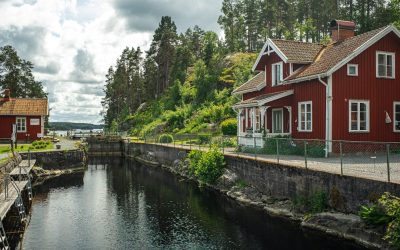
So, why is Sweden really making waves when it comes to clean energy? It boils down to a few core things: a genuinely long-term vision, smart investments, and a public that’s pretty much on board. They’ve been actively working towards reducing their reliance on fossil fuels for decades, not just as a trendy idea, but as a fundamental part of their national strategy. This isn’t just about ticking boxes; it’s about creating a sustainable future and a robust economy. It’s a multi-faceted approach, and the results speak for themselves. Sweden’s journey towards a clean energy economy isn’t an overnight success story. It’s built on a foundation of historical resourcefulness and a deep understanding of their environment. Think about it – for centuries, Sweden has relied heavily on its natural resources, from forests for timber and paper to its abundant water for hydroelectric power. This inherent connection to the land fostered an early appreciation for managing these resources wisely. Hydroelectric Power: The Backbone One of the earliest and most significant contributors to Sweden’s clean energy mix is hydroelectric power. The country’s numerous rivers and lakes have been harnessed for electricity generation for over a century. This provided a reliable and largely emission-free source of power, laying a crucial groundwork for later renewable energy expansion. While the most significant expansion of hydropower happened in the mid-20th century, Sweden has been careful to manage its existing facilities. The focus now often shifts to increasing efficiency and minimising environmental impact rather than building vast new dams. Nuclear Power: A Controversial but Clean Component Sweden’s approach to nuclear power is a bit more complex....
Russia’s Arctic Expansion and the New Geopolitical Race
The Arctic is rapidly becoming a new geopolitical hotspot, and Russia is undoubtedly at the forefront of this shift. In short, Russia is actively expanding its military presence, economic interests, and scientific research in its vast Arctic territories, driven by a combination of strategic resource potential, national security concerns, and the opportunities presented by a melting ice cap. This isn’t just about flags and claims; it’s a calculated, long-term strategy with significant global implications. Let’s cut to the chase: the Arctic isn’t just a cold, remote place anymore. It’s a treasure trove of resources and a potential game-changer for international shipping. Untapped Resources Below that icy surface lies a massive amount of untapped wealth. We’re talking about an estimated 13% of the world’s undiscovered oil and 30% of its undiscovered natural gas, according to the US Geological Survey. Beyond hydrocarbons, there are significant reserves of rare earth minerals, metals, and even diamonds. For Russia, a nation whose economy is heavily reliant on oil and gas, securing these resources is a top priority for its future energy security and export potential. This isn’t just about current needs; it’s about future generations’ economic stability. The Northern Sea Route Perhaps even more immediately impactful than the resources is the Northern Sea Route (NSR). As the Arctic ice melts, this shipping lane along Russia’s northern coast is becoming increasingly viable for longer periods of the year. Shorter Shipping Times For ships travelling between Europe and Asia, the NSR is considerably shorter than the traditional Suez Canal route – often cutting transit times by up to 15 days. This translates directly to lower fuel...
Which Presidents Owned Slaves? A Historical Examination
When you look back at the founding of the United States, and indeed much of its early history, a rather uncomfortable truth emerges: a significant number of the men who shaped the nation were slave owners. It’s a complex and often painful subject, but understanding it is crucial to grasping the full picture of American history. So, to answer the main question directly, the first twelve US Presidents, from George Washington through to Zachary Taylor, all owned enslaved people at some point in their lives, with the exception of the 11th President, James K. Polk, who inherited enslaved people but did not personally buy or sell them. The Founding Fathers and the Peculiar Institution The very bedrock of American ideals – liberty, equality – was built in a society where the enslavement of human beings was deeply entrenched. This contradiction permeates the nation’s founding documents and the lives of its leaders. It wasn’t a fringe practice; it was woven into the economic and social fabric of the time, particularly in the Southern states. Many of the men who debated and signed the Declaration of Independence and the Constitution were themselves slaveholders. Washington: The Reluctant Master George Washington, the first President and often hailed as the “Father of His Country,” is perhaps the most prominent example. He inherited enslaved people from his father and expanded his holdings through marriage and purchases. At Mount Vernon, his plantation, hundreds of enslaved men, women, and children laboured under his ownership. Mount Vernon’s Complex Reality It’s important to note that Washington’s relationship with slavery was, in some ways, complex for his era. While he...
The Most Powerful AI Systems Ever Created and What They Can Do
So, what are the most powerful AI systems we’ve seen so far, and what can they actually do? In simple terms, the ‘most powerful’ AI systems right now are primarily large language models (LLMs). Think of them as incredibly sophisticated prediction engines, trained on vast amounts of text and code. They’re not conscious or sentient in the way we understand it, but their ability to process, understand, and generate human-like text and other forms of data is what makes them stand out. From writing poems to helping diagnose diseases, the applications are already broad and rapidly expanding, hinting at a future where AI plays an even more integrated role in our lives. When we talk about powerful AI, we’re usually referring to systems that demonstrate a significant jump in capability or performance compared to previous iterations. It’s not just about speed; it’s about the complexity of tasks they can tackle and the quality of their output. The “power” comes from a combination of factors that are constantly evolving. Massive Datasets: The Fuel for Intelligence Imagine trying to learn a new language by only reading a few sentences. It wouldn’t get you very far, would it? AI systems, especially LLMs, are trained on colossal datasets. We’re talking about petabytes of information scraped from the internet, books, code repositories, and more. This sheer volume allows them to learn intricate patterns, nuances, and relationships within the data. Scale of Data: The datasets used are often comparable to the entire contents of libraries or the vast majority of publicly available text on the internet. This sheer scale is a key differentiator. Data Quality:...
The Partisans and Resistance Movements in Wartime Yugoslavia
Right, so you’re wondering about the Partisans and the resistance movements in wartime Yugoslavia? In a nutshell, they were an incredibly effective and diverse force that played a massive role in kicking the Axis powers out of the country during World War II. It wasn’t just one single group; it was a complex web of defiance that involved a huge chunk of the population, and their story is a pretty remarkable one, far from the simple ‘good versus evil’ narratives you sometimes hear. When the Axis invaded Yugoslavia in April 1941, things went south pretty quickly. The royal government was overthrown, and the country was carved up and occupied by Nazi Germany, Fascist Italy, Hungary, and Bulgaria. It was a brutal occupation, and resistance wasn’t just a patriotic duty; it was often a matter of survival. People weren’t going to just sit back and let their country be destroyed. Initial Uprisings Almost immediately after the invasion, sporadic acts of rebellion started popping up. These weren’t necessarily organised at first, more like spontaneous outbursts against the occupiers. People were angry, scared, and determined not to be subjugated. These early acts, while small, set the stage for what was to come. The Communist Party’s Role The Communist Party of Yugoslavia, led by Josip Broz Tito, was already a well-established organisation despite being banned. They had a clear vision and were prepared to act. While other groups also resisted, the Communists were arguably the most organised and ideologically driven from the outset. They saw the invasion as an opportunity to not only fight the occupiers but also to push for a radical...
The Geography of Angola and Its Strategic Importance
Angola’s geography plays a critical role in its strategic importance, primarily due to its extensive coastline, rich natural resources, and its location within Southern Africa. This makes it a significant player in regional politics, global energy markets, and international trade. Angola boasts a formidable Atlantic coastline spanning approximately 1,600 kilometres (nearly 1,000 miles). This extensive stretch of ocean frontage is a cornerstone of its strategic value, offering numerous benefits and opportunities. Deep-Water Ports and Maritime Trade The presence of natural deep-water ports along Angola’s coast is a significant geographical asset. Unlike many other African nations, Angola doesn’t struggle with shallow harbours that limit the size of vessels that can dock. This allows for the accommodation of large cargo ships and oil tankers, facilitating efficient international trade. Luanda: As the capital and largest city, Luanda boasts the country’s primary port. It’s a key logistical hub for importing goods and exporting petroleum, minerals, and agricultural products. Its strategic location makes it a vital gateway for accessing the wider Central and Southern African markets. Lobito: Further south, Lobito offers another crucial deep-water port. Historically, it served as the western terminus for the Benguela Railway, connecting Angola’s coast with the copper belt regions of the Democratic Republic of Congo (DRC) and Zambia. While the railway’s full potential has been hampered by past conflicts and infrastructure challenges, its presence underscores Lobito’s enduring strategic importance as a potential trade corridor. Cabinda: Although an exclave, Cabinda’s port is critical for its substantial oil production. Its accessibility, despite its geographical isolation from the rest of Angola, allows for direct export of crude oil, bypassing the need for...
The Collapse of the Soviet Union and the End of the Cold War
So, what actually happened when the Soviet Union fell apart and the Cold War fizzled out? It wasn’t a single bang, but more of a gradual unraveling caused by a mix of internal pressures and external realities that the Soviet system just couldn’t handle anymore. Think of it like a building that’s been neglected for decades: the cracks start to show, then spread, until eventually, it becomes unsustainable. The Seeds of Discontent: Internal Weaknesses The Soviet Union, for all its superpower posturing, was built on some pretty shaky foundations. When you peel back the propaganda, you see a system struggling with fundamental issues for a long, long time. The Economic Strain This is probably the big one. The Soviet planned economy was brilliant at mobilising resources for specific goals, like space exploration or military hardware. But it was terrible at producing the everyday goods people actually wanted and needed. The Arms Race Drain: Imagine pouring a massive chunk of your national budget into weapons and defence year after year. The US, with its more dynamic and diverse capitalist economy, could sustain this for longer. The USSR, with its less efficient system, was bleeding money, and it showed in empty shelves and shoddy consumer goods. They were essentially trying to outspend a wealthier rival, and it was a losing game. Technological Lag: While they had pockets of brilliance, the overall Soviet technological base lagged behind the West in many key areas, especially in computing and information technology. This made their economy even less competitive and their ability to innovate limited. The Black Market Boom: Because the official economy couldn’t deliver,...
Calvin Coolidge: Silent Cal and the Roaring Twenties
Alright, let’s dive into Calvin Coolidge, a man often misunderstood yet deeply connected to the vibrant, and sometimes turbulent, 1920s. If you’re wondering what Coolidge was all about, especially with that “Silent Cal” nickname, the simplest way to put it is this: he was a quiet, principled Republican president who believed in limited government, fiscal prudence, and letting businesses flourish. He led America during an era of significant economic boom and cultural change, often taking a backseat and letting the good times roll, which, for many, was exactly what they wanted after the Progressive Era and World War I. Calvin Coolidge was a bit of a contrast to many of his political contemporaries. He wasn’t one for grand speeches or flamboyant gestures. His persona was built on New England stoicism and a deep-seated belief in traditional American values. A Modest Upbringing Born in Plymouth Notch, Vermont, in 1872, Coolidge’s roots were firmly in rural America. His father was a farmer, storekeeper, and held various local offices, instilling in young Calvin a sense of hard work and civic duty. This humble background shaped his cautious approach to governance and his appreciation for practical solutions over ideological stances. From Local Politics to the Governor’s Mansion Coolidge’s political career started at the local level in Northampton, Massachusetts. He steadily climbed the ranks, serving as a city councilman, city solicitor, and state legislator. His big break came during the 1919 Boston Police Strike. As Governor of Massachusetts, Coolidge famously declared, “There is no right to strike against the public safety by anybody, anywhere, anytime.” This firm stance garnered him national attention and solidified...
Life in the Soviet Union: What Was It Really Like?
Life in the Soviet Union: What Was It Really Like? You’ve probably heard a lot about the Soviet Union – the Cold War, red flags, and all that. But what was it really like to live there, day in and day out? It wasn’t all bread queues and gulags, but it certainly wasn’t a walk in the park either. The reality was a complex mix of state control, shared experiences, and individual coping mechanisms. It depended heavily on when you lived, where you lived, and your social standing. Life for the average Soviet citizen was largely dictated by the state. This meant a predictable rhythm, but also a distinct lack of personal choice in many areas. Housing: The Communal Living Experience One of the most striking features of Soviet life was housing. Private home ownership wasn’t the norm. Instead, most people lived in state-allocated apartments. Khrushchyovkas: These are perhaps the most iconic Soviet housing blocks. Built in the late 1950s and early 1960s, they were a hastily constructed solution to the severe post-war housing shortage. Think small, functional, five-storey buildings with tiny kitchens and bathrooms, often shared with neighbours. They weren’t built for comfort, but for expediency. The name comes from Nikita Khrushchev, who initiated the mass construction program. Communal Apartments (Kommunaalnye Kvartiry): Particularly in older, larger buildings in cities, families might share an apartment with other families. Each family would have a private room, but the kitchen, bathroom, and hallways were communal. This could lead to friction and a definite lack of privacy. Imagine negotiating cooking times and cleaning rota with several other households. Waiting Lists: Getting your...