Explore the World Through Geography, Natural Resources & Daily History
Clear, reliable and engaging guides that help you understand our planet — from UK geography education to global natural resources and On This Day history events.
Explore, discover, and learn about the wonders of our world! At Earth Site, we’re passionate about bringing geography, history, and science to life for curious minds of all ages. Whether you’re delving into historical events, uncovering the mysteries of the natural world, or seeking interactive resources, you’re in the right place.
Here, you can uncover the stories behind historical events, explore the natural wonders of our planet, and gain valuable insights into how the Earth’s systems shape our daily lives. From the towering peaks of mountain ranges to the far-reaching impacts of human innovation, we aim to make every topic both engaging and informative.
Start your journey of discovery with us today, and let’s make learning an adventure!
What We Cover
Earth Site brings together engaging and accessible educational content designed to help you understand the world, its history, and its natural systems.
🌍 Geography Education (UK & Worldwide)
We publish clear, easy-to-understand geography resources for students, teachers and curious learners. Our guides support geography education in the UK and cover physical geography, climate, ecosystems, population, and global development.
⛏️ Natural Resources & Environmental Geography
Explore detailed country profiles covering natural resources, mining, energy, geology and global environmental challenges. We show how nations manage minerals, water, land and ecosystems, and why these resources matter.
📅 On This Day in History
Every day has a story. Our On This Day history series features major events, anniversaries, traditions, and cultural milestones from around the world — with timelines, context, and fun facts.
TIMELINE
Why Does the United States Want Greenland?
So, why does the United States have such an interest in Greenland? The simple, immediate answer is that Greenland, despite being geographically closer to Canada, holds significant geopolitical, economic, and strategic value that the US has recognised for a long time. It’s not a new fascination, but rather a long-standing consideration with renewed relevance in the modern world. The idea of the US acquiring Greenland isn’t some recent, whimsical thought. It’s been floated around for well over a century, which might surprise some. Early Inquiries and Perceptions Back in 1867, US Secretary of State William Seward, known for orchestrating the Alaska purchase, reportedly expressed interest in Greenland, alongside Iceland. He saw the strategic value of Arctic territories even then. Fast forward to 1946, and President Truman actually offered Denmark $100 million for the island. The Danes politely declined, but the interest was clearly there, rooted in more than just a fleeting notion. This historical context is vital; it highlights that the US views Greenland not as a sudden opportunity, but as a consistent point of strategic importance. World War II Significance During World War II, Greenland became incredibly important. When Denmark was occupied by Nazi Germany, the US took on the responsibility of defending Greenland, establishing military bases there. This was primarily to prevent its use by the Axis powers and to protect shipping lanes in the North Atlantic. This period cemented Greenland’s role as a vital outpost for US security and projecting power across the Atlantic. It demonstrated, in a very practical sense, why control or strong influence over Greenland mattered. Geopolitical Advantage: A Strategic Chess Piece Greenland’s...
The Future of Russian Oil Exports: Asia, Europe, and Global Energy Markets
Russia’ FAQs What are the current trends in Russian oil exports? Russian oil exports are currently shifting towards Asia, with China becoming a major importer of Russian oil. This trend is driven by the growing energy demand in Asia and Russia’s efforts to diversify its export markets. How does the future of Russian oil exports look like in Asia? The future of Russian oil exports in Asia looks promising, with Russia aiming to strengthen its energy ties with countries like China, India, and Japan. The development of new pipelines and infrastructure projects will further facilitate the growth of Russian oil exports to Asia. What is the outlook for Russian oil exports to Europe? Russian oil exports to Europe are expected to remain significant, as Europe continues to be a major market for Russian oil. However, geopolitical tensions and the European Union’s efforts to diversify its energy sources may impact the future of Russian oil exports to Europe. How do Russian oil exports impact global energy markets? Russian oil exports have a significant impact on global energy markets, as Russia is one of the world’s largest oil producers. The dynamics of Russian oil exports influence global oil prices and supply, and any changes in Russian oil exports can have ripple effects on the global energy landscape. What are the challenges and opportunities for the future of Russian oil exports? Challenges for the future of Russian oil exports include geopolitical tensions, competition from other oil-producing countries, and the need for continued investment in infrastructure. However, opportunities lie in the growing energy demand in Asia, potential for new partnerships, and advancements in...
The Future of Climate Science: Breakthroughs That Could Change Everything
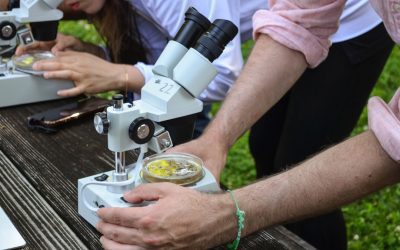
So, what’s next for climate science? It might sound a bit daunting, but honestly, it’s a field buzzing with innovation. The breakthroughs aren’t just about more complex models; they’re about genuinely new ways of understanding, predicting, and even tackling the challenges of our changing planet. Think of it as moving from just diagnosing the illness to developing some really promising treatments. We’re talking about things that could fundamentally shift how we approach climate change, making our efforts more effective and, dare we hope, more successful. Climate science has always been about piecing together a colossal, intricate puzzle. For decades, we’ve relied on sophisticated computer models to simulate the Earth’s systems, but these models are only as good as the data we feed them and the understanding we have. The real game-changer here is the explosive growth of artificial intelligence (AI) and machine learning (ML). These aren’t just buzzwords; they’re tools that are allowing us to see patterns and connections in climate data that were previously invisible or too complex for humans to discern. Supercharging Climate Models Traditional climate models are often computationally intensive, requiring massive supercomputers and taking weeks to run. AI and ML are starting to speed this up dramatically. By learning from vast datasets – think decades of satellite imagery, atmospheric readings, and oceanographic data – AI can help build more efficient and accurate models. It’s like having a super-analyst who can process information at a speed and scale far beyond human capability. Predictive Power Boost One of the key areas where AI is making a difference is in improving the accuracy and resolution of climate predictions....
Which European Countries Are Most Vulnerable to Climate Change?
Okay, so you’re wondering which European countries are really feeling the heat when it comes to climate change. It’s a pretty unavoidable topic these days, and frankly, some parts of Europe are definitely more exposed than others. The short answer is that countries with long coastlines, significant reliance on agriculture, and those situated in warmer or more arid regions tend to be the most vulnerable. Think of the Mediterranean, the low-lying delta regions, and areas already prone to extreme weather events. It’s not a case of one-size-fits-all, but rather a mosaic of interconnected risks. Southern Europe: The Sun-Baked Frontline Southern Europe, with its famously warm climate, is unfortunately also on the frontline of many climate change impacts. The Mediterranean basin, in particular, is a hotspot for rising temperatures and changing rainfall patterns. Heatwaves and Health Risks We’re already seeing more frequent and intense heatwaves across countries like Spain, Italy, Greece, and Portugal. These aren’t just inconveniently warm spells; they have serious consequences. Increased mortality: Older people, young children, and those with pre-existing health conditions are particularly at risk during prolonged periods of extreme heat. Hospitals can become overwhelmed, and public health systems are stretched thin. Workplace dangers: Outdoor workers, especially in sectors like agriculture and construction, face significant health hazards. Adapting working hours and providing adequate protection are becoming increasingly crucial. Impact on daily life: Simple things like going for a walk or enjoying outdoor activities become difficult and potentially dangerous. This affects tourism, local economies, and the overall quality of life. Water Scarcity and Drought Another major concern for Southern Europe is the dwindling availability of fresh water....
The Orange Revolution Explained: Ukraine’s Political Turning Point
Right, let’s get into the nitty-gritty of the Orange Revolution. If you’re wondering what it was, in a nutshell, it was a series of protests and political events in Ukraine during late 2004 that ultimately led to the annulment of a rigged presidential election and a rerun vote. It was a pretty big deal, marking a significant shift in Ukraine’s post-Soviet trajectory towards a more democratic, European future. Imagine a country where the stakes are incredibly high, and the upcoming presidential election feels like it could genuinely steer its future trajectory. That’s pretty much where Ukraine was in 2004. The election was a showdown between two very different visions for the nation. The Contenders: Two Worlds Apart On one side, you had Viktor Yanukovych, the incumbent Prime Minister. He was widely seen as the pro-Russian, establishment candidate, backed by the sitting President Leonid Kuchma. His support base was largely concentrated in the industrial east and south of Ukraine, regions with strong historical ties to Russia. Then, there was Viktor Yushchenko, an opposition leader and former Prime Minister. He was campaigning on a platform of closer ties with the West, democratic reforms, and tackling widespread corruption. His support was strongest in the western and central parts of Ukraine, which leaned more towards Europe. The First Round: Setting the Stage The initial round of voting in October 2004 didn’t produce a clear winner, so it went to a run-off. This was always going to be the crunch point, where the real battle would be fought. Both sides knew it, and so did the international community. The Second Round and the Suspicions...
What Is Artificial Intelligence? A Simple Scientific Explanation
So, what exactly is Artificial Intelligence, or AI? At its heart, it’s about creating machines that can do things we normally associate with human intelligence – things like learning, problem-solving, and making decisions. It’s not about robots taking over the world (at least, not yet!), but about building smart systems that can process information and act on it in useful ways. Understanding the Core Idea Think of it this way: when you learn to ride a bike, you try, you fall, you adjust, and eventually, you get the hang of it. AI aims to replicate that kind of learning process in computers, albeit in a very different way. It’s about giving machines the ability to perceive their environment, reason about it, and then take actions to achieve specific goals. Is It Really “Intelligence”? This is where things get a bit philosophical, and honestly, there’s no single, universally agreed-upon answer. If we define intelligence as consciousness and self-awareness, then no, current AI isn’t intelligent in that human sense. However, if we define intelligence as the ability to perform tasks that typically require human cognitive abilities, then yes, AI is certainly stepping into that realm. It’s a tool, a highly sophisticated one, designed to augment our own capabilities. It’s not magic, though sometimes it can feel like it! AI systems are built using a combination of sophisticated algorithms, massive amounts of data, and powerful computing hardware. The approach to building an AI often depends on the specific problem it’s trying to solve. The Power of Data: Training Your AI One of the most influential ways we teach AI is through machine...
The History of Jerusalem and Why It Is So Contested
Jerusalem’s story is one of ancient beginnings, profound spiritual significance, and unfortunately, a persistent and often violent struggle for control. It’s a city that has drawn people from across the globe for millennia, not just for its physical beauty but for the deep, foundational beliefs it represents to Judaism, Christianity, and Islam. This enduring allure, combined with its strategic location, is precisely why Jerusalem remains one of the most intensely contested places on Earth. Jerusalem’s origins aren’t precisely a single ‘eureka’ moment, but rather a gradual emergence from scattered settlements into a place of consequence. The earliest evidence of habitation points to habitation as far back as the Chalcolithic period, around 3500 BCE. These were likely small, agricultural communities. The Jebusites and the Dawn of a City Walls Before it was a name etched in religious texts, Jerusalem was known to its inhabitants, the Jebusites. They established a fortified settlement on the eastern hill, a location that offered natural defensibility. It was this Jebusite stronghold that King David famously captured, laying the groundwork for something far grander. The strategic advantage of the hilltop, with its access to water, was evident even then. David and Solomon: The First Temple and the Golden Age The biblical narrative marks King David as the one who brought Jerusalem under Israelite control, around 1000 BCE. He made it the capital of his United Kingdom, a political and spiritual hub. His son, Solomon, then built the First Temple, a monumental structure that solidified Jerusalem’s status as the centre of Jewish faith and national identity. This era is often viewed as a golden age, a period...
International Recognition of Palestine: Which Countries Support Statehood?
So, you’re wondering which countries actually recognise Palestine as an independent state, right? It’s a pretty straightforward answer for the majority, but understanding the nuances is where it gets interesting. The good news is, quite a lot of countries have already done this. We’re talking about a significant chunk of the world’s nations that officially acknowledge the State of Palestine. A Quick Overview: The Big Picture Let’s get this out of the way: the vast majority, over 130 countries, officially recognise Palestine as a sovereign state. This means they see it as a legitimate country, independent of Israeli occupation, with defined borders (generally understood to be pre-1967 borders) and a government representing its people. This isn’t just a symbolic gesture; it has implications for diplomatic relations, international law, and participation in international bodies. However, this broad recognition doesn’t paint the whole picture. There are some high-profile absences from this list, which often leads to confusion. These are primarily Western nations, including key players like the United States, the United Kingdom, and France, who haven’t formally recognised Palestine yet. Their reasons are complex and often tied to ongoing peace processes and their own foreign policy considerations. Where Does the Support Come From? Broad Strokes The countries that recognise Palestine span every continent and represent a wide range of political and economic systems. It’s not just a bloc of like-minded nations; you’ll find countries from South America, Africa, Asia, and parts of Europe on the list. This widespread acknowledgment highlights a global consensus among a large portion of the international community regarding the Palestinian right to self-determination and statehood. The historical...
The Soviet Invasion of Afghanistan Explained
Let’s dive into the Soviet invasion of Afghanistan, a pivotal event with long-lasting global repercussions. In short, the Soviet Union invaded Afghanistan in December 1979 to prop up the embattled communist government there, which was facing widespread opposition and rebellion. They aimed to prevent the collapse of this ideologically aligned regime, which they saw as crucial to regional stability and their own national security interests. However, what they anticipated as a swift intervention turned into a decade-long quagmire. To understand why the Soviets felt compelled to intervene, we need to look at the precarious political situation in Afghanistan throughout the 1970s. It wasn’t a sudden decision; rather, it was the culmination of escalating instability and a series of leadership changes that deeply concerned Moscow. Daoud Khan’s Rise and Fall In 1973, Mohammed Daoud Khan, a cousin of King Zahir Shah, overthrew the monarchy in a bloodless coup, establishing the Republic of Afghanistan. Initially, Daoud pursued closer ties with the Soviet Union, receiving military and economic aid. However, he gradually began to pivot, seeking to reduce Afghanistan’s reliance on Soviet influence and forge stronger relationships with Western and Gulf states. This shift was viewed with suspicion by the Soviets, who had invested heavily in the country. The Saur Revolution and the PDPA The People’s Democratic Party of Afghanistan (PDPA), a communist party established in 1965, gained influence within the military and bureaucracy. On 27 April 1978, the PDPA, led by Nur Muhammad Taraki and Hafizullah Amin, launched a military coup known as the Saur Revolution (April Revolution). Daoud Khan and his family were killed, and the PDPA took power, declaring...
The Goliath Expedition: Karl Bushby’s Epic Journey Explained
So, what’s all the fuss about Karl Bushby and his ‘Goliath Expedition’? In simple terms, it’s a monumental undertaking to walk an unbroken path from the southernmost tip of South America to the northernmost point of mainland Europe. It’s not just a long walk; it’s a multi-decade, globe-spanning odyssey that has pushed the limits of human endurance and logistics. Think of it as a pedestrian circumnavigation of significant landmasses, but with a highly specific, continuous route. Karl Bushby isn’t your average rambler. This former British paratrooper from Hull, England, decided in 1998 to embark on what he calls the “Goliath Expedition.” His initial aim was to be the first person to walk an unbroken path from Punta Arenas, Chile, to Grimsby, England, without the aid of any kind of transport. He’s been at it for over two decades, facing challenges that would break most people. Humble Beginnings and Military Grit Bushby’s background in the Parachute Regiment equipped him with invaluable skills – resilience, discipline, and an ability to operate in challenging environments. These weren’t just useful; they were absolutely essential for what he was about to undertake. It’s fair to say that without that military training, this expedition would have ended long ago. He wasn’t born into wealth or privilege; he was a working-class lad with an extraordinary dream and the sheer bloody-mindedness to pursue it. The Spark of an Idea The idea for the walk wasn’t some sudden epiphany. It developed over time, fuelled by a desire for a truly epic adventure and a challenge that no one else had ever completed. He wanted to do something that...
Julius Caesar: The Man Who Changed Rome Forever
Julius Caesar truly left an indelible mark on Rome, reshaping its destiny in ways few others have. He wasn’t just a general or a politician; he was a force of nature who profoundly influenced the trajectory of the Roman Republic and laid the groundwork for the Roman Empire. His story is a captivating blend of ambition, genius, military prowess, and political intrigue that still fascinates us today. Born Gaius Julius Caesar in 100 BCE, his early life wasn’t exactly smooth sailing. He came from the venerable but by then less influential patrician gens Julia, who claimed descent from Aeneas, the legendary Trojan hero, and thus from the goddess Venus herself. While this gave him good lineage, his family wasn’t rolling in wealth or immediate political power like some of their contemporaries. A Risky Family Connection Caesar’s aunt, Julia, was married to Gaius Marius, a prominent general and influential figure in Roman politics. Marius was a leader of the Populares, a faction advocating for the common people, and frequently in conflict with the Optimates, who represented the senatorial aristocracy. This connection, while prestigious in some ways, became a liability when Marius lost power and his rival, Sulla, rose to dominance. During Sulla’s proscriptions – a brutal period of political purges – Caesar, a young man at the time, found himself in a precarious position. His ties to Marius made him a target, and he reportedly almost lost his life. He was ordered to divorce his wife, Cornelia, the daughter of a prominent Mariani supporter, but he refused. This act of defiance, though risky, showed an early streak of stubborn independence...
The Great Depression and How America Recovered
Right, let’s get straight to it. The Great Depression was a monumental economic collapse that hit the United States hard in the 1930s. It wasn’t just a tough patch; it was a decade of widespread poverty, unemployment, and sheer desperation. Recovery, though it felt painstakingly slow at the time, primarily came through a combination of President Franklin D. Roosevelt’s New Deal policies, which aimed to reform the financial system and provide relief, and ultimately, the massive mobilisation for World War II, which kick-started industrial production and created millions of jobs. It wasn’t a quick fix, but a gradual and often painful climb back. The Depression didn’t just appear out of nowhere. There were a number of factors brewing beneath the surface, and when they all converged, it created a perfect storm that shattered the American economy. Wall Street’s Crash and Its Ripple Effect Most people point to the Wall Street Crash of October 1929 as the starting gun for the Depression, and they’re not wrong, but it was more of a symptom than the root cause. When the stock market crashed, it wiped out billions of dollars in wealth overnight. This wasn’t just the rich losing money; many ordinary people had invested their savings, often on margin, meaning they’d borrowed heavily to buy shares. When the market tanked, they were left with debt and no assets. Loss of Confidence: The crash shattered public confidence in the economy. People stopped spending, businesses stopped investing, and a downward spiral began. Bank Runs: Fearing that banks would collapse, people rushed to withdraw their savings. Many banks, having invested heavily in the stock...