Ever wondered where rain comes from, or why your paddling pool seems to shrink even when the sun isn’t out? It all comes down to something we call the water cycle. Simply put, the water cycle describes how water continuously moves around, above, and below the Earth’s surface. It’s a bit like a circular journey, constantly recycling the same water we’ve had for billions of years. No water is ever truly lost; it just changes form and location.
At its core, the water cycle is the perpetual movement of water. It’s driven primarily by the sun’s energy and gravity. Water goes from liquid to gas, to solid, and back again, endlessly. This natural process is absolutely vital for life on Earth, regulating our climate and ensuring we have freshwater to drink, grow food, and keep our ecosystems thriving. Without it, our planet would be a very different, and much drier, place.
The Big Picture
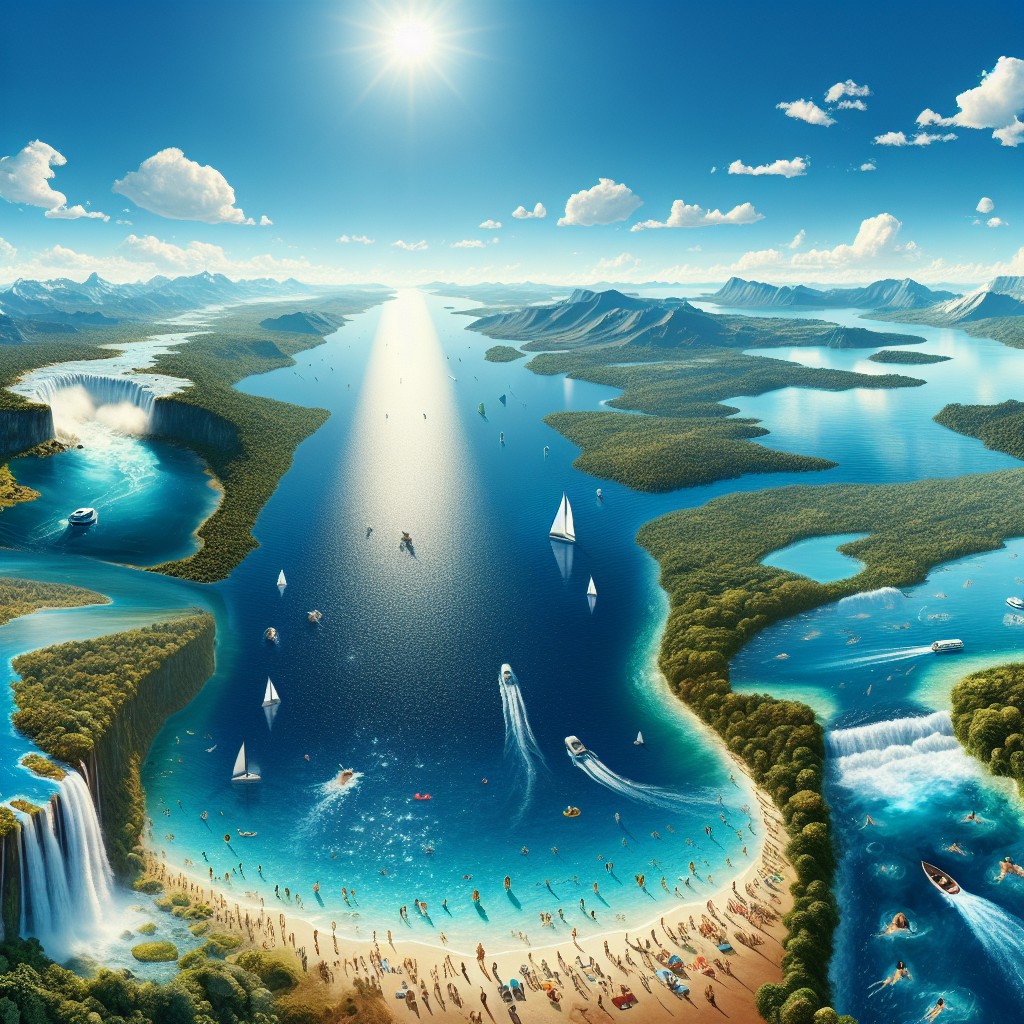
Imagine all the water on Earth – in the oceans, rivers, lakes, ice caps, and even in the air you breathe. The water cycle is the grand choreographer that moves all this water around. It’s a closed system, meaning the total amount of water on Earth pretty much stays the same. It just changes where it is and what form it’s in.
Why It Matters
Beyond providing us with a cuppa, the water cycle has a massive impact. It influences weather patterns, shapes landscapes through erosion, and distributes heat around the globe. It’s also critical for maintaining biodiversity and supporting all plant and animal life.
The Key Stages of the Water Cycle
While it’s a continuous loop, we can break the water cycle down into several main stages to make it easier to understand. Think of these as the main pit stops on water’s grand journey.
Evaporation: Up, Up, and Away
This is where it all often begins for a water molecule’s journey into the atmosphere. Evaporation is the process where liquid water turns into water vapour – a gas – and rises into the air.
How It Happens
- Sun’s Energy: The sun’s heat provides the energy needed for water molecules to gain enough speed to break free from the liquid state and become a gas. Think of a boiling kettle; the steam rising is water evaporating rapidly.
- From Where? Most evaporation occurs from the surface of oceans, seas, lakes, and rivers. Even puddles on the pavement evaporate!
- Invisible Gas: Water vapour is invisible to the naked eye. That “steam” you see from a kettle is actually tiny condensed water droplets, not the pure vapour itself.
Transpiration: Plants Get Thirsty Too
You might not immediately think of plants when you think of the water cycle, but they play a significant role through a process called transpiration.
Plant Sweat
- Water Absorption: Plants absorb water through their roots from the soil.
- Release into Air: This water then travels up the plant and is released as water vapour through tiny pores (stomata) on their leaves, almost like the plant is sweating.
- Big Contributor: While individual plants don’t release much, collectively, forests and vast areas of vegetation release massive amounts of water vapour into the atmosphere, especially in tropical regions.
Condensation: Forming Clouds
Once water vapour is in the atmosphere, it can’t stay there forever. As it rises higher, the air gets colder. This cooling leads to condensation.
From Gas to Liquid (or Solid)
- Cooling Down: As warm, moist air rises, it expands and cools.
- Dew Point: When the air cools to its dew point, the water vapour can’t remain a gas anymore. It begins to change back into tiny liquid water droplets or, if it’s cold enough, ice crystals.
- Cloud Formation: These minuscule droplets or crystals cling to even tinier particles in the air (like dust, pollen, or smoke, called condensation nuclei) and group together, forming visible clouds. Fog is essentially a cloud that has formed very close to the ground.
Precipitation: What Goes Up Must Come Down
Eventually, those little water droplets and ice crystals in the clouds get bigger and heavier. When they become too heavy for the air currents to hold them up, they fall back to Earth. This is precipitation.
Different Forms
- Rain: The most common form, where water falls as liquid drops.
- Snow: When temperatures in the cloud and near the ground are below freezing, water vapour turns directly into ice crystals, which fall as snowflakes.
- Sleet: A mix of rain and partially melted snow, or rain that freezes as it falls through a layer of freezing air near the ground.
- Hail: Formed in strong thunderstorms when updrafts carry raindrops high into very cold parts of the cloud, where they freeze and grow by collecting more supercooled water. They fall when they become too heavy.
Collection: Back to the Start (Almost)
Once water reaches the Earth’s surface as precipitation, it needs to go somewhere. This is the collection phase, bringing the water back into larger bodies of water or underground, ready to start its journey again.
Where Does It Go?
- Runoff: A significant portion of precipitation flows over the land surface as surface runoff. This water makes its way into streams, rivers, and eventually oceans, lakes, or reservoirs. Gravity is a big player here, always pulling water downhill.
- Infiltration (or Percolation): Some water soaks into the ground, a process called infiltration. It seeps down through the soil and rock layers.
- Groundwater: Water that infiltrates deeply enough can become groundwater, stored in underground layers called aquifers. This groundwater can slowly move through the ground, eventually emerging as springs or flowing into rivers and lakes, or being pumped up for human use.
- Oceans and Lakes: The largest collection points are our oceans and lakes, holding the vast majority of the Earth’s water.
- Ice and Snow Caps: In colder regions, precipitation can fall as snow and accumulate as ice sheets, glaciers, and snowpacks, storing water in a solid state for long periods. These can then melt, contributing to runoff.
How Humans Influence the Water Cycle
While the water cycle is a natural process, human activities can and do have a significant impact on its various stages. Understanding these impacts is crucial for managing our water resources sustainably.
Changes to Land Use
- Deforestation: When forests are cut down, it reduces transpiration (less water released by trees) and increases surface runoff. This can lead to drier local climates and a higher risk of flooding elsewhere, as the land can’t absorb as much water.
- Urbanisation: Replacing natural landscapes with concrete and asphalt stops water from soaking into the ground (infiltration). This dramatically increases surface runoff, contributing to urban flooding and reducing groundwater recharge.
- Agriculture: Irrigation for crops draws vast amounts of water from rivers, lakes, and groundwater, impacting local water levels and even causing land subsidence in some areas.
Pollution
- Water Contamination: Industrial waste, agricultural run-off (pesticides, fertilisers), and untreated sewage can pollute rivers, lakes, and groundwater, making water unusable for drinking or harming aquatic ecosystems.
- Atmospheric Pollution: Certain pollutants released into the air can affect cloud formation and even the acidity of precipitation (acid rain), which can damage plants and structures.
Climate Change
- Accelerated Cycle: Global warming is intensifying the water cycle. Warmer temperatures lead to more evaporation, which means more moisture in the atmosphere. This can result in more intense rainfall events in some areas and more severe droughts in others.
- Melting Ice: Rising temperatures are causing glaciers and ice caps to melt at an accelerated rate, contributing to rising sea levels and altering water availability in regions that rely on glacial meltwater for freshwater.
- Extreme Weather: We’re seeing more frequent and intense storms, floods, and droughts, all linked to the changes occurring within the water cycle due to climate change. This impacts water security, food production, and human settlements.
Water Storage: Where it All Sits
It’s important to remember that water doesn’t just flow directly from one stage to the next; it’s often stored for periods of time in various “reservoirs” or “sinks.”
Oceans – The Big Blue
- Largest Store: The oceans undeniably hold the vast majority (around 97%) of Earth’s water. This water is saline, meaning it’s too salty for direct human consumption or agriculture without desalination.
- Long Residence Time: Water molecules can spend thousands of years in the ocean before evaporating.
Ice Caps and Glaciers – Frozen Reserves
- Second Largest: Around 2% of the Earth’s total water is locked up in ice caps (like Antarctica and Greenland) and glaciers. This is primarily freshwater.
- Slow Movement: Water can be stored as ice for thousands of years, moving very slowly. This poses a significant freshwater resource, but one that is vulnerable to climate change.
Groundwater – Hidden Depths
- Crucial Resource: Water stored beneath the Earth’s surface in aquifers makes up a significant portion of our accessible freshwater (around 0.6%).
- Variable Storage: Groundwater can reside underground for days, months, or even millennia, depending on the geology and how deep it is.
Lakes and Rivers – Surface Stores
- Visible Freshwater: These are the surface freshwater bodies we interact with most directly, providing drinking water and supporting ecosystems.
- Dynamic: Water in rivers moves relatively quickly, while lakes can hold water for years or decades, depending on their size and inflow/outflow.
Atmosphere – The Invisible Reservoir
- Smallest Store, Fastest Cycle: Though it only holds a tiny fraction of the Earth’s total water at any given moment, the atmosphere is where intense and rapid cycling occurs. Water here can cycle through in a matter of days.
The Future of the Water Cycle
| Stage | Description |
|---|---|
| Evaporation | The process of water turning into water vapour due to heat from the sun. |
| Condensation | Water vapour turning into water droplets as it cools and forms clouds. |
| Precipitation | Water droplets falling from the clouds in the form of rain, snow, sleet or hail. |
| Runoff | Excess water flowing over the land and into rivers, lakes and oceans. |
| Infiltration | Water seeping into the ground and replenishing underground water sources. |
Understanding the water cycle isn’t just an academic exercise; it’s fundamental to our planet’s future. With growing populations and the undeniable impacts of climate change, managing our water resources is becoming increasingly complex and critical.
Sustainable Water Management
- Conservation: Reducing individual and industrial water use, fixing leaks, and using water-efficient technologies are essential.
- Protection of Ecosystems: Maintaining healthy forests, wetlands, and rivers helps regulate the water cycle, improves water quality, and reduces flood risks.
- Infrastructure: Investing in robust water infrastructure for storage, treatment, and distribution is vital, especially as climate change brings more erratic weather patterns.
- Global Cooperation: Water doesn’t respect borders. International cooperation is needed to manage shared river basins and address transboundary water issues.
The water cycle is a magnificent, intricate system. Far from being a dry (pun intended!) scientific concept, it’s the very lifeblood of our planet. Every drop of water has been on an incredible, endless journey, and understanding its path helps us appreciate its immense value and our responsibility to protect it.
FAQs
What is the water cycle?
The water cycle is the continuous process by which water is circulated throughout the Earth and its atmosphere. It involves the evaporation of water from the Earth’s surface, the formation of clouds, precipitation, and the return of water to the Earth’s surface through runoff and infiltration.
What are the main stages of the water cycle?
The main stages of the water cycle are evaporation, condensation, precipitation, and collection. Evaporation occurs when water is heated and changes from a liquid to a gas. Condensation occurs when the water vapor in the air cools and changes back into liquid form, forming clouds. Precipitation occurs when the water droplets in the clouds become too heavy and fall to the Earth’s surface as rain, snow, sleet, or hail. Collection refers to the gathering of water in rivers, lakes, and oceans.
What factors influence the water cycle?
Several factors influence the water cycle, including temperature, wind, humidity, and the presence of impurities in the atmosphere. Temperature affects the rate of evaporation and condensation, while wind can transport water vapor to different regions. Humidity levels determine the amount of water vapor in the air, and impurities can act as nuclei for condensation, leading to cloud formation.
Why is the water cycle important?
The water cycle is important because it is essential for sustaining life on Earth. It helps to distribute water across the planet, replenish freshwater sources, and regulate the Earth’s climate. The water cycle also plays a crucial role in agriculture, industry, and the natural environment.
How does human activity impact the water cycle?
Human activity can impact the water cycle in various ways, such as through deforestation, urbanization, and pollution. Deforestation can reduce the amount of water vapor released into the atmosphere, while urbanization can increase runoff and reduce infiltration. Pollution can contaminate water sources and affect the quality of precipitation. These impacts can disrupt the natural balance of the water cycle and have far-reaching consequences for ecosystems and human societies.