Gaza, officially the Gaza Strip, is a narrow piece of land on the eastern coast of the Mediterranean Sea. It’s one of the two Palestinian territories, the other being the West Bank. Roughly 41 kilometres (25 miles) long and 10 kilometres (6 miles) wide, it’s one of the most densely populated places on Earth. Despite its small size, Gaza holds immense historical, political, and social significance, playing a crucial role in the ongoing Israeli-Palestinian conflict and impacting regional and international dynamics. Its importance stems from its status as a core part of the Palestinian national identity, the humanitarian situation within its borders, and its function as a flashpoint in a long-standing geopolitical struggle.
A Look at Gaza’s Geography and Demographics
Getting a clearer picture of Gaza often starts with understanding its physical characteristics and the people who live there. It’s a truly unique place, shaped by its small size and dense population.
Where Exactly Is Gaza?
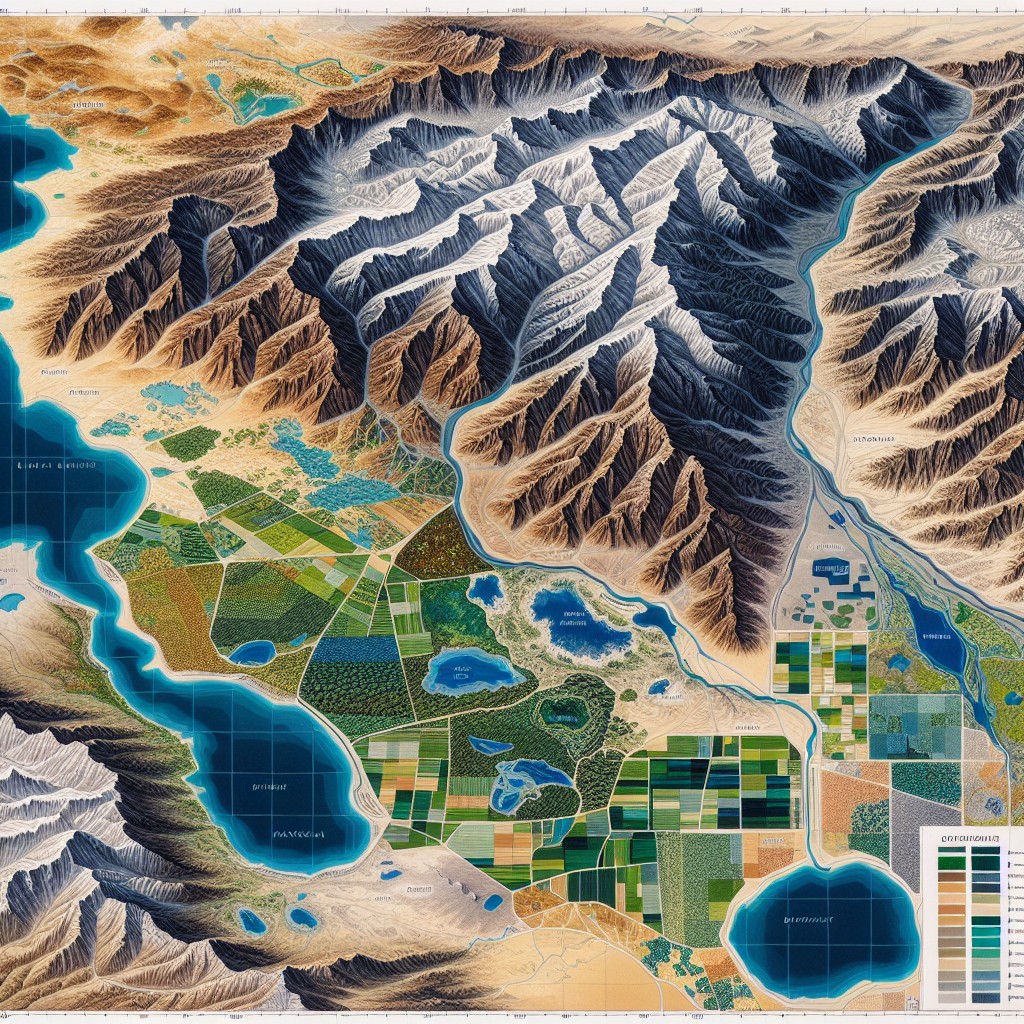
Gaza is bordered by Israel to the east and north, Egypt’s Sinai Peninsula to the south, and the Mediterranean Sea to the west. This geographical positioning is key to understanding many of the challenges it faces, particularly regarding access and movement. Its connection to the sea, for instance, offers both potential and limitations due to Israeli and Egyptian naval blockades.
Who Lives in Gaza?
The population of the Gaza Strip is overwhelmingly Palestinian, with a very high proportion of refugees and their descendants. The vast majority of these individuals are Sunni Muslim, with a small Christian minority. The birth rate is high, contributing to the ever-increasing population density within its constrained borders. The median age is remarkably low, meaning a significant proportion of the population are children and young adults, which has implications for education, employment, and social services.
Gaza’s Rich and Complex History
Gaza isn’t a new place; it has a history stretching back millennia, marked by various empires and cultures. This deep historical backdrop is crucial for comprehending its present-day significance.
An Ancient Crossroads
Historically, Gaza has served as a vital trade route and a strategic point connecting Africa, Asia, and Europe. It’s seen the influence of ancient Egyptians, Philistines, Assyrians, Babylonians, Persians, Greeks (under Alexander the Great), Romans, Byzantines, and various Islamic caliphates. Each conqueror and civilisation left its mark, contributing to a rich tapestry of cultural heritage. For example, archaeological sites in Gaza hint at a bustling port city that facilitated commerce and cultural exchange for centuries.
The Ottoman and British Mandate Eras
For over 400 years, from the 16th century until World War I, Gaza was part of the Ottoman Empire. Following the Ottoman defeat, it fell under British control as part of the British Mandate for Palestine. During this period, tensions between Arab and Jewish communities began to escalate, laying some of the groundwork for future conflicts. The British Mandate period was characterised by increasing immigration into Palestine, which greatly altered the demographic landscape and sparked Arab nationalist movements.
The 1948 War and Its Aftermath
The pivotal moment for modern Gaza came with the 1948 Arab-Israeli War, also known as the Nakba (‘catastrophe’) by Palestinians. As a result of the war, hundreds of thousands of Palestinians fled or were expelled from their homes in what became Israel. Many of these refugees sought safety in the Gaza Strip, which then came under Egyptian administration. This influx of refugees drastically swelled Gaza’s population and fundamentally changed its character, transforming it into a densely populated refugee haven. The refugee camps established during this time, like Jabalia, Rafah, and Khan Younis, remain central to Gaza’s social fabric today.
Israeli Occupation and Withdrawal
Israel occupied the Gaza Strip during the 1967 Six-Day War. For the next 38 years, Gaza remained under Israeli military occupation, which included the establishment of Israeli settlements within the Strip. This period saw the rise of Palestinian popular resistance, including the First Intifada (uprising) in the late 1980s. In 2005, Israel unilaterally disengaged from Gaza, withdrawing its troops and dismantling its settlements. This withdrawal was a complex event, seen by some as a step towards peace and by others as a strategic redeployment that left Gaza isolated.
The Dynamics of Governance and Control
Since the 2005 disengagement, Gaza’s political landscape has been tumultuous, marked by internal divisions and external pressures. The question of who governs Gaza and how is central to its ongoing struggles.
The Rise of Hamas
Following the Israeli disengagement, elections were held in the Palestinian territories in 2006. Hamas, an Islamist political and militant organisation, won a majority of seats in the Palestinian Legislative Council. This victory was not recognised by Israel or many Western powers. A year later, in 2007, a violent conflict between Hamas and Fatah (the secular nationalist party that dominates the Palestinian Authority in the West Bank) resulted in Hamas taking full control of the Gaza Strip. This internal division effectively split the Palestinian territories politically.
The Blockade and Its Impact
In response to Hamas’s takeover, Israel, with significant Egyptian cooperation, imposed a land, air, and sea blockade on the Gaza Strip. The stated aim was to prevent weapons from entering Gaza and to pressure Hamas. However, this blockade has had devastating humanitarian consequences, severely restricting the movement of goods and people, hindering economic development, and limiting access to essential services. For instance, the import of building materials is often restricted, making reconstruction after conflicts incredibly difficult. Electricity supply is frequently intermittent, and clean water is scarce.
International Relations and Aid
Gaza’s international relations are largely mediated through its neighbours and international organisations. The blockade means that most aid and goods enter via designated crossings with Israel and Egypt, subject to strict controls. The United Nations Relief and Works Agency for Palestine Refugees in the Near East (UNRWA) plays a critical role in providing education, healthcare, and social services to the vast refugee population. Various other NGOs also operate within Gaza, attempting to mitigate the severe humanitarian crisis.
The Humanitarian Crisis and Living Conditions
Life in Gaza is incredibly challenging for its inhabitants. The combination of conflict, blockade, and political instability has created a pervasive humanitarian crisis.
Economic Hardship and Unemployment
The blockade has crippled Gaza’s economy. High unemployment rates, particularly among young people, are a persistent problem. Industries that once thrived, such as fishing, agriculture, and manufacturing, are severely constrained by restrictions on exports, imports, and access to resources. The lack of economic opportunity fuels despair and reliance on humanitarian aid. Businesses struggle to operate without consistent power, raw materials, or the ability to export their products.
Infrastructure Challenges
Gaza’s infrastructure is under immense strain. The repeated conflicts have caused significant damage to homes, hospitals, schools, and essential utilities like water purification plants and power stations. Rebuilding efforts are constantly hampered by import restrictions and funding shortages. The sewage system is often overwhelmed, leading to environmental contamination and health risks. Access to potable water is a major concern, with most of the aquifer being over-extracted and contaminated.
Healthcare and Education
The healthcare system in Gaza is stretched to its breaking point. Hospitals often lack essential medicines, equipment, and trained personnel due to the blockade and funding issues. Complex medical cases frequently require patients to seek treatment outside Gaza, a process fraught with difficulties and often denied permits. Similarly, the education system, while highly valued by Palestinians, struggles with overcrowding, damaged facilities, and a lack of resources, impacting the quality of teaching and learning environments.
Why Gaza Matters Regionally and Globally
Gaza’s significance extends far beyond its physical borders. It’s a symbol, a flashpoint, and a factor in numerous wider geopolitical calculations.
A Symbol of the Palestinian Cause
For many Palestinians and their supporters globally, Gaza is a potent symbol of resilience and resistance against occupation and injustice. Its struggles resonate deeply within the broader Palestinian narrative of dispossession and the quest for self-determination. The suffering of Gazans is often highlighted as a central example of the humanitarian toll of the Israeli-Palestinian conflict.
A Regional Flashpoint
Gaza is frequently a focus of regional diplomatic efforts, and unfortunately, a frequent flashpoint for violence. Escalations between Israel and militant groups in Gaza can quickly destabilise the wider region, drawing in other actors and raising fears of broader conflicts. The ongoing cycles of violence impact not just Palestinians and Israelis, but also have implications for Egypt, Jordan, and other Arab states, as well as for Iran and its proxies.
International Human Rights and Law
The situation in Gaza consistently raises questions about international humanitarian law and human rights. The blockade, the impact of military operations on civilians, and the rights of a people under de facto occupation are all subjects of intense international scrutiny and debate. Organisations like the UN and various human rights groups regularly report on the conditions in Gaza, advocating for greater protection of civilians and adherence to international legal norms. The international community grapples with how to address the crisis without inadvertently strengthening militant groups or undermining prospects for a lasting peace.
The Search for Peace
Ultimately, the future of Gaza is inextricably linked to the broader search for a comprehensive and lasting peace in the Israeli-Palestinian conflict. Any viable peace agreement would need to address the political status of Gaza, its economic viability, and the critical humanitarian needs of its population. The current separation between Gaza and the West Bank, both geographically and politically, poses a significant obstacle to a unified Palestinian state and a two-state solution. Finding a way forward for Gaza is not just about alleviating immediate suffering; it’s about addressing fundamental questions of justice, self-determination, and regional stability.
FAQs
What is Gaza?
Gaza is a small self-governing Palestinian territory on the eastern coast of the Mediterranean Sea. It is bordered by Israel to the east and north, and Egypt to the south.
Why is Gaza important?
Gaza is important for several reasons. It is a significant geopolitical hotspot due to its location and its ongoing conflict with Israel. Additionally, it is home to a large population of Palestinians and has been the focus of international attention and aid efforts.
What is the history of Gaza?
Gaza has a long and complex history, with evidence of human habitation dating back to ancient times. It has been ruled by various empires and has been a part of different territories throughout history. In modern times, it has been at the center of the Israeli-Palestinian conflict.
What is the current situation in Gaza?
Gaza is currently facing a humanitarian crisis, with high levels of poverty, unemployment, and limited access to basic services such as healthcare and education. The territory has also experienced multiple conflicts with Israel, resulting in significant loss of life and destruction.
What is the international community doing about Gaza?
The international community has been providing aid and support to Gaza to address the humanitarian crisis. Additionally, there have been ongoing diplomatic efforts to find a peaceful resolution to the Israeli-Palestinian conflict, which includes addressing the situation in Gaza.