Rockhounds, geology buffs, and the perpetually curious – ever wondered about those solid, sometimes glassy, sometimes coarse-grained rocks you find? You know, the ones that feel like they’ve been around since the dawn of time? Chances are, you’ve stumbled upon an igneous rock.
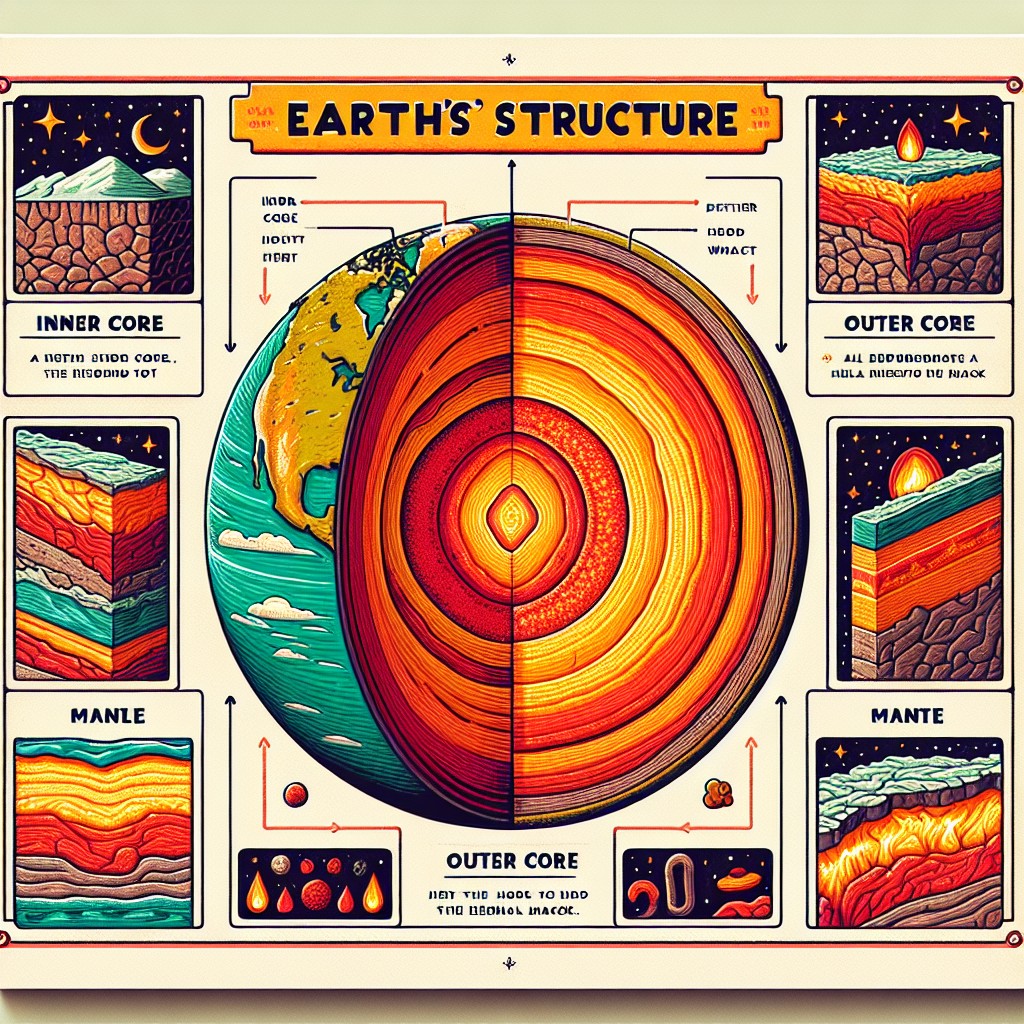
So, what exactly are igneous rocks? Simply put, they’re born from fire – or more precisely, from molten rock. Whether it’s magma deep beneath the Earth’s crust or lava that’s burst forth onto the surface, when this superheated liquid cools and solidifies, it forms igneous rocks. It’s the Earth’s way of recycling itself, a continuous cycle of melting and solidifying that has shaped our planet for billions of years.
A Fiery Birth: Understanding Igneous Rock Formation
The key to understanding igneous rocks lies in their origins: the cooling of molten rock. This molten material comes in two main flavours: magma (which stays underground) and lava (which erupts onto the surface). The conditions under which this molten rock cools, including the temperature, pressure, and the presence of water, play a massive role in determining the final appearance and texture of the resulting igneous rock. Think of it like baking – the ingredients and the oven temperature drastically change the final cake, right? It’s much the same with rocks.
Magma vs. Lava: The Underground vs. The Outburst
This distinction is crucial because it dictates where the cooling happens and, therefore, how quickly it occurs.
Magma: The Slow Cooker of the Earth
Magma is molten rock found beneath the Earth’s surface. Because it’s insulated by the surrounding rock, magma cools very, very slowly. We’re talking thousands, even millions, of years for some magmas to solidify. This slow cooling gives mineral crystals ample time to grow. Imagine a few very patient builders meticulously constructing something large – they have plenty of time to make each brick and detail perfect.
- Plutonic (or Intrusive) Rocks: These are igneous rocks that form from magma that cools and solidifies beneath the Earth’s surface. As the magma is trapped, it cools slowly.
- Examples: Granite is the classic example here. You’ll see its familiar speckled appearance, with visible crystals of quartz, feldspar, and mica all interlocking. Diorite and gabbro are other intrusive rocks, often darker than granite.
Lava: The Rapid Chill
Lava, on the other hand, is magma that has erupted onto the Earth’s surface or the floor of the ocean. Once exposed to the atmosphere or water, this molten rock cools much, much faster. This rapid cooling doesn’t give mineral crystals much time to form large, visible grains. Think of a chef in a busy kitchen – things happen quickly, and while the result is delicious, the individual components might not be as distinct as in a slow-cooked meal.
- Volcanic (or Extrusive) Rocks: These are igneous rocks formed from lava that cools and solidifies on the Earth’s surface.
- Examples: Basalt is perhaps the most common volcanic rock, forming vast lava flows and the oceanic crust. It’s typically dark and fine-grained, meaning you can’t easily see individual crystals with the naked eye. Obsidian, the volcanic glass, is a prime example of extremely rapid cooling where no crystals have time to form at all. Pumice, with its frothy, vesicular texture, forms when gas bubbles are trapped in rapidly cooling lava.
The Building Blocks: Igneous Rock Minerals
Igneous rocks are essentially made up of interlocking mineral crystals. The specific combination and proportions of these minerals give each igneous rock its unique characteristics. Geologists classify many igneous rocks based on their mineral content, particularly the types of silicate minerals present. Silicates are compounds containing silicon and oxygen, and they make up the vast majority of minerals in the Earth’s crust.
The Big Players: Common Igneous Minerals
When you look at an igneous rock, you’re often seeing a mosaic of these minerals, each with its own colour, hardness, and crystal habit.
Felsic Minerals: Light and Abundant
These are typically light-coloured minerals, rich in silicon, oxygen, aluminium, potassium, and sodium. They tend to be less dense than mafic minerals.
- Quartz: A very common and durable mineral. In igneous rocks, it’s usually found as glassy, greyish or whitish grains. Granite is rich in quartz.
- Feldspar: The most abundant mineral group in the Earth’s crust. It comes in several varieties, including potassium feldspar (often pinkish or creamy) and plagioclase feldspar (which can be white or grey).
- Mica: These are sheet silicates that can be split into thin flakes. Muscovite mica is clear or light-coloured, while biotite mica is dark. You’ll often see them as small, shimmering flakes in rocks like granite.
Mafic Minerals: Dark and Dense
These minerals are typically dark-coloured and richer in iron and magnesium. They are generally denser and form at higher temperatures than felsic minerals.
- Olivine: Usually a green mineral, often found in basic igneous rocks like basalt and gabbro. It’s one of the first minerals to crystallise from a cooling magma.
- Pyroxenes: These are a group of dark-coloured crystalline minerals. Augite is a common pyroxene found in basalt and gabbro.
- Amphiboles: Similar to pyroxenes in composition and colour (often dark), but with a slightly different crystal structure. Hornblende is a common example, often found in diorites and some granites.
Accessory Minerals: The Supporting Cast
Besides the dominant minerals, igneous rocks can also contain smaller amounts of other minerals, known as accessory minerals. These don’t usually dictate the main classification of the rock but contribute to its overall appearance or can be indicators of specific formation conditions.
- Examples: Zircon, apatite, magnetite (an iron oxide), and sphene are common accessory minerals.
Texture Tells a Tale: The Visual Clues in Igneous Rocks
The “texture” of an igneous rock refers to the size, shape, and arrangement of its mineral crystals. It’s a powerful clue to the rock’s cooling history. Fast cooling leads to fine grains, while slow cooling allows for larger crystals to form.
Crystal Size Matters: Phaneritic to Aphanitic
This is where the magma vs. lava distinction really shows up visually.
Phaneritic Texture: The Slow-Cool Story
Rocks with a phaneritic texture have mineral crystals that are large enough to be seen with the naked eye. This is a sure sign of slow cooling, typically occurring deep underground (intrusive/plutonic rocks). You can often pick out individual crystals of different minerals.
- Characteristics: Coarse-grained. All crystals are roughly the same size.
- Examples: Granite, gabbro, diorite, peridotite.
Aphanitic Texture: The Fast-Chil Story
Rocks with an aphanitic texture have very fine-grained crystals that are usually too small to be seen without a microscope. This indicates rapid cooling, which is characteristic of volcanic (extrusive/volcanic) rocks.
- Characteristics: Fine-grained. Individual crystals are often indistinguishable to the naked eye.
- Examples: Basalt, rhyolite, andesite.
Special Textures: When Things Get Interesting
Beyond just crystal size, igneous rocks can exhibit other fascinating textures that tell stories about their formation.
Porphyritic Texture: A Tale of Two Cooling Rates
This texture features larger, well-formed crystals (phenocrysts) embedded in a matrix of much finer-grained crystals (groundmass). This indicates a two-stage cooling process: slow cooling while deep underground allowed the larger crystals to grow, followed by a more rapid eruption and cooling of the remaining molten rock.
- Visual: Like large chunks of ice in a slushy.
- Examples: Porphyritic basalt, porphyritic andesite, porphyritic granite.
Glassy Texture: Frozen in Time
When molten rock cools so rapidly that no mineral crystals can form, you get a glassy texture. This is like super-chilling something so fast that its molecules don’t have time to organise into a crystal structure.
- Appearance: Smooth, conchoidal fracture (curved, shell-like breaks).
- Examples: Obsidian (volcanic glass), fulgurites (formed when lightning strikes sand).
Vesicular Texture: The Gas Bubbles
This texture is characterised by the presence of numerous small holes or cavities, called vesicles. These are formed by gas bubbles escaping from the molten rock as it cools and solidifies. It’s like pouring fizzy lemonade – the bubbles get trapped.
- Appearance: Frothy, sponge-like.
- Examples: Pumice (very common), scoria.
Pyroclastic Texture: The Explosive Output
These rocks are formed from fragments of volcanic material – ash, cinders, volcanic bombs – that are ejected during an explosive eruption and then cemented together.
- Appearance: Jumbled mix of fragments.
- Examples: Tuff (formed from volcanic ash), agglomerate.
Classification Corner: Naming the Igneous Beasts
Geologists use a few key criteria to classify igneous rocks: their mineral composition and their texture. This allows them to create a systematic way of identifying and understanding these rocks. You’ll often see them placed on diagrams like the TAS diagram (Total Alkali vs. Silica) or the QAPF diagram (Quartz, Alkali Feldspar, Plagioclase Feldspar, Feldspathoid), but for everyday understanding, focusing on mineralogy and texture is a great start.
The Big Two: Felsic, Intermediate, Mafic, and Ultramafic
This classification refers to the relative abundance of silica and the types of minerals present. It’s a spectrum from silica-rich (felsic) to silica-poor (mafic).
Felsic Rocks: The Lightweights
These are silica-rich rocks, typically light in colour. They contain minerals like quartz, potassium feldspar, and plagioclase feldspar. They generally form at lower temperatures under greater water pressure.
- Compositionally: High silica content (>63% SiO2).
- Key Minerals: Quartz, orthoclase feldspar, plagioclase feldspar, muscovite mica.
- Common Examples: Granite (intrusive, phaneritic), rhyolite (extrusive, aphanitic).
Intermediate Rocks: The Middle Ground
These rocks have a mineral composition that falls between felsic and mafic rocks. They are often greyish in colour and contain a mix of lighter and darker minerals.
- Compositionally: Moderate silica content (52-63% SiO2).
- Key Minerals: Plagioclase feldspar, hornblende, biotite mica, pyroxenes.
- Common Examples: Diorite (intrusive, phaneritic), andesite (extrusive, aphanitic).
Mafic Rocks: The Dark and Heavy
These rocks are rich in magnesium and iron, and consequently, they are typically dark-coloured. They contain minerals like olivine, pyroxenes, and calcium-rich plagioclase feldspar. They form at higher temperatures.
- Compositionally: Low silica content (45-52% SiO2).
- Key Minerals: Olivine, pyroxenes, amphiboles, calcium-rich plagioclase feldspar.
- Common Examples: Gabbro (intrusive, phaneritic), basalt (extrusive, aphanitic).
Ultramafic Rocks: The Purest of the Deep
These are the rarest type of igneous rock and are extremely rich in magnesium and iron, with very little silica. They are usually dark green to black and are typically found deep within the Earth, often brought to the surface by tectonic activity.
- Compositionally: Very low silica content (<45% SiO2).
- Key Minerals: Olivine, pyroxenes.
- Common Examples: Peridotite, dunite.
Putting it Together: Example Classifications
Combining texture and composition gives us specific rock names:
- Granite: Felsic, intrusive, phaneritic (you can see the grains).
- Basalt: Mafic, extrusive, aphanitic (fine-grained).
- Obsidian: Felsic (often), extrusive, glassy.
- Gabbro: Mafic, intrusive, phaneritic.
- Rhyolite: Felsic, extrusive, aphanitic.
Where Do Igneous Rocks Show Up? Igneous Environments
Igneous rocks are not just random occurrences; they’re directly linked to geological processes, primarily volcanic activity and the movement of tectonic plates.
Volcanic Eruptions: The Dramatic Entrances
When volcanoes erupt, they spew out lava and ash, which cool to form volcanic (extrusive) igneous rocks. These can create dramatic landscapes.
- Volcanoes: Conical mountains with vents from which lava, rock fragments, hot gas, and ash are or have been erupted.
- Lava Flows: Rivers of molten rock that can cover vast areas, solidifying into layers of basalt or similar rocks.
- Pyroclastic Deposits: Ash clouds that settle, forming layers of tuff, or larger ejected fragments that form agglomerates.
Intrusive Settings: The Quiet Giants Below
Magma that cools and solidifies beneath the surface forms intrusive igneous rocks. These are often exposed later through erosion.
- Batholiths: Large bodies of intrusive igneous rock formed when magma cools in the deep crust. Often the “roots” of ancient mountain ranges.
- Dikes and Sills: Intrusions that cut across existing rock layers (dikes) or run parallel to them (sills). They are like nature’s concrete injections.
- Volcanic Necks: The solidified remnant of magma that once filled the vent of a volcano. Erosion eventually strips away the surrounding softer rock.
Mid-Ocean Ridges: The Earth’s New Crust Factory
One of the most significant places igneous rocks form is at mid-ocean ridges. Here, magma rises from the mantle, cools, and solidifies to create new oceanic crust, primarily basalt. This is part of the plate tectonic cycle.
- Seafloor Spreading: The continuous process where new oceanic crust is formed at mid-ocean ridges.
- Pillow Basalts: Unique formations of basalt that cool underwater in rounded, pillow-like shapes.
The Importance of Igneous Rocks: Beyond Pretty Pebbles
Igneous rocks are more than just interesting geological specimens; they are fundamental to understanding Earth’s history, its composition, and processes that shape our planet.
Building Blocks of Continents and Oceans
Intrusive igneous rocks like granite form the core of continental crust, making up vast mountain ranges and the stable foundations of continents. Volcanic rocks like basalt form the floor of the oceans and are essential components of volcanic islands.
Resources for Humanity
Igneous rocks are often rich in valuable minerals and elements and are crucial sources for many industries.
- Construction Materials: Granite is widely used in building, monuments, and countertops due to its durability and beauty. Basalt can be crushed for aggregate in roads and concrete.
- Metals: Many metallic ores, such as copper, gold, and silver, are found in or associated with igneous intrusions.
- Gemstones: Diamonds, rubies, and sapphires are often formed under the high pressures and temperatures associated with igneous activity.
- Geothermal Energy: Areas with recent volcanic activity and subsurface magma bodies can be tapped for geothermal energy.
Unlocking Earth’s History
Studying the minerals, textures, and chemical composition of igneous rocks allows scientists to:
- Date Rocks: Radiometric dating of minerals within igneous rocks provides a timeline for Earth’s history.
- Understand Mantle Processes: Ultramafic rocks, for instance, give us insights into the composition of the Earth’s mantle.
- Reconstruct Past Environments: The types of igneous rocks and their associated volcanic features can tell us about past climates and tectonic settings.
So, the next time you pick up a dark, heavy rock from a beach, or a speckled, coarse-grained stone from a hillside, take a moment to appreciate its fiery origins. It’s a piece of Earth’s deep past, a testament to the dynamic processes that continue to shape our world.
FAQs
What are igneous rocks?
Igneous rocks are formed from the solidification of molten rock material, either below the Earth’s surface (intrusive) or on the surface (extrusive). They are one of the three main types of rock, alongside sedimentary and metamorphic rocks.
How are igneous rocks classified?
Igneous rocks are classified based on their mineral composition, texture, and the rate at which they cooled. The two main categories are intrusive (plutonic) rocks, which form from magma cooling below the Earth’s surface, and extrusive (volcanic) rocks, which form from lava cooling on the Earth’s surface.
What are some examples of igneous rocks?
Common examples of igneous rocks include granite, basalt, and obsidian. Granite is a coarse-grained intrusive rock, while basalt is a fine-grained extrusive rock. Obsidian is a glassy-textured igneous rock that forms from rapidly cooled lava.
What are the uses of igneous rocks?
Igneous rocks have a wide range of uses, including as building materials (e.g. granite countertops), in road construction (e.g. basalt aggregates), and as decorative stones. They also provide valuable insights into the Earth’s geological history and processes.
How do igneous rocks contribute to the rock cycle?
Igneous rocks play a crucial role in the rock cycle, as they can be weathered and eroded to form sediment, which can then be compacted and cemented to form sedimentary rocks. They can also be subjected to heat and pressure to form metamorphic rocks. This continuous process of transformation is known as the rock cycle.