Explore the World Through Geography, Natural Resources & Daily History
Clear, reliable and engaging guides that help you understand our planet — from UK geography education to global natural resources and On This Day history events.
Explore, discover, and learn about the wonders of our world! At Earth Site, we’re passionate about bringing geography, history, and science to life for curious minds of all ages. Whether you’re delving into historical events, uncovering the mysteries of the natural world, or seeking interactive resources, you’re in the right place.
Here, you can uncover the stories behind historical events, explore the natural wonders of our planet, and gain valuable insights into how the Earth’s systems shape our daily lives. From the towering peaks of mountain ranges to the far-reaching impacts of human innovation, we aim to make every topic both engaging and informative.
Start your journey of discovery with us today, and let’s make learning an adventure!
What We Cover
Earth Site brings together engaging and accessible educational content designed to help you understand the world, its history, and its natural systems.
🌍 Geography Education (UK & Worldwide)
We publish clear, easy-to-understand geography resources for students, teachers and curious learners. Our guides support geography education in the UK and cover physical geography, climate, ecosystems, population, and global development.
⛏️ Natural Resources & Environmental Geography
Explore detailed country profiles covering natural resources, mining, energy, geology and global environmental challenges. We show how nations manage minerals, water, land and ecosystems, and why these resources matter.
📅 On This Day in History
Every day has a story. Our On This Day history series features major events, anniversaries, traditions, and cultural milestones from around the world — with timelines, context, and fun facts.
TIMELINE

History of Pakistan
The region of Pakistan boasts a rich and diverse history, with evidence of human habitation dating back to the Palaeolithic era. The ancient civilisations that flourished in this region include the Indus Valley Civilisation, one of the world’s oldest urban societies. The Indus Valley Civilisation, also known as the Harappan Civilisation, existed from approximately 3300 BCE to 1300 BCE and was located in what is now modern-day Pakistan and northwest India. The civilisation was renowned for its advanced urban planning, sophisticated drainage systems, and intricate pottery and jewellery. The cities of Mohenjo-Daro and Harappa are two of the most well-known sites from this ancient civilisation, and they provide valuable insights into the social, economic, and cultural aspects of the time. Moreover, the region of Pakistan has also been influenced by other ancient civilisations, such as the Persian Empire, the Maurya Empire, and the Gupta Empire. These empires left their mark on the region through trade, cultural exchange, and the spread of religious beliefs. The region was also a significant part of the Silk Road, an ancient network of trade routes that connected the East and West, further contributing to its cultural and economic significance. The ancient history of Pakistan is a testament to the region’s importance in shaping the development of human civilisation and its enduring legacy in the modern world. Summary Ancient civilizations in the region of Pakistan include the Indus Valley Civilization, which was one of the world’s earliest urban societies. The Islamic conquest and the Mughal Empire played a significant role in shaping the culture and history of the region, leaving behind architectural marvels and a...

Population Density of Pakistan
Population density refers to the number of people living per unit of area, typically per square kilometre or square mile. It is a crucial demographic indicator that aids in understanding the distribution of people within a given area. In Pakistan, population density varies significantly across different regions, with some areas being densely populated whilst others are sparsely populated. Understanding population density is vital for policymakers, urban planners, and researchers as it provides insights into the social, economic, and environmental dynamics of a region. Pakistan is the sixth most populous country in the world, with a population exceeding 220 million people. The country’s population is growing at a rapid rate, and this growth has significant implications for its population density. As the population continues to increase, it places pressure on resources, infrastructure, and the environment. Therefore, understanding the factors affecting population density in Pakistan, as well as its impact on urban and rural areas, is essential for sustainable development and effective policymaking. Summary Population density refers to the number of people living per square kilometre and is a key indicator of the distribution of population in a specific area. Factors affecting population density in Pakistan include geographical features, economic opportunities, and government policies. Urban areas in Pakistan have higher population density compared to rural areas due to better job opportunities and access to amenities. High population density puts pressure on infrastructure and resources, leading to challenges such as inadequate housing and water scarcity, but also presents opportunities for economic growth and innovation. Government policies and initiatives to manage population density in Pakistan should focus on urban planning, improving access to...

Natural Resources of Pakistan: Where Natural Resources are Located in Pakistan
Pakistan possesses a diverse array of natural resources that are integral to the nation’s economy and development. These resources encompass minerals, agriculture, energy, water and forests. The country’s strategic geographical position has bestowed upon it a variety of mineral deposits, fertile arable land, plentiful water resources and a rich diversity of flora and fauna. The exploitation and conservation of these natural resources are paramount for sustainable development and the welfare of Pakistan‘s populace. The natural resources of Pakistan have the potential to make a substantial contribution to the country’s economy. However, the sustainable management and preservation of these resources are crucial to ensure their availability for future generations. The Pakistani government has implemented various initiatives to promote the sustainable utilisation of natural resources and address the challenges associated with their exploitation. This article shall examine the mineral, agricultural, energy, water and forest resources of Pakistan, as well as the challenges and conservation efforts related to these resources. Summary Pakistan is rich in natural resources, including minerals, agriculture, energy, water, and forests. The mineral resources in Pakistan include coal, salt, gypsum, limestone, and iron ore, among others. Pakistan’s agricultural resources are diverse, with the country being a major producer of wheat, rice, cotton, and sugarcane. Energy resources in Pakistan include natural gas, coal, and hydropower, with a growing focus on renewable energy sources. Water resources in Pakistan are crucial for agriculture and energy production, but the country faces challenges such as water scarcity and pollution. Mineral Resources in Pakistan Significance of Mineral Resources The mining and quarrying sector in Pakistan contributes significantly to the country’s economy and provides employment opportunities...

Cultural or Historical Sites of Pakistan: Important Cultural Landmarks or Historical Sites In Pakistan
Pakistan boasts a rich cultural and historical heritage, with numerous sites showcasing its diverse and vibrant past. From ancient ruins to grand mosques, imposing forts and splendid gardens, Pakistan‘s cultural and historical landmarks offer insight into the country’s extensive history and the influences that have shaped its identity. These sites stand as a testament to Pakistan’s historical significance, serving as a source of national pride and attracting tourists from across the globe. The cultural and historical sites in Pakistan reflect the nation’s multifaceted heritage, bearing influences from various civilisations and cultures that have left their imprint on the land. From the ancient Indus Valley civilisation to the Mughal Empire and beyond, Pakistan’s historical sites provide a captivating journey through time, illustrating the country’s evolution and its people’s contributions to world history. The ancient ruins of Mohenjo-daro, the magnificent Badshahi Mosque in Lahore, and the grand forts and gardens scattered throughout the landscape each recount a unique narrative, contributing to the rich tapestry of Pakistan’s cultural and historical legacy. Summary Pakistan is home to a rich tapestry of cultural and historical sites that date back thousands of years. The ancient ruins of Mohenjo-Daro offer a fascinating glimpse into one of the world’s earliest urban settlements. The Badshahi Mosque in Lahore is a stunning example of Mughal architecture and a symbol of the city’s rich cultural heritage. Lahore Fort and Rohtas Fort are grand structures that showcase the military prowess and architectural splendour of their respective eras. The Shalimar Gardens in Lahore are a testament to the Mughal love for nature and beauty, with their intricate design and serene atmosphere. The...

Climate Zones of Oman: Different climate regions Of Oman
Oman, situated on the south-eastern coast of the Arabian Peninsula, is a nation renowned for its diverse and varied climate zones. The country’s distinctive geography, which encompasses coastal regions, deserts, mountains and oases, contributes to the wide array of climates found within its borders. Comprehending the different climate zones of Oman is crucial for anyone intending to visit or conduct business in the country, as it can significantly influence travel arrangements, outdoor pursuits and even agricultural practices. From the hot and humid coastal areas to the arid and dry desert regions, Oman’s climate zones provide a captivating insight into the natural diversity of the nation. Summary Oman has diverse climate zones including coastal, desert, mountain, oasis, and semi-arid regions. The coastal climate of Oman is characterized by high humidity, warm temperatures, and minimal rainfall. The desert climate of Oman is extremely hot and dry, with very little precipitation and large temperature fluctuations. The mountain climate of Oman experiences cooler temperatures and higher rainfall, with some areas even receiving snowfall in winter. The oasis climate of Oman is found in isolated pockets with abundant water and vegetation, providing a stark contrast to the surrounding desert landscape. The semi-arid climate of Oman is characterized by low rainfall and high temperatures, with vegetation adapted to the arid conditions. The Coastal Climate of Oman Climate Influences The coastal climate is influenced by the monsoon winds, which bring heavy rainfall to the region during the summer months. This can lead to flash floods and waterlogging in some areas, particularly in low-lying coastal plains. Marine Ecosystem The coastal climate also supports a rich and diverse...

Terrain and Topography of Oman: mountains, valleys, and plains.
Oman, situated on the south-eastern coast of the Arabian Peninsula, is renowned for its diverse and striking landscapes. The terrain of Oman is characterised by rugged mountains, captivating valleys, expansive plains and distinctive geological formations. The topography of the country is the result of tectonic activity, erosion and the influence of the Arabian Sea. Oman’s varied terrain provides a rich tapestry of natural beauty and offers a wide range of outdoor activities for adventure enthusiasts and nature lovers alike. Oman’s terrain comprises a blend of rocky mountains, deep valleys and vast deserts, making it an ideal destination for those keen to explore the natural world. The country’s topography is a testament to the geological forces that have shaped it over millions of years. From the towering peaks of the Al Hajar Mountains to the sprawling dunes of the Empty Quarter, Oman’s terrain reflects the country’s geological history and natural splendour. Whether one is an avid hiker, a passionate geologist or simply a traveller in search of breathtaking vistas, Oman’s diverse terrain offers something for everyone. Summary Oman’s terrain is diverse, ranging from mountains and valleys to vast plains, making it a unique and captivating destination for nature lovers. The majestic mountains of Oman, including the Al Hajar Mountains, offer breathtaking views and challenging hiking opportunities for adventure seekers. The enchanting valleys of Oman, such as Wadi Shab and Wadi Bani Khalid, are known for their lush greenery, crystal-clear pools, and picturesque waterfalls. The vast plains of Oman, like the Al Wahiba Sands and the Dhofar Plain, showcase the country’s expansive desert landscapes and unique flora and fauna. The unique...

Political Boundaries of Oman: Provinces, Districts, or Historical Boundaries.
Oman, officially known as the Sultanate of Oman, is a country situated on the southeastern coast of the Arabian Peninsula. It shares land borders with the United Arab Emirates to the northwest, Saudi Arabia to the west, and Yemen to the southwest. Additionally, Oman has maritime borders with Iran and Pakistan. The nation’s political boundaries are defined by its international borders and internal administrative divisions, which comprise governorates and wilayats. These boundaries are integral to the country’s governance, local administration, and historical heritage. A thorough understanding of Oman’s political boundaries is essential for comprehending the nation’s political landscape and its influence on development and governance. Oman’s political boundaries extend beyond its international borders to encompass its internal administrative divisions. The country is divided into 11 governorates, each with its own administrative centre. These governorates are further subdivided into wilayats, which play a significant role in local governance and administration. The political boundaries of Oman are not merely lines on a map; they represent the diverse cultural, social, and historical landscapes that have shaped the country’s identity over centuries. A comprehensive understanding of these boundaries is crucial for grasping the complexities of Oman’s political system and its impact on the nation’s development and governance. Summary Oman’s political boundaries are defined by its borders with neighbouring countries and its internal administrative divisions. The administrative divisions of Oman are known as provinces, each with its own governor and administrative structure. Local governance in Oman is carried out at the district level, with each district having its own council and local officials. Oman’s historical boundaries have been influenced by various empires and colonial...

Natural Resources of Oman: Where Natural Resources are Located in Oman
Oman, situated on the south-eastern coast of the Arabian Peninsula, is renowned for its abundant and diverse natural resources, which have been instrumental in shaping the nation’s economy and development. These resources encompass oil and gas reserves, mineral deposits, water resources, agricultural assets, and renewable energy sources. They have been pivotal in propelling the country’s economic growth and continue to be a primary focus for both the government and private sector in Oman. The effective management and conservation of natural resources in Oman are of paramount importance to ensure sustainable development and the welfare of the nation’s populace. The government has implemented a range of policies and initiatives aimed at protecting and preserving these resources for future generations. This article shall examine the various natural resources in Oman, their significance, and the efforts undertaken towards their conservation and management. Summary Oman is rich in natural resources, including oil, gas, minerals, water, agricultural resources, and renewable energy sources. The country’s oil and gas reserves are significant, making it a key player in the global energy market. Oman also has abundant mineral deposits, including copper, gold, and gypsum, which contribute to its economy. Water resources in Oman are limited, and the country relies on desalination and groundwater extraction to meet its needs. Agriculture is an important sector in Oman, with a focus on date palm cultivation and livestock production to support the economy and food security. Oman is investing in renewable energy sources such as solar and wind power to diversify its energy mix and reduce reliance on fossil fuels. Conservation and sustainable management of natural resources are priorities for Oman...

History of Oman
Oman possesses a rich history extending back to ancient times, with archaeological evidence indicating human settlement from the Stone Age. The country’s strategic position at the entrance to the Persian Gulf rendered it a crucial centre for trade and commerce, attracting diverse civilisations and empires. One of the earliest known civilisations in Oman was the Magan civilisation, which thrived around 3000 BCE. The Magan people were renowned for their advanced metallurgy and trade relations with Mesopotamia, particularly in copper and other metals. The ancient city of Qalhat, situated on Oman’s eastern coast, served as a major trading port during this period, connecting the region to the broader ancient world. Another significant civilisation in Oman’s history was the Sumerians, who established trade links with the region circa 2000 BCE. The Sumerians were notable for their sophisticated writing system and played a crucial role in the development of early urban societies in Oman. The influence of the Sumerians is evident in the ancient city of Ubar, also referred to as the “Atlantis of the Sands,” which is believed to have been a significant trading hub for frankincense and myrrh. Ubar is mentioned in various historical texts, including the Quran, and its discovery in the 1990s provided valuable insights into Oman’s ancient history. Summary Early civilizations in Oman date back to the third millennium BC, with evidence of trade and maritime activities with Mesopotamia and the Indus Valley. The influence of Islam in Oman began in the 7th century, leading to the establishment of the first Islamic state in the region. The Portuguese occupation of Oman in the 16th century had a...

Population Density of Oman
Oman, a nation situated on the south-eastern coast of the Arabian Peninsula, exhibits a comparatively low population density in relation to other countries in the region. With a total land area of approximately 309,500 square kilometres, Oman‘s population density stands at roughly 16 people per square kilometre. This low population density can be attributed to various factors, including the country’s arid and desert landscape, as well as its historical reliance on nomadic lifestyles. However, in recent years, Oman has experienced significant population growth, leading to a gradual increase in population density. Understanding the factors affecting population density in Oman, as well as the impact it has on the country’s infrastructure and resources, is crucial for policymakers and urban planners as they work towards sustainable development and management of the country’s population. Oman’s population density is a complex issue that is influenced by a variety of factors, including geography, climate, economic opportunities, and government policies. As the country continues to develop and urbanise, it is important to consider the implications of increasing population density on various aspects of society, including infrastructure, resources, and quality of life. By examining the challenges and opportunities associated with high population density in Oman, as well as the government’s initiatives to manage and mitigate its effects, we can gain a better understanding of the country’s demographic trends and their implications for the future. Summary Oman has a population density of 16 people per square kilometre, making it one of the lowest in the world. Factors affecting population density in Oman include geography, climate, economic opportunities, and government policies. Urban areas in Oman have higher population...

Cultural or Historical Sites of Oman: Important Cultural Landmarks or Historical Sites In Oman
The Sultan Qaboos Grand Mosque stands as a testament to the grandeur of Omani architecture and the rich Islamic heritage of the country. This magnificent mosque, situated in the capital city of Muscat, is a true architectural marvel, blending traditional Omani design elements with modern construction techniques. The mosque’s main prayer hall is adorned with a stunning hand-woven carpet, which holds the Guinness World Record for being the largest hand-loomed carpet in the world. The intricate designs and vibrant colours of the carpet reflect the artistic prowess of Omani craftsmen and serve as a symbol of the country’s rich cultural heritage. The exterior of the mosque is equally impressive, with its grand domes, towering minarets, and intricate geometric patterns adorning the walls and ceilings. The use of white marble and sandstone in the construction of the mosque not only adds to its aesthetic appeal but also reflects the traditional building materials used in Omani architecture. The overall design of the Sultan Qaboos Grand Mosque is a harmonious blend of Islamic architectural elements, such as arches, domes, and calligraphy, with Omani influences, creating a truly unique and awe-inspiring structure that stands as a symbol of Omani pride and heritage. Summary The Sultan Qaboos Grand Mosque is a stunning example of Omani architecture and a symbol of Islamic heritage. Bahla Fort’s UNESCO World Heritage status highlights its significance as a testament to Omani fortification. Nizwa Souq is a historical market that serves as a gathering place for Omani traditions and culture. Al Baleed Archaeological Park offers an insight into Oman’s ancient maritime history and trade connections. Jabrin Castle stands as a...
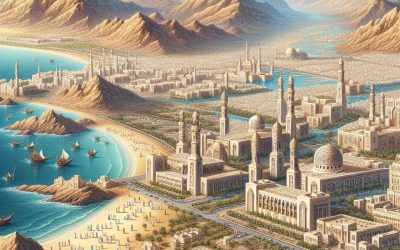
Oman
Oman (Salṭanat ʿUmān (Sultanate of Oman)) Capital: Muscat Population (Estimated July 2012): 3,090,150 Area: 309,500km2 or 119,500mi2 Currency: Rial Omani (RO) Official Language: Arabic Political Information: Islamic Monarchy Official Religion: Islam(approximately 75% of the population are Ibadhi Muslims with 25% having other religious beliefs including other Muslim denominations and Hinduism ) Highest Mountain: Jabal Shams 3005m or 9,859ft GDP Official Exchange Rate (OER is more precise at gauging a country’s economic power) (Estimated 2011): $66.8 billion (US$) or (GBP) GDP (OER) Per Capita (per member of the population estimated 2011): (US$) or (GBP) GDP Purchasing Power Parity (PPP is good for gauging living conditions and the use of resources but is not as accurate as OER. This data has been calculated based on the sum value of all goods and services produced in the country valued at prices prevailing in the United States) (Estimated 2011): $80.89 billion (US$) or (GBP) GDP (PPP) Per Capita (per member of the population estimated 2011): $26,200 (US$) or (GBP) Time Zone (GMT/UTC): +4:00 Wildlife: Counties/Provinces/States: 5 regions (manatiq, singular – mintaqat) and 4 governorates* (muhafazat, singular – muhafazat) Ad Dakhiliyah, Al Batinah, Al Buraymi*, Al Wusta, Ash Sharqiyah, Az Zahirah, Masqat (Muscat)*, Musandam*, Zufar (Dhofar)* Leaders: Sultan and Prime Minister Qaboos bin Said (Qabus ibn Saʿid) Sources: CIA World Fact Book, Encyclopaedia Britannica. Oman Oman, officially the Sultanate of Oman, is situated on the southeastern coast of the Arabian Peninsula. It shares borders with the United Arab Emirates to the northwest, Saudi Arabia to the west, and Yemen to the southwest. The Arabian Sea lies to the south and east, whilst the Gulf of Oman and the...