Explore the World Through Geography, Natural Resources & Daily History
Clear, reliable and engaging guides that help you understand our planet — from UK geography education to global natural resources and On This Day history events.
Explore, discover, and learn about the wonders of our world! At Earth Site, we’re passionate about bringing geography, history, and science to life for curious minds of all ages. Whether you’re delving into historical events, uncovering the mysteries of the natural world, or seeking interactive resources, you’re in the right place.
Here, you can uncover the stories behind historical events, explore the natural wonders of our planet, and gain valuable insights into how the Earth’s systems shape our daily lives. From the towering peaks of mountain ranges to the far-reaching impacts of human innovation, we aim to make every topic both engaging and informative.
Start your journey of discovery with us today, and let’s make learning an adventure!
What We Cover
Earth Site brings together engaging and accessible educational content designed to help you understand the world, its history, and its natural systems.
🌍 Geography Education (UK & Worldwide)
We publish clear, easy-to-understand geography resources for students, teachers and curious learners. Our guides support geography education in the UK and cover physical geography, climate, ecosystems, population, and global development.
⛏️ Natural Resources & Environmental Geography
Explore detailed country profiles covering natural resources, mining, energy, geology and global environmental challenges. We show how nations manage minerals, water, land and ecosystems, and why these resources matter.
📅 On This Day in History
Every day has a story. Our On This Day history series features major events, anniversaries, traditions, and cultural milestones from around the world — with timelines, context, and fun facts.
TIMELINE
Year 1919
TIMELINE 1900's DateTypeEvent1919-01-06In 1919 the 26th President of the United States, Theodore Roosevelt died. Theodore Roosevelt was quite poorly as a child suffering from asthma he forced himself to live a strenuous life determined not to let it affect him. He studied hard and pursued a life in politics becoming vice president in 1901 to the 25th President, William McKinley. He became President within the year and spent two terms as the 26th President of the United States. On the night of the 5th of January 1919, Roosevelt went to bed complaining of breathing problems and died in his sleep the following morning. Roosevelt is considered by many to be one of the greatest Presidents and he is immortalised on Mount Rushmore with his face carved into the side of the mountain along with Abraham Lincoln, George Washington and Thomas Jefferson.1919-01-16In 1919 prohibition began across the United States of America. Prohibition in the United States, spanning from 1920 to 1933, was a nationwide constitutional ban on the production, importation, transportation, and sale of alcoholic beverages. This transformative era arose from a combination of moral reform movements, social dynamics, and political campaigns, but it also gave rise to unintended consequences that reshaped American society. The 18th Amendment (also known as the Prohibition Amendment) was ratified on the 16th of January 1919 and forbade the "manufacture, sale, or transportation of intoxicating liquors for beverage purposes,". This law proved too difficult to enforce and gave organised crime a new revenue stream. The U.S. Government was forced to bring in the 21st Amendment in 1933 which ended Prohibition. The temperance movement emerged in the early 19th century, advocating for...
Year 1918
TIMELINE 1900's DateTypeEvent1918-07-16In 1918 the last Russian Tsar, Nicholas II, was executed with his wife and children after the ‘February Revolution’. After the ‘February Revolution’ between the 8th and 12th of March (called the February Revolution because it started in February based on the old Julian calendar used at the time) Tsar Nicholas II was forced to abdicate by the will of the people. His Army garrison in the capital of Petrograd (now St. Petersburg) had also joined the revolutionaries calling for socialist reforms and it was not safe for him or his family anymore. Upon his abdication, he named his brother as his successor, but he wisely turned down the position which ended Tsarist rule in Russia. When counter-revolutionary forces began to advance on the captive ex-Tsar’s position in July 1918, the soviet revolutionaries executed Nicholas, his wife, children and many of the servants, shooting them dead on the night of the 16th of July 1918.1918-08-11 In 1918 the most decisive battle of World War I “The Battle of Amiens” ends in victory to the Allies. The Russian revolution of 1917 led them to agreeing a ceasefire on the eastern front on the 15th of December 1917 effectively leaving the First World War. With the Eastern Front ended Germany’s most senior officer, Erich Ludendorff, suddenly had a huge supply of battle ready troops ready to fight against the remaining allies on the Western Front. Ludendorff devised a plan he called the “Emperor’s Battle” which involved the full force of the new troops attacking one point in the western front which was being held by the British Expeditionary Forces near the...
Year 1917
TIMELINE 1900's DateTypeEvent1917-03-08In 1917, ‘The February Revolution’ started in Russia. It was the first part of the 1917 Russian revolution that would culminate in the abdication of Tsar Nicholas II, the end of Tsarist rule in Russia and lead to the October Revolution in Russia, which was the start of Communism there (also known as Red October). The ‘February and October Revolutions' were named after the months that they occurred in 1917, based on the old Julian calendar, which is currently 13 days behind the Gregorian calendar now used by most of the world. Russia changed to the Gregorian calendar in 1918 after the end of the Russian Revolution. The Russian people had had enough of the growing poverty, governmental corruption and tremendous loss of life for Russia in World War I, which all happened under Tsarist Rule. On this day in the Capital of Petrograd (now St. Petersburg), more than 90,000 protesters clashed with police and remained on the streets. The protesters would not leave despite being attacked by the army on the 11th of March, and many were killed. The protestors' resolve didn’t waver. Later that day, 150,000 soldiers joined the protestors, and on the 14th, all Russian Soldiers in the capital had been ordered not to harm the civilians. On the 15 of March, Nicholas II abdicated, giving the throne to his brother Michael. Michael refused the crown, and the Tsar's rule in Russia ended after hundreds of years.1917-04-16 On this day in 1917 Vladimir Lenin returned to Russia after his exile for advocating socialism by Tsar Nicholas II. The Russian people had had enough of the...
Year 1916
TIMELINE 1900's DateTypeEvent1916-01-05In 1916 Prime Minister of Great Britain Herbert Asquith introduces the first military conscription bill in British history. Although the number of volunteers from Britain was huge, with a little under half a million men voluntarily enlisting within the first 6 weeks, numbers dwindled against the German army that had been growing through conscription for 40 years. By 1916 the Prime Minister and Lord Horatio Herbert Kitchener, Britain's secretary of state for war, felt they had no choice but to introduce a military conscription bill that was passed and came into effect on the 10th of February 1916. Initially, only single men aged 18 to 41 were liable to be called up for military service, but this was later extended to include married men as well. Those who refused military service on moral, religious, or political grounds were known as conscientious objectors. They faced tribunals to assess the validity of their claims, and some were assigned non-combatant roles or alternative civilian work. Others faced imprisonment or harsh treatment. Conscription continued until the end of World War I in 1918. It was briefly revived during the interwar period and again during World War II.1916-02-02In 1916 two days after one of the largest bombing raids by the German Zeppelins of World War I, one of the aircraft was found floating in the North Sea. The nine Zeppelins used in the raid dropped 400 bombs over the midlands of England, killing 70 people and injuring hundreds. King Stephen, a fishing trawler, found the damaged zeppelin on this day in 1916.1916-03-09In 1916 Germany declares War on Portugal in retaliation for its support of the United Kingdom. Portugal made Alliance with Great Britain in...
Year 1915
TIMELINE 1900's DateTypeEvent1915-01-19In 1915 The first Zeppelins attacked the United Kingdom by the Germans as part of their World War I offensive. The first Zeppelin air raid on London (and first Air raid in history) was attempted on the 19th of January 1915, during the early stages of World War I. While this raid did not directly hit the capital, it marked the beginning of a new era in warfare, where civilian populations became targets of aerial bombing. It was a precursor to the more devastating raids that would follow later in the war. Two German Navy Zeppelins, L3 and L4, were assigned to bomb Britain. Their primary targets were believed to be London and military installations in eastern England. However, due to poor weather and navigation challenges, the airships did not reach London. Instead, they dropped bombs on several coastal towns in Norfolk and Suffolk, including Great Yarmouth and King’s Lynn. Although only 4 people were killed it would mark the beginning of strategic bombing as a military tactic. It set the stage for future raids, including the May 1915 Zeppelin raid, which successfully targeted London dropping 40 bombs and killing 7 people. While the January raid achieved limited success, it introduced the British public to the reality of aerial warfare and prompted innovations in both military technology and civilian defence. The British government responded by improving air defences, including deploying searchlights, anti-aircraft guns, and fighter aircraft. 1915-04-22 On this day in 1915 the Germans first used poisonous gas in the trenches of the Western Front. Normally after a barrage of artillery fire in the trenches of World War I silence...
Year 1914
TIMELINE 1900's DateTypeEvent1914-07-23In 1914 following the Assassination of Archduke Franz Ferdinand, Austro-Hungary gives the Kingdom of Serbia an Ultimatum. When the Heir Presumptive to the Austro-Hungarian throne, Franz Ferdinand, was assassinated by Serbian, Gavrilo Princip, on the 28th of June 1914 the Austro-Hungarian immediately accused the government of the Kingdom of Serbia. The Kingdom of Serbia were furious over the Austro Hungarian annexing of Bosnia and Herzegovina and it was while visiting the Bosnian Capital of Sarajevo that Archduke Franz Ferdinand was assassinated. Bad blood existed between the two Minor powers for some time and on the 7th of July 1914, in response to the assassination, the Ministerial Council of Austro-Hungary convened in Vienna to discuss the “measures to be used in reforming the evil internal political conditions in Bosnia and Herzegovina, as shown up by the disastrous event at Sarajevo”. Diplomatic preparations had already been made when the Austro-Hungarian government met with delegates from the German Government who assured them that Germany would support any acts of aggression with Serbia. The events of that month which led up to the First World War is known as “the July Crisis”. With this assurance in mind the Ministerial Council began to “make up their minds as to whether the moment had not come for reducing Serbia to permanent inoffensiveness by a demonstration of their power”. The Ministers agreed on placing demands on Serbia that “must undoubtedly be hard, but should not be impossible of fulfilment. Should Serbia accept them we should be able to quote a dazzling diplomatic victory, and our prestige in the Balkans would be raised”. If their demands were not met...

WWII: History, Dates, Causes, and Timeline of World Wars
WWII: History, Dates, Causes, and Timeline of World War Two The world wars stand as the most destructive wars in human history, with WWII alone claiming tens of millions of lives and reshaping the global order forever. In this article, we’ll dive deep into the timeline of world war, focusing on the Second World War (WWII)—its causes, major battles, the turning points, and the aftermath that defined the post-war world. Whether you’re a history enthusiast or just curious about the most significant conflict in history, this detailed guide will provide clarity and insight into why WWII remains so influential today. Outline What Were the World Wars and Why Are They So Significant? How Did the Outbreak of WWII Begin on 3 September? What Role Did the Axis Powers Play in WWII? How Did Pearl Harbor Change the Course of the War? Why Was 1945 the Year That Ended the War? What Was the Human Cost and Casualty Figures of World War Two? What Were the Major Turning Points in the War in Europe? How Did the Soviet Union and Red Army Contribute to Victory in Europe? Hiroshima and Nagasaki – The End of the War Against Japan Lessons Learned from the Most Destructive War in History What Were the World Wars and Why Are They So Significant? World wars refer to two massive global conflicts: the First World War (1914–1918) and the Second World War (1939–1945). These were not isolated battles; they involved nearly every part of the world, making them global wars in every sense. WWII was the bloodiest conflict in human history, often referred to as a...
Element Xenon (Xe): Atomic Properties in the Periodic Table
Element Xenon (Xe): Atomic Properties in the Periodic Table Xenon, also known by its symbol Xe and atomic number 54, is a fascinating member of the periodic table. As a noble gas, xenon is colourless, odourless, and extremely rare, but it has some truly extraordinary properties and uses. In this article, we explore what makes element xenon so unique, where it fits in the periodic table of elements, and why it matters in science and technology today. Whether you’re a student, a science enthusiast, or just curious, this deep dive into xenon will surprise and inform you. 🌍 What Is Xenon and Where Is It Found? Xenon is a chemical element that belongs to the noble gases, a group known for their lack of reactivity. Found in trace amounts in Earth’s atmosphere at a concentration of just 0.0000087%, xenon occurs naturally but in very small quantities. Discovered in 1898 by William Ramsay and Morris Travers, xenon was discovered while they were studying liquid air. As they allowed the liquid to evaporate, they isolated this new chemical element, naming it xenon, from the Greek word xenos, meaning “strange” or “foreign.” 📋 What Are the Properties of Xenon? The properties of xenon are what make it stand out among elements. As a noble gas, xenon is a colourless, heavy, and odourless gas under standard conditions. It is one of the densest gases in the noble gas group. Its atomic weight is approximately 131.3 u, and its atomic mass is an essential value in chemistry calculations. Xenon is known for forming xenon compounds, especially under high pressure or with reactive fluorine and...
Rubidium periodic table isotope
Rubidium (Rb) Rubidium, a lesser-known alkali metal, occupies a unique position in the periodic table, nestled between rubidium and caesium. With the atomic number 37, it is classified as an alkali metal, sharing many characteristics with its group members, such as high reactivity and a tendency to form ionic compounds. The name “Rubidium” is derived from the Latin word “rubidus,” meaning red, which reflects the distinctive red lines observed in its emission spectrum. Although it is not as widely recognised as other alkali metals, Rubidium has garnered interest in various scientific fields due to its intriguing properties and potential applications. The study of Rubidium is not merely an academic pursuit; it has practical implications in several advanced technologies. Its unique electronic configuration allows it to participate in a range of chemical reactions, making it a subject of interest for researchers exploring new materials and compounds. As the world increasingly turns towards innovative solutions in technology and energy, understanding Rubidium’s characteristics and applications becomes ever more pertinent. Rubidium (Rb) may not be the most well-known element, but this silvery-white metallic element plays a fascinating role in science and technology. Found in group 1 of the periodic table, rubidium is an alkali metal with the symbol Rb and atomic number 37. It’s known for its high reactivity, especially its tendency to ignite spontaneously in air and react violently with water. From its discovery by German chemists Robert Bunsen and Gustav Kirchhoff to its applications in atomic clocks and spectroscopy, rubidium’s unique properties and isotopes have made it an essential part of modern chemistry and physics. This article explores rubidium’s key characteristics,...
Argon: Periodic Table Element and Properties
Argon: Periodic Table Element and Properties Argon, a noble gas with the atomic number 18, is a colourless, odourless, and tasteless element that occupies a unique position in the periodic table. It is classified as a member of Group 18, which is known for its inertness and lack of reactivity under standard conditions. Argon is the third most abundant gas in the Earth’s atmosphere, following nitrogen and oxygen, and it constitutes approximately 0.93% of the atmosphere by volume. Its discovery and subsequent applications have made it an essential component in various fields, from industrial processes to scientific research. The significance of argon extends beyond its abundance; it plays a crucial role in numerous applications due to its inert nature. Unlike many other gases, argon does not readily form compounds with other elements, making it an ideal choice for environments where reactions must be minimised. This characteristic has led to its widespread use in welding, lighting, and even in the preservation of historical artefacts. As we delve deeper into the properties, uses, and history of argon, it becomes evident that this noble gas is not merely a passive component of the atmosphere but a vital element in modern technology and science. Argon might not be the most talked-about element, but it plays an essential role in our everyday lives and in scientific research. As a noble gas, argon is known for being inert and unreactive, making it perfect for environments where other elements would be too volatile. This article explores argon’s discovery, properties, uses, and its important place on the periodic table. Whether you’re a science enthusiast or just curious...

China’s Tianwen-1 Mars Mission: First Mars Sample Return Mission
China’s Tianwen-1 Mars Mission: First Mars Sample Return Mission Tianwen‑1 marked China’s grand debut on Mars, placing an orbiter, lander, and rover in one mission. Read on to discover how this daring launch reshaped space exploration, what lies ahead with the Tianwen‑3 sample return mission, and what it means in the global race to answer: Is there life on Mars? Outline What was Tianwen‑1, and why launch it? How did Tianwen‑1 reach and enter Mars orbit? What instruments did the Mars orbiter carry? How did the Zhurong rover perform its Mars mission? What scientific discoveries did Zhurong make? Why is Tianwen‑1 a milestone in planetary exploration? What is the plan for the Tianwen‑3 Mars sample‑return mission? How will Tianwen‑3 return samples from Mars to Earth? When and why will Tianwen‑3 launch? How does China’s mission compare to NASA/ESA? 1. What was Tianwen‑1, and why was it launched? China’s Tianwen‑1 Mars mission was the country’s first Mars mission to independently reach Mars with an orbiter, lander, and rover in one compact package—an approach never used previously by NASA or ESA. Launched from Wenchang on July 23, 2020, via Long March 5, it aimed to study Martian topography, geology, water‑ice presence, space environment, and the planet’s internal structure. China’s aim was clear: advance planetary exploration of China, close the technological gap with NASA, and position itself as a leader in deep space exploration. How did Tianwen‑1 reach and enter Mars orbit? After a nearly seven‑month journey through the inner solar system, Tianwen‑1 entered Mars orbit on February 10, 2021, at about 20:18 Beijing Time. Tianwen in Mandarin means “Questions to Heaven”—apt for a probe seeking answers about water, geology,...
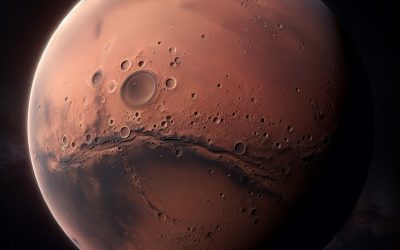
Mars Colonisation: How Close Are We to Colonising Mars?
Mars Colonisation: How Close Are We to Colonising Mars? Mars, the fascinating red planet, has captured human imagination for decades. Today, Mars colonisation is evolving from science fiction into a genuine scientific and technological ambition propelled by organisations like SpaceX, NASA, and visionaries such as Elon Musk. This blog post dives into how close we are to sending humans on Mars, building cities on Mars, and making humans on Mars a reality. Whether you’re curious about the colonisation of Mars timeline, the mission to Mars, or the science and engineering that will get us there, this article is worth reading—it covers the latest developments, current challenges, future prospects, and why it matters for humanity. Article Outline What Is Driving Mars Colonisation? How Soon Will We See Humans on Mars? Who Is Leading the Mars Race — NASA, SpaceX, or Others? What Are the Biggest Challenges to Colonise Mars? How Will Astronauts Survive the Mars Journey? What Will a Mars Colony Need to Thrive? Can Robotics Prepare the Way to Colonise Mars? What Role Will Mars Settlement Play in Space Exploration? Can a City on Mars Support Lifelong Habitation? Why Mars Colonisation Matters for Earth and Beyond What Is Driving Mars Colonisation? Mars colonisation stems from a mix of technological ambition, existential exploration, and visionary leadership. Mars has long been our planet’s most Earth-like neighbour, earning its nickname as the red planet. It also represents the next logical step after the Moon to Mars transition. Visionaries like Elon Musk aim to build a multi-planetary civilisation, while NASA has rekindled its commitment under the Artemis program that includes Mars missions as a natural...