Explore the World Through Geography, Natural Resources & Daily History
Clear, reliable and engaging guides that help you understand our planet — from UK geography education to global natural resources and On This Day history events.
Explore, discover, and learn about the wonders of our world! At Earth Site, we’re passionate about bringing geography, history, and science to life for curious minds of all ages. Whether you’re delving into historical events, uncovering the mysteries of the natural world, or seeking interactive resources, you’re in the right place.
Here, you can uncover the stories behind historical events, explore the natural wonders of our planet, and gain valuable insights into how the Earth’s systems shape our daily lives. From the towering peaks of mountain ranges to the far-reaching impacts of human innovation, we aim to make every topic both engaging and informative.
Start your journey of discovery with us today, and let’s make learning an adventure!
What We Cover
Earth Site brings together engaging and accessible educational content designed to help you understand the world, its history, and its natural systems.
🌍 Geography Education (UK & Worldwide)
We publish clear, easy-to-understand geography resources for students, teachers and curious learners. Our guides support geography education in the UK and cover physical geography, climate, ecosystems, population, and global development.
⛏️ Natural Resources & Environmental Geography
Explore detailed country profiles covering natural resources, mining, energy, geology and global environmental challenges. We show how nations manage minerals, water, land and ecosystems, and why these resources matter.
📅 On This Day in History
Every day has a story. Our On This Day history series features major events, anniversaries, traditions, and cultural milestones from around the world — with timelines, context, and fun facts.
TIMELINE
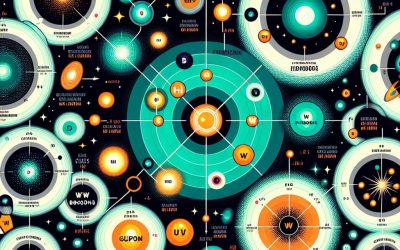
Standard Model of Particle Physics
The Standard model of particle physics (or quantum field theory) is the ultimate theory of everything. The standard model explains interactions between all subatomic particles and the fundamental forces. It is a work in progress, most recently updated in 2012 to include the higgs boson. Before we begin discussing the standard model we will provide some background information. to skip this select ‘The Standard Model’ below and begin reading from there. The discovery of sub-atomic particles Electron Shells The Photoelectric Effect Dirac’s Prediction of Antimatter The discovery of anti-matter Particle Accelerators Hadrons Baryons Mesons The Standard Model Fermions Quarks Leptons Fundamental Forces and Force Carrying Particles Bosons Photons (y) – The Electromagnetic Force Gluons (g) – The Strong Force Z and W Bosons – The Weak Force Gravity and the Higgs Boson The discovery of sub-atomic Particles By the Late 19th and Early 20th Centaury scientist became aware that although all matter was made from atoms, atoms themselves were made up of sub atomic particles and the first of these to be discovered was the electron by J.J. Thomson in 1897. The electron is a negatively charged particle that orbits the nucleus of an atom. Later Ernest Rutherford performed a series of experiments between 1909 and 1911 which suggested that atoms also contained small, dense and positively charged nuclei. He named the new particle a Proton and it was believed for some time that these were the only particles that occupied the nucleus and gave the atom its mass. In 1932 British Physicist James Chadwick proved the existence of the neutron. A neutron is a neutral...
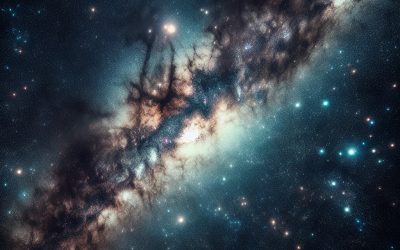
Milky Way Galaxy
The shape of the Milky Way Galaxy is a Barred Spiral Galaxy. Made of hudreds of billions of stars the Diameter of the disk is 100,000 light years with the average thickness is about 2,000 light years. How the Milky Way Galaxy got its Name Early Discoveries of the Milky Way Formation and Destiny of the Milky Way Shape of the Milky Way Our Position in the Milky Way How the Milky Way Galaxy got its Name In the times of the ancient Greeks people would look into the sky on a dark ‘moonless’ night and see a band of light streaked across the visible cosmos. They likened the sight to that of milk naming it galaxias (the Greek word for milk) from which we get the name galaxy and the Milky Way. Image in the public domain obtained from Pixabay Early Discoveries of the Milky Way In 1609 Galileo used his telescope to look at the Milky Way and realised that the Milky Way was actually a large clump of stars set in close proximity to each other. Later in 1750 an English physicist/astronomer called Thomas Wright suggested that the Milky Way may be a collection of stars in the shape of a convex lens and that our sun was one of the many stars within this mass. He published this theory in a book called ‘An original theory or new hypothesis of the Universe’. He came up with this idea when trying to explain the different perspectives of the Milky Way and gradually this theory became accepted by the Astronomers of the time. Formation and Destiny...
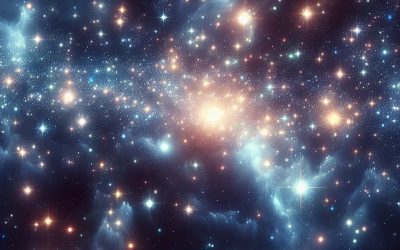
Stars – from Birth to Death
Born in the cosmic clouds (which can be up to 300 light-years across) known as nebula (meaning cloud) or “stellar nurseries”, stars form almost by chance. The Birth of Stars Plasma Nuclear Fusion in Stars The Life of Stars Hydrogen Fuelled Stars (Stage I) Helium Fuelled Stars (Stage II) Carbon Fuelled Stars (Stage III) White Dwarf Stars Supernova Neutron Stars Pulsars Black Holes The Birth of Stars Born in the cosmic clouds (which can be up to 300 light-years across) known as nebula (meaning cloud) or “stellar nurseries”, stars form almost by chance. In these incredibly vast accumulations of gas, often the result of a supernova (the explosive death of extremely large stars), is the potential for life. A slight movement of the matter that forms these clouds can cause a small clump to form. This clump will have a slight increase in mass and therefore, in gravity drawing more matter slowly towards its centre. This seemingly insignificant event is the first step towards creating a star and even a solar system like ours. Image Credit NASA As the clump draws in more matter it grows larger. Other clumps may have formed which too would slowly attract each other through their gravitational pull. Either way the mass will increase over millions of years and due to the conservation of angular momentum causes the clump to spin (similar to what causes water to spin as it falls down the plug hole). Plasma The sphere that has formed at the centre of the disc grows dramatically. As its mass and density increase...
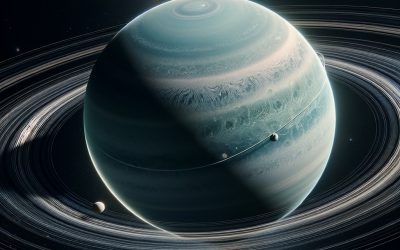
Planet Uranus
Planet Uranus is unique in our solar system in that its Obliquity or axil tilt is more than a right angle to its Elliptical path (its actual obliquity is 97.8˚). Overview of Planet Uranus Discovery of Uranus Naming Uranus Obliquity of Planet Uranus Seasons of Planet Uranus Magnetic field of Uranus Structure of Planet Uranus Atmosphere of Uranus Why is Uranus the Coldest Planet? Rings of Uranus Where in the Solar System? Quick Stats Overview of Planet Uranus Planet Uranus is the seventh planet in our solar system and unique in that it’ rotational axis is almost horizontal. Its striking blue-green colour is due to its methane rich atmosphere. It wasn’t discovered until 1781 when telescopes had been in use (whereas the planets closer to the sun had been observed for thousands of years) and it took over 200 years to discover Uranus had rings. Uranus is an ice giant made up of over 80% icy water, methane and ammonia. It is the coldest planet in our solar system with atmospheric temperatures reaching as low as -224˚C or 49.15˚k. Discovery of Uranus Uranus lays just over 18 Astronomical Units (1 AU is the average distance between Earth and the Sun) from Earth which made seeing this gas giant impossible from earth without the use of a telescope. Because of this Uranus was the first planet to have been discovered in the ‘modern era’. It was discovered by German born British astronomer and composer Sir William Herschel on the 13th of March 1781. The image on the left is...
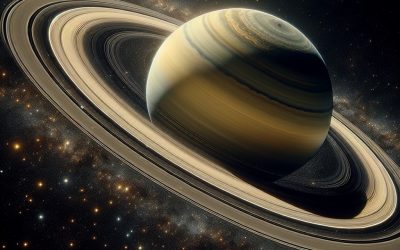
Planet Saturn
Planet Saturn is the second largest planet in our solar system however is the only planet that has a density less than water and would therefore float in a large enough body of water. Saturn Overview Rings of Saturn Saturn’s Weather Structure of Planet Saturn Saturn’s Sky Missions to Saturn Where in the Solar System? Quick Stats Saturn Overview This image was taken by NASA’s Cassini spacecraft on the 19th of July 2013. Sat in Saturn’s shadow Cassini managed to take this amazing image showing many moons and even earth in the distance. The Greeks called the planet Kronos or Cronus after the father of Zeus (Jupiter’s counterpart). Kronos was also the god of agriculture and fertility which led the roman’s to call the planet Saturn after their god of agriculture. Saturn is the second largest planet in our solar system and has a similar atmosphere to Jupiter with 97% hydrogen, 2.5% helium, and 0.5% methane. Saturn however is the only planet that has a density less than water and would therefore float in a large enough body of water. Saturn was the most distant planet that ancient civilisations knew of as it is the furthest planet, visible by the naked eye. Rings of Saturn In 1610 Galileo looked at the planet with his telescope and was the first person to see Saturn’s rings. His telescope wasn’t powerful enough to make them out clearly and so initially he thought it was three bodies very close together. After further observations Galileo started to sketch Saturn with two arms either side of...
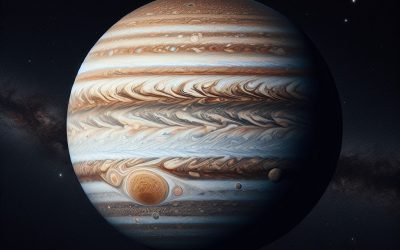
Planet Jupiter
Planet Jupiter is 2.5 times more massive than all the other planets in our solar system combined, and is believed to have the largest moon system with 67 moons. Overview of Planet Jupiter Formation of Planet Jupiter Layers of Jupiter Jupiter’s Magnetosphere Jupiter’s Rings Weather on Jupiter Juno Where in the Solar System? Quick Stats Real Time Data Overview of Planet Jupiter Jupiter is named after the King of the roman gods for very good reason. It is not only the largest planet but its magnetosphere is the largest object in the solar system. Jupiter and Saturn have the largest moon systems in the entire solar system Jupiter is known to have at least 67 moon as of 2015 while Saturn is currently known to have at least 62 but more are being discovered all the time. Planet Jupiter is 2.5 times more massive than all the other planets in our solar system combined. If Jupiter had become 80 times more massive it would have collapsed in on itself due to the immense gravity. This immense pressure would have started a thermonuclear reaction, turning Jupiter into a star. Formation of Planet Jupiter When the solar system was forming and left over material from the sun began to form the planets, moons and other bodies in our solar system. One planet in particular got more than 90% of that matter; this planet is the gas giant we call Jupiter. Stars form when gas clouds begin to clump together and this clump draws in more of the gas through the gravity...
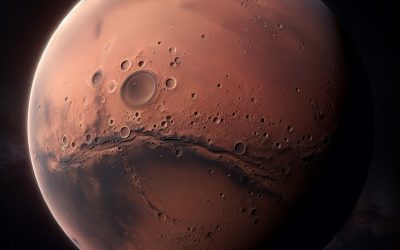
Planet Mars – The Red Planet
Planet Mars is the second smallest planet in our solar system, with a radius that is approximately half of Earth’s. Mars, often called the Red Planet, has captivated the human imagination for centuries. As the fourth planet from the Sun in our solar system, Mars offers some of the most intriguing possibilities in planetary science—from the search for alien life to becoming a future home for humanity. This article explores everything you need to know about the Red Planet, including the latest NASA science, facts about Mars, and the history of Mars exploration. If you’re curious about Planet Mars or dreaming about humanity’s journey into space, this post is a must-read. How Mars got its name Martian Orbit Surface of Planet Mars Martian Weather Life on Mars Curiosity Rover Where in the Solar System? Quick Stats What Makes Mars So Unique in the Solar System? Mars is the second smallest planet in the solar system, just half the size of Earth. Despite its size, it has drawn major attention due to its Earth-like features. Known as the fourth planet from the Sun, Mars is one of the most studied celestial bodies thanks to its relatively moderate distance from the Sun and the potential it holds for scientific discovery. The planet has two moons, named Phobos and Deimos, which are small and irregularly shaped. Unlike other rocky planets, Mars has a thin atmosphere made mostly of carbon dioxide. This makes it difficult to retain heat, resulting in extreme temperatures. The planet’s polar regions feature a polar ice cap, further evidence of the planet’s dynamic environment. How Mars got...
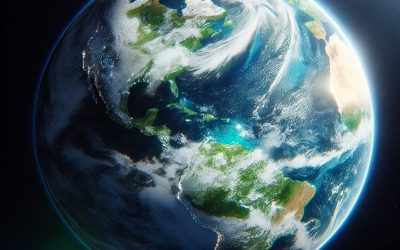
Planet Earth
Planet Earth gets its name from the old English word ‘eorthe’ meaning ground. It is the only place in the universe that we know sustains life. Planet Earth – the Cradle of life Origin of Planet Earth Seasons of Planet Earth Earth by Numbers Inside Planet Earth Earth’s Magnetosphere Where in the Solar System? Quick Stats of Earth Planet Earth – the Cradle of life Earth gets its name from the old English word ‘eorthe’ meaning ground. It is the only place in our solar system that we know sustains life which is attributed to many factors, including its distance from the Sun. Earth is at a distance that allows water to form as a liquid giving us the oceans from which life began. Our strong magnetosphere is created by our large iron core and the momentum of the planet, without it, solar storms would’ve destroyed any chance life long ago. Origin of Earth In 1975 two papers were published with a new theory that would change our picture of how Earth was formed and its relationship with our moon. One paper by William K. Hartmann and Donald Davis and another by Alfred G. W. Cameron and William Ward were written to explain why the moon has such a small metallic core which seems to be abnormal to the other celestial bodies in our solar system. The theory is called ‘The Giant Impact Hypothesis’ and is now regarded as the most plausible explanation for the structure of our moon and Earth. For many years physicists tried to explain how the moon was formed but these theories didn’t fit...
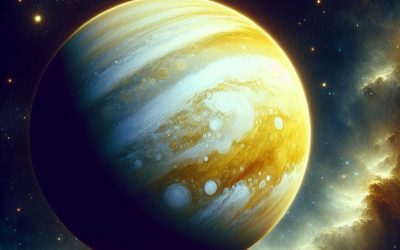
Planet Venus – The Mysterious Fiery Sister of Earth
Planet Venus: Facts about Venus and Future Missions to Venus Venus, the glowing gem in our sky, is one of the most fascinating planets in our solar system. With its scorching surface temperature, thick atmosphere of Venus, and curious retrograde rotation, Planet Venus stands out among Venus facts and facts about Venus. This article takes you on an in-depth journey through the mission to Venus, its characteristics, and why Venus facts matter to science and humanity. Why is this article worth reading? Because Venus is not just a bad twin of Earth—it challenges our understanding of what makes a planet habitable, how worlds evolve, and what future venus missions may uncover about life on Venus or its past. Article Outline What is Venus and where does it stand in the solar system? How does Venus orbit around the Sun? What makes the surface of Venus so extreme? How thick is the atmosphere of Venus? Can Venus host life on Venus? What have past venus missions taught us? What do modern venus orbiter missions reveal? Why is Venus often called Earth’s sister planet? What are the current and future mission to Venus? What are the most surprising facts about Venus? Naming Planet Venus Transit of Planet Venus Surface of Venus Environment of Planet Venus Spin and Magnetosphere of Venus Where in the Solar System? Venus Quick Stats The planet Venus looked very tranquil and beautiful to early observers but it was hiding a very inhospitable environment. What is Venus and where does it stand in the solar system? Venus is the second planet from the Sun, nestled between...
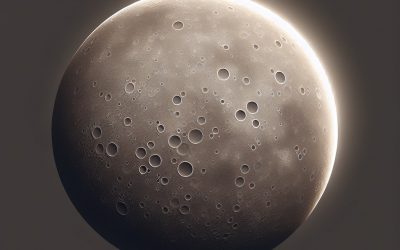
Planet Mercury
Mercury: The Smallest Planet With a Big Story to Tell Mercury, the smallest planet in our solar system, is often overlooked—but it shouldn’t be. As the closest planet to the Sun, it’s a fascinating world of extremes: searing heat and icy shadows, a bizarre orbit, and a mysterious magnetic field. Though tiny, it’s packed with surprises that help scientists understand how the solar system formed and evolved. This article dives into the planet Mercury, exploring what makes this rocky planet so unique and why it continues to capture our imagination. Article Outline What is Mercury and Why Is It Unique? Where Is Mercury Located in the Solar System? What Is Mercury’s Orbit Like? What Is the Surface of Mercury Made Of? Why Is Mercury So Hot and Cold? How Was Mercury Explored by NASA and Other Agencies? What Did the MESSENGER Spacecraft Discover? What Makes Mercury’s Magnetic Field So Unusual? How Does Mercury Compare to Venus? Fun Mercury Facts That Might Surprise You 1. What is Mercury and Why Is It Unique? Mercury is the smallest planet in the solar system, just slightly larger than our Moon. Despite its size, Mercury is one of the most fascinating celestial bodies. It’s often referred to as a planet of extremes due to its temperature fluctuations and close proximity to the Sun. While it’s the closest planet to the Sun, it’s not the hottest planet—that title goes to Venus, thanks to its thick atmosphere. Mercury is named after the Roman god Mercury, the swift messenger of the gods, which is fitting since Mercury speeds around the Sun faster than any other planet—completing...
Sun
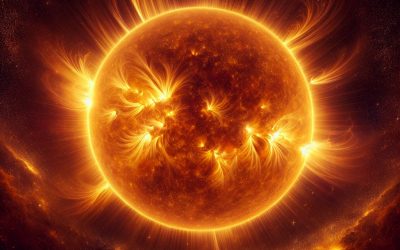
The Sun’s Rotation Sections of the Sun The Core The Radioactive Zone The Convection Zone The Photosphere The Chromosphere The Corona As illustrated the sun rotates in an anti-clockwise direction as observed from its most northern point. The solid core rotates in much the same way as all the solid planets in the solar system, however as the outer shell is made up from gas and plasma, it spins at different speeds from the equator as it does in the poles (yet still in the same direction). At the equator the sun rotates faster, taking 26.8 Earth days to make a full rotation, whereas it takes up to 36 Earth days to make one rotation at the poles. The Sun’s Rotation The rotation of the suns outer layers have a very powerful effect on the magnetic field produced by the sun. Because the material of the sun rotates at different speeds it causes the magnet lines of force to become tangled and even tear. Magnetic lines of force can be viewed on a normal magnet using iron fillings. By placing a piece of paper above a magnet and sprinkling iron filings on the paper, curved lines appear between the north and south poles. The two ends of torn lines can show up on the Photosphere as sunspots where they cool the plasma considerably. Another effect of this can be solar flares that are massive expulsion of energy when the lines snap and reconnect and occasionally this forces an eruption of actual plasma from the Corona, a phenomenon we call Coronal Mass Ejection...