Explore the World Through Geography, Natural Resources & Daily History
Clear, reliable and engaging guides that help you understand our planet — from UK geography education to global natural resources and On This Day history events.
Explore, discover, and learn about the wonders of our world! At Earth Site, we’re passionate about bringing geography, history, and science to life for curious minds of all ages. Whether you’re delving into historical events, uncovering the mysteries of the natural world, or seeking interactive resources, you’re in the right place.
Here, you can uncover the stories behind historical events, explore the natural wonders of our planet, and gain valuable insights into how the Earth’s systems shape our daily lives. From the towering peaks of mountain ranges to the far-reaching impacts of human innovation, we aim to make every topic both engaging and informative.
Start your journey of discovery with us today, and let’s make learning an adventure!
What We Cover
Earth Site brings together engaging and accessible educational content designed to help you understand the world, its history, and its natural systems.
🌍 Geography Education (UK & Worldwide)
We publish clear, easy-to-understand geography resources for students, teachers and curious learners. Our guides support geography education in the UK and cover physical geography, climate, ecosystems, population, and global development.
⛏️ Natural Resources & Environmental Geography
Explore detailed country profiles covering natural resources, mining, energy, geology and global environmental challenges. We show how nations manage minerals, water, land and ecosystems, and why these resources matter.
📅 On This Day in History
Every day has a story. Our On This Day history series features major events, anniversaries, traditions, and cultural milestones from around the world — with timelines, context, and fun facts.
TIMELINE
Why the Palestine Question Remains One of the World’s Most Difficult Conflicts
When we talk about the Israeli-Palestinian conflict, we’re delving into something that’s truly multifaceted and deeply entrenched. It’s not just a border dispute or a political disagreement; it’s a profound clash of narratives, historical grievances, and existential fears. This conflict remains one of the world’s most difficult because it involves interwoven issues of identity, land, religion, human rights, and the legacy of colonialism, all exacerbated by a complex web of regional and international interests that make a straightforward resolution seem perpetually out of reach. One of the primary reasons this conflict is so tough to crack is that both sides have profoundly different, yet equally deeply felt, historical narratives that clash at almost every turn. These aren’t just academic disagreements; they shape national identity and fuel ongoing grievances. The Zionist Narrative: Return to an Ancestral Homeland For many Israelis, the establishment of Israel in 1948 was the culmination of a centuries-old dream: the return of a dispersed people to their ancestral homeland. Biblical Roots and Historical Ties: Jewish people have maintained a continuous presence in the land of Israel for millennia, tracing their roots back to biblical times. This connection isn’t just religious; it’s cultural and historical, forming the bedrock of Jewish identity. Persecution and the Holocaust: The atrocities of the Holocaust underscored the urgent need for a safe haven for Jewish people. The Zionist movement, already gaining momentum, was seen as the only viable solution to prevent future genocides and provide self-determination. A “Land Without a People for a People Without a Land”: This often-cited phrase, while historically inaccurate in its full context, reflects the early Zionist belief...
The Complete History of Afghanistan: Empires, Wars, and Survival
So, you’re curious about Afghanistan’s history? It’s a wild ride, to say the least. Think of it as a crossroads that’s seen more comings and goings than a London Tube station during rush hour. Empires have marched through, wars have raged, and through it all, the Afghan people have somehow, astonishingly, survived and shaped their own identity. It’s a story of incredible resilience, cultural fusion, and a strategic location that has both blessed and cursed the land. Afghanistan, in its modern borders, is a relatively new concept. For millennia, the region was a mosaic of tribal lands, influenced by everything happening around it along the Silk Road and beyond. Before any of the big empires showed up, this was already a place of movement and settlement. Early Settlers and Nomadic Life Long before written records, hunter-gatherer groups roamed these fertile river valleys and rugged mountains. Archaeological finds hint at settlements dating back thousands of years. The geography itself, with its high plains and valleys, naturally lent itself to both settled agriculture in fertile areas and nomadic pastoralism, moving herds with the seasons. This dual lifestyle forged a deep connection to the land and a practical, adaptable spirit that would become a hallmark of its people. The Rise of Gandhara and Bactria As civilisations bloomed in Mesopotamia and the Indus Valley, the Afghan region began to see the emergence of more complex societies. Two significant early players were the kingdoms of Gandhara (roughly modern eastern Afghanistan and Pakistan) and Bactria (northern Afghanistan). These weren’t monolithic states in the modern sense, but rather influential cultural and political centres. Gandhara: Known for...
The American Revolution: How the United States Won Independence
Alright, let’s dive into how the United States, against pretty significant odds, managed to break free from British rule. It wasn’t a quick or easy affair, but a long, often brutal struggle driven by a growing sense of injustice and a fierce desire for self-determination. They didn’t just win independence; they carved it out. Long before any shots were fired, the relationship between Britain and its American colonies was, shall we say, complicated. For decades, the colonies mostly managed their own affairs, fostering a sense of independence. However, after the French and Indian War (or Seven Years’ War, as we know it here), things shifted dramatically. Britain, burdened by war debt, decided the colonies should contribute more. Taxation Without Representation This is a classic. Parliament started imposing taxes like the Stamp Act and the Townshend Acts without giving the colonists any say in the matter. Their argument, “no taxation without representation,” wasn’t just a catchy slogan; it was a fundamental principle they felt was being violated. They argued that since they had no elected representatives in Parliament, Parliament had no right to tax them. Growing Resentment These taxes weren’t just about money; they were about control. British actions were often seen as infringements on the colonists’ traditional rights as Englishmen. The Quartering Act, forcing colonists to house British soldiers, was another sore point, feeling like an invasion of their homes and privacy. It was a constant drip of new regulations and taxes that chipped away at the colonists’ patience. Escalating Tensions and Early Conflicts Things didn’t just go from zero to war overnight. There was a period of increasing...
Energy Security in Europe: Which Countries Depend Most on Imported Energy?
Sure, here’s an article about energy security in Europe, focusing on which countries rely most on imported energy. Europe’s energy landscape is a bit of a complex jigsaw puzzle, and a big piece of that puzzle is understanding where all the energy comes from, especially when it’s not produced domestically. The short answer to which countries depend most on imported energy isn’t a simple one-liner; it’s a nuanced picture depending on the type of energy and how you measure reliance. Generally speaking, countries lacking significant domestic fossil fuel reserves or substantial renewable capacity tend to be more exposed to the ups and downs of international energy markets. This reliance has, of course, been a hot topic, particularly in recent years. The Big Picture: Measuring Energy Dependency When we talk about energy dependency, we’re essentially looking at the proportion of a country’s total energy consumption that is met by imports. This isn’t just about oil and gas; it includes electricity, coal, and even fuels used for transport and industry. The European Union, as a whole, is a massive energy importer, meaning the bloc collectively relies on external sources for a significant chunk of its energy needs. However, the level of dependence varies wildly from one member state to another. Key Metrics to Consider Net Imports as a Percentage of Total Energy Consumption: This is the most straightforward measure. It shows how much energy a country has to bring in to meet its demand, relative to its total energy use. A high percentage here means a high degree of reliance. Import Dependency for Specific Fuel Types: Some countries might have a...
What Is the Difference Between Gaza and the West Bank?
Hello there. If you’ve been following news from the Middle East, you’ve probably heard about Gaza and the West Bank quite a bit. They are two distinct Palestinian territories, and while they share some fundamental historical and political threads, they are quite different in terms of geography, governance, and daily life for their residents. The core difference lies in their geographical separation, the controlling authorities, and the unique challenges each faces due to their respective positions and histories. Let’s start with the most obvious point: where they actually are. Gaza and the West Bank aren’t connected; they are separated by Israeli territory. This geographical isolation has profound implications for everything from movement of people to economic development. Gaza Strip: A Coastal Enclave The Gaza Strip is a narrow strip of land along the Mediterranean Sea. It’s about 41 kilometres (25 miles) long and 10 kilometres (6 miles) wide, making it one of the most densely populated areas in the world. Location: Bordered by Israel to the north and east, Egypt to the south, and the Mediterranean Sea to the west. Access: Entry and exit are heavily controlled by Israel (via two main crossings) and Egypt (via the Rafah crossing). This makes travel for residents extremely difficult. Climate: Mediterranean climate with hot, dry summers and mild, wet winters. The West Bank: A Landlocked Territory In contrast, the West Bank is a landlocked territory bordered by Israel to the north, west, and south, and Jordan to the east. It’s significantly larger than Gaza, covering an area of about 5,655 square kilometres (2,183 square miles). Location: East of Israel, with a long...
Russia’s Shadow Economy: How Trade Routes Changed After Western Sanctions
Right, let’s talk about how Russia’s shadow economy has been flexing and changing since those Western sanctions hit. Basically, what we’re seeing is a significant rerouting of trade, often through informal, less transparent channels, and a much bigger reliance on a few key partners. It’s less about direct confrontation and more about finding the path of least resistance through a complex web of global supply chains. When the West brought down the hammer of sanctions, particularly after the full-scale invasion of Ukraine in 2022, the goal was clear: isolate Russia economically and starve its war machine. But economies, especially large ones, rarely just lie down and die. Instead, they adapt. For Russia, this meant a pretty rapid shift away from established trade partners and methods. Initial Shockwaves The early days were chaotic, with many Western companies pulling out of Russia and direct trade routes becoming a political minefield. This created immediate shortages of certain goods and disrupted supply chains that had been in place for decades. The Search for Alternatives Businesses, both state-owned and private, quickly started looking for ways to circumvent these restrictions. This isn’t just about illicit goods; it’s also about everything from semiconductors for military use to everyday consumer items that Russian consumers were accustomed to. The Rise of Parallel Imports and Intermediaries One of the most visible changes is the dramatic increase in ‘parallel imports’. This is essentially bringing goods into Russia without the brand owner’s permission, often through third countries. It’s a legal grey area in Russia (they effectively legalized it for sanctioned goods), but it requires a sophisticated network. The Turkic Corridor Turkey...
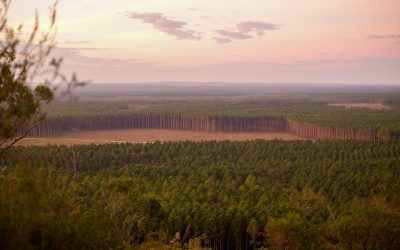
The Role of Deforestation in Climate Change: A Growing Global Concern
Right, so what’s the deal with deforestation and climate change? Simply put, when we cut down forests, we’re not just losing trees; we’re actively contributing to a warmer planet. Forests are fantastic at soaking up carbon dioxide, a major greenhouse gas, and keeping it out of the atmosphere. When they’re gone, that carbon gets released, and it also means there are fewer trees left to do the soaking up in the future. It’s a double whammy, really, and it’s a growing global concern for good reason. Imagine forests as Earth’s big, green lungs. They’re constantly taking in carbon dioxide from the air through photosynthesis. This process essentially turns CO2 into wood, leaves, and roots, storing the carbon safely away. This stored carbon is a massive carbon sink, helping to regulate the Earth’s temperature. When these trees are standing and growing, they’re actively reducing the amount of greenhouse gases in the atmosphere. Photosynthesis: The Magic Behind the Shield At its core, photosynthesis is the engine that drives forests’ climate-regulating power. Sunlight, water, and carbon dioxide are all the ingredients. Plants use these to create their own food (sugars) and, as a byproduct, they release oxygen. Crucially, during this process, a significant amount of carbon is incorporated into the plant’s biomass. The older and larger a tree gets, the more carbon it has stored over its lifetime. It’s a slow, natural process that’s been happening for millennia, keeping our climate relatively stable. Carbon Sequestration: More Than Just Storing It’s not just about the living trees. The soil beneath the forest also plays a vital role. Forest soils are rich in organic...
How Vladimir Putin Reshaped Modern Russia
So, how did Vladimir Putin manage to reshape modern Russia? In a nutshell, he did it by consolidating power, reasserting national pride, and steering the country back onto the global stage after a period of perceived weakness, all while navigating a complex economic and political landscape. It’s a story of determined leadership, strategic decisions, and significant consequences. When Vladimir Putin first came onto the scene, Russia was in a turbulent state. The 1990s, following the collapse of the Soviet Union, were marked by economic hardship, political instability, and a general feeling of helplesness for many Russians. Against this backdrop, Putin’s methodical rise through the ranks of the KGB and then into politics offered a promise of order and stability. From St. Petersburg to the Kremlin Putin’s early life gave little indication of the global figure he would become. Born in Leningrad (now St. Petersburg) in 1952, he joined the KGB in the 1970s and served in East Germany for several years. After the fall of the Berlin Wall, he returned to St. Petersburg and entered local politics, eventually becoming a close aide to Mayor Anatoly Sobchak. From there, his trajectory was swift. He moved to Moscow in 1996 and quickly rose through President Boris Yeltsin’s administration, holding various key positions before Yeltsin’s surprise resignation on New Year’s Eve 1999, naming Putin as acting president. Early Promises and Public Perception Putin’s initial appeal lay in his calm, confident demeanor and his promise to restore order. The Chechen Wars, which had raged throughout the 1990s, were a major source of instability. Putin’s strong stance in the Second Chechen War, despite significant...
European Countries Increasing Military Spending: What’s Driving Rearmament?
European countries are definitely upping their military spending, and the short answer to “why now?” is Russia. The invasion of Ukraine in February 2022 was a huge wake-up call, shattering decades of assumptions about peace in Europe and highlighting vulnerabilities that many countries had let slide. This isn’t just about a desire to confront Russia directly, though that’s certainly part of it, especially for countries closer to the eastern flank. It’s also a pragmatic response to a changed security landscape, a recognition that the world is a more unpredictable place, and a renewed commitment to collective defence. For a long time after the Berlin Wall fell, many European nations enjoyed something of a “peace dividend.” With the Soviet threat gone, defence budgets were trimmed, resources were redirected, and military spending became less of a priority. Decades of Underinvestment Catching Up This sustained period of lower spending meant that many European militaries, while maintaining professional forces, saw their equipment age, their stockpiles dwindle, and their readiness levels drop. Training exercises became less frequent or smaller in scale, and the focus often shifted to expeditionary missions rather than large-scale territorial defence. A Stark Reality Check The war in Ukraine didn’t just expose Russia’s aggressive intent; it also exposed the limitations of many European militaries. The scale of ammunition consumption, the need for robust air defence, and the importance of logistical resilience all became incredibly clear. Suddenly, the nice-to-haves from a decade ago became urgent necessities. Russia’s Renewed Aggression: The Primary Catalyst Let’s be blunt: Moscow’s actions are the single biggest driver behind this rearmament push. The annexation of Crimea in 2014...
How the Ukraine War Changed Europe Forever
When we talk about the Ukraine war, it’s not just about the fighting on the ground; it’s about a fundamental shift in how Europe operates, perhaps for good. The invasion in February 2022 wasn’t just another conflict; it was a watershed moment that reshaped alliances, sped up policy changes, and forced a pretty stark re-evaluation of just what security means on the continent. In short, it fundamentally altered Europe forever. Russia’s actions didn’t just annoy a few neighbours; they upended decades of established diplomatic norms and forced countries to pick sides or at least re-evaluate their positions. NATO’s Revitalised Purpose For years, NATO was arguably a bit directionless. The Cold War was over, and while it had operations, its core purpose felt less urgent. Russia’s invasion changed that overnight. It gave NATO a renewed sense of purpose and, frankly, a kick up the backside. Expansion and Unity: We saw Finland and Sweden, traditionally neutral countries, apply for and join NATO. This wasn’t a small thing; it showed a clear desire for stronger collective defence against a perceived threat. Suddenly, the alliance became larger and more united than it had been in a long time. Increased Defence Spending: Countries that had been dragging their heels on the 2% of GDP defence spending target are now taking it seriously. The message was clear: if you want security, you have to invest in it. This isn’t just about big headlines; it’s about tangible hardware, training, and personnel increases across the board. Enhanced Eastern Flank Security: NATO significantly bolstered its presence in Eastern Europe, deploying more troops, equipment, and conducting exercises. This wasn’t...
What Was the British Mandate for Palestine?
So, what exactly was the British Mandate for Palestine? In a nutshell, it was a legal instrument for the administration of Palestine, established in 1922 by the League of Nations. Britain, as the mandatory power, was tasked with preparing the region for self-governance, with a significant catch: also implementing the Balfour Declaration, which called for a “national home for the Jewish people.” This dual and inherently conflicting objective set the stage for much of the subsequent turmoil in the area. It wasn’t just a simple handover of territory; it was a complex, internationally sanctioned responsibility that ended up shaping the modern Middle East in profound ways. To truly understand the British Mandate, we need to rewind a bit and look at the events leading up to its creation. It wasn’t a sudden decision out of nowhere, but rather a culmination of wartime politics and long-standing ambitions. The Ottoman Empire’s Decline For centuries, Palestine had been part of the vast Ottoman Empire. However, by the early 20th century, the “Sick Man of Europe” was in decline. World War I provided the final push towards its disintegration. As the Allied powers fought the Ottoman forces, the future of its territories became a major point of discussion and negotiation. Wartime Promises and Agreements During the First World War, with the aim of building alliances and securing strategic advantages, Britain made a series of rather contradictory promises regarding the future of the Middle East. These commitments would ultimately complicate its role as the mandatory power significantly. The McMahon-Hussein Correspondence (1915-1916) This exchange of letters between Sir Henry McMahon, the British High Commissioner in...
Why Does Jerusalem Matter to Both Israelis and Palestinians?
Jerusalem. It’s a name that carries a monumental weight, sparking intense emotions and complex political debates. For Israelis and Palestinians, this ancient city isn’t just a place; it’s the beating heart of their national aspirations and their deepest spiritual connections. Understanding why Jerusalem matters so profoundly to both sides is key to grasping the enduring conflict in the region. At its core, Jerusalem’s significance stems from a dual but inseparable reality: it is simultaneously a deeply sacred religious site for Judaism, Christianity, and Islam, and the political capital for both Israelis and Palestinians. These intertwining layers of meaning create a situation where each group sees control over Jerusalem as fundamental to their identity and their future. For Israelis, it’s the historical and spiritual center of the Jewish people, the site of their ancient temples and the focus of millennia of longing. For Palestinians, it represents the heart of their hoped-for independent state, a symbol of their narrative and a vital cultural and political hub. The contest for Jerusalem, therefore, is not just about land; it’s a contest for narratives, for identity, and for the very right to self-determination. Jerusalem’s claim to immense religious importance is ancient and multifaceted, drawing millions of pilgrims and believers from across the globe. For Judaism, Christianity, and Islam, the city’s stones echo with stories that shaped human history and faith. This shared sacredness, however, has also been a source of conflict, as each religion holds beliefs about Jerusalem that can, at times, appear to be in direct competition with the others. Abrahamic Roots and Divine Promises The foundational narratives of Judaism, Christianity, and Islam...