Hello there. If you’ve been following news from the Middle East, you’ve probably heard about Gaza and the West Bank quite a bit. They are two distinct Palestinian territories, and while they share some fundamental historical and political threads, they are quite different in terms of geography, governance, and daily life for their residents. The core difference lies in their geographical separation, the controlling authorities, and the unique challenges each faces due to their respective positions and histories.
Let’s start with the most obvious point: where they actually are. Gaza and the West Bank aren’t connected; they are separated by Israeli territory. This geographical isolation has profound implications for everything from movement of people to economic development.
Gaza Strip: A Coastal Enclave
The Gaza Strip is a narrow strip of land along the Mediterranean Sea. It’s about 41 kilometres (25 miles) long and 10 kilometres (6 miles) wide, making it one of the most densely populated areas in the world.
- Location: Bordered by Israel to the north and east, Egypt to the south, and the Mediterranean Sea to the west.
- Access: Entry and exit are heavily controlled by Israel (via two main crossings) and Egypt (via the Rafah crossing). This makes travel for residents extremely difficult.
- Climate: Mediterranean climate with hot, dry summers and mild, wet winters.
The West Bank: A Landlocked Territory
In contrast, the West Bank is a landlocked territory bordered by Israel to the north, west, and south, and Jordan to the east. It’s significantly larger than Gaza, covering an area of about 5,655 square kilometres (2,183 square miles).
- Location: East of Israel, with a long border along the Jordan River.
- Access: Access to and from the West Bank is primarily controlled by Israel, with numerous checkpoints and restricted roads.
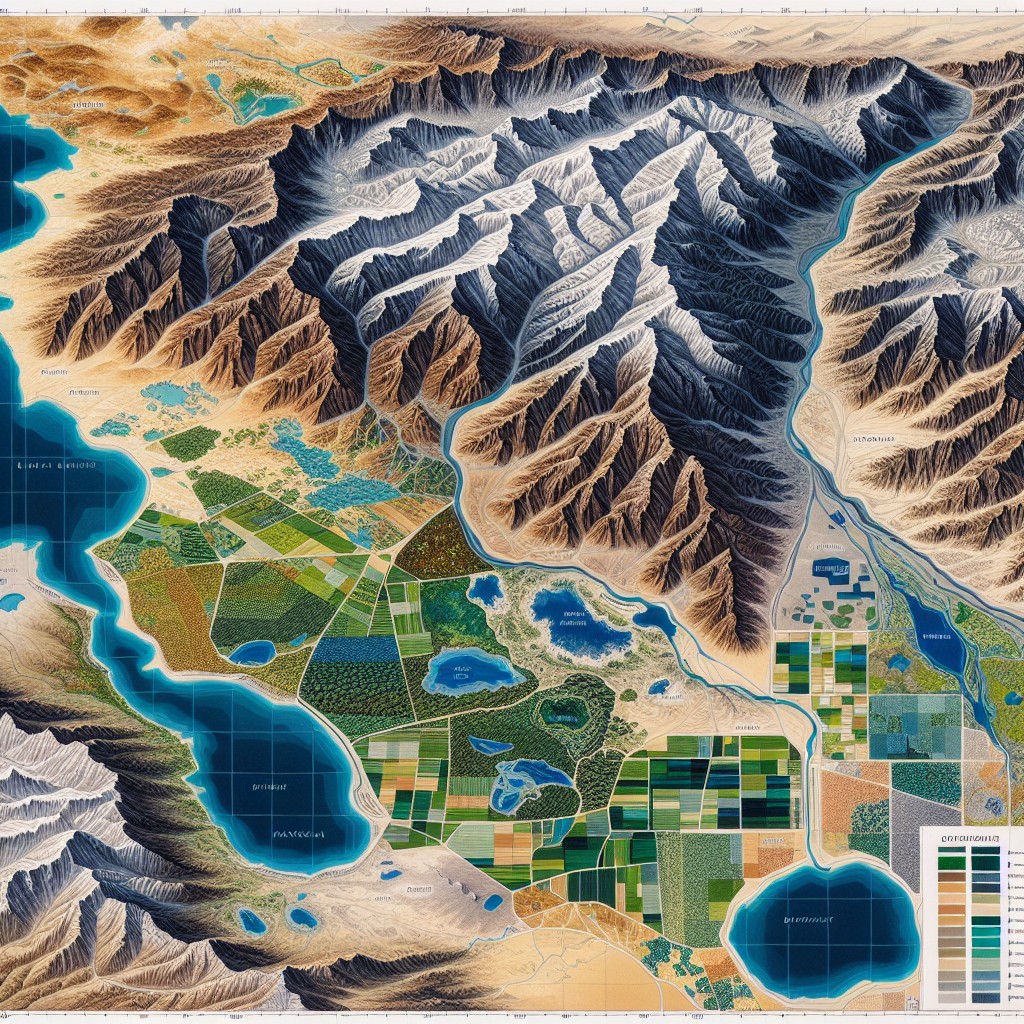
- Terrain: More varied terrain than Gaza, including mountainous areas, rolling hills, and the Dead Sea basin.
Political Governance and Control
This is where things get particularly complex. While both territories are considered Palestinian, their internal governance and external control differ significantly. This divergence arose after the 2007 Fatah-Hamas conflict.
Gaza Strip: Hamas’s Rule
Since 2007, the Gaza Strip has been governed by Hamas, an Islamist political and militant organisation. This has had a dramatic impact on Gaza’s international standing and its relationship with Israel and the Palestinian Authority.
- De facto Government: Hamas independently runs the civil administration, security forces, and public services within Gaza.
- International Relations: Many countries, including the UK, classify Hamas as a terrorist organisation, which complicates international aid and diplomatic relations with Gaza.
- Blockade: Following Hamas’s takeover, Israel and Egypt imposed a blockade on Gaza, citing security concerns. This blockade restricts the movement of goods and people, severely impacting the economy and daily life.
- Impact of Blockade: This has led to chronic shortages of essential goods, limited electricity, and high unemployment rates.
The West Bank: Palestinian Authority and Israeli Occupation
The West Bank is a patchwork of control. While the Palestinian Authority (PA) exercises limited self-rule in certain areas, large parts remain under full Israeli military and administrative control.
- Palestinian Authority (PA): The PA, headed by President Mahmoud Abbas and dominated by the Fatah party, governs parts of the West Bank. It was established following the Oslo Accords in the 1990s.
- Areas A, B, and C: For administrative purposes, the West Bank is divided into three areas:
- Area A: Full Palestinian civil and security control. These are generally the main Palestinian cities.
- Area B: Palestinian civil control, but Israeli security control.
- Area C: Full Israeli civil and security control. This comprises the vast majority of the West Bank’s land, including all Israeli settlements and connecting roads, and much of the Jordan Valley.
- Israeli Occupation: Israel maintains ultimate security control over the entire West Bank. This includes control over borders, airspace, and the right to conduct military operations anywhere in the territory.
- Israeli Settlements: Over 130 official Israeli settlements, and many more unofficial outposts, have been built in the West Bank since 1967. These settlements are considered illegal under international law.
- Security Barrier: A substantial barrier, also known as the separation wall or fence, has been constructed by Israel primarily within the West Bank, further limiting Palestinian movement and access to land.
Demographics and Social Fabric
The populations of Gaza and the West Bank, while both predominantly Palestinian Arab and Muslim, exhibit some differences in their social structure and experiences due to their distinct political and geographical realities.
Gaza: A Young, Displaced Population
Gaza’s population is overwhelmingly young, and a significant proportion are refugees or descendants of refugees from the 1948 Arab-Israeli War.
- Population Density: Extremely high, making it one of the most crowded places on Earth.
- Refugee Status: A large percentage of residents are registered refugees with UNRWA (United Nations Relief and Works Agency), living in camps that have often evolved into permanent neighbourhoods.
- Social Impact of Blockade: The ongoing blockade has led to immense social strain, high poverty rates, and significant mental health challenges, particularly among the youth who have known little else.
- Religious Conservatism: Generally considered more religiously conservative than the West Bank, partly influenced by Hamas’s governance.
West Bank: More Diverse and Fragmented
The West Bank’s population is also largely Palestinian, but its geographical fragmentation and the presence of Israeli settlements lead to a more diverse social landscape.
- Urban Centres: Contains major Palestinian cities like Ramallah, Nablus, Hebron, and Bethlehem.
- Refugee Camps: Also home to numerous refugee camps, though their scale and visibility can differ from Gaza.
- Israeli Settlers: The presence of a significant Israeli settler population creates unique social and political dynamics, often leading to tension and conflict.
- Economic Disparities: While some areas have seen economic development, particularly around Ramallah, there are significant disparities, often linked to the impact of occupation and land confiscation.
- Cultural Differences: While sharing a common Palestinian identity, there can be subtle cultural differences between regions within the West Bank and compared to Gaza, influenced by historical connections to Jordan and the varied impact of Israeli policies.
Economic Realities
The economic situations in Gaza and the West Bank are both challenging, but the specific factors contributing to these challenges differ significantly. Both are heavily reliant on external aid.
Gaza: A Collapsed Economy
Gaza’s economy is largely in tatters due to the prolonged blockade, multiple conflicts, and political isolation.
- High Unemployment: Among the highest unemployment rates globally, particularly for youth.
- Dependence on Aid: Heavily reliant on international humanitarian aid and remittances.
- Limited Production: Industries and agriculture are severely hampered by restrictions on imports of raw materials and exports of finished goods.
- Fishing Restrictions: The fishing zone off Gaza’s coast is heavily restricted by Israel, impacting a traditional livelihood.
- Energy Crisis: Chronic electricity shortages, often with only a few hours of power per day, cripple businesses and daily life.
West Bank: Restricted Growth
The West Bank’s economy, while generally more stable than Gaza’s, faces significant limitations due to Israeli occupation policies, movement restrictions, and the division of territory.
- Oslo Accords Framework: The economic relationship between Israel and the PA is largely governed by the Paris Protocol, an annex to the Oslo Accords, which gives Israel significant control over Palestinian trade, customs, and currency.
- Movement Restrictions: Checkpoints, permits, and segregated road systems hinder the movement of goods and people, increasing business costs and stifling trade between Palestinian cities.
- Area C Control: Israel’s control over Area C, which contains most of the West Bank’s agricultural land and natural resources, limits Palestinian development and economic expansion.
- Limited Access to Resources: Palestinians have restricted access to water resources in the West Bank, often disproportionately compared to Israeli settlements.
- Donor Dependence: Also highly reliant on international donor aid, which helps to sustain public services and development projects.
Human Rights and Daily Life
| Aspect | Gaza | West Bank |
|---|---|---|
| Location | Southern part of Israel | Eastern part of Israel |
| Size | 365 square kilometers | 5,655 square kilometers |
| Population | Approximately 2 million | Approximately 2.8 million |
| Government | Ruled by Hamas | Ruled by Fatah |
| Border | Border with Egypt and Israel | Border with Israel |
| Economy | High unemployment and poverty | Higher GDP per capita |
The daily lives of Palestinians in both Gaza and the West Bank are profoundly shaped by the political realities and restrictions they face, leading to different but equally challenging human rights situations.
Gaza: ‘Open-Air Prison’
Life in Gaza is often described as living in an ‘open-air prison’ due to the severity of the blockade and constant threat of conflict.
- Freedom of Movement: Severely restricted. Gazans require permits from Israeli authorities to leave the Strip, which are rarely granted, even for medical emergencies. The Rafah crossing with Egypt is also frequently closed.
- Access to Healthcare: Limited medical facilities and shortages of essential medicines and equipment due to import restrictions.
- Impact of Conflict: Frequent military operations and conflicts have caused widespread destruction, casualties, and psychological trauma among the population.
- Water and Sanitation: A severe crisis in clean water and sanitation due to crumbling infrastructure and limited access to materials for repair.
- Humanitarian Crisis: The cumulative effect of these challenges is a persistent humanitarian crisis, with a large part of the population dependent on aid for survival.
West Bank: Restrictions and Dispossession
While not under a full blockade like Gaza, residents of the West Bank face a different set of daily challenges stemming from the Israeli occupation.
- Freedom of Movement: Restricted by checkpoints, permits, and segregated road systems. Travel between Palestinian cities can be time-consuming and unpredictable.
- Settlement Expansion: Ongoing expansion of Israeli settlements, often accompanied by the confiscation of Palestinian land and resources.
- Demolitions: Palestinian homes and structures, particularly in Area C, are frequently demolished by Israeli authorities for lacking building permits, which are almost impossible for Palestinians to obtain.
- Military Raids and Arrests: Regular Israeli military raids into Palestinian areas, often leading to arrests, particularly of young men.
- Impact of Barrier: The separation barrier cuts off communities from their agricultural lands, schools, and healthcare facilities.
- Self-Determination: The overarching human rights issue is the lack of genuine self-determination for Palestinians, with daily life heavily dictated by an occupying power.
In summary, while both Gaza and the West Bank are integral parts of the Palestinian story, their current circumstances are vastly different. Gaza is under a tight blockade and governed by Hamas, leading to an acute humanitarian crisis and near-isolation. The West Bank, while larger and more integrated economically in some ways, is fragmented by Israeli settlements, checkpoints, and military control, with the Palestinian Authority exercising limited sovereignty. Understanding these distinctions is crucial for grasping the complexities of the Israeli-Palestinian conflict and the diverse challenges faced by Palestinians today.
FAQs
1. What is the geographical location of Gaza and the West Bank?
Gaza is a coastal strip of land on the eastern shore of the Mediterranean Sea, bordered by Egypt to the south and Israel to the east and north. The West Bank is a landlocked territory located in the Middle East, bordered by Israel to the west and north, and Jordan to the east.
2. What is the political status of Gaza and the West Bank?
Gaza is governed by the militant group Hamas, which took control of the territory in 2007. The West Bank is governed by the Palestinian Authority, which is recognized as the legitimate government by the international community.
3. What is the demographic makeup of Gaza and the West Bank?
Gaza has a population of approximately 2 million people, predominantly Palestinian Arabs. The West Bank has a population of around 2.7 million, also predominantly Palestinian Arabs.
4. What is the economic situation in Gaza and the West Bank?
Gaza has faced economic hardship due to a blockade imposed by Israel and Egypt, leading to high unemployment and poverty rates. The West Bank has a relatively more stable economy, with a higher standard of living compared to Gaza.
5. What is the religious significance of Gaza and the West Bank?
Both Gaza and the West Bank hold religious significance for Muslims, Christians, and Jews. The West Bank is home to several important religious sites, including Bethlehem and Jericho, while Gaza is believed to be the site of ancient Philistine settlements mentioned in the Bible.