Ever looked at a map and noticed how the coastlines of continents, particularly South America and Africa, seem to fit together like pieces of a jigsaw puzzle? That’s not a coincidence! The idea that continents have moved across the Earth’s surface over vast periods of time is the core concept of continental drift. It’s a theory that has profoundly changed our understanding of our planet’s geology and history, suggesting that our landmasses aren’t fixed but are in constant, albeit very slow, motion.
The Man Behind the Idea: Alfred Wegener
The person most famously associated with the initial formulation of continental drift is Alfred Wegener, a German meteorologist and geophysicist. While many scientists had noticed the peculiar fit of continents before him, Wegener was the one who compiled a comprehensive body of evidence to support the idea that the continents were once joined together. He proposed that there was a supercontinent, which he named Pangaea, meaning “all lands” in Greek, and that this supercontinent began to break apart and drift into their current positions roughly 200 million years ago.
Wegener wasn’t the first to ponder this, but he was the first to bring together disparate lines of evidence from different scientific fields to make a compelling case. His work, however, faced significant resistance from the scientific community of his time, largely because he couldn’t adequately explain the mechanism behind how continents could move.
The Evidence: More Than Just a Jigsaw Fit
Wegener’s strength lay in gathering evidence from various sources that, when put together, painted a picture of a dynamic Earth. He wasn’t just relying on guesses; he had data.
Fossil Clues Across Continents
One of Wegener’s most persuasive arguments came from the distribution of fossils. He pointed out that identical fossils of certain ancient plants and animals were found on continents now separated by vast oceans.
Mesosaurus: A Freshwater Reptile’s Journey
Consider the fossil remains of Mesosaurus, a small freshwater reptile that lived during the early Permian period. Fossils of Mesosaurus are found only in two specific regions: southern Africa and eastern South America. Given that Mesosaurus was a freshwater creature, it’s highly improbable that it could have swum across the vast, salty Atlantic Ocean to inhabit both continents independently. The presence of these identical fossils strongly suggests that these landmasses were once connected, allowing the reptile to disperse.
Glossopteris: The Fern That Bridged Worlds
Another key fossil was that of Glossopteris, an ancient fern. Fossilized remains of this distinctive fern have been discovered in South America, Africa, India, Australia, and Antarctica. This widespread distribution of a single plant species, which likely required a specific and uniform climate to thrive, would be extremely difficult to explain if the continents had always been in their present positions. The most logical explanation is that these landmasses were once part of a single, larger landmass where Glossopteris could flourish, and then they drifted apart.
Rock Formations and Mountain Ranges: A Geological Connection
Beyond fossils, Wegener also looked at the rocks themselves. He observed striking similarities in geological structures and rock formations on continents that are now separated by oceans.
Appalachian Mountains and Caledonian Mountains: Echoes Across the Atlantic
Wegener noted that the Appalachian Mountains in North America share a similar geological history and rock composition with the Caledonian Mountains in Scotland and Scandinavia. He proposed that these mountain ranges were once part of a continuous chain that was broken apart as the continents drifted. If you could conceptually push North America and Europe back together, these mountain ranges would align, showing a clear geological continuity.
Similar Rock Strata on Opposite Shores
Furthermore, Wegener found matching sequences of rock layers with similar ages and compositions on the coastlines of Africa and South America. These rocks provided further evidence of a shared geological past before the continents separated. Imagine finding identical geological blueprints on two different construction sites separated by a massive body of water – it strongly suggests they were part of the same original design.
Palaeoclimate Evidence: Traces of Past Climates
Wegener also used evidence of past climates, or palaeoclimates, to support his theory. He examined geological deposits that indicated very different climatic conditions than those present in those regions today.
Glacial Deposits in Warm Climates
For instance, evidence of glaciation – ice ages – has been found in tropical and subtropical regions like India, Africa, South America, and Australia. These deposits, such as tillites (rocks formed from glacial debris), suggest that massive ice sheets once covered these areas. Conversely, rocks in drier, warmer climates indicate past arid conditions. If the continents had always been in their current positions, it would be incredibly difficult to explain these widespread glacial deposits in what are now warm regions. Wegener argued that if these continents were once clustered together closer to the South Pole, then a single, vast ice sheet could have covered them all, explaining the distribution of glacial evidence.
The Resistance: Why It Wasn’t Accepted at First
Despite the compelling evidence Wegener presented, continental drift was largely rejected by the scientific community during his lifetime. The primary hurdle was the lack of a plausible mechanism to explain how continents, massive slabs of rock, could move across the Earth’s surface.
The “Maw” Hypothesis and Other Doubts
Wegener himself proposed some ideas, such as continents plowing through the oceanic crust like ships through water, or being dragged by tidal forces. These explanations were not scientifically sound and were easily refuted. Geologists at the time understood the immense strength and rigidity of rock, making it difficult to imagine how such movement could occur. The oceanic crust was thought to be too solid for continents to push through, and alternative explanations for the observed data were favoured, even if they were more convoluted.
A Lack of Understanding of the Earth’s Interior
A key reason for this resistance was a limited understanding of the Earth’s interior. Scientists didn’t yet grasp the concept of plate tectonics – the idea that the Earth’s outer shell is broken into large plates that move, driven by forces deep within the planet. Without this fundamental understanding, Wegener’s theory was seen as a fanciful notion.
The Breakthrough: Plate Tectonics Emerges
It wasn’t until the mid-20th century, with advancements in oceanography and geophysics, that the pieces of the puzzle finally fell into place. New discoveries at the bottom of the ocean provided the missing mechanism for continental drift, leading to the development of the theory of plate tectonics.
Echo Sounding and the Ocean Floor
The development of sonar technology during World War II allowed scientists to map the ocean floor in unprecedented detail. They discovered vast underwater mountain ranges, like the Mid-Atlantic Ridge, which are essentially continuous chains of volcanoes. They also found deep ocean trenches and evidence of seafloor spreading.
Seafloor Spreading: The Engine of Movement
The concept of seafloor spreading, proposed by Harry Hess in the early 1960s, was a crucial turning point. It suggested that new oceanic crust is constantly being formed at mid-ocean ridges and then moves away from the ridge as more new crust is generated. This process effectively pushes the older seafloor outwards, and because the continents are embedded in these vast tectonic plates, they are carried along with this movement.
Magnetic Stripes on the Seafloor
Further evidence for seafloor spreading came from studying the magnetic properties of rocks on the ocean floor. As new molten rock (magma) erupts at mid-ocean ridges and cools, magnetic minerals within it align themselves with the Earth’s magnetic field at that time. The Earth’s magnetic field has reversed its polarity numerous times throughout history. Crucially, scientists found symmetrical patterns of these magnetic reversals on either side of the mid-ocean ridges, which could only be explained by new crust forming at the ridge and then moving outwards symmetrically. This provided irrefutable evidence that the seafloor was indeed spreading.
The Asthenosphere: A Slippery Layer
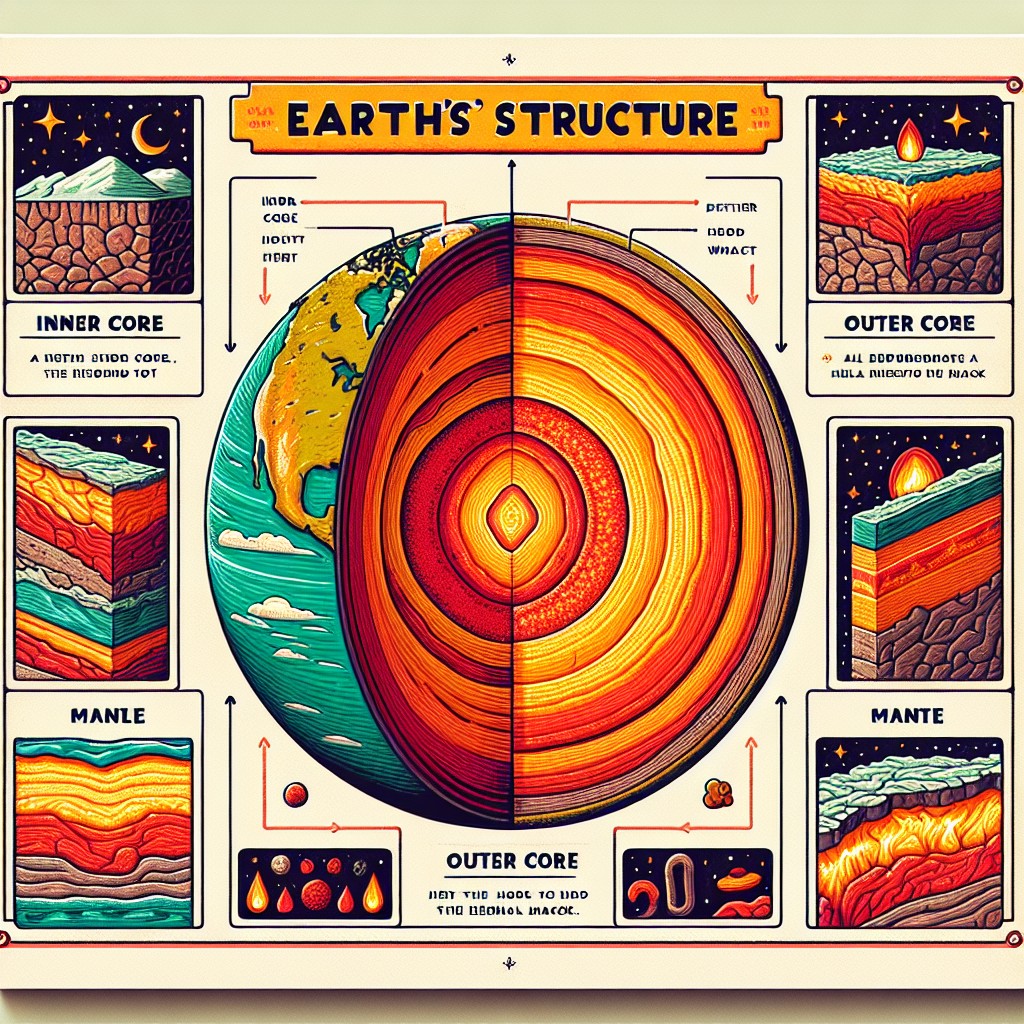
Scientists also began to understand the structure of the Earth’s mantle. They realised that the uppermost part of the mantle, beneath the rigid lithosphere (which includes the crust and the uppermost part of the mantle), is a semi-fluid layer called the asthenosphere. This layer, though solid, can flow very slowly over geological timescales, providing a relatively “slippery” layer for the tectonic plates to move upon.
Plate Tectonics: The Modern Understanding
Plate tectonics, therefore, is the overarching theory that explains how continental drift happens. It’s not just continents drifting independently; rather, the Earth’s lithosphere is broken into about a dozen major and numerous minor tectonic plates. These plates, which include both continental and oceanic crust, float and move on the semi-fluid asthenosphere. The movement of these plates is driven by convection currents within the Earth’s mantle – hotter, less dense material rises, cools, and sinks, creating a slow but powerful circulation that drags the plates along.
Types of Plate Boundaries
The interactions between these moving plates at their boundaries are responsible for most of Earth’s geological activity, including earthquakes, volcanoes, and mountain formation. There are three main types of plate boundaries:
Divergent Boundaries: Where Plates Pull Apart
At divergent boundaries, plates move away from each other. This is where new oceanic crust is created, as seen at the mid-ocean ridges. On land, divergent boundaries can form rift valleys, which can eventually lead to the formation of new oceans.
Convergent Boundaries: Where Plates Collide
At convergent boundaries, plates move towards each other. The outcome of this collision depends on the types of plates involved. If an oceanic plate collides with a continental plate, the denser oceanic plate is forced beneath the continental plate in a process called subduction, leading to volcanic mountain ranges and deep ocean trenches. If two continental plates collide, neither is dense enough to subduct completely, resulting in massive uplift and the formation of the world’s largest mountain ranges, like the Himalayas.
Transform Boundaries: Where Plates Slide Past Each Other
At transform boundaries, plates slide horizontally past each other. This movement often results in significant earthquakes, as the plates can become locked for periods, building up stress before suddenly releasing it. The San Andreas Fault in California is a famous example of a transform boundary.
The Legacy of Continental Drift and Plate Tectonics
The acceptance of continental drift, and its evolution into the theory of plate tectonics, has been nothing short of revolutionary in geology and related sciences. It provides a unifying framework for understanding a vast array of geological phenomena.
Predicting Geological Events
Understanding plate tectonics helps us predict where earthquakes and volcanic eruptions are likely to occur. Most seismic and volcanic activity is concentrated along plate boundaries, allowing for hazard assessments and disaster preparedness in vulnerable regions.
Exploration and Resource Discovery
This theory also plays a vital role in the exploration for natural resources. The geological processes associated with plate tectonics, such as volcanic activity and the formation of sedimentary basins, are linked to the concentration of valuable mineral deposits, oil, and gas.
Understanding Earth’s History
Continental drift and plate tectonics allow us to reconstruct the history of our planet. By tracing the movements of continents backwards in time, scientists can map out past supercontinents like Pangaea and understand how the Earth’s geography has changed over millions of years, influencing climate, evolution, and even the migration patterns of ancient populations.
In essence, while Alfred Wegener might not have had all the answers about the “how,” his groundbreaking idea that continents move has fundamentally reshaped our planet’s story. It’s a testament to the power of observation and the gradual, collaborative nature of scientific discovery.
FAQs
What is the Continental Drift Theory?
The Continental Drift Theory is the idea that the Earth’s continents were once joined together as a single landmass, and have since drifted apart over millions of years.
Who proposed the Continental Drift Theory?
The Continental Drift Theory was first proposed by German meteorologist Alfred Wegener in 1912. He suggested that the continents were once part of a supercontinent called Pangaea.
What evidence supports the Continental Drift Theory?
Evidence supporting the Continental Drift Theory includes the fit of the continents, similarities in rock formations and mountain ranges, the distribution of fossils, and the matching of ancient climates and glacial deposits.
What is the current scientific understanding of the Continental Drift Theory?
The current scientific understanding of the Continental Drift Theory is that the movement of the Earth’s tectonic plates is responsible for the drifting of the continents. This process is known as plate tectonics.
How has the Continental Drift Theory impacted our understanding of Earth’s history?
The Continental Drift Theory has revolutionized our understanding of Earth’s history, providing insights into the formation of continents, the evolution of life, and the changing climate over millions of years. It has also led to the development of the theory of plate tectonics, which has wide-ranging implications for geology, geography, and environmental science.