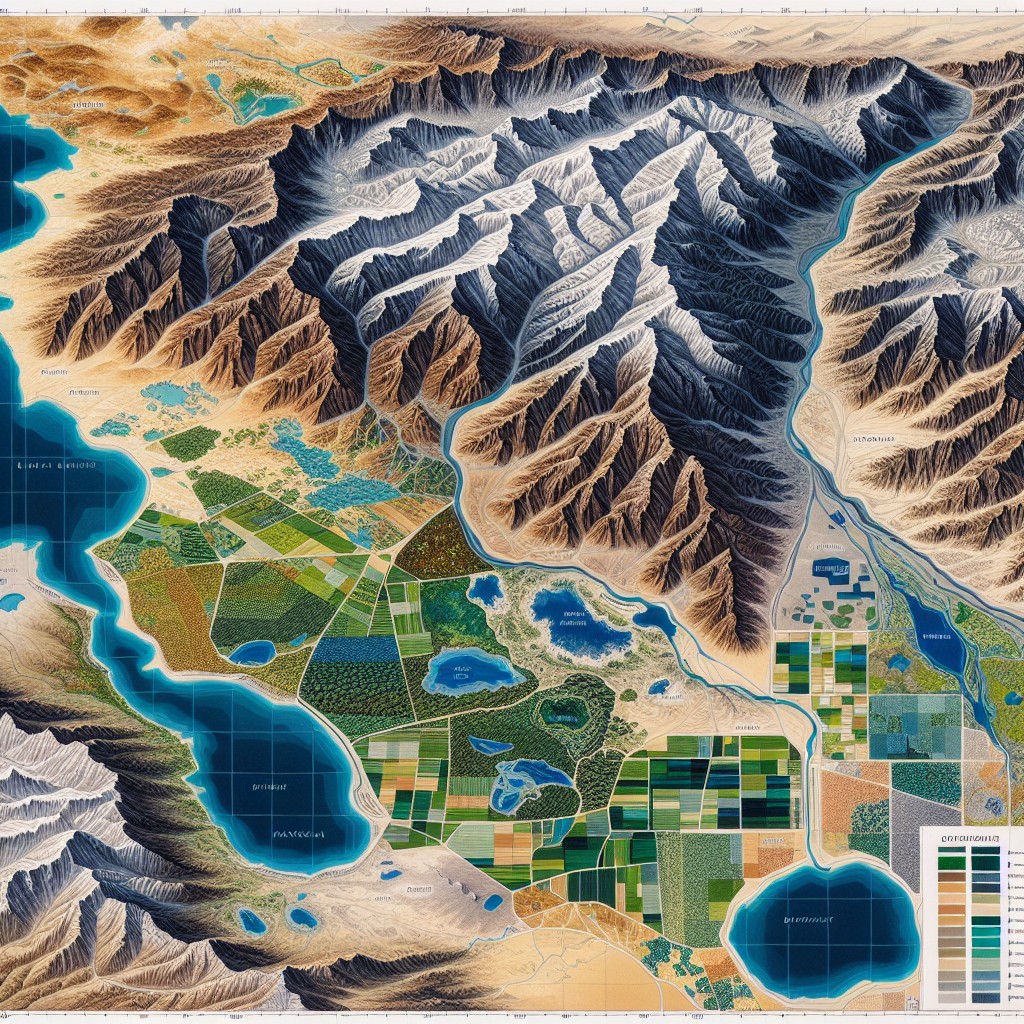
So, you’ve seen them on maps, those fan-shaped bits of land where rivers decide to spread out before meeting the sea, haven’t you? These are deltas, and they’re a pretty fascinating natural phenomenon. Essentially, a delta forms when a river carrying a lot of sediment flows into a body of calmer water, like an ocean, a sea, or even a large lake, and can no longer carry its load. The river slows down, and all that sand, silt, and mud it’s been ferrying drops to the bottom, gradually building up new land. It’s a constant, slow-motion process of deposition that shapes coastlines over millennia.
Think of a river as a busy delivery service, constantly hauling all sorts of material from its headwaters. This material isn’t just clean water; it’s a gritty mix of eroded rock and soil.
Erosion: Where it All Begins
Before a river can even think about forming a delta, it has to pick up stuff. This happens through erosion.
Weathering and Breakdown
Rocks and soil on land are constantly being broken down by natural forces. Rain, ice, wind, and even biological activity (like plant roots prying rocks apart) chip away at the landscape, creating smaller particles.
Hydraulic Action and Abrasion
As water flows, its sheer force can dislodge loose material from the riverbed and banks (hydraulic action). If the water is also carrying grit and pebbles, these can act like sandpaper, grinding away at the riverbed and sides (abrasion).
Dissolution and Deflation
Some minerals in rocks can dissolve directly into the water, carried along unseen. In drier regions, wind can also play a role, picking up fine dust and sand and blowing it away, leaving behind particles that can eventually get washed into rivers (deflation).
Transportation: The River’s Burden
Once these particles are loosened, the river gets to work. The speed and volume of the river determine how much it can carry and what size of particles it can move.
Suspended Load: The Feather-Light Passengers
The smallest and lightest particles, like clay and silt, are kept bobbing around in the water column. They’re so fine that the water’s flow, even at moderate speeds, is enough to keep them aloft. This is often the most visible part of sediment transport, giving rivers a muddy or cloudy appearance.
Bed Load: The Heavy Haulers
Larger and heavier materials – pebbles, cobbles, and even boulders in fast-flowing, powerful rivers – tend to be rolled, bounced, or dragged along the riverbed. This movement is only possible when the water has enough energy to overcome the weight of these items.
Dissolved Load: The Invisible Cargo
Remember those minerals that dissolved? They’re still in the water, unseen but contributing to the water’s chemical makeup. This load is always present, regardless of river speed.
The Delta’s Cradle: Where River Meets Sea
The magic, or rather the geology, really happens when the river’s energetic journey comes to an end. The moment of delta formation is dictated by the clash between the river’s force and the calmness of its destination.
Slowing Down: Losing the Drive
When a river enters a larger, stiller body of water, its speed dramatically decreases. Imagine hitting a brick wall, but in water. The water has to spread out, and its ability to keep all that sediment in motion is suddenly severely limited.
Reduced Flow Velocity
The open water offers less resistance than confined riverbanks. The river’s energy dissipates as it fans out, and that energy is what was keeping the sediment suspended and rolling.
Increased Friction
As the river water spreads across the wider surface of the sea or lake, friction with the bottom and sides increases, further slowing it down.
Deposition: The Sediment’s Final Rest
With its power to transport gone, the river’s load begins to drop. This is the primary mechanism for delta building.
Settling of Suspended Load
The fine clay and silt particles, which were easily held in suspension, now slowly sink to the bottom as the water stills.
Accumulation of Bed Load
Larger pebbles and sand grains that were being rolled along the riverbed will also settle out, contributing to the growing deposit.
The Fan Shape Emerges
As this deposition happens repeatedly, day after day, year after year, it begins to build upwards and outwards, creating that characteristic fan or triangular shape that gives deltas their name (derived from the Greek letter delta, Δ).
Types of Deltas: Not All Fans are Created Equal
While the basic principle of deposition is the same, the shape and characteristics of a delta can vary quite a bit. These variations are often down to the specific interplay between the river’s sediment supply and the forces of the surrounding water body.
River-Dominated Deltas: The Straight Shooters
These are the classic examples. The river’s force is the dominant factor, so much so that it often pushes out into the sea, creating distinct lobe-shaped features. The Gini delta in Italy, for instance, shows clear signs of the river building itself outwards.
Bird’s Foot Deltas
A specific type of river-dominated delta, these have long, finger-like projections that resemble a bird’s foot. The Mississippi Delta is the most famous example. The river’s sediment is deposited so efficiently that it forms these extensions.
Arcuate Deltas
These have a more rounded or arc-shaped coastline, often with multiple distributaries (smaller channels that branch off the main river). The Nile Delta is a prime example of an arcuate delta, showcasing a broad, sweeping fan.
Wave-Dominated Deltas: The Sculpted Shorelines
In some places, the persistent energy of waves along the coast can significantly influence delta formation. Waves can rework the deposited sediment, smoothing out the delta’s edges and creating offshore sandbars.
Straight Shorelines
Instead of sharp lobes, wave-dominated deltas tend to have straighter coastlines as waves redistribute the sediment along the shore.
Beach Ridges and Barrier Islands
The wave action can create a series of parallel beach ridges or even barrier islands offshore, which are essentially elongated sandy deposits shaped by the surf.
Tide-Dominated Deltas: The Rhythmic Reorganizers
Where tides are strong, they can have a major impact on how a delta forms. Tides can create channels and bars that run parallel to the coast, as opposed to the more outward-pushing river- or wave-influenced deltas.
Tidal Channels and Creeks
The ebb and flow of strong tides can carve out distinct channels and smaller creeks that snake through the delta.
Tidal Ridges
These are submerged or emergent sand ridges that form perpendicular to the coast, reflecting the direction of dominant tidal currents. The Ganges-Brahmaputra Delta famously exhibits these features.
Factors Influencing Delta Shape and Size
It’s not just the river and the water body that matter; other elements play a crucial role in determining what kind of delta emerges and how large it gets.
Sediment Supply: The Fuel for Growth
This is perhaps the most critical factor. A river that carries a massive amount of sediment will build a delta much faster and potentially much larger than a river with a meager load.
River Basin Geology
The type of rocks and soil in the river’s drainage basin directly influences the sediment it can pick up. Basins with easily erodible rock will yield more sediment.
Climate and Rainfall Patterns
Regions with high rainfall and frequent storms can lead to increased erosion and thus a greater sediment load for the river. Conversely, arid climates might have less sediment.
Tectonic Setting: The Ground Beneath
What’s happening geologically matters too. The stability of the crust where the delta is forming can influence subsidence (sinking) or uplift, affecting the overall balance of deposition.
Subsidence Rates
If the land beneath the delta is sinking faster than the river can deposit sediment, the delta might struggle to grow or even disappear. This is a significant concern in some low-lying delta regions.
Sea Level Changes
Over geological timescales, fluctuating sea levels have a massive impact. Rising sea levels can swamp developing deltas, while falling sea levels can expose more land for delta formation to occur.
Wave and Tidal Energy: The Sculpting Forces
As mentioned, the power of waves and the strength of tides are key. In a high-energy coastal environment, sediment might be eroded and redistributed, shaping a different kind of delta than in a sheltered bay.
Open Coast vs. Sheltered Bays
Deltas forming on exposed coastlines will be more heavily influenced by wave action. Those in protected bays or estuarine systems might be more dominated by riverine processes.
The Life Cycle of a Delta: From Birth to Decline
| Process | Description |
|---|---|
| Erosion | As rivers flow, they erode the land and carry sediment downstream. |
| Deposition | When the river reaches a body of water, the sediment is deposited due to reduced flow velocity. |
| Delta Formation | Over time, the deposited sediment builds up to form a delta, which is a landform that extends into the body of water. |
| Channels | The river branches into multiple channels within the delta, creating a complex network of waterways. |
Like anything in nature, deltas aren’t static. They have a life story, undergoing changes over long periods.
Growth and Progradation: The Building Phase
This is the period of active formation and outward growth. The river is depositing sediment effectively, and the delta is expanding into the water body. New land is being created, and distributary channels might be actively forming new lobes.
Stagnation and Differentiation: The Mature Phase
As the delta matures, the river channels might become less efficient, and the land surface might start to subside. The delta’s shape becomes more defined, and natural levees might form along the river channels. Different parts of the delta might start to show varying characteristics as sediment distribution changes.
Degradation and Submergence: The Waning Years
In some cases, deltas can begin to shrink or even disappear. This can happen if the river’s sediment supply decreases, or if subsidence and rising sea levels outpace deposition. Erosion by waves and currents can also contribute to degradation.
Relict Deltas: Echoes of the Past
Sometimes, you find evidence of deltas that formed in ancient times when sea levels were different or coastlines were in other positions. These are known as relict deltas, and they tell us a lot about past geological conditions.
Modern Examples: Our Living Deltas
Think of the major river systems emptying into the sea: the Amazon, the Yangtze, the Ganges-Brahmaputra, the Mississippi. These are massive, active deltas that are not only geological wonders but also home to incredibly rich ecosystems and large human populations. They are vital for agriculture, fishing, and biodiversity, but are also increasingly vulnerable to the impacts of climate change and human activity. Understanding how they form is just the first step in appreciating their importance and fragility.
FAQs
What is a delta?
A delta is a landform that forms at the mouth of a river where it meets a body of water, such as a sea or ocean. It is typically triangular in shape and is formed by the deposition of sediment carried by the river.
How do deltas form?
Deltas form when a river carries sediment, such as sand, silt, and clay, and deposits it at the river mouth. This sediment builds up over time, creating a fan-shaped landform. The formation of a delta is influenced by factors such as the volume of water and sediment carried by the river, the strength of tides and waves, and the slope of the land.
What are the different types of deltas?
There are three main types of deltas: arcuate, bird’s foot, and cuspate. Arcuate deltas have a triangular shape and are formed by a single main river channel. Bird’s foot deltas have a branching network of distributaries, giving them a bird’s foot-like appearance. Cuspate deltas have a triangular shape with pronounced points and are formed in areas with strong wave action.
What are the ecological functions of deltas?
Deltas are important ecosystems that support a diverse range of plant and animal species. They also provide valuable habitats for migratory birds and marine life. Deltas also play a crucial role in regulating the flow of sediment and nutrients, as well as providing natural protection against coastal erosion and storm surges.
What are some well-known deltas around the world?
Some well-known deltas around the world include the Nile Delta in Egypt, the Mississippi River Delta in the United States, the Ganges-Brahmaputra Delta in Bangladesh and India, and the Mekong Delta in Vietnam. These deltas are not only significant in terms of their ecological and environmental importance, but also in terms of their cultural and economic significance.