Explore the World Through Geography, Natural Resources & Daily History
Clear, reliable and engaging guides that help you understand our planet — from UK geography education to global natural resources and On This Day history events.
Explore, discover, and learn about the wonders of our world! At Earth Site, we’re passionate about bringing geography, history, and science to life for curious minds of all ages. Whether you’re delving into historical events, uncovering the mysteries of the natural world, or seeking interactive resources, you’re in the right place.
Here, you can uncover the stories behind historical events, explore the natural wonders of our planet, and gain valuable insights into how the Earth’s systems shape our daily lives. From the towering peaks of mountain ranges to the far-reaching impacts of human innovation, we aim to make every topic both engaging and informative.
Start your journey of discovery with us today, and let’s make learning an adventure!
What We Cover
Earth Site brings together engaging and accessible educational content designed to help you understand the world, its history, and its natural systems.
🌍 Geography Education (UK & Worldwide)
We publish clear, easy-to-understand geography resources for students, teachers and curious learners. Our guides support geography education in the UK and cover physical geography, climate, ecosystems, population, and global development.
⛏️ Natural Resources & Environmental Geography
Explore detailed country profiles covering natural resources, mining, energy, geology and global environmental challenges. We show how nations manage minerals, water, land and ecosystems, and why these resources matter.
📅 On This Day in History
Every day has a story. Our On This Day history series features major events, anniversaries, traditions, and cultural milestones from around the world — with timelines, context, and fun facts.
TIMELINE
Why Does Jerusalem Matter to Both Israelis and Palestinians?
Jerusalem. It’s a name that carries a monumental weight, sparking intense emotions and complex political debates. For Israelis and Palestinians, this ancient city isn’t just a place; it’s the beating heart of their national aspirations and their deepest spiritual connections. Understanding why Jerusalem matters so profoundly to both sides is key to grasping the enduring conflict in the region. At its core, Jerusalem’s significance stems from a dual but inseparable reality: it is simultaneously a deeply sacred religious site for Judaism, Christianity, and Islam, and the political capital for both Israelis and Palestinians. These intertwining layers of meaning create a situation where each group sees control over Jerusalem as fundamental to their identity and their future. For Israelis, it’s the historical and spiritual center of the Jewish people, the site of their ancient temples and the focus of millennia of longing. For Palestinians, it represents the heart of their hoped-for independent state, a symbol of their narrative and a vital cultural and political hub. The contest for Jerusalem, therefore, is not just about land; it’s a contest for narratives, for identity, and for the very right to self-determination. Jerusalem’s claim to immense religious importance is ancient and multifaceted, drawing millions of pilgrims and believers from across the globe. For Judaism, Christianity, and Islam, the city’s stones echo with stories that shaped human history and faith. This shared sacredness, however, has also been a source of conflict, as each religion holds beliefs about Jerusalem that can, at times, appear to be in direct competition with the others. Abrahamic Roots and Divine Promises The foundational narratives of Judaism, Christianity, and Islam...
The West Bank in 2026: Settlements, Security, and Rising Tensions
The West Bank in 2026: Settlements, Security, and Rising Tensions So, what’s the deal with the West Bank in 2026? It’s a complex picture, but the short answer is: expect continued Israeli settlement expansion, an increasingly strained security situation, and a persistent undercurrent of rising tensions, all playing out against a backdrop of shifting regional and international dynamics. It’s not a simple story, and the reality on the ground for those living there is often challenging. Let’s break it down. The expansion of Israeli settlements in the West Bank isn’t a new phenomenon, but in 2026, it’s showing no signs of slowing down. This is a key driver of many of the issues we’ll discuss. Official Policies and Their Impact The Israeli government’s official stance, particularly under the current political climate, largely supports settlement building. This translates into planning, approval, and funding for new construction. We’re likely to see continued tenders for housing units, the establishment of new outposts (often in legally grey areas), and infrastructure projects that effectively cement these settlements into the West Bank’s landscape. Planning and Approvals: Expect the Higher Planning Council for Judea and Samaria (the Israeli body responsible for settlement planning) to remain active. Decisions regarding zoning, building permits, and land appropriation will directly influence the physical growth of settlements. “Settlement Blocs” and Contiguity: There’s a strategic focus on expanding existing settlement blocs, often those near the Green Line or those perceived as vital for Israeli security. This aims to create geographically contiguous areas of Israeli presence, making future territorial divisions more difficult. Outposts and Legal Challenges: The issue of illegal outposts – settlements...
The Complete History of the United States of America Explained
Fancy diving into the nuts and bolts of how the United States came to be? You’ve landed in the right place. We’re going to whiz through the major milestones, from its early days right up to modern times, giving you the grand sweep of American history without getting bogged down in endless details. Think of it as a handy roadmap through the past of a nation that’s certainly left its mark on the world. The story of the US doesn’t start clean-cut. It’s a tapestry woven with indigenous narratives, European ambitions, and a whole lot of struggle. Before Columbus: A Rich Tapestry of Civilisations Long before Europeans set foot on what they’d call ‘America’, the land was home to countless sophisticated civilisations. From the highly developed Pueblo cultures in the southwest to the mound-building societies of the Mississippian era, these indigenous peoples had complex social structures, intricate trade networks, and diverse spiritual beliefs. They farmed, hunted, and built impressive cities, leaving behind a legacy that often gets overlooked in typical historical accounts. We’re talking about thousands of years of rich human history that predates any European arrival. European Arrival and Colonial Expansion The arrival of Christopher Columbus in 1492 marked a seismic shift. While he certainly wasn’t the first European to visit (Vikings got there centuries earlier), his voyages kicked off a period of sustained European exploration and, crucially, colonisation. Spain, France, and the Netherlands all staked their claims, but it was England that eventually gained the dominant foothold along the eastern seaboard. Early English Settlements and Their Challenges The Jamestown settlement in 1607 is a well-known start, though...
Eastern vs Western Europe: The Growing Political and Economic Divide
The idea of a growing divide between Eastern and Western Europe isn’t just a political talking point; it’s a tangible reality shaping the continent. While the fall of the Iron Curtain promised a unified Europe, we’re increasingly seeing two distinct trajectories in terms of political values, economic development, and international alignment. This isn’t about one being “better” than the other, but about differing approaches and priorities that are creating clear fault lines. When we talk about political landscapes, we’re looking at more than just who’s in power. It’s about the fundamental principles guiding governance, the approach to democratic institutions, and the role of the state. Democratic Backsliding in the East In several Eastern European nations, particularly Hungary and Poland, we’ve observed a trend often termed “democratic backsliding.” This isn’t an outright rejection of democracy, but rather a gradual erosion of its checks and balances. Undermining Judicial Independence: Governments in these countries have faced significant criticism for actions perceived as attempts to control the judiciary. This often involves controversial reforms to judicial appointment processes, retirement ages for judges, or disciplinary procedures, leading to concerns about political interference in legal rulings. When courts are seen as extensions of the executive, it casts a long shadow over the rule of law. Restricted Media Freedom: Independent media outlets are crucial for a healthy democracy. However, in parts of Eastern Europe, there has been a tightening grip on the media landscape. This can manifest as state control over public broadcasters, the use of state advertising to favour pro-government outlets, or even legal and financial pressures on critical journalists and publications. The result is often...
What Is Gaza and Why Is It Important?
Gaza, officially the Gaza Strip, is a narrow piece of land on the eastern coast of the Mediterranean Sea. It’s one of the two Palestinian territories, the other being the West Bank. Roughly 41 kilometres (25 miles) long and 10 kilometres (6 miles) wide, it’s one of the most densely populated places on Earth. Despite its small size, Gaza holds immense historical, political, and social significance, playing a crucial role in the ongoing Israeli-Palestinian conflict and impacting regional and international dynamics. Its importance stems from its status as a core part of the Palestinian national identity, the humanitarian situation within its borders, and its function as a flashpoint in a long-standing geopolitical struggle. A Look at Gaza’s Geography and Demographics Getting a clearer picture of Gaza often starts with understanding its physical characteristics and the people who live there. It’s a truly unique place, shaped by its small size and dense population. Where Exactly Is Gaza? Gaza is bordered by Israel to the east and north, Egypt’s Sinai Peninsula to the south, and the Mediterranean Sea to the west. This geographical positioning is key to understanding many of the challenges it faces, particularly regarding access and movement. Its connection to the sea, for instance, offers both potential and limitations due to Israeli and Egyptian naval blockades. Who Lives in Gaza? The population of the Gaza Strip is overwhelmingly Palestinian, with a very high proportion of refugees and their descendants. The vast majority of these individuals are Sunni Muslim, with a small Christian minority. The birth rate is high, contributing to the ever-increasing population density within its constrained borders. The...
Could the European Union Expand Further East?
Could the European Union Expand Further East? The short answer is yes, the European Union could expand further East. However, it’s not a simple yes or no, and the reality is a complex tapestry of political will, economic considerations, and geopolitical realities that make any future enlargement a multi-layered undertaking. What Does “Further East” Actually Mean? When we talk about the EU expanding further East, we’re generally referring to countries located geographically east of the current EU member states. This typically includes the Western Balkan nations (like Albania, Bosnia and Herzegovina, Kosovo, Montenegro, North Macedonia, and Serbia), as well as countries in Eastern Europe such as Ukraine, Moldova, and Georgia. Some discussions even extend to countries in the Caucasus region, or further afield depending on the context. The Current Landscape of EU Enlargement The EU’s enlargement process isn’t a new phenomenon; it’s been a core policy for decades. States join by meeting a rigorous set of criteria known as the Copenhagen criteria. These cover political stability, democratic institutions, the rule of law, respect for human rights and minorities, a functioning market economy, and the ability to adopt the EU’s acquis communautaire – the body of EU law. Currently, several countries are at various stages of this accession journey. The Western Balkan states have been engaged with the EU for a long time, with many holding candidate status. Ukraine and Moldova were granted candidate status in June 2022, a significant development spurred by the ongoing conflict with Russia. Geopolitical Drivers for Eastern Expansion The prospect of EU expansion into Eastern Europe is heavily influenced by broader geopolitical trends, not least...
The Ruble in 2026: Currency Stability or Economic Illusion?
The big question on many minds is whether the Russian ruble will hold steady or crumble by 2026. Honestly, predicting currency futures is a tricky business, and the ruble is no exception. It’s influenced by a complex web of factors, and what looks like stability today might be built on shaky foundations. So, instead of a simple yes or no, let’s dive into what’s likely to be shaping the ruble’s fate over the next couple of years. Right now, the ruble seems to be performing… well, not disastrously. But it’s crucial to understand why. It’s not necessarily a sign of robust economic health, but rather a result of specific, and potentially temporary, measures. The Role of Capital Controls One of the biggest contributors to the ruble’s current relative strength is the strict set of capital controls Russia has put in place. These are essentially rules that limit how money can flow in and out of the country. Forcing Exporters to Sell Foreign Currency A key measure has been the requirement for major Russian exporters to convert a significant portion of their foreign currency earnings back into rubles. This artificially boosts demand for the ruble by forcing companies to buy it on the open market, regardless of actual economic need. It’s like making everyone in a shop buy a specific item they might not even want, just to keep the shelves stocked. Restrictions on Capital Outflow Another significant factor is the severe restrictions on money leaving Russia. Businesses and individuals find it very difficult to transfer funds abroad, meaning less ruble supply is being exchanged for foreign currencies. This, again,...
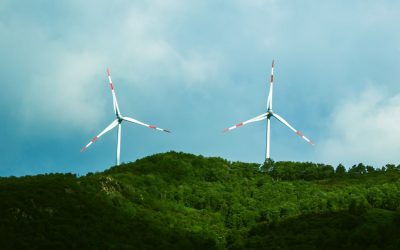
Renewable Energy vs Fossil Fuels: The Scientific Battle for Earth’s Future
It’s a big question, isn’t it? When we talk about powering our lives, whether it’s our homes, our cars, or our industries, the debate often boils down to one of two sides: renewable energy versus fossil fuels. Which one is winning the scientific battle for our planet’s future? The short answer is that science is increasingly pointing towards renewables, but the transition is complex and still very much in progress. The Case for Fossil Fuels: A Long and Complicated History Let’s be honest, fossil fuels haven’t just powered our modern world; they’ve fundamentally shaped it. For over a century, coal, oil, and natural gas have been the bedrock of industrialisation and economic growth. How Did We Get Here? The Industrial Revolution: The discovery and exploitation of coal, in particular, enabled the steam engine and mass production, completely transforming societies. Oil’s Dominance: Later, oil became king, powering our cars, planes, and much of our manufacturing. Its energy density and relative ease of transport made it incredibly versatile. Natural Gas’s Rise: Natural gas, often considered the “cleanest” of the fossil fuels (though we’ll get to that), has seen a significant surge in use, particularly for electricity generation and heating. The Familiarity Factor There’s a certain comfort and familiarity with fossil fuels. We understand how they work, the infrastructure is already in place, and for many years, they’ve been the most cost-effective option. The economic systems we have are deeply intertwined with their extraction, processing, and distribution. The “Baseload” Argument Historically, fossil fuel power plants have been crucial for providing what’s known as “baseload” power – a constant, reliable supply of electricity...
The Political Map of Europe: How Alliances and Borders Are Changing
Right, so you’re probably wondering what’s actually happening with Europe’s political map – it’s a fair question, as things aren’t exactly static. Basically, we’re seeing a push and pull between existing alliances strengthening and new ones forming, often in response to global events, alongside borders facing pressure from internal and external factors. It’s a dynamic situation, not a fixed picture. While headlines often focus on cracks, the major alliances that have shaped post-war Europe are still very much in play. They provide a foundational structure, even as they adapt to new challenges. NATO: Still the Cornerstone of Defence Let’s kick off with NATO. It’s truly difficult to overstate its importance for European security. Despite various internal debates and calls for greater European “strategic autonomy,” NATO remains the primary collective defence organisation. Shifting Priorities and New Members NATO was originally formed to counter the Soviet threat, and while that specific threat changed, Russia’s recent actions have undeniably re-energised the alliance. What was once a focus on out-of-area operations, like in Afghanistan, has largely returned to collective defence within Europe. We’ve seen significant troop deployments to the eastern flank, a clear signal. Then there’s the expansion. Finland and Sweden joining NATO is a monumental shift. Historically neutral, their decisions were a direct consequence of the invasion of Ukraine. This isn’t just adding new members; it fundamentally alters the strategic landscape of the Baltic Sea and northern Europe, extending NATO’s border significantly with Russia. These aren’t token additions; both countries have highly capable militaries that integrate well into NATO’s structures. Internal Pressures and Burden Sharing Of course, it’s not all smooth sailing....
The Annexation of Crimea Explained: What Really Happened?
Sometimes big global events leave us scratching our heads, and the annexation of Crimea by Russia in 2014 is definitely one of those. So, what really happened? In a nutshell, after a period of political upheaval in Ukraine, Russia moved to assert control over the Crimean Peninsula, arguing it was safeguarding Russian-speaking populations and historical ties. It’s a situation with deep historical roots and a complex chain of events, not a simple switch being flipped. To understand why Crimea is so significant, we need to rewind a bit. It’s not just a holiday spot, though it has lovely beaches. Tsarist Russia and Soviet Union Influence For centuries, Crimea enjoyed a degree of autonomy. However, under the Tsarist Russian Empire, it became a strategically important naval base, particularly for the Black Sea Fleet. Then, in 1954, under a move widely seen as symbolic and administrative at the time, Nikita Khrushchev, the Soviet leader, transferred Crimea from the Russian Soviet Federative Socialist Republic to the Ukrainian Soviet Socialist Republic. At that point, both were part of the larger Soviet Union, so borders within the USSR were quite fluid and not considered as sacrosanct as international borders are today. The Post-Soviet Landscape When the Soviet Union dissolved in 1991, Ukraine became an independent nation. Crimea, with its predominantly Russian-speaking population and historical links to Russia, remained part of Ukraine. This created a lingering tension. While Ukraine granted Crimea significant autonomy, including its own parliament and constitution within Ukraine, the question of its ultimate allegiance was never entirely settled in everyone’s minds. Russia, throughout this period, maintained a naval base in Sevastopol under...
The Origins of the Israel–Palestine Conflict
So, you’re curious about how the whole Israel-Palestine situation got started? It’s a complex story, and there aren’t any simple answers, but at its core, it’s about two groups of people, both with deep historical and cultural ties to the same land, vying for self-determination and control. This conflict didn’t just appear overnight; it evolved over centuries, with key moments accelerating the tensions, particularly in the late 19th and early 20th centuries. We’ll break down some of the main threads that led us to where we are today. The land we now call Israel and Palestine has a long and layered history, with various peoples and empires leaving their mark. Understanding this ancient past helps explain some of the deeply ingrained connections people feel to this territory. The Biblical Narrative and Jewish Connection For Jewish people, this land, often referred to as the Land of Israel or Zion, holds immense religious and historical significance. The Hebrew Bible recounts the stories of patriarchs like Abraham, Isaac, and Jacob, and the establishment of the Israelite kingdoms. This narrative forms the bedrock of Jewish identity and their connection to the land, which they believe was promised to them by God. For millennia, Jewish communities lived in this region, even through periods of exile and diaspora, always holding onto the hope of return. Palestinian Arab Historical Presence Similarly, Arab populations have inhabited the land for centuries, with their presence deepening over time. Their connection is rooted in language, culture, and faith, with the region holding a significant place in Islamic history, including holy sites in Jerusalem. Over generations, various Arab dynasties and communities...
Why Is There Conflict Between Israel and Palestine? Explained Simply
Right, so you’ve probably heard about the ongoing conflict between Israel and Palestine, and it’s a complicated one, for sure. At its heart, it’s a dispute over land that both Israelis and Palestinians claim as their homeland. This has been going on for a very long time, and it’s got deep historical, religious, and political roots that make it incredibly difficult to resolve. We’ll break down some of the main reasons why. This is really the fundamental problem. Both Israelis and Palestinians believe they have a rightful claim to the same piece of land. The Jewish Connection to the Land For Israelis, this land is historically known as Eretz Yisrael, or the Land of Israel. Jewish people have a deep, millennia-old connection to this area, rooted in their religious texts and history. They believe it’s their ancestral homeland, promised to them in the Torah, and it’s where their core religious sites are located, such as the Western Wall in Jerusalem. The idea of returning to and rebuilding a Jewish homeland gained significant traction in the late 19th and early 20th centuries, driven by rising antisemitism in Europe and the Zionist movement. The dream was to create a safe haven for Jewish people and establish a sovereign state. The Palestinian Connection to the Land For Palestinians, the land is also their ancestral homeland. They have lived there for centuries, and their culture, identity, and way of life are intrinsically linked to its soil. They’ve developed their own national identity over time, and like Israelis, they envision their own sovereign state within this territory. The displacement and dispossession of Palestinians, particularly...