Explore the World Through Geography, Natural Resources & Daily History
Clear, reliable and engaging guides that help you understand our planet — from UK geography education to global natural resources and On This Day history events.
Explore, discover, and learn about the wonders of our world! At Earth Site, we’re passionate about bringing geography, history, and science to life for curious minds of all ages. Whether you’re delving into historical events, uncovering the mysteries of the natural world, or seeking interactive resources, you’re in the right place.
Here, you can uncover the stories behind historical events, explore the natural wonders of our planet, and gain valuable insights into how the Earth’s systems shape our daily lives. From the towering peaks of mountain ranges to the far-reaching impacts of human innovation, we aim to make every topic both engaging and informative.
Start your journey of discovery with us today, and let’s make learning an adventure!
What We Cover
Earth Site brings together engaging and accessible educational content designed to help you understand the world, its history, and its natural systems.
🌍 Geography Education (UK & Worldwide)
We publish clear, easy-to-understand geography resources for students, teachers and curious learners. Our guides support geography education in the UK and cover physical geography, climate, ecosystems, population, and global development.
⛏️ Natural Resources & Environmental Geography
Explore detailed country profiles covering natural resources, mining, energy, geology and global environmental challenges. We show how nations manage minerals, water, land and ecosystems, and why these resources matter.
📅 On This Day in History
Every day has a story. Our On This Day history series features major events, anniversaries, traditions, and cultural milestones from around the world — with timelines, context, and fun facts.
TIMELINE
The Most Powerful AI Systems Ever Created and What They Can Do
So, what are the most powerful AI systems we’ve seen so far, and what can they actually do? In simple terms, the ‘most powerful’ AI systems right now are primarily large language models (LLMs). Think of them as incredibly sophisticated prediction engines, trained on vast amounts of text and code. They’re not conscious or sentient in the way we understand it, but their ability to process, understand, and generate human-like text and other forms of data is what makes them stand out. From writing poems to helping diagnose diseases, the applications are already broad and rapidly expanding, hinting at a future where AI plays an even more integrated role in our lives. When we talk about powerful AI, we’re usually referring to systems that demonstrate a significant jump in capability or performance compared to previous iterations. It’s not just about speed; it’s about the complexity of tasks they can tackle and the quality of their output. The “power” comes from a combination of factors that are constantly evolving. Massive Datasets: The Fuel for Intelligence Imagine trying to learn a new language by only reading a few sentences. It wouldn’t get you very far, would it? AI systems, especially LLMs, are trained on colossal datasets. We’re talking about petabytes of information scraped from the internet, books, code repositories, and more. This sheer volume allows them to learn intricate patterns, nuances, and relationships within the data. Scale of Data: The datasets used are often comparable to the entire contents of libraries or the vast majority of publicly available text on the internet. This sheer scale is a key differentiator. Data Quality:...
The Partisans and Resistance Movements in Wartime Yugoslavia
Right, so you’re wondering about the Partisans and the resistance movements in wartime Yugoslavia? In a nutshell, they were an incredibly effective and diverse force that played a massive role in kicking the Axis powers out of the country during World War II. It wasn’t just one single group; it was a complex web of defiance that involved a huge chunk of the population, and their story is a pretty remarkable one, far from the simple ‘good versus evil’ narratives you sometimes hear. When the Axis invaded Yugoslavia in April 1941, things went south pretty quickly. The royal government was overthrown, and the country was carved up and occupied by Nazi Germany, Fascist Italy, Hungary, and Bulgaria. It was a brutal occupation, and resistance wasn’t just a patriotic duty; it was often a matter of survival. People weren’t going to just sit back and let their country be destroyed. Initial Uprisings Almost immediately after the invasion, sporadic acts of rebellion started popping up. These weren’t necessarily organised at first, more like spontaneous outbursts against the occupiers. People were angry, scared, and determined not to be subjugated. These early acts, while small, set the stage for what was to come. The Communist Party’s Role The Communist Party of Yugoslavia, led by Josip Broz Tito, was already a well-established organisation despite being banned. They had a clear vision and were prepared to act. While other groups also resisted, the Communists were arguably the most organised and ideologically driven from the outset. They saw the invasion as an opportunity to not only fight the occupiers but also to push for a radical...
The Geography of Angola and Its Strategic Importance
Angola’s geography plays a critical role in its strategic importance, primarily due to its extensive coastline, rich natural resources, and its location within Southern Africa. This makes it a significant player in regional politics, global energy markets, and international trade. Angola boasts a formidable Atlantic coastline spanning approximately 1,600 kilometres (nearly 1,000 miles). This extensive stretch of ocean frontage is a cornerstone of its strategic value, offering numerous benefits and opportunities. Deep-Water Ports and Maritime Trade The presence of natural deep-water ports along Angola’s coast is a significant geographical asset. Unlike many other African nations, Angola doesn’t struggle with shallow harbours that limit the size of vessels that can dock. This allows for the accommodation of large cargo ships and oil tankers, facilitating efficient international trade. Luanda: As the capital and largest city, Luanda boasts the country’s primary port. It’s a key logistical hub for importing goods and exporting petroleum, minerals, and agricultural products. Its strategic location makes it a vital gateway for accessing the wider Central and Southern African markets. Lobito: Further south, Lobito offers another crucial deep-water port. Historically, it served as the western terminus for the Benguela Railway, connecting Angola’s coast with the copper belt regions of the Democratic Republic of Congo (DRC) and Zambia. While the railway’s full potential has been hampered by past conflicts and infrastructure challenges, its presence underscores Lobito’s enduring strategic importance as a potential trade corridor. Cabinda: Although an exclave, Cabinda’s port is critical for its substantial oil production. Its accessibility, despite its geographical isolation from the rest of Angola, allows for direct export of crude oil, bypassing the need for...
The Collapse of the Soviet Union and the End of the Cold War
So, what actually happened when the Soviet Union fell apart and the Cold War fizzled out? It wasn’t a single bang, but more of a gradual unraveling caused by a mix of internal pressures and external realities that the Soviet system just couldn’t handle anymore. Think of it like a building that’s been neglected for decades: the cracks start to show, then spread, until eventually, it becomes unsustainable. The Seeds of Discontent: Internal Weaknesses The Soviet Union, for all its superpower posturing, was built on some pretty shaky foundations. When you peel back the propaganda, you see a system struggling with fundamental issues for a long, long time. The Economic Strain This is probably the big one. The Soviet planned economy was brilliant at mobilising resources for specific goals, like space exploration or military hardware. But it was terrible at producing the everyday goods people actually wanted and needed. The Arms Race Drain: Imagine pouring a massive chunk of your national budget into weapons and defence year after year. The US, with its more dynamic and diverse capitalist economy, could sustain this for longer. The USSR, with its less efficient system, was bleeding money, and it showed in empty shelves and shoddy consumer goods. They were essentially trying to outspend a wealthier rival, and it was a losing game. Technological Lag: While they had pockets of brilliance, the overall Soviet technological base lagged behind the West in many key areas, especially in computing and information technology. This made their economy even less competitive and their ability to innovate limited. The Black Market Boom: Because the official economy couldn’t deliver,...
Calvin Coolidge: Silent Cal and the Roaring Twenties
Alright, let’s dive into Calvin Coolidge, a man often misunderstood yet deeply connected to the vibrant, and sometimes turbulent, 1920s. If you’re wondering what Coolidge was all about, especially with that “Silent Cal” nickname, the simplest way to put it is this: he was a quiet, principled Republican president who believed in limited government, fiscal prudence, and letting businesses flourish. He led America during an era of significant economic boom and cultural change, often taking a backseat and letting the good times roll, which, for many, was exactly what they wanted after the Progressive Era and World War I. Calvin Coolidge was a bit of a contrast to many of his political contemporaries. He wasn’t one for grand speeches or flamboyant gestures. His persona was built on New England stoicism and a deep-seated belief in traditional American values. A Modest Upbringing Born in Plymouth Notch, Vermont, in 1872, Coolidge’s roots were firmly in rural America. His father was a farmer, storekeeper, and held various local offices, instilling in young Calvin a sense of hard work and civic duty. This humble background shaped his cautious approach to governance and his appreciation for practical solutions over ideological stances. From Local Politics to the Governor’s Mansion Coolidge’s political career started at the local level in Northampton, Massachusetts. He steadily climbed the ranks, serving as a city councilman, city solicitor, and state legislator. His big break came during the 1919 Boston Police Strike. As Governor of Massachusetts, Coolidge famously declared, “There is no right to strike against the public safety by anybody, anywhere, anytime.” This firm stance garnered him national attention and solidified...
Life in the Soviet Union: What Was It Really Like?
Life in the Soviet Union: What Was It Really Like? You’ve probably heard a lot about the Soviet Union – the Cold War, red flags, and all that. But what was it really like to live there, day in and day out? It wasn’t all bread queues and gulags, but it certainly wasn’t a walk in the park either. The reality was a complex mix of state control, shared experiences, and individual coping mechanisms. It depended heavily on when you lived, where you lived, and your social standing. Life for the average Soviet citizen was largely dictated by the state. This meant a predictable rhythm, but also a distinct lack of personal choice in many areas. Housing: The Communal Living Experience One of the most striking features of Soviet life was housing. Private home ownership wasn’t the norm. Instead, most people lived in state-allocated apartments. Khrushchyovkas: These are perhaps the most iconic Soviet housing blocks. Built in the late 1950s and early 1960s, they were a hastily constructed solution to the severe post-war housing shortage. Think small, functional, five-storey buildings with tiny kitchens and bathrooms, often shared with neighbours. They weren’t built for comfort, but for expediency. The name comes from Nikita Khrushchev, who initiated the mass construction program. Communal Apartments (Kommunaalnye Kvartiry): Particularly in older, larger buildings in cities, families might share an apartment with other families. Each family would have a private room, but the kitchen, bathroom, and hallways were communal. This could lead to friction and a definite lack of privacy. Imagine negotiating cooking times and cleaning rota with several other households. Waiting Lists: Getting your...
Albania’s Secret Police Under Communist Rule Explained
Albania’s Secret Police Under Communist Rule Explained So, you’re curious about Albania’s secret police during communism? It’s a heavy topic, but understanding it is key to grasping how the country was run for decades. In a nutshell, the Sigurimi (short for Drejtoria e Sigurimit të Shtetit, meaning Directorate of State Security) was the ubiquitous and brutal secret police force under the Hoxha regime. They weren’t just an intelligence agency; they were the eyes and ears of the Communist Party, deeply embedded in every aspect of Albanian life, and their primary job was to maintain absolute control by instilling fear. The Genesis of Fear: How the Sigurimi Came to Be The seeds of Albania’s secret police were sown early in the Communist Party’s rise to power. Following World War II, as the Communist Party under Enver Hoxha consolidated its grip, the need for an instrument of repression became paramount. The Sigurimi wasn’t born fully formed; it evolved, drawing inspiration from Soviet and other Eastern Bloc security services, but quickly developed its own uniquely Albanian brand of paranoia and cruelty. Early Years and Consolidation of Power After the war, the newly established People’s Republic of Albania was keen to purge any remnants of what it deemed “bourgeois elements” or “enemies of the people.” The Sigurimi was instrumental in this process, identifying, interrogating, and ultimately eliminating perceived threats to the party’s authority. This period was characterized by widespread arrests, show trials, and the establishment of labour camps, often under harsh conditions. The absence of international scrutiny meant that the Sigurimi could operate with relative impunity. The Sino-Albanian Split and Increased Paranoia A...
Population Growth Through History
So, you’re wondering how our human population got to be so big? Well, the simple answer is: slowly at first, then incredibly fast. For most of human history, our numbers were pretty low and growth was a painstakingly slow crawl, constantly battling disease, famine, and harsh environmental conditions. It wasn’t until a series of major breakthroughs, particularly in agriculture and medicine, that things really took off. The Long, Slow Dawn of Humanity For several hundred thousand years, our early ancestors roamed the Earth as hunter-gatherers, and their numbers stayed remarkably low. A Nomadic Existence Imagine a world without farms or permanent homes. That was life for most of our history. These nomadic tribes moved with the seasons, following animal migrations and foraging for edible plants. This lifestyle, while efficient for survival in its own way, simply wouldn’t support a massive population. Resources were often scarce, and moving around with many very young or very old individuals was challenging. High Mortality, Low Growth Life expectancy was incredibly short, often in the 20s or 30s. Childbirth was risky for both mother and baby, and infections, injuries, and starvation were constant threats. Even a slight increase in birth rates was often cancelled out by high death rates, leading to near-stagnant population figures for millennia. It’s thought that the global population might have only been in the low millions for much of this period. The Ice Age Impact Major climatic events, like the last Ice Age, would have caused significant population bottlenecks. Harsh conditions and limited food sources would have placed immense pressure on human groups, likely leading to population declines or at...
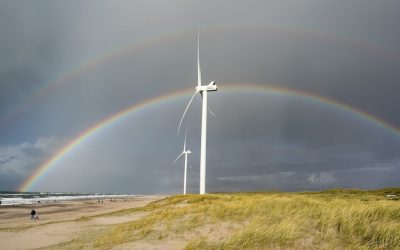
How Denmark Became a Global Wind Energy Superpower
Denmark’s dominance in wind energy didn’t happen overnight. It’s a story built on a blend of foresight, a commitment to renewable energy, and a pragmatic approach to overcoming challenges. So, how did this relatively small Nordic country become a global leader in harnessing the power of the wind? It boils down to a series of deliberate choices and a persistent effort to foster innovation and infrastructure. Denmark’s journey into wind power started not with grand government mandates, but with a grassroots movement and a healthy dose of necessity. In the 1970s, the oil crises hit hard, forcing many nations to rethink their energy sources. Denmark, with its limited domestic fossil fuel reserves, was particularly vulnerable. The Influence of the Oil Crises The oil shocks of 1973 and 1979 were a wake-up call. Suddenly, reliance on imported oil felt precarious. This period fostered a public consciousness about energy security and the need for alternatives. While other countries were focused on nuclear power, a segment of the Danish population began looking towards the wind. A Groundswell of Local Initiative It wasn’t just government policy driving the initial push. A significant portion of the early wind development was driven by ordinary citizens and local communities. Small groups of individuals, concerned about energy independence and environmental impact, started experimenting with building their own wind turbines. These were often small, relatively simple machines, but they were a vital proof of concept. The Rise of Cooperative Wind Farms These early community efforts evolved into what became known as “cooperative wind farms.” Think of it like a neighbourhood pooling resources to invest in a larger turbine....
Essex During the English Civil War
Ever wondered what life was like in Essex when the English Civil War broke out? It wasn’t just back then for fancy uniforms and big battles. For your average Essex chap or chapette, it meant real disruption, tough choices, and a whole lot of uncertainty. Essex, conveniently close to London and with its own strategic importance, found itself right in the thick of it. This wasn’t a distant conflict; it directly impacted livelihoods, families, and the landscape itself. So, let’s dive into how Essex navigated those turbulent years. Essex wasn’t a monolithic block supporting one side or the other. Like much of England, it was deeply split, with loyalties often dictated by local gentry, religious leanings, and economic ties. This division had tangible consequences for everyday people. The Royalist Holds While Essex leaned more towards Parliament, there were still pockets of Royalist support. These were often found amongst the established landed gentry who benefited from the existing hierarchy and felt threatened by Parliament’s more radical ideas. The Gentry’s Dilemma Imagine being a squire with a family estate and tradition stretching back generations. To side with Parliament meant potentially alienating neighbours and disrupting the social order you knew. To side with the King might mean facing the full wrath of the Parliamentarian forces gathering in London, or worse, having your lands confiscated. It was a precarious balancing act with high stakes. Local Strongholds Some estates and towns, though fewer than Parliamentarian ones, served as rallying points for Royalists. These weren’t always grand castles, but fortified manor houses or strategically important market towns where local lords could muster support. Their influence,...
How Britain Took Control of India From the East India Company
So, how did Britain actually take control of India from the East India Company? It wasn’t a sudden snatch, but rather a gradual chipping away of the Company’s authority, culminating in the complete transfer of power after the Indian Mutiny of 1857. Essentially, the British government grew increasingly wary of the Company’s unchecked power and missteps, eventually using a major crisis as the catalyst to step in and assume direct rule. The East India Company started life in 1600 as a purely commercial venture. Its initial goal was simply trade, primarily in spices, textiles, and other valuable commodities from India. From Trading Post to Territorial Power Initially, the Company established trading posts, or “factories,” along the Indian coast, negotiating with local rulers. However, the political landscape of India was complex and often fractured after the decline of the Mughal Empire. This fragmentation created opportunities for the Company to get involved in local politics. Exploiting Political Instability The Company, with its well-trained army (composed largely of Indian sepoys but commanded by British officers), found itself drawn into conflicts between various Indian states. They backed certain factions, helping them to victory, and in return, received concessions like land, trading rights, and even the right to collect taxes. This marked a significant shift from pure trade to territorial acquisition. The Battle of Plassey and its Aftermath A real turning point was the Battle of Plassey in 1757. Through a combination of military prowess and strategic alliances (and a fair bit of treachery on the part of Mir Jafar, the commander of the Nawab of Bengal’s army), the Company’s forces, led by Robert...
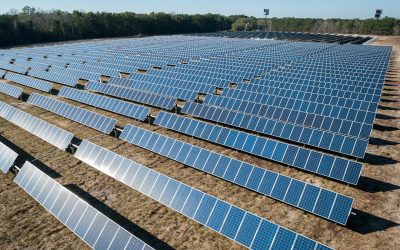
Which Countries Produce the Most Solar Energy Per Person?
When we talk about which countries are leading the charge in solar energy, it’s not always about who has the most panels or the biggest solar farms. Often, the real story lies in how much solar power a country produces relative to its population – essentially, how much sun-powered electricity each person gets. On this front, Australia, with its vast, sunny landscapes and relatively smaller population, often comes out on top, consistently producing the most solar energy per person globally. Cyprus and the Netherlands are also strong contenders making significant strides. Looking at total solar output can be a bit misleading. China, for instance, produces an enormous amount of solar energy in absolute terms, but its massive population means that per person, the contribution isn’t as high as smaller nations. Focusing on solar energy per capita gives us a clearer picture of a country’s commitment to renewable energy for its citizens and its actual progress in transitioning away from fossil fuels. It highlights the efficiency and widespread adoption within a society, rather than just the sheer scale of deployment. Understanding the Metrics: What We’re Measuring When we say “solar energy per person,” we’re generally referring to the amount of electricity generated by solar photovoltaic (PV) systems within a country over a specific period, usually a year, divided by that country’s population for the same period. This metric is typically expressed in kilowatt-hours (kWh) or megawatt-hours (MWh) per person. It’s a good indicator of how deeply solar power has penetrated a nation’s energy mix and how much each individual benefits from or contributes to its production. The Role of Population...