Explore the World Through Geography, Natural Resources & Daily History
Clear, reliable and engaging guides that help you understand our planet — from UK geography education to global natural resources and On This Day history events.
Explore, discover, and learn about the wonders of our world! At Earth Site, we’re passionate about bringing geography, history, and science to life for curious minds of all ages. Whether you’re delving into historical events, uncovering the mysteries of the natural world, or seeking interactive resources, you’re in the right place.
Here, you can uncover the stories behind historical events, explore the natural wonders of our planet, and gain valuable insights into how the Earth’s systems shape our daily lives. From the towering peaks of mountain ranges to the far-reaching impacts of human innovation, we aim to make every topic both engaging and informative.
Start your journey of discovery with us today, and let’s make learning an adventure!
What We Cover
Earth Site brings together engaging and accessible educational content designed to help you understand the world, its history, and its natural systems.
🌍 Geography Education (UK & Worldwide)
We publish clear, easy-to-understand geography resources for students, teachers and curious learners. Our guides support geography education in the UK and cover physical geography, climate, ecosystems, population, and global development.
⛏️ Natural Resources & Environmental Geography
Explore detailed country profiles covering natural resources, mining, energy, geology and global environmental challenges. We show how nations manage minerals, water, land and ecosystems, and why these resources matter.
📅 On This Day in History
Every day has a story. Our On This Day history series features major events, anniversaries, traditions, and cultural milestones from around the world — with timelines, context, and fun facts.
TIMELINE
Megacities of the World
A megacity is, put simply, a truly enormous urban area. We’re talking about a city with a population exceeding 10 million people. It’s not just about size, though; these places are economic powerhouses, cultural melting pots, and often, centres of significant global influence. Think bustling streets, towering skyscrapers, and a constant hum of activity – that’s a megacity in a nutshell. The Rise of the Giants The concept of a megacity is relatively new. For most of human history, cities were far smaller. It wasn’t until the 20th century, spurred by industrialisation, improved infrastructure, and a massive rural-to-urban migration, that cities really started to balloon. London and New York were among the first to hit that 10 million mark, but nowadays, the vast majority of megacities are found in Asia, Africa, and Latin America. This shift reflects global demographic changes and economic development patterns. Why Do They Form? Several factors contribute to the growth of megacities. Economic opportunity is a huge one; people move to urban centres seeking jobs, better education, and improved living standards. Industrialisation often creates a magnet effect, drawing in a vast workforce. Improved healthcare and sanitation also play a role, leading to lower mortality rates and increased life expectancy. Lastly, natural population growth within these urban areas significantly contributes to their ever-expanding sizes. Life in a megacity is a unique experience, a blend of incredible advantages and significant challenges. It’s never dull, but it’s certainly not for everyone. Opportunities Galore One of the biggest draws of a megacity is the sheer breadth of opportunities available. Economic Hubs Megacities are often the economic engines of their...
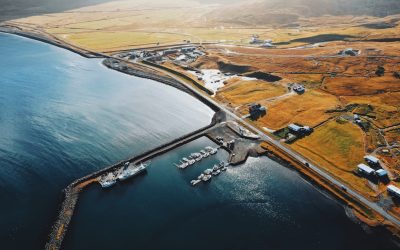
How Iceland Generates Nearly All of Its Electricity from Renewable Energy
So, how does Iceland manage to keep the lights on using almost entirely renewable energy? It’s a story rooted in Iceland’s unique geology – think volcanoes, glaciers, and plenty of hot springs. This land of fire and ice has an incredible natural advantage: geothermal energy and hydropower are readily available and, for the most part, incredibly reliable. They’ve basically built their entire energy system around what nature offers them directly. It’s not some fancy, impossible feat; it’s a practical application of the resources right under their feet. Iceland sits smack-bang on the Mid-Atlantic Ridge, where the North American and Eurasian tectonic plates are pulling apart. This means the Earth’s crust is thinner there, and magma – molten rock – is much closer to the surface. This geological activity is the driving force behind Iceland’s prolific geothermal energy. How Geothermal Works in Iceland At its core, geothermal energy is about tapping into the Earth’s internal heat. In Iceland, this heat manifests in several ways: Hot Springs and Geysers: These are the most visible signs of geothermal activity. Water percolates down into the Earth, gets superheated by the magma below, and then bursts back up to the surface. While visually stunning, these aren’t the primary source for electricity generation, though they are heavily utilized for direct heating. Deep Wells: To generate electricity, Icelanders drill deep wells into the ground, reaching areas where the rocks are very hot and often filled with steam or superheated water. The temperature at these depths can be hundreds of degrees Celsius. Steam Turbines: This superheated steam or water is then brought to the surface. The steam...
Medieval Essex: Life in England’s Growing County
So, you’re curious about what life was like in medieval Essex? It’s a big question, as the medieval period stretches for centuries and Essex, like the rest of England, went through some pretty significant changes. But if we’re talking about that era – roughly from the Norman Conquest in 1066 right up to when the Tudors took over in 1485 – you’re basically looking at a county that was becoming more established, more populated, and more integrated into the wider English story. It wasn’t a static place; it grew and evolved, much like a person does over their lifetime. Think of it this way: at the start of the period, Essex was still finding its feet after the upheaval of the Conquest. By the end, it was a pretty recognisable English county, with its own networks of towns, villages, agriculture, and even a bit of political clout. It was a place where people lived, worked, fought, prayed, and went about their daily lives, much like us, just with a very different set of tools and beliefs. Farming the Land For most people in medieval Essex, life revolved around the land. Agriculture was the backbone of the economy, and the seasons dictated much of what happened. The Three-Field System and Crop Rotation The development of the three-field system was a real game-changer. Before this, fields might be left fallow for longer periods, meaning a lot of land wasn’t being used productively at any one time. The three-field system divided a village’s arable land into three sections. One section would be sown with winter crops (like wheat or rye), another with...
Corruption and Scandal in the East India Company
If you’re curious about the East India Company and the messes it got into, you’re not alone. The truth is, this massive trading organisation, which wielded so much power in India, wasn’t exactly a paragon of virtue. Corruption and scandal were, unfortunately, pretty much part of the furniture for a good chunk of its existence. It’s a complex story, but at its heart, it boils down to the immense power and wealth the Company amassed, and how that tempted and, frankly, often broke the people who worked for it. From its very beginnings, the East India Company was a venture driven by profit. And where there’s a lot of potential profit to be made, there’s also a lot of temptation to bend the rules. A Licence to Print Money The Company was granted a Royal Charter in 1600, essentially giving it a monopoly on English trade with the East Indies. This wasn’t just about selling spices; it quickly evolved into something much bigger, involving textiles, indigo, and eventually, revenue collection. This monopoly meant that anyone associated with the Company could potentially make a fortune, far beyond what was achievable back in England. Opportunities Abound Imagine arriving in a land with immense wealth, where the local rulers were often fragmented and engaged in internal power struggles. For Company officials, this presented a unique set of opportunities, not all of them entirely legal or ethical. The sheer distance from oversight, coupled with the lucrative nature of trade and nascent political power, created a perfect storm. Gifts, Bribes, and Private Fortunes One of the most persistent issues that plagued the East India...
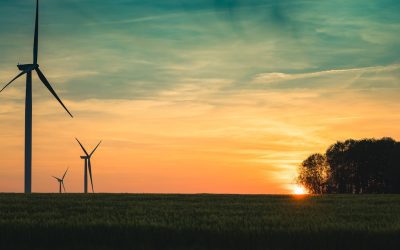
The World’s Green Energy Leaders Ranked by Renewable Power Production
So, who’s actually leading the charge when it comes to generating renewable energy globally? It’s not just about intentions or policies; it’s about the sheer volume of clean power being produced. When we look at the numbers, certain countries consistently emerge at the top, not by accident, but through a combination of strategic investment, natural resources, and a serious commitment to transitioning away from fossil fuels. Let’s dive into who those leaders are and what’s making them tick. When we talk about green energy production on a global scale, a few countries immediately jump to mind. These are the nations that are not only investing heavily but are also reaping the rewards in terms of actual electricity generated from sources like solar, wind, hydro, and geothermal. It’s a complex picture, influenced by geography, population, and economic development, but the top contenders are robustly shaping the future of energy. China’s Dominance: A Powerhouse of Renewables China is, without a doubt, the undisputed leader in renewable energy production. It’s not a close race; they are significantly ahead of the pack. This isn’t just a recent development; China has been on a determined path for years, driven by a need for energy security, a desire to combat severe air pollution, and a strategic push to dominate the global renewable technology market. Massive Scale in Solar and Wind The sheer scale of China’s renewable build-out is staggering. They have invested more in renewable energy than any other country, and it shows in their installed capacity and generation figures. When you look at sectors like solar and wind power, China’s numbers are simply on...
From Lenin to Putin: The Leaders Who Shaped Russia
Ever wondered how Russia ended up with the leaders it has had, from the revolutionary firebrand Lenin to the ever-present Putin? It’s a long and fascinating journey, marked by dramatic shifts and individuals who profoundly shaped the nation’s course. This isn’t just a dry history lesson; it’s about understanding the personalities, the decisions, and the ideologies that forged the Russia we see today. Vladimir Lenin wasn’t just a historical figure; he was the architect of a seismic shift. He ushered in an era that fundamentally altered the global political landscape and laid the groundwork for the Soviet Union. His ideas were radical, and his methods were decisive. The Marxist Mastermind Lenin, born Vladimir Ulyanov, was deeply influenced by Marxist theory. He believed capitalism was inherently exploitative and that a communist revolution was not only inevitable but necessary to liberate the working class. His interpretation of Marxism, often termed Leninism, emphasized the crucial role of a disciplined, vanguard party to lead the revolution. Seizing the Moment: The October Revolution The chaos following World War I and the February Revolution provided the perfect storm for Lenin and his Bolshevik Party. They weren’t the only players, but their organization, their clear message of “peace, land, and bread,” and Lenin’s unwavering conviction allowed them to seize power in October 1917. This wasn’t a popular uprising in the traditional sense; it was a calculated move by a dedicated group. Forging a New State: The Civil War and Early Soviet Years Establishing the Bolsheviks’ authority was far from easy. The ensuing Russian Civil War (1918-1922) was brutal, pitting the Red Army against various anti-Bolshevik forces...
US Presidents Who Never Won a Popular Election
Ever wondered if a US President can take office without winning the popular vote? Absolutely! It might seem a bit counter-intuitive in a democracy, but thanks to the Electoral College system, it’s happened a few times in American history. Essentially, what matters most isn’t who gets the most individual votes nationwide, but who secures enough electoral votes from each state. This system means a candidate can win the presidency even if more people across the country voted for their opponent. It’s a quirk of the American political landscape, and one that often sparks a fair bit of debate. Before we delve into specific presidents, it’s worth a quick refresher on how the Electoral College actually works. It’s a pretty central part of understanding why popular vote victories don’t always translate into a White House win. What is it? The Electoral College isn’t a physical place, but rather a process. When you cast your vote for president, you’re actually voting for a slate of “electors” chosen by your state’s political parties. These electors are generally pledged to vote for a particular candidate. How Does it Allocate Votes? Each state gets a number of electoral votes roughly proportionate to its population, plus two extra votes to represent its two senators, regardless of size. This means smaller states have a slightly disproportionate say compared to their population. Most states operate on a “winner-takes-all” system, meaning the candidate who wins the popular vote in that state gets all of its electoral votes. The Magic Number To win the presidency, a candidate needs an absolute majority of electoral votes – currently 270 out of...
Why Serbia Became the Largest Successor State of Yugoslavia
So, why did Serbia end up being the biggest successor state after Yugoslavia broke up? Well, it boils down to a few key factors: its existing size and central position within the federation, the significant Serb population spread across various republics, its historical role, and a strong political will to maintain influence and territory during the messy dissolution. It wasn’t just about snatching land; it was a complex interplay of demographics, politics, and historical legacy. When Yugoslavia was still in one piece, Serbia was already the largest and most populous republic. This wasn’t some post-breakup development; it was the starting point. Pre-Breakup Dominance Before 1991, Serbia encompassed a substantial chunk of Yugoslavia’s landmass and population. It wasn’t just a republic; it also included two autonomous provinces, Vojvodina and Kosovo, which further padded its figures. This inherent ‘bigness’ gave it a significant head start compared to, say, Montenegro or Macedonia. Largest Land Area: Geographically, Serbia covered the most ground. This meant more infrastructure, more natural resources, and simply more physical space to work with when the borders were redrawn. Largest Population: Serbia also had the highest population count within the SFRY. More people generally means a larger workforce, a bigger consumer base, and more potential for military recruitment – all factors that play into a state’s overall strength and influence. Inclusion of Autonomous Provinces: Vojvodina and Kosovo weren’t tiny additions. They were sizable regions with their own distinct populations and economic contributions, all contributing to Serbia’s overall footprint within Yugoslavia. When they remained (mostly) within Serbia’s borders after the breakup, it naturally kept Serbia as the largest entity. The Serb...
The History of Luanda: Angola’s Capital City Explained
Let’s get to grips with the history of Luanda, Angola’s bustling capital. Essentially, Luanda’s story is a tale of Portuguese colonial ambition, the brutal transatlantic slave trade, a prolonged and complex path to independence, and the modern-day challenges and vibrancy of a rapidly growing African metropolis. It wasn’t built overnight, and its past has shaped every inch of its sprawling urban landscape. Luanda’s origins are firmly rooted in the 16th century. The Portuguese arrived on the scene with clear intentions – to establish a foothold for trade and expand their influence. The Founding and First Settlers In 1575, Portuguese explorer Paulo Dias de Novais landed on the shores of what is now Luanda Bay. He wasn’t exactly greeted with open arms by the local Mbundu people, who had been living in the area for centuries. Novais, however, was determined and established a settlement he named São Paulo da Assumpção de Loanda, which eventually shortened to Luanda. The initial goal was to create a base for exploration and, crucially, for trade with the inland kingdoms. This wasn’t a casual visit; it was the beginning of significant and lasting foreign influence. Strategic Importance: Geography and Trade Luanda’s location was no accident. Its natural harbour provided a safe haven for ships navigating the Atlantic. This was vital for the Portuguese, not just for resupply but as a staging post for further exploration of the Angolan interior. More importantly, and this is a grim but essential part of the story, the site was strategically placed to become a primary point for the export of enslaved people. The Portuguese weren’t just interested in gold...
The Arms Race Explained: Nuclear Weapons and Mutual Destruction
The concept of an arms race, particularly when we talk about nuclear weapons, boils down to a pretty stark reality: nations build up their arsenals because they fear what other nations might do. It’s a self-perpetuating cycle where perceived threats lead to increased military spending and weapon development, which in turn makes other nations feel threatened and do the same. This often spirals into a situation where the sheer destructive power of these weapons, especially nuclear ones, means that using them would be catastrophic for everyone involved, a grim doctrine known as Mutual Assured Destruction, or MAD. The Genesis of the Nuclear Age The story of the nuclear arms race really kicks off in the mid-20th century, a time of unprecedented global conflict and scientific breakthroughs. The Manhattan Project and its Aftermath It all started with the Manhattan Project, a colossal secret undertaking by the United States, backed by the UK and Canada, during World War II. Their goal was simple, yet terrifyingly ambitious: build an atomic bomb before Nazi Germany could. The successful test of “Trinity” in July 1945, followed by the bombings of Hiroshima and Nagasaki, irrevocably changed warfare and international relations forever. Suddenly, humanity had the power to annihilate itself. The Soviet Union’s Entry into the Nuclear Club The US didn’t hold that monopoly on nuclear power for long. The Soviet Union, feeling directly threatened by America’s newfound capabilities and still smarting from the immense losses of WWII, poured massive resources into developing its own atomic bomb. Their first successful test, “RDS-1” in August 1949 (dubbed “Joe 1” by the Americans), effectively ended the US’s nuclear...
Theodore Roosevelt: The Progressive President and Conservation Champion
So, you’re curious about Theodore “Teddy” Roosevelt – the guy FAQs 1. What were Theodore Roosevelt’s key accomplishments as a progressive president? Theodore Roosevelt’s key accomplishments as a progressive president include the regulation of big business through antitrust laws, the establishment of the Pure Food and Drug Act, the Meat Inspection Act, and the conservation of natural resources through the creation of national parks and forests. 2. How did Theodore Roosevelt contribute to conservation efforts during his presidency? During his presidency, Theodore Roosevelt contributed to conservation efforts by establishing the United States Forest Service, creating five national parks, and signing the Antiquities Act, which allowed him to designate national monuments to protect natural and cultural resources. 3. What was Theodore Roosevelt’s role in the Progressive Era? Theodore Roosevelt played a significant role in the Progressive Era by advocating for social and political reforms, such as workers’ rights, consumer protection, and environmental conservation. He also supported the regulation of big business and the promotion of a fair and just society. 4. How did Theodore Roosevelt’s conservation efforts impact the United States? Theodore Roosevelt’s conservation efforts had a lasting impact on the United States by preserving natural landscapes and wildlife, ensuring sustainable use of natural resources, and promoting the idea of environmental stewardship for future generations. 5. What is Theodore Roosevelt’s legacy as a conservation champion? Theodore Roosevelt’s legacy as a conservation champion is marked by his dedication to preserving the nation’s natural beauty and resources. His efforts led to the establishment of national parks, forests, and monuments, shaping the modern conservation movement in the United...
The Soviet Union Under Joseph Stalin Explained
So, what was the Soviet Union like under Joseph Stalin? Let’s break it down. Essentially, the Soviet Union under Joseph Stalin was a totalitarian state characterized by absolute one-party rule, a centrally planned economy, and widespread political repression. It was a period of immense industrialisation and collectivisation, but also one of brutal purges, forced labour, and devastating famines. Stalin steered the USSR through industrialisation and victory in World War II, but at a horrific human cost. Understanding this era means looking at both the dramatic, state-driven changes and the deeply personal suffering they caused. After the death of Vladimir Lenin in 1924, a power struggle ensued. Joseph Stalin, initially a relatively obscure figure, managed to outmanoeuvre his rivals through a combination of political cunning and ruthless pragmatism. He was not the charismatic orator some of his opponents were, but he understood the mechanics of power within the Communist Party incredibly well. He used his position as General Secretary to build a loyal base of support within the party apparatus, gradually isolating and then eliminating those who posed a threat. Consolidating Power After Lenin Lenin’s death left a vacuum. While figures like Leon Trotsky were intellectually powerful and had played a major role in the Revolution, Stalin proved more adept at internal party politics. He masterfully played factions against each other, presenting himself as Lenin’s true successor and advocating for “Socialism in One Country” – a more inward-looking approach that resonated with many after the turmoil of revolution and civil war, compared to Trotsky’s vision of global revolution. The Cult of Personality Stalin wasn’t just a leader; he became a...