So, how do mountains, those massive rocky titans that punctuate our landscapes, actually come to be? Essentially, mountains are the result of colossal forces within our planet pushing, pulling, and folding the Earth’s crust over millions of years. It’s not a quick process; we’re talking geological timescales here, where immense pressure and heat work their magic beneath our feet. The main players are tectonic plates, those giant rafts of rock that make up the Earth’s surface, and their interactions are the fundamental drivers behind mountain formation.
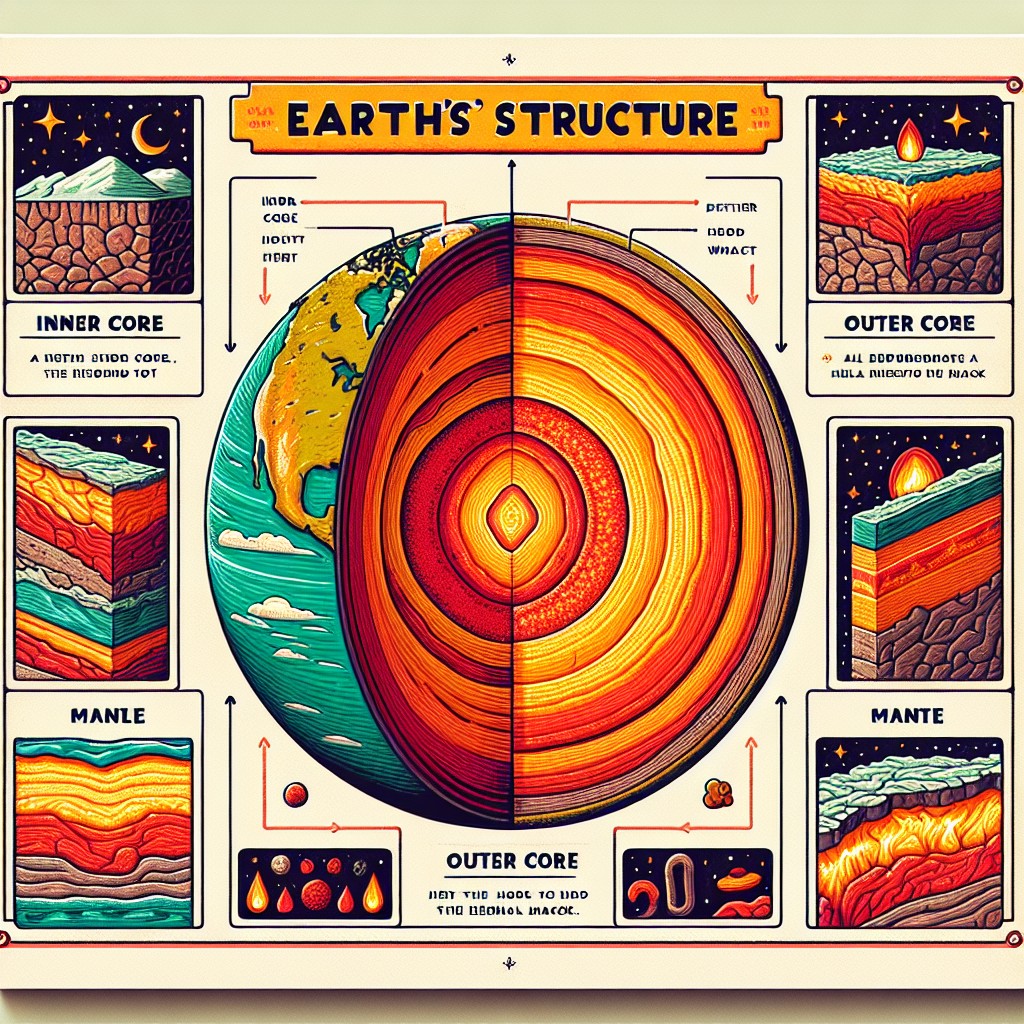
Imagine the Earth’s outer shell, the lithosphere, not as one solid piece, but as a cracked eggshell. It’s broken up into numerous large chunks called tectonic plates. These plates are constantly, albeit very slowly, moving. They float on a semi-molten layer beneath them called the asthenosphere. This constant, glacial movement is the engine room for most of the Earth’s dramatic geological activity, including the building of mountains.
Continental vs. Oceanic Plates
There are two main types of tectonic plates at play: continental plates, which form the landmasses we live on, and oceanic plates, which lie beneath the oceans. Continental plates are generally thicker and less dense, while oceanic plates are thinner and denser. These differences in density are crucial when these plates collide, dictating how they interact and what kind of geological features arise.
The Asthenosphere: A Gradual Flow
The asthenosphere isn’t liquid in the way water is, but it’s something akin to a very, very thick, slow-moving syrup. Think of convection currents in a pot of thick stew – the material is constantly circulating. These slow currents within the asthenosphere are what drag the tectonic plates along with them. This movement is incredibly slow, usually only a few centimetres per year, but over millions of years, this adds up to massive geological shifts.
Plate Boundaries: Where the Action Happens
The most significant mountain-building events occur at the edges of these tectonic plates, known as plate boundaries. It’s at these junctures that the plates either move towards each other, away from each other, or slide past one another. The type of boundary determines the specific mountain-building mechanism in play.
Convergent Boundaries: The Smash-Up Zone
This is where the real drama unfolds for mountain formation. At convergent boundaries, two tectonic plates collide. The outcome of this collision depends largely on the types of plates involved.
Continental-Continental Collision: The Ultimate Fold
When two continental plates collide, neither is dense enough to be pushed far down into the Earth’s mantle. Instead, the immense pressure causes the crust to buckle, crumple, and fold upwards, much like what happens when you push the ends of a rug together. This is how some of the planet’s most colossal mountain ranges, like the Himalayas, were formed. The collision between the Indian and Eurasian plates is a classic example, a process that has been ongoing for about 50 million years and is still continuing today, slowly pushing the Himalayas even higher. The sheer thickness of the crust at these collision zones can reach over 70 kilometres.
Oceanic-Continental Collision: Subduction and Uplift
When an oceanic plate meets a continental plate, the denser oceanic plate is forced beneath the lighter continental plate. This process is called subduction. As the oceanic plate dives into the mantle, it heats up and releases water, which lowers the melting point of the overlying mantle rock. This molten rock, or magma, rises to the surface, erupting to form volcanoes. These volcanoes often line up parallel to the coast, creating volcanic mountain ranges. The Andes in South America are a prime example, formed by the subduction of the Nazca Plate beneath the South American Plate. The initial uplift and folding of the continental margin also contribute to the mountain building process here.
Oceanic-Oceanic Collision: Island Arcs
When two oceanic plates collide, again, the denser one subducts beneath the other. This subduction process leads to the formation of a chain of volcanic islands, known as an island arc. The Mariana Islands in the western Pacific Ocean are an example, formed by the subduction of the Pacific Plate beneath the Philippine Plate. While these might not be as immense as continental mountains, they are still significant geological features created by plate tectonics.
Divergent Boundaries: Rifting and Horst-Grimen
While convergent boundaries are the primary mountain builders, divergent boundaries, where plates move apart, can also contribute to mountain formation through a process called rifting.
Rift Valleys and Block Mountains
At divergent boundaries, the crust is stretched and thinned. This can lead to the formation of vast rift valleys, like the East African Rift Valley. As the crust pulls apart, large blocks of rock can drop down, creating fault lines. The blocks that remain elevated between these faults are called horsts, and they can form significant mountain ranges in their own right, known as block mountains. The Sierra Nevada in the United States is a classic example of block fault mountains, where a central block was tilted upwards.
Transform Boundaries: A Grinding Process
Transform boundaries are where plates slide past each other horizontally. While these boundaries are responsible for major earthquakes, they are not typically major mountain-building zones. However, the friction and stress generated can cause some localised uplift and deformation of the crust, leading to smaller mountain features. The San Andreas Fault in California is a well-known transform boundary.
The Role of Volcanoes: Building Mountains from Within
Volcanoes are a direct manifestation of the Earth’s internal heat and pressure, and they are responsible for creating entirely new landforms, including mountains.
Effusive Eruptions: Shield Volcanoes
When magma erupts relatively gently, with low viscosity (it’s runny), it forms broad, gently sloping mountains called shield volcanoes. These are built up layer by layer from successive lava flows. Mauna Loa in Hawaii is a prime example of a shield volcano, one of the largest mountains on Earth in terms of volume.
Explosive Eruptions: Stratovolcanoes
When magma is thicker and contains more trapped gases, eruptions can be much more violent and explosive. These eruptions build up steep, cone-shaped mountains known as stratovolcanoes or composite volcanoes. Ash, cinders, and lava flows alternate to form the characteristic layered structure. Mount Fuji in Japan and Mount Vesuvius in Italy are famous examples of stratovolcanoes. The debris ejected during these eruptions can also contribute to the surrounding topography.
Different Magma Compositions
The composition of the magma plays a huge role in the type of volcanic mountain formed. Magma with high silica content tends to be thicker and more viscous, leading to explosive eruptions and steeper cones. Magma with lower silica content is runnier, resulting in gentler slopes and effusive eruptions.
Erosion and Weathering: The Sculptors of Mountains
Once mountains have been formed, they are not static. They are constantly being shaped and worn down by the forces of erosion and weathering. These processes, over millions of years, can dramatically alter the appearance of mountains.
Weathering: Breaking Down the Rocks
Weathering is the process of breaking down rocks into smaller pieces. This can happen through several mechanisms:
Physical Weathering
This involves the mechanical breakdown of rocks.
- Freeze-thaw weathering: Water seeps into cracks, freezes, expands, and widens the cracks. Repeated cycles can break off chunks of rock.
- Temperature changes: Rocks expand when heated and contract when cooled. Over many cycles, this can cause stress and cracking.
- Abrasion: Wind-blown sand or glaciers can grind away at rock surfaces.
- Root wedging: Plant roots growing into cracks can exert pressure and widen them.
Chemical Weathering
This involves the alteration of the chemical composition of rocks.
- Dissolution: Water, especially slightly acidic rainwater, can dissolve minerals in rocks.
- Oxidation: Rocks containing iron can rust, causing them to weaken and crumble.
- Hydrolysis: Water can react with minerals, breaking them down.
Erosion: Transporting the Debris
Once rocks are broken down by weathering, erosion carries the resulting material away.
Glacial Erosion
Glaciers are powerful erosive agents. As they move, they grind and scour the underlying rock, carving out U-shaped valleys and creating distinctive features like cirques (bowl-shaped depressions) and arêtes (sharp, knife-like ridges). The sharp, jagged peaks characteristic of many young mountain ranges are often the result of heavy glaciation.
Fluvial Erosion
Rivers and streams play a significant role in shaping mountains, particularly in their lower reaches and valleys. They cut down into the landscape, carrying away sediment and carving out V-shaped valleys. The process of downcutting can create canyons and gorges, further dissecting the mountain range.
Wind Erosion
While less powerful than water or ice, wind can also contribute to erosion, especially in arid or semi-arid mountain environments. It can transport sand and dust, abrading rock surfaces and shaping features like desert pavement and yardangs.
Isostatic Rebound: The Buoyant Earth
| Mountain Range | Height (meters) | Formation Type |
|---|---|---|
| Himalayas | 8,848 | Fold Mountains |
| Andes | 6,961 | Volcanic Mountains |
| Rocky Mountains | 4,401 | Block Mountains |
Finally, there’s a process called isostatic rebound that can also influence mountain landscapes, though it’s more about how mountains are supported rather than their initial formation. Think of the Earth’s crust as floating on the denser mantle. When a massive weight, like a large ice sheet or a significant pile of rock that forms a mountain range, is removed (by melting or erosion), the crust slowly floats back up to a newer equilibrium. This rebound can lift the landmass, sometimes exposing even older rock layers and affecting the overall elevation and structure of the region. While not a primary mountain-building force itself, isostatic adjustment is crucial in understanding the long-term elevation and stability of mountain regions.
FAQs
What is the process of mountain formation?
Mountains are formed through tectonic processes, including folding, faulting, and volcanic activity. The most common way mountains are formed is through the collision of tectonic plates, which causes the Earth’s crust to be pushed upwards.
What are the different types of mountains?
Mountains can be classified into three main types: fold mountains, fault-block mountains, and volcanic mountains. Fold mountains are formed through the folding of rock layers, fault-block mountains are created by the movement of tectonic plates, and volcanic mountains are formed from volcanic activity.
How long does it take for mountains to form?
The process of mountain formation can take millions of years. The collision of tectonic plates, the folding and faulting of rock layers, and volcanic activity all contribute to the gradual formation of mountains over an extended period of time.
What are some examples of famous mountain ranges?
Some famous mountain ranges include the Himalayas in Asia, the Andes in South America, the Rocky Mountains in North America, and the Alps in Europe. These mountain ranges are the result of various tectonic processes and have significant cultural and ecological importance.
How do mountains impact the environment?
Mountains play a crucial role in shaping the environment. They influence weather patterns, provide habitats for diverse plant and animal species, and are a source of freshwater for rivers and streams. Additionally, mountains are important for tourism, recreation, and cultural significance.