Explore the World Through Geography, Natural Resources & Daily History
Clear, reliable and engaging guides that help you understand our planet — from UK geography education to global natural resources and On This Day history events.
Explore, discover, and learn about the wonders of our world! At Earth Site, we’re passionate about bringing geography, history, and science to life for curious minds of all ages. Whether you’re delving into historical events, uncovering the mysteries of the natural world, or seeking interactive resources, you’re in the right place.
Here, you can uncover the stories behind historical events, explore the natural wonders of our planet, and gain valuable insights into how the Earth’s systems shape our daily lives. From the towering peaks of mountain ranges to the far-reaching impacts of human innovation, we aim to make every topic both engaging and informative.
Start your journey of discovery with us today, and let’s make learning an adventure!
What We Cover
Earth Site brings together engaging and accessible educational content designed to help you understand the world, its history, and its natural systems.
🌍 Geography Education (UK & Worldwide)
We publish clear, easy-to-understand geography resources for students, teachers and curious learners. Our guides support geography education in the UK and cover physical geography, climate, ecosystems, population, and global development.
⛏️ Natural Resources & Environmental Geography
Explore detailed country profiles covering natural resources, mining, energy, geology and global environmental challenges. We show how nations manage minerals, water, land and ecosystems, and why these resources matter.
📅 On This Day in History
Every day has a story. Our On This Day history series features major events, anniversaries, traditions, and cultural milestones from around the world — with timelines, context, and fun facts.
TIMELINE
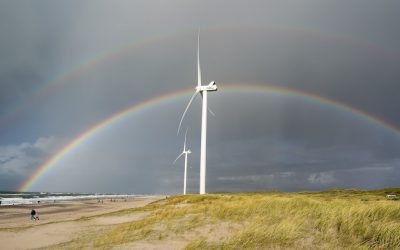
How Denmark Became a Global Wind Energy Superpower
Denmark’s dominance in wind energy didn’t happen overnight. It’s a story built on a blend of foresight, a commitment to renewable energy, and a pragmatic approach to overcoming challenges. So, how did this relatively small Nordic country become a global leader in harnessing the power of the wind? It boils down to a series of deliberate choices and a persistent effort to foster innovation and infrastructure. Denmark’s journey into wind power started not with grand government mandates, but with a grassroots movement and a healthy dose of necessity. In the 1970s, the oil crises hit hard, forcing many nations to rethink their energy sources. Denmark, with its limited domestic fossil fuel reserves, was particularly vulnerable. The Influence of the Oil Crises The oil shocks of 1973 and 1979 were a wake-up call. Suddenly, reliance on imported oil felt precarious. This period fostered a public consciousness about energy security and the need for alternatives. While other countries were focused on nuclear power, a segment of the Danish population began looking towards the wind. A Groundswell of Local Initiative It wasn’t just government policy driving the initial push. A significant portion of the early wind development was driven by ordinary citizens and local communities. Small groups of individuals, concerned about energy independence and environmental impact, started experimenting with building their own wind turbines. These were often small, relatively simple machines, but they were a vital proof of concept. The Rise of Cooperative Wind Farms These early community efforts evolved into what became known as “cooperative wind farms.” Think of it like a neighbourhood pooling resources to invest in a larger turbine....
Essex During the English Civil War
Ever wondered what life was like in Essex when the English Civil War broke out? It wasn’t just back then for fancy uniforms and big battles. For your average Essex chap or chapette, it meant real disruption, tough choices, and a whole lot of uncertainty. Essex, conveniently close to London and with its own strategic importance, found itself right in the thick of it. This wasn’t a distant conflict; it directly impacted livelihoods, families, and the landscape itself. So, let’s dive into how Essex navigated those turbulent years. Essex wasn’t a monolithic block supporting one side or the other. Like much of England, it was deeply split, with loyalties often dictated by local gentry, religious leanings, and economic ties. This division had tangible consequences for everyday people. The Royalist Holds While Essex leaned more towards Parliament, there were still pockets of Royalist support. These were often found amongst the established landed gentry who benefited from the existing hierarchy and felt threatened by Parliament’s more radical ideas. The Gentry’s Dilemma Imagine being a squire with a family estate and tradition stretching back generations. To side with Parliament meant potentially alienating neighbours and disrupting the social order you knew. To side with the King might mean facing the full wrath of the Parliamentarian forces gathering in London, or worse, having your lands confiscated. It was a precarious balancing act with high stakes. Local Strongholds Some estates and towns, though fewer than Parliamentarian ones, served as rallying points for Royalists. These weren’t always grand castles, but fortified manor houses or strategically important market towns where local lords could muster support. Their influence,...
How Britain Took Control of India From the East India Company
So, how did Britain actually take control of India from the East India Company? It wasn’t a sudden snatch, but rather a gradual chipping away of the Company’s authority, culminating in the complete transfer of power after the Indian Mutiny of 1857. Essentially, the British government grew increasingly wary of the Company’s unchecked power and missteps, eventually using a major crisis as the catalyst to step in and assume direct rule. The East India Company started life in 1600 as a purely commercial venture. Its initial goal was simply trade, primarily in spices, textiles, and other valuable commodities from India. From Trading Post to Territorial Power Initially, the Company established trading posts, or “factories,” along the Indian coast, negotiating with local rulers. However, the political landscape of India was complex and often fractured after the decline of the Mughal Empire. This fragmentation created opportunities for the Company to get involved in local politics. Exploiting Political Instability The Company, with its well-trained army (composed largely of Indian sepoys but commanded by British officers), found itself drawn into conflicts between various Indian states. They backed certain factions, helping them to victory, and in return, received concessions like land, trading rights, and even the right to collect taxes. This marked a significant shift from pure trade to territorial acquisition. The Battle of Plassey and its Aftermath A real turning point was the Battle of Plassey in 1757. Through a combination of military prowess and strategic alliances (and a fair bit of treachery on the part of Mir Jafar, the commander of the Nawab of Bengal’s army), the Company’s forces, led by Robert...
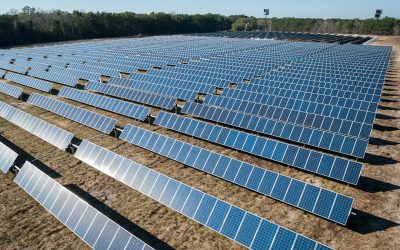
Which Countries Produce the Most Solar Energy Per Person?
When we talk about which countries are leading the charge in solar energy, it’s not always about who has the most panels or the biggest solar farms. Often, the real story lies in how much solar power a country produces relative to its population – essentially, how much sun-powered electricity each person gets. On this front, Australia, with its vast, sunny landscapes and relatively smaller population, often comes out on top, consistently producing the most solar energy per person globally. Cyprus and the Netherlands are also strong contenders making significant strides. Looking at total solar output can be a bit misleading. China, for instance, produces an enormous amount of solar energy in absolute terms, but its massive population means that per person, the contribution isn’t as high as smaller nations. Focusing on solar energy per capita gives us a clearer picture of a country’s commitment to renewable energy for its citizens and its actual progress in transitioning away from fossil fuels. It highlights the efficiency and widespread adoption within a society, rather than just the sheer scale of deployment. Understanding the Metrics: What We’re Measuring When we say “solar energy per person,” we’re generally referring to the amount of electricity generated by solar photovoltaic (PV) systems within a country over a specific period, usually a year, divided by that country’s population for the same period. This metric is typically expressed in kilowatt-hours (kWh) or megawatt-hours (MWh) per person. It’s a good indicator of how deeply solar power has penetrated a nation’s energy mix and how much each individual benefits from or contributes to its production. The Role of Population...
US Presidents and Their Relationships with Foreign Leaders
How did US Presidents get on with the world’s leaders? It’s a rollercoaster, honestly. Some forged genuine friendships, others navigated frosty stand-offs, and a few just… well, they winged it. The truth is, these relationships are a messy mix of personal chemistry, national interest, and sheer diplomatic legwork. It’s rarely as simple as “mates” or “enemies”; it’s more about the intricate dance of global power. When you’re leading a nation, especially a superpower like the US, your personal rapport with other heads of state can genuinely influence how things play out on the world stage. It’s not just about policy papers; it’s about that handshake, that tone of voice, that shared joke (or awkward silence). Summit Serendipity: Bonds Forged Over the Table Think of those summits – the G7s, the UN General Assemblies – they’re not just photo ops. For some presidents, these are opportunities to actually get to know their counterparts. The “Bromance” Era: We’ve seen periods where leaders seemed to genuinely enjoy each other’s company. Think of a certain US president and his Russian counterpart in the early 2000s, with talk of looking into each other’s souls. While perhaps a touch poetic, it signalled a perceived level of trust. These moments, however fleeting, could lead to breakthroughs, or at least prevent things from escalating too quickly. The “Chilly Reception”: On the flip side, there have been times when personal animosity or a lack of connection made diplomacy incredibly difficult. Imagine trying to negotiate a critical treaty when there’s a palpable dislike between the individuals representing their countries. It creates an immediate hurdle that requires extra effort to...
Yugoslavia During World War 2 Explained
So, what was Yugoslavia like during World War 2? In a nutshell, it was a country torn apart by invasion, resistance, and brutal civil war, with multiple factions fighting both the Axis powers and each other. It’s a complex and often tragic story of shifting loyalties, unimaginable suffering, and ultimately, a successful – albeit very bloody – homegrown resistance that liberated the country before the war even officially ended. The Kingdom of Yugoslavia: A Precarious Beginning Before the war, Yugoslavia was a relatively young country, formed after World War I, and a bit of a patchwork quilt of different ethnic and religious groups. This internal diversity, while culturally rich, also meant underlying tensions. Think of it as a house built on shifting sands – beautiful, but not very stable when a storm hits. Political Instability and Ethnic Divisions The interwar period was marked by political assassinations, a royal dictatorship, and growing resentment among various ethnic groups, particularly Croats and Serbs. There was a constant struggle for power and representation, which left the country vulnerable. This internal strife would, unfortunately, be exploited to devastating effect once the war broke out. An Unwilling Neutrality As war clouds gathered over Europe, Yugoslavia tried to remain neutral. They had a complex relationship with both the Axis and Allied powers, largely due to their geographical position and economic ties. However, neutrality was hardly a luxury afforded to many small nations in Europe at the time, and Yugoslavia was no exception. Invasion and Disintegration: April 1941 In April 1941, the Axis powers, primarily Germany, Italy, Hungary, and Bulgaria, launched a swift and brutal invasion of...
How Drones Were Used in the Afghanistan Conflict
So, you’re curious about how drones played a role in Afghanistan? It’s a pretty significant story, really. In a nutshell, drones went from being a niche bit of technology at the start of the conflict to becoming an absolutely crucial tool for pretty much every aspect of military operations, from scouting and surveillance to delivering strikes and even helping with logistics. They changed the game in how the war was fought, making things a lot more… well, seen and heard, from a distance. One of the most fundamental ways drones were used in Afghanistan was simply as eyes in the sky. Before the widespread use of drones, much of the reconnaissance relied on manned aircraft, reconnaissance patrols on the ground, or human intelligence – all of which carried a much higher risk to personnel. Drones, however, offered a way to gather intelligence constantly and over vast areas without putting pilots or soldiers directly in harm’s way. Persistent Surveillance Think of it like having an incredibly long-lasting drone that can just circle a specific area for hours, or even days. These persistent surveillance capabilities were invaluable. They allowed forces to monitor enemy movements, understand patterns of life in a particular region, and detect potential threats before they became immediate dangers. This was especially important in a complex, often rural and mountainous terrain like Afghanistan, where visibility could be limited and the enemy could easily disappear into the landscape. Overwatching Patrols When ground troops were out on patrol, drones provided a constant overhead view. This “situational awareness” was a massive force multiplier. They could spot improvised explosive devices (IEDs) being planted,...
How Angola Rebuilt After Decades of Civil War
Angola’s journey since its civil war ended in 2002 is a remarkable story of rebuilding. The short answer to how they did it is a combination of abundant natural resources, particularly oil, coupled with significant international investment and a determined effort by the Angolan government to reconstruct infrastructure and foster economic growth. It wasn’t a smooth ride, and many challenges remain, but the country has indeed transformed significantly from the war-torn nation it once was. When the peace accords were signed, Angola was in a dire state. Decades of conflict had decimated the country’s infrastructure, displaced millions, and left a generation traumatised. Roads to Nowhere and Ruined Railways Imagine a country where most of the main roads were impassable, either due to neglect, landmines, or simply being blown up. That was Angola. The railway network, once a vital artery for the economy, was largely inoperable. This meant moving goods, people, and even emergency aid was a logistical nightmare. Ghost Towns and Displaced Populations Millions of Angolans had fled their homes, either becoming internally displaced persons (IDPs) or refugees in neighbouring countries. Many towns and villages were abandoned or severely damaged, their populations scattered and their livelihoods destroyed. Reintegrating these communities and providing basic services was an immense undertaking. A Legacy of Landmines Perhaps one of the most insidious and long-lasting scars of the war was the widespread presence of landmines. These silent killers not only posed a constant threat to life and limb but also rendered vast swathes of agricultural land unusable, further FAQs 1. What was the duration of the civil war in Angola? The civil war in...
The Fall of the Berlin Wall and the Beginning of the End
Right then, let’s get straight to it. The Berlin Wall falling on 9th November 1989 wasn’t just a big moment for Germany; it signalled the start of the unravelling of the entire Soviet Bloc, fundamentally reshaping the political landscape of Europe and beyond. It was a crack in the dam that led to a flood of changes. For nearly three decades, the Berlin Wall stood as the most stark and brutal symbol of the Cold War’s division. It wasn’t just a barrier; it was a wound slicing through a city, a nation, and indeed, a continent. Why the Wall Went Up In the years after World War II, Germany was split into four occupation zones. Berlin, deep within the Soviet zone, was similarly divided. As the Western zones (Federal Republic of Germany, or West Germany) began to prosper, fuelled by Marshall Plan aid, and offered more personal freedoms, many East Germans started to vote with their feet – literally. The Brain Drain: Professionals, skilled workers, and educated individuals were steadily fleeing East Germany (German Democratic Republic, or GDR) for the West. This wasn’t just an inconvenience; it was a critical drain on the GDR’s workforce and economy. Political Embarrassment: The sheer number of people leaving was a huge propaganda problem for the communist regime. It exposed the lie that their system was superior and attractive. So, on 13th August 1961, almost overnight, the border between East and West Berlin was sealed off with barbed wire, quickly replaced by a substantial concrete wall. The official line was that it was to protect East Germany from ‘fascist elements’ in the West....
Warren G. Harding: The Return to Normalcy President
Warren G. Harding, the 29th President of the United States, is perhaps best known for his promise of a “Return to Normalcy” after the tumultuous years of World War I. This wasn’t just a catchy slogan; it encapsulated a widespread public desire for an end to the crusading zeal and wartime austerity that had defined the preceding era. In essence, he offered America a chance to breathe, to scale back the grand ambitions, and to focus on domestic stability and economic prosperity. Harding’s journey to the White House wasn’t through a meteoric rise but rather a steady, almost plodding, ascension through the ranks of Ohio politics. Born in 1865 in Blooming Grove, Ohio, his early life was, by all accounts, quite ordinary. Humble Beginnings and Newspaper Roots Harding’s family had modest means, and he received a fairly standard education for the period. He wasn’t a child prodigy or a budding intellectual. Instead, he found his footing in the world of journalism, purchasing the Marion Star newspaper at the young age of 19. This proved to be a pivotal decision. Running a local paper not only provided him with a platform but also immersed him in the community, allowing him to understand its concerns and connect with its people. He was known for his genial nature and approachable demeanour, qualities that served him well in both his journalistic and political careers. Stepping Stone to Wider Politics His success with the Marion Star eventually propelled him into politics. He served as an Ohio State Senator from 1899 to 1903, and then as Lieutenant Governor of Ohio from 1903 to 1905. These...
The Battle of Stalingrad and the Turning Point of the War
So, has the Battle of Stalingrad truly earned its reputation as the turning point of World War II? In a nutshell, yes. It wasn’t just a single battle; it was a monumental clash that bled the German war machine dry on the Eastern Front and irrevocably shifted the momentum of the entire conflict in favour of the Allies. What happened at Stalingrad wasn’t just a defeat for Hitler; it was a crushing blow that he never truly recovered from. It’s easy to look back and see Stalingrad as an inevitable confrontation, but the path that led both sides to this brutal city was a complex mix of strategic ambition, propaganda, and sheer brute force. Hitler’s Summer Offensive of 1942: Operation Blue After the initial shock of Operation Barbarossa in 1941 didn’t deliver the quick victory Hitler craved, Germany regrouped for a more focused offensive in the summer of 1942. This was Operation Blue, or Fall Blau in German. The primary objectives were to secure the oil-rich regions of the Caucasus. These oil fields were absolutely vital for Germany’s continued war effort. Without them, their tanks, planes, and U-boats would eventually grind to a halt. Stalingrad: More Than Just Oil But why Stalingrad, specifically? This industrial city on the Volga River was named after Stalin himself – a fact that made it a potent propaganda prize for Hitler. Capturing it would be a massive symbolic victory, a supposed vindication of his entire invasion. It also sat astride the Volga, a crucial transportation artery for supplies reaching the Soviet Union, including vital Lend-Lease aid from the Americans and British. So, strategically,...
Birth Rates and Death Rates
So, you’re wondering about birth rates and death rates, are you? It’s a pretty fundamental part of how societies change, and understanding them gives you a real insight into what’s going on. In a nutshell, birth rate is the number of live births per 1,000 people in a year, and death rate is the number of deaths per 1,000 people in a year. The difference between these two – called the natural increase or decrease – is a major driver of population growth or decline. The Basics of Birth and Death Rates Let’s break this down a bit. When we talk about birth rates, we’re usually looking at the “crude birth rate,” which is the most straightforward measure. What’s a Crude Birth Rate? Simply put, it’s the number of babies born alive in a given year for every 1,000 people in the total population. So, if a country has a crude birth rate of 12, it means for every 1,000 people, there were 12 live births that year. It’s a broad measure, and it’s important to remember it includes everyone, not just women of childbearing age. And the Crude Death Rate? Similarly, the crude death rate is the number of deaths in a year per 1,000 people in the population. A rate of 9 would mean 9 deaths for every 1,000 people. Again, it’s a crude measure because it doesn’t account for age structure – a younger population will naturally have a lower death rate than an older one, even if healthcare is the same. Natural Increase: The Core Equation The real magic (or lack thereof, depending on your...