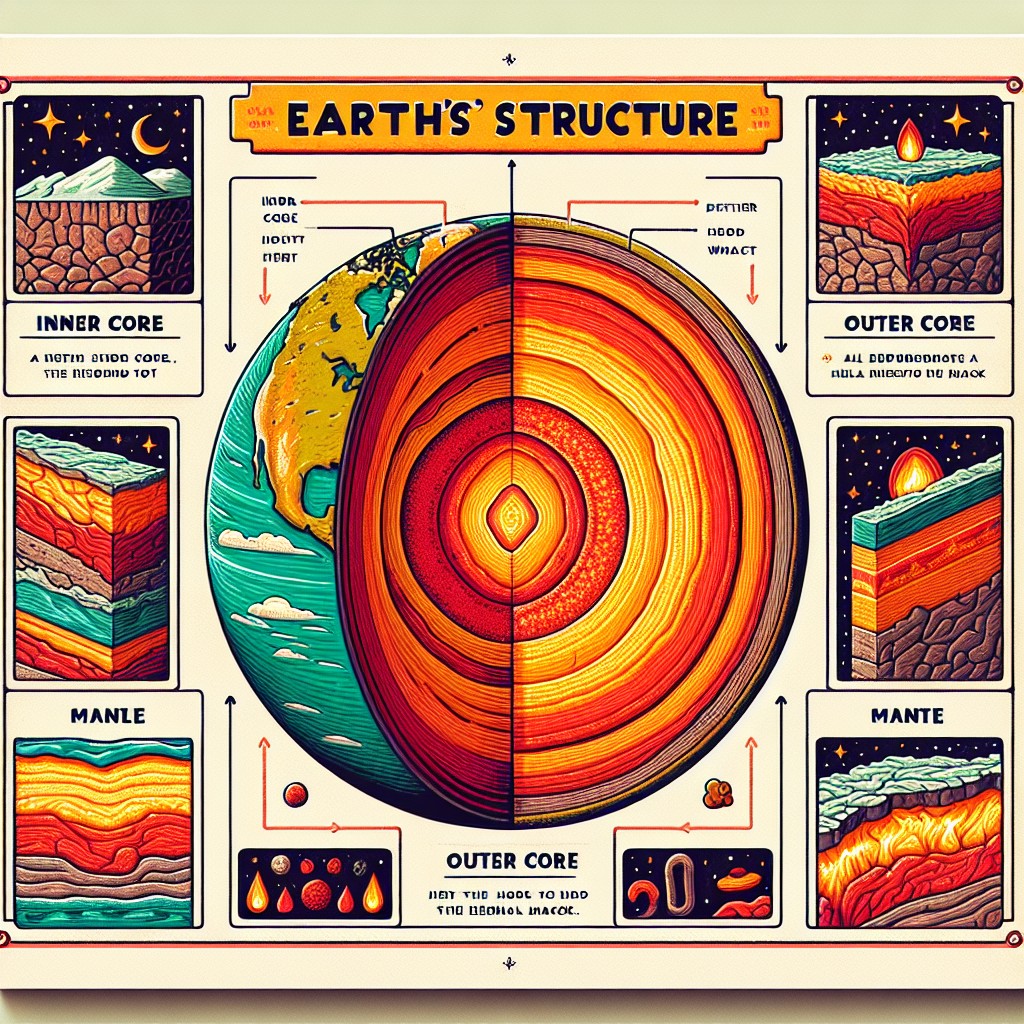
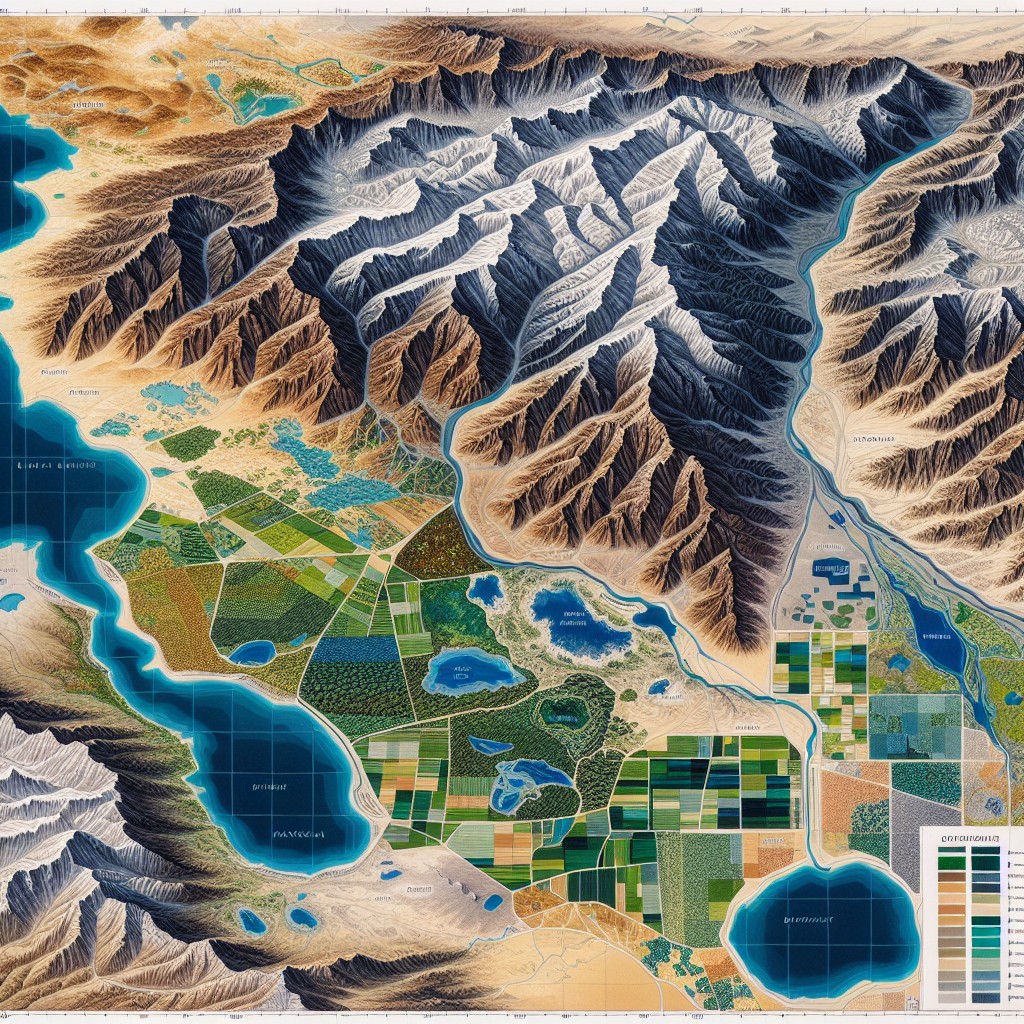
Right, let’s get straight to it. The Rock Cycle is essentially Earth’s way of recycling its materials. Imagine a grand, continuous process where rocks constantly change from one type to another—igneous, sedimentary, or metamorphic—driven by forces both deep within the Earth and on its surface. It’s not a quick process, mind you; we’re talking millions of years for some transformations. This cycle explains how all the rocks we see around us have formed, evolved, and continue to change. There’s no true ‘beginning’ or ‘end’ to the cycle, just a series of interconnected processes.
Before we dive into the rock cycle itself, it’s helpful to briefly touch on the three main types of rocks. Understanding what makes them distinct will make the cycle much clearer.
Igneous Rocks: Born from Fire
These are your ‘fire-formed’ rocks, created when molten rock—either magma (underground) or lava (above ground)—cools and solidifies. Think of it like making a giant, rocky chocolate bar; when the chocolate melts and then cools, it hardens.
Intrusive Igneous Rocks
These form when magma cools slowly beneath the Earth’s surface. Because they cool slowly, they tend to have larger crystals. A good example is granite, often used for kitchen countertops.
Extrusive Igneous Rocks
These form when lava erupts onto the surface and cools quickly. The rapid cooling means smaller crystals or sometimes no crystals at all, like obsidian (a volcanic glass) or basalt, which makes up much of the ocean floor.
Sedimentary Rocks: Layers of Time
Sedimentary rocks are essentially bits of other rocks, minerals, or organic matter that have been weathered, eroded, transported, deposited, and then compacted and cemented together. They often have distinct layers, much like geological history books.
Clastic Sedimentary Rocks
These are made from fragments (clasts) of pre-existing rocks. Sandstone, formed from cemented sand grains, and shale, made from compressed mud, are classic examples.
Chemical Sedimentary Rocks
These form when dissolved minerals precipitate out of water. Limestone, often formed from calcium carbonate in ancient seas, is a prime example. Rock salt, which forms as water evaporates, is another.
Organic Sedimentary Rocks
These are formed from the accumulation of organic material. Coal, made from compacted plant remains, is a common example, as is some types of limestone derived from shell fragments.
Metamorphic Rocks: Transformed by Heat and Pressure
Metamorphic rocks are ‘changed form’ rocks. They start off as either igneous, sedimentary, or even other metamorphic rocks, and are then transformed by intense heat, pressure, or chemical alteration (or a combination of these) deep within the Earth’s crust. They don’t melt, though; they just recrystallise or rearrange their mineral structure.
Foliated Metamorphic Rocks
These have a layered or banded appearance due to the alignment of minerals under pressure. Slate, schist, and gneiss are good examples, often splitting along distinct planes.
Non-Foliated Metamorphic Rocks
These don’t have that layered appearance, often because they’re made of minerals that don’t align well or because they formed under conditions where pressure wasn’t directed from a particular angle. Marble (transformed limestone) and quartzite (transformed sandstone) are common examples.
The Journey Begins: How Igneous Rocks Form
The rock cycle often conceptually starts with igneous rocks, purely because they origin from molten material from within the Earth. However, as mentioned, there’s no true start point.
Melting and Magma Generation
It all begins with melting. This can happen deep within the Earth where temperatures are incredibly high, or where pressure changes allow rocks to melt, or even where water is introduced, lowering the melting point. Once rock melts, it becomes magma.
Cooling and Crystallisation
This magma, being less dense than the surrounding solid rock, begins to rise. As it moves upwards, it starts to cool.
Slow Cooling Underground
If the magma stays trapped beneath the surface, it cools very slowly. This long cooling period allows mineral crystals to grow large enough to be easily seen with the naked eye, forming intrusive igneous rocks like granite.
Fast Cooling on the Surface
If the magma reaches the surface as lava through a volcano, it cools much more quickly. This rapid cooling doesn’t give crystals much time to grow, resulting in fine-grained extrusive igneous rocks like basalt, or sometimes even volcanic glass like obsidian where cooling is almost instantaneous.
From Rock to Sediment: The Surface Processes
Once igneous rocks (or any other rock type for that matter) are exposed on the Earth’s surface, they face the relentless forces of weathering and erosion. This is the first step in creating sedimentary rocks.
Weathering: Breaking Down the Rocks
Weathering is the process that breaks down rocks into smaller pieces, or dissolves their minerals. It doesn’t involve moving the material, just breaking it apart.
Physical (Mechanical) Weathering
This involves the physical disintegration of rocks without changing their chemical composition. Think of frost wedging, where water freezes in cracks and expands, or abrasion, where rocks bump into each other.
Chemical Weathering
This involves the chemical alteration of rocks. For example, dissolution (minerals dissolving in water), oxidation (like rusting), or hydrolysis (minerals reacting with water). These processes often create weaker materials that are more easily eroded.
Erosion and Transport: Moving the Bits Around
Once rocks have been broken down by weathering, erosion steps in. Erosion involves the removal and transport of these weathered rock fragments (sediments) by agents like water, wind, ice (glaciers), or gravity.
Rivers and Streams
Water is a powerful erosional agent, picking up sediments and carrying them downstream. Larger particles might roll or slide, while finer particles are suspended.
Wind
In arid environments, wind can pick up and transport sand and dust, shaping landscapes and eroding exposed rock surfaces.
Glaciers
Massive sheets of ice slowly grinding across the landscape are incredibly effective at eroding and transporting huge amounts of rock debris.
Gravity
Mass wasting events like landslides and rockfalls move large quantities of material under the direct influence of gravity.
Deposition: Settling Down
Eventually, as the energy of the transporting agent decreases, the sediments are deposited. This often happens in low-lying areas like riverbeds, lake bottoms, ocean basins, or deserts.
Layering
Sediments are typically deposited in layers, with coarser, heavier sediments often settling first, followed by finer ones. These layers are what give sedimentary rocks their distinctive appearance.
From Sediment to Stone: Lithification
Once sediments are deposited, they don’t immediately become solid rock. They need to undergo a process called lithification, which essentially means ‘turning into stone.’
Compaction: Squeezing It Together
As more and more layers of sediment accumulate above, the weight of the overlying material presses down on the lower layers. This pressure compacts the sediments, squeezing out water and reducing the space between the particles.
Cementation: Sticking It Together
At the same time, dissolved minerals in the groundwater percolate through the compacted sediments. These minerals can precipitate out of the water, acting like a natural glue to bind the sediment particles together. Common cementing agents include silica, calcium carbonate, and iron oxides.
Forming Sedimentary Rocks
Through compaction and cementation, loose sediments are transformed into coherent sedimentary rocks like sandstone, shale, and limestone. These rocks often contain clues about the past environments in which they formed, including fossils.
The Deep Transformation: Metamorphism
| Rock Type | Formation Process | Example |
|---|---|---|
| Igneous | Formed from cooling and solidification of magma or lava | Granite |
| Sedimentary | Formed from the accumulation and compression of sediments | Limestone |
| Metamorphic | Formed from the alteration of existing rock through heat and pressure | Marble |
Sedimentary rocks (or igneous rocks, or even other metamorphic rocks) that get buried deeply beneath the Earth’s surface can undergo a profound change: metamorphism. This occurs without melting, but rather through intense heat, pressure, or chemical reactions.
Heat: The Cooking Ingredient
Heat is a major driver of metamorphism. This heat can come from several sources:
Geothermal Gradient
Simply put, the deeper you go into the Earth, the hotter it gets. Rocks buried deep within the crust experience significantly higher temperatures.
Magmatic Intrusions
When hot magma intrudes into cooler surrounding rock, it “bakes” the adjacent rock, causing contact metamorphism.
Pressure: The Squeeze and Squish
Pressure also plays a crucial role in metamorphism, coming from two main sources:
Confining Pressure
This is the uniform pressure exerted on rocks by the weight of overlying rocks, similar to the pressure you feel at the bottom of a deep swimming pool. It causes rocks to become denser.
Directed Pressure
This is pressure applied unevenly, common in areas where tectonic plates collide (mountain building). Directed pressure can cause minerals to align themselves perpendicular to the stress, creating the ‘foliation’ seen in many metamorphic rocks.
Chemically Active Fluids: The Dissolvers and Alterers
Hot, chemically active fluids (often water with dissolved ions) can circulate through rocks. These fluids can dissolve existing minerals and precipitate new ones, altering the rock’s chemical composition and crystal structure. This is known as hydrothermal metamorphism.
The Transformation Itself
Under these conditions, existing minerals in the parent rock (protolith) become unstable and recrystallise into new minerals that are stable under the new temperature and pressure regime. The texture of the rock also changes; grains might grow larger, or they might align to form foliated structures. For example:
- Shale (sedimentary) can be metamorphosed into slate, then phyllite, then schist, and finally gneiss with increasing heat and pressure.
- Limestone (sedimentary) can be metamorphosed into marble.
- Sandstone (sedimentary) can be metamorphosed into quartzite.
- Basalt (igneous) can be metamorphosed into amphibolite.
The Infinite Loop: Where Do We Go Next?
So, we’ve gone from magma to igneous, through weathering and erosion to sediment, then to sedimentary rock, and finally, through heat and pressure, to metamorphic rock. But the cycle is far from over.
Metamorphic Rocks to Melt
If metamorphic rocks continue to be subjected to even greater heat and pressure, they will eventually melt, becoming magma once again. This molten rock could then cool to form new igneous rocks, completing a full loop of the cycle.
Metamorphic Rocks to Sediment
Alternatively, uplift and erosion can bring metamorphic rocks to the Earth’s surface. Once exposed, they too will be subject to weathering and erosion, breaking down into sediments that can then form new sedimentary rocks.
Sedimentary Rocks to Melt
Sedimentary rocks, if buried deep enough and subjected to extreme heat, can also melt directly into magma, bypassing the metamorphic stage.
Sedimentary Rocks to Metamorphic (as discussed)
This is a very common pathway, as sedimentary rocks are often the ones predominantly buried during tectonic processes leading to metamorphism.
Igneous Rocks to Sediment (as discussed)
Exposed igneous rocks weather and erode, forming sediment.
Igneous Rocks to Metamorphic
Igneous rocks can also be directly subjected to heat and pressure, transforming them into metamorphic rocks. For instance, a granite body caught in a mountain-building zone can become a gneiss.
The Driving Forces of the Rock Cycle
This whole grand cycle isn’t some mystical process; it’s driven by fundamental forces within and on our planet.
Plate Tectonics: The Earth’s Great Mover
This is arguably the most significant driver. The movement of tectonic plates causes:
Subduction
Where one plate slides beneath another, bringing rocks deep into the Earth where they can melt or metamorphose.
Orogenesis (Mountain Building)
Collisions between plates create immense heat and pressure, leading to widespread metamorphism and uplift of rocks.
Volcanic Activity
Plate boundaries are often sites of volcanism, where new igneous rocks are formed.
The Hydrologic Cycle: Water’s Role
Water is absolutely central to the surface processes:
Weathering and Erosion
Water, in its various forms (rain, ice, rivers), is the primary agent for breaking down and transporting rocks.
Sediment Transport and Deposition
Rivers carry vast amounts of sediment to basins.
Chemical Reactions
Water facilitates chemical weathering and the precipitation of minerals for cementation.
The Sun’s Energy: Indirect but Important
While not directly melting rocks, the sun’s energy drives the climate system, powering the wind and the water cycle. This in turn drives weathering and erosion.
In essence, the rock cycle isn’t a simple, linear path but a complex, interconnected web of processes. Any rock type can transform into any other type, or even revert to its original state, given the right conditions and enough geological time. It’s a testament to the dynamic and ever-changing nature of our planet.
FAQs
What is the rock cycle?
The rock cycle is a continuous process that describes how rocks are formed, changed, and recycled over time. It involves the transformation of rocks from one type to another through various geological processes.
What are the three main types of rocks in the rock cycle?
The three main types of rocks in the rock cycle are igneous, sedimentary, and metamorphic. Igneous rocks are formed from the cooling and solidification of magma or lava. Sedimentary rocks are formed from the accumulation and compression of sediments. Metamorphic rocks are formed from the alteration of existing rocks due to heat, pressure, or chemical processes.
How does the rock cycle work?
The rock cycle works through a series of processes including weathering, erosion, deposition, compaction, melting, crystallization, and metamorphism. These processes act on rocks to transform them from one type to another, creating a continuous cycle.
What role do plate tectonics play in the rock cycle?
Plate tectonics play a significant role in the rock cycle as they are responsible for the movement and interaction of the Earth’s lithosphere. This movement can lead to the formation of new rocks through volcanic activity, the subduction of rocks into the mantle, and the collision of tectonic plates which can cause metamorphism.
Why is the rock cycle important?
The rock cycle is important as it helps to explain the processes that shape the Earth’s surface and the formation of different types of rocks. It also plays a crucial role in the recycling of materials and the creation of resources such as minerals and fossil fuels. Understanding the rock cycle is essential for geologists and scientists to interpret the Earth’s history and predict future geological events.