Earthquakes are, quite simply, the earth’s way of releasing built-up stress. Think of it like bending a stick – you can only bend it so far before it snaps and releases that stored energy. In the earth’s crust, this snapping is what we feel as an earthquake. Most of the time, this happens along the boundaries of massive rock slabs called tectonic plates, which are constantly, albeit slowly, moving. It’s a natural process, and while we can’t stop them, understanding why they happen helps us prepare for them.
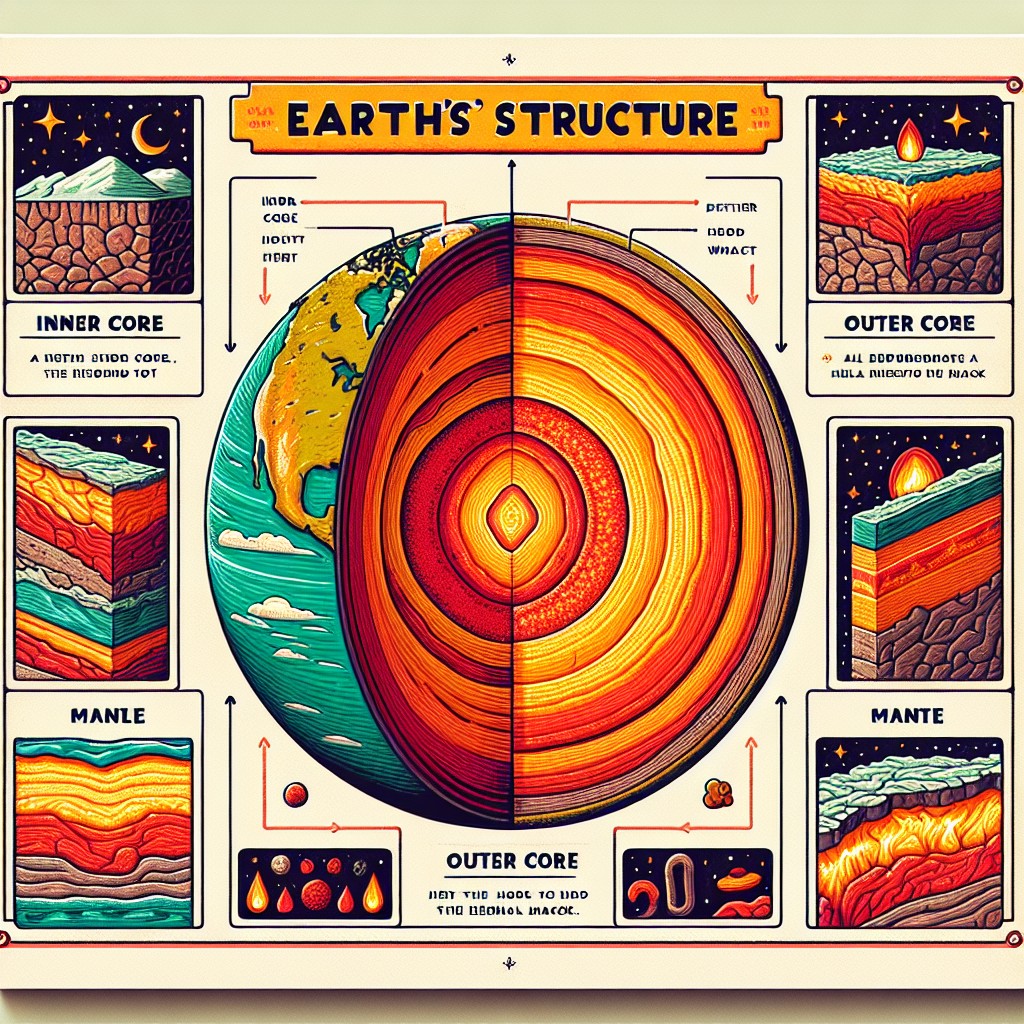
Our planet’s outer shell isn’t a single, solid piece. Instead, it’s broken up into several enormous, irregular pieces called tectonic plates. These aren’t stationary; they’re constantly on the move, albeit at speeds comparable to fingernail growth. This slow, relentless motion is powered by heat escaping from the Earth’s core, creating convection currents in the molten rock below the plates.
Why do they move?
Imagine a giant conveyor belt made of molten rock deep inside the Earth. This “conveyor” slowly drags the tectonic plates along its surface. Hot material from the Earth’s core rises, pushing the plates apart, while cooler, denser material sinks, pulling them down. This continuous cycle of rising and sinking molten rock is the primary driver behind plate movement.
The Different Boundaries
Where these plates meet is where most of the seismic action happens. There are three main types of plate boundaries, and each contributes to earthquakes in different ways.
Divergent Boundaries
These are areas where plates are pulling apart from each other. Think of it like two conveyor belts moving in opposite directions. As they separate, molten rock from the Earth’s mantle rises to fill the gap, creating new crustal material. This process is often found along the mid-oceanic ridges, like the Mid-Atlantic Ridge. Earthquakes here tend to be relatively shallow and less powerful, as the forces involved are more about stretching and pulling than violent collision.
Convergent Boundaries
Here, plates are colliding head-on. The outcome depends on the type of crust involved.
Oceanic-Continental Convergence
When an oceanic plate (which is denser) crashes into a continental plate, the oceanic plate is forced downwards, beneath the continental plate, in a process called subduction. This creates deep ocean trenches and volcanic mountain ranges on the continental side. The friction and stress as the plates grind past each other can generate some of the most powerful and deepest earthquakes on Earth, as well as significant volcanic activity. The Pacific “Ring of Fire” is a prime example of this.
Oceanic-Oceanic Convergence
Similar to the above, one oceanic plate will subduct beneath the other. This typically forms chains of volcanic islands, known as island arcs, alongside deep ocean trenches. Again, powerful earthquakes are common here due to the intense friction and stress.
Continental-Continental Convergence
When two continental plates collide, neither plate can easily subduct because they are both relatively buoyant. Instead, the enormous compression forces cause the crust to buckle, fold, and uplift, forming towering mountain ranges like the Himalayas. The earthquakes here can be widespread and powerful, but generally not as deep as those at subduction zones, as there’s less downward movement.
Transform Boundaries
At transform boundaries, plates slide horizontally past each other. The San Andreas Fault in California is a famously active example. While the plates are attempting to slide smoothly, irregularities and friction along the fault line cause them to get “stuck.” As the plates continue to move, stress builds up. When the stress overcomes the friction, the plates suddenly lurch past each other, releasing a burst of energy in the form of an earthquake. These quakes can be very damaging, even if they aren’t always the deepest.
The Snapping Point: Faults and Their Role
When we talk about earthquakes, we’re really talking about movement along faults. A fault is essentially a fracture or crack in the Earth’s crust where blocks of rock have moved relative to each other. They’re the physical manifestations of the stresses caused by plate tectonics.
Different Types of Faults
Just like plate boundaries, faults come in a few different flavours, each indicating a particular type of stress.
Normal Faults
Normal faults occur in areas where the crust is being pulled apart or stretched (extensional forces). Imagine pulling a piece of fabric until it tears in the middle; one side drops down relative to the other. In a normal fault, the upper block (hanging wall) drops down relative to the lower block (footwall). These are common at divergent plate boundaries and in areas undergoing regional extension.
Reverse and Thrust Faults
These faults happen where the crust is being compressed or pushed together (compressional forces). In a reverse fault, the upper block (hanging wall) is pushed up relative to the lower block (footwall). Thrust faults are a specific type of reverse fault where the angle of the fault plane is very shallow, often less than 45 degrees. These are characteristic of convergent plate boundaries, particularly where mountains are being built.
Strike-Slip Faults
These are the faults you find at transform plate boundaries. Here, the blocks of rock slide past each other horizontally, with very little vertical movement. The San Andreas Fault is a prime example of a right-lateral strike-slip fault, meaning that if you stand on one side of the fault and look across, the other side appears to have moved to your right.
How Energy is Released: Seismic Waves
When a fault finally gives way, the sudden movement releases an enormous amount of stored energy. This energy radiates outwards from the point of rupture in the form of seismic waves, much like ripples spreading on a pond after a stone is thrown in. These waves are what cause the ground to shake.
The Hypocentre and Epicentre
The exact point within the Earth where the rupture originates is called the hypocentre (or focus). It’s the starting point of the earthquake. The point on the Earth’s surface directly above the hypocentre is called the epicentre. This is often the area where the shaking is most intense, though the extent of damage depends on many factors, including the type of seismic waves, local geology, and building construction.
Primary, Secondary, and Surface Waves
Different types of seismic waves travel at different speeds and behave in different ways, leading to the various motions we feel during an earthquake.
P-waves (Primary Waves)
These are the fastest seismic waves, and they arrive first at seismic stations (hence “primary”). P-waves are compressional waves, meaning they push and pull rock particles in the same direction that the wave is travelling, similar to how sound waves move through air. They can travel through solids, liquids, and gases. While often not the most destructive, their arrival is a crucial warning sign.
S-waves (Secondary Waves)
Slower than P-waves, S-waves arrive next. These are shear waves, meaning they move rock particles perpendicular to the direction the wave is travelling, like shaking a rope up and down. S-waves can only travel through solid materials; they cannot pass through liquids or gases, which is a key piece of evidence for the Earth’s liquid outer core. S-waves often cause more significant shaking than P-waves.
Surface Waves
These waves travel along the Earth’s surface and are generally the slowest but often the most destructive. They are responsible for much of the ground shaking that causes buildings to collapse. There are two main types of surface waves:
Love Waves
These waves cause horizontal shearing motion, making the ground twist and shift from side to side. They’re particularly damaging to foundations and can cause significant structural instability.
Rayleigh Waves
These waves create a rolling motion, similar to ocean waves. They affect the ground both vertically and horizontally, making the surface move up and down, and forwards and backwards. This complex motion can be incredibly destructive, especially to tall structures.
Beyond Tectonic Plates: Other Causes
While the vast majority of significant earthquakes are caused by the movement of tectonic plates, there are other, less common, ways in which the ground can shake.
Volcanic Earthquakes
As magma (molten rock) moves beneath a volcano, it can fracture the surrounding rock, leading to small, relatively shallow earthquakes. These quakes are often a sign of impending volcanic eruptions and are used by volcanologists to monitor volcanic activity. They usually have a lower magnitude compared to tectonic earthquakes, but a swarm of them can indicate significant stress building up.
Collapse Earthquakes
These are usually very small earthquakes that occur in underground caverns or mines when the roof collapses. They’re typically localised and not widely felt. Although they are not a global concern, they pose risks to those working or living in affected areas.
Human-Induced Earthquakes (Anthropogenic Earthquakes)
Yes, humans can, inadvertently, cause earthquakes. While these are typically smaller than naturally occurring quakes, their frequency is a growing concern.
Fracking
Hydraulic fracturing, or “fracking,” involves injecting high-pressure fluid into rock formations to extract oil and natural gas. This process can lubricate existing faults or create new ones, triggering small to moderate earthquakes. The disposal of wastewater from fracking operations into deep injection wells has also been linked to increased seismic activity in several regions.
Dam Impoundment
When large reservoirs are filled behind massive dams, the immense weight of the water can stress the Earth’s crust, leading to what are known as reservoir-induced seismicity. This can reactivate existing faults or create new ones, leading to small to moderate earthquakes, particularly during the initial filling phase of the reservoir.
Mining Operations
Underground mining can alter the stress distribution in the surrounding rock, leading to rock bursts and tremors, especially in deep mines. The removal of large volumes of rock can cause subsidence, which may also trigger small seismic events.
Geothermal Energy Projects
Similar to fracking, the injection and extraction of fluids in geothermal power plants can sometimes induce seismic activity by changing pore pressures along fault lines.
Measuring Earthquakes: A Brief Overview
| Cause | Description |
|---|---|
| Tectonic Plate Movements | Most earthquakes occur due to the movement of tectonic plates, either colliding, sliding past each other, or pulling apart. |
| Volcanic Activity | Earthquakes can be caused by the movement of magma beneath the Earth’s surface, leading to volcanic eruptions. |
| Human Activities | Activities such as mining, reservoir-induced seismicity, and geothermal energy extraction can also trigger earthquakes. |
| Other Natural Causes | Other natural causes include landslides, collapsing icebergs, and even meteorite impacts. |
When an earthquake strikes, scientists use various tools and scales to quantify its size and impact.
Seismographs
These are instruments that detect and record ground motion. They work by having a mass that remains relatively stationary while the ground around it moves. The relative motion between the mass and the ground is then recorded, creating a seismogram.
Magnitude Scales
Traditionally, the Richter scale was used, but it’s largely been superseded by the Moment Magnitude Scale (Mw). The Moment Magnitude Scale is more accurate for larger earthquakes and directly measures the total energy released by an earthquake. It’s a logarithmic scale, meaning that each whole number increase represents about 32 times more energy released. So, a magnitude 6 earthquake releases roughly 32 times more energy than a magnitude 5.
Intensity Scales
While magnitude measures the energy released at the source, intensity scales (like the Modified Mercalli Intensity Scale) describe the severity of ground shaking at a particular location and its observed effects. Factors like local geology, distance from the epicentre, and building construction heavily influence intensity. So, a single earthquake will have one magnitude, but many different intensity values depending on where you are.
Understanding what causes earthquakes is crucial for managing their risks. While we can’t stop the relentless dance of our tectonic plates, our knowledge allows us to build more resilient structures, develop early warning systems, and educate communities on how to prepare and respond when the Earth inevitably decides to shift its weight.
FAQs
What is an earthquake?
An earthquake is the shaking of the surface of the Earth resulting from a sudden release of energy in the Earth’s lithosphere that creates seismic waves.
What causes earthquakes?
Earthquakes are caused by the sudden release of energy within the Earth’s crust or upper mantle. This release of energy can be caused by volcanic activity, tectonic plate movements, or human activities such as mining or reservoir-induced seismicity.
What are tectonic plate movements and how do they cause earthquakes?
The Earth’s outer shell is divided into several tectonic plates that are constantly moving. When these plates interact, they can cause earthquakes. For example, when two plates collide, one plate can be forced beneath the other in a process called subduction, leading to the release of energy and the formation of earthquakes.
Can earthquakes be predicted?
Currently, earthquakes cannot be predicted with precision. While scientists can identify areas with a higher likelihood of seismic activity, the exact timing and magnitude of an earthquake remain unpredictable.
What are the effects of earthquakes?
Earthquakes can have devastating effects, including ground shaking, tsunamis, landslides, and structural damage to buildings and infrastructure. They can also lead to loss of life and displacement of communities.