🧪 Introduction to Chemistry
Unlocking the Secrets of Matter and Change
Chemistry is the science of matter—what it’s made of, how it behaves, and how it changes. It explores everything from the tiniest atoms and molecules to the vast chemical reactions that fuel stars, power engines, and sustain life itself. Often called the “central science,” chemistry connects physics with biology, medicine, geology, environmental science, and even engineering.
At its core, chemistry seeks to answer questions like:
-
What is this substance made of?
-
How does it interact with other substances?
-
Why do some materials burn, rust, or dissolve?
-
How can we create new materials, medicines, or fuels?
From the food we eat to the air we breathe, from cleaning products to smartphones, chemistry is everywhere. It helps explain natural phenomena like fire, digestion, and photosynthesis, while also driving innovations in technology, health, and sustainability.
By studying chemistry, we gain a deeper understanding of the world at a molecular level—and the tools to change it for the better.


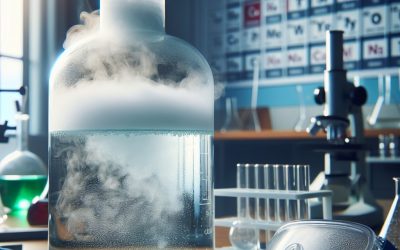
Liquid Nitrogen
Liquid Nitrogen is nitrogen gas (its normal state on earth) that has been cooled sufficiently enough for it to change into its liquid state. What is liquid Nitrogen? Where Does Liquid Nitrogen Come From? Use of Liquid Nitrogen Use of Liquid Nitrogen in Science Medical Applications Use in Special effects Liquid Nitrogen use in Cuisine Safety Concerns with Liquid Nitrogen What is liquid Nitrogen? Liquid Nitrogen is nitrogen gas (its normal state on earth) that has been cooled sufficiently enough for it to change into its liquid state. Nitrogen becomes a liquid (at normal atmospheric pressure) between -210o C to -196o C (63 K to 77.2 K or -346°F to -320.44°F). Where Does Liquid Nitrogen Come From? Nitrogen is obtained industrially from fractional distillation, a process that involves cooling air down to -200° C so it becomes a liquid. This is then allowed to heat in a chamber by several degrees until the air becomes -190 C and the nitrogen becomes a gas once more. At this point the collected nitrogen can then be cooled to -195 ˚C or more when it becomes liquid Nitrogen (nitrogen’s boiling point – when it becomes a gas – is -195.8 ˚C). Air is made up of 78% nitrogen, 21% oxygen and 1% of other substances. This means that air is a very good source of nitrogen and the most efficient way of extracting it is through fractional distillation. In many cases fractional distillation required heating the original substance to extract its required parts but fractional distillation of air requires cooling to low temperatures. As the nitrogen is already...

Lithium – alkali metal
Lithium is a soft silver-white metal with a range of applications including medication,batteries and fireworks. Basic Information Discovery of Lithium Sources of Lithium Uses of Lithium Lithium Tablets Lithium Batteries Lithium In Fireworks Lithium’s Cell Structure Absorption Lines of Lithium Emission Lines of Lithium Lithium (from the Greek Lithos meaning Stone) Classification: Alkali metal Atomic Mass: [6.941 (2)] g/mol Density: 0.534g/cm3 Colour: metallic silver or greyish white Boiling Point: 1615K (1342°C) Melting Point: 453.69K (180.54°C) Critical Temperature:3223K (2950°C) Discovery of Lithium Lithium (3Li) was first discovered in the mineral petalite (LiAlSi4O10) by Johann Arfvedson in Sweden 1817. Sources It is harvested from compounds found in most igneous rocks, clay, brine sources and through electrolysis of compounds like lithium chloride. 3Li is a highly reactive and flammable metal like all the alkali metals and is only found in nature as part of a compound. A pure sample is a metallic silver metal however this very quickly changes into a dull whitish grey or black colour as it reacts with moisture or oxygen in the air. 3Li is the only alkali metal that reacts with nitrogen. To prevent reactions with other elements it is usually stored in mineral oil which acts as a barrier or protective seal. Uses In medicine 3Li is used to regulate the sodium levels in the muscles and nerves reducing the effects of mania in those that suffer from manic depression or manic episodes. 3Li helps reduce some of the symptoms associated with the illness such as hyperactivity, insomnia, aggression...

Hydrogen
Hydrogen is the lightest and most abundant element in the universe. Basic Information Discovery of Hydrogen Sources of Hydrogen Uses of Hydrogen The Hydrogen Bomb Airships Hydrogen Fuel Cells Hydrogen’s Cell Structure Absorption Lines of Hydrogen Emission Lines of Hydrogen Hydrogen (from the Greek hudor (meaning water) and gennan (meaning generate) Classification: Non-metallic Atomic Mass: 1.00794 g/mol Density: 0.08988g/cm3 Colour: None Boiling Point: 20.268K (-252.87°C Melting Point: 14.01K (-259.14°C) Critical Temperature: 33K (-240°C) Discovery Hydrogen was discovered in 1766 by English physicist Henry Cavendish. Cavendish conducted numerous experiments and eventually identified that hydrogen was a unique gas with its own set of properties. Fast forward to today, and the significance of hydrogen is more apparent than ever. This little molecule holds incredible potential as a clean and renewable energy source. Scientists and researchers worldwide are tirelessly working to harness its power and overcome some of the current challenges that come with its production and storage. Sources Hydrogen is the most abundant element in the universe with nearly 90% of all visible atoms being hydrogen. The first atoms ever created after the Big Bang would have been that of hydrogen and helium which eventually culminated into stars. Due to the intense heat and pressure within the stars the hydrogen is in a state known as plasma and nuclear fission turns the hydrogen atoms into Helium, the next most abundant element. On earth Hydogen is most abundant in the sea where it has been mixed with oxygen to create water. Uses Hydrogen is used in the production of ammonia (NH3), ethanol (alcahol(C2H5OH)) and hydrogen Chloride (HCL) among many other uses. Hydrogen has...

The Lighter Side of Science: Exploring the Wonders of Helium (He)
The Lighter Side of Science: Exploring the Wonders of Helium (He) The Lighter Side of Science: Exploring the Wonders of Helium (He) Basic Information Discovery of Helium Sources of Helium Uses of Helium Liquid Helium in Superconductors Use of Helium by Divers Helium in Balloons and Airships Helium’s Cell Structure Absorption Lines of Helium Emission Lines of Helium Helium (from the Greek helios meaning Sun) Classification: Non-metallic Atomic Mass: 1.00794 g/mol Density: 0.08988g/cm3 Colour: None Boiling Point: 20.268K (-252.87°C Melting Point: 14.01K (-259.14°C) Critical Temperature: 33K (-240°C) The outreaching wave is called the prominence and is composed of ionized Helium that is about 60,000 degrees Kelvin. (Image from NASA) Discovery Discovery: Helium was first detected by French astronomer Pierre Janssen during a total solar eclipse in Guntur, India on the 18th of August 1868 using spectroscopy. It was evident as a bright yellow line (a wavelength of 587.49 nanometres) in the spectrum of the Chromosphere of the Sun but it was assumed that this line was produced by sodium which produces similar yellow lines. But it was On the 20th of October 1868 English astronomer Norman Lockyer observed the same line and concluded that it was produced by an element in the sun that was as yet un-discovered on earth. Lockyer and English chemist Edward Frankland named the element after the Greek word for the Sun (helios). Helium was not isolated on earth until the 26th of March 1895 when a Scottish chemist Sir William Ramsey isolated samples whilst attempting isolate argon. The samples were confirmed to be Helium by Lockyer and English...
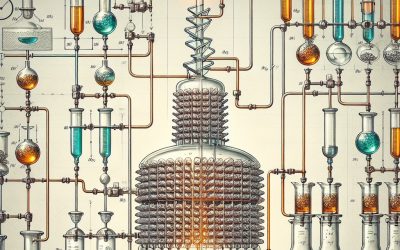
Fractional Distillation
Fractional Distillation is the process used to separate a liquid mixture into its component parts or in some cases individual elements. What is Fractional Distillation The fractioning chamber or fractioning column Fractional Distillation of Air Fractional distillation of crude oil Fractional Distillation in a lab What is Fractional Distillation This is a process used to separate a liquid mixture into its component parts or in some cases individual elements. A common method for this is to heat the mixture or compound causing the components to evaporate. The mixture is heated in a large container with several condensing ‘plates’ at different heights; as the mixture heats up and evaporates the various components condense at different temperatures. As the container is heated from the bottom the components that are less volatile and have a high boiling point are separated at the bottom and those that are more volatile and a lower boiling point are separated at the top. This process is commonly used in the extraction of petrol, diesel etc from crude oil and takes place in the fractioning chamber/column. An exception to this type of fractional distillation is the extraction of Nitrogen from air. This process involves cooling atmosphere and allowing the nitrogen to boil off as nitrogen gas, which it does at a higher temperature in the top of the chamber. Image of an Italian double-effect distillation plant for recovery of solvent, used for the treatment of crude oil Image by Luigi Chiesa and released under Creative Commons Attribution and ShareAlike License. The fractioning chamber or fractioning column The...

Diamond Formation
Diamond formation occurs naturally in the earth’s crust but it is now possible to produce diamonds artificially in labs from any carbon. What Are Diamonds Age and origin of Diamonds Diamond Formation in The Earth’s Crust Diamond Formation through Plate Tectonics Diamond Formation in Space What Are Diamonds Diamond formation occurs from the same element as coal and graphite (carbon) but under immense pressure and heat energy, normally only found naturally in the depth of the earth or in outer space, that carbon becomes the strongest material on earth. Diamonds immense strength is due to the complex lattice shown on the left. This pattern continues throughout the diamond and each carbon atom (shown as black spheres) is bonded (shown as grey tubes) in such a way that gives the entire structure unrivalled strength. Age and Origin of Diamonds Diamonds are not formed by coal as commonly thought. In fact most diamonds were formed before plant life, and therefore any possibility of coal, began. Through radioactive dating it has been possible to calculate that most diamonds date back to the Precambrian eon which means they were formed approximately 100 million years before life. Coal is a sedimentary rock that is formed of carbon from decomposed organic material. Diamonds however are found in igneous rocks which are formed from cooled molten lava. Diamonds are formed in the Earth’s mantle, approximately 90 to 120 miles below the surface. This region, known as the diamond stability zone, is characterized by extreme temperature and pressure conditions. The process begins with carbon atoms being subjected to intense heat and pressure, causing them to rearrange their...
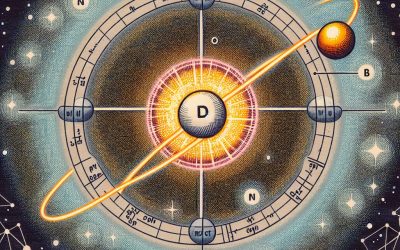
Deuterium
Basic Information Discovery of Deuterium Sources of Deuterium Uses of Deuterium Deuterium in stars Energy Production through Nuclear Fusion Ultra Dense Deuterium Deuterium’s Cell Structure Electron Orbit of Deuterium Absorption Lines of Deuterium Emission Lines of Deuterium Deuterium – Greek deuteros meaning ‘second’ (Heavy Hydrogen) Classification: Non-metallic Atomic Mass: 2.01 Density: 0.168 kg/m3 Colour: Boiling Point: -249.6 °C Melting Point: -254.6 °C Critical Temperature: -234.8 °C Discovery: American physical chemist Harold Urey discovered Deuterium in 1931 for which he received a Nobel prize. Sources: Deuterium was created with normal hydrogen and helium just after the big bang and, due to deuterium’s mutation in stars, its level of abundance has reduced since then. Although produced in stars through nuclear fusion, deuterium particles are quickly fused into helium atoms. Uses of Deuterium: Heavy hydrogen, as Deuterium is sometimes called, is used to create heavy water which has many uses in the field of nuclear power and uranium refinement for nuclear weapons. Hydrogen in its basic form contains one proton within its nucleus where as deuterium, which is a stable isotope of hydrogen, contains one proton and one neutron. Due to the extra neutron its atomic mass is doubled hence its nickname of heavy hydrogen. Applications of Deuterium: Nuclear Fusion: One of the most significant applications of deuterium is in nuclear fusion reactions. Nuclear fusion, the process of combining atomic nuclei to release energy, often involves the fusion of deuterium nuclei. This reaction releases an immense amount of energy, making it a potential solution to the world’s energy crisis. Aerospace Propulsion: Deuterium has also found use in aerospace propulsion systems. Its high...

Carbon
Basic Information Discovery of Carbon Sources of Carbon Uses of Carbon Carbon Dating The Carbon Cycle Carbon Fibres Diamonds Carbon’s Cell Structure Absorption Lines of Carbon Emission Lines of Carbon Carbon (from the latin word ‘carbo’ meaning coal) Classification: Non-metal (solid at 298 K) Atomic Mass: 12.0107 g/mol Density (graphite): 2.267g/cm3 Density (Diamond): 3.513g/cm3 Colour: Diamond has no colour / graphite is black Boiling Point: 4300K (4027°C) Melting Point: 3800K (3527°C) Discovery The production of carbon in the form of charcoal has been known since records began. Sources Charcoal was produced by burning organic material in an atmosphere with reduced oxygen. Although it is possible to make superb diamonds artificially the most precious kind are produced naturally under extreme pressure over a very long period of time. Uses The ratio of carbon on earth is thought to be 99% carbon-12, just under 1% Carbon-13 and 0.0000000001% of carbon-14 with the same ratios found in all living things. Carbon-14 is an unstable isotope of carbon which can be used in the process called carbon dating. As all living things intake carbon in the above ratios, when an organism dies the Carbon 14 begins to decay. This means that over time the carbon 14 ratio decreases over time and this decrease can be measured. As scientists know the decay rate of Carbon 14 they can measure the approximate time since the organism died. Carbon is one of the fundamental building blocks of life and most carbon would have been through a process we call the Carbon Cycle. This...

Carbon Fibres
Who Created Carbon Fibres? Development of Carbon Fibres Difference between Rayon, Pitch and PAN Carbon Fibres Manufacture of Carbon Fibres PAN Carbon Fibre Production through Pyrolysis High-Strength Fibres High-Modulus Fibres and Graphitisation Creation of Carbon Fibres? The first known use of carbon fibres dates back to 1860 when an English physicist by the name of Sir Joseph Swan created the world’s first incandescent light bulb. He initially created it with a carbonized paper filament in a vacuum tube but later improved on his design in 1878 by using a carbon fibre filament derived from cotton. When Thomas Edison took out a patent for the manufacture of his light bulb in 1879 of the same design he proposed using carbonised bamboo as his filament. Edison took bamboo and heated it in a controlled atmosphere (a method known as ‘pyrolysis’ which is used in the manufacture of carbon fibres today) which produced fire-resistant carbon fibres. The fibres produced by Swan and Edison had no tensile strength but could withstand high temperatures making them perfect for use in his bulbs. In 1883 Swan produced the world’s first synthetic fibre when he squeezed nitrocellulose – obtained from tree bark- through holes to produce fibres which he could use as a new filament. This revolutionised the textile industry and led to his knighthood in 1904. All the filaments produced proved inefficient, requiring high currents to produce light and soon they were replaced with tungsten. Development of Carbon Fibres It would be around 50 years before experiments with carbon fibres would take place. In...
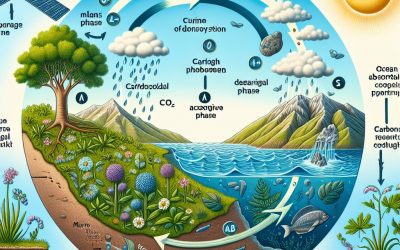
The Carbon Cycle
Plants to animals Fossil Fuels Calcium Carbonate Our planet has got many systems or cycles in place that allow for the re-use of materials which are vital for life. These include nitrogen, water and carbon. The recycling of these vital materials helps support the continued existence of life that would otherwise end. We, as all living things, do not simply use this cycle but are a part of it. Plants to animals...

Beryllium: Periodic Table, Uses, Occupational Safety and Health
Beryllium: Periodic Table, Uses, Occupational Safety and Health Basic Information Discovery Sources Uses Use in Telescopes Use in Satellites Cell Structure Absorption Lines Emission Lines Beryllium (named after the mineral, beryl, that it was originally isolated from) Classification: Alkali earth metal Atomic Mass: 9.012182 (3) g/mol Density: 1.85g/cm3 Colour: grey Boiling Point: 2742K (2469°C) Melting Point: 1560K (1287°C) Beryllium: The Lightweight Power Metal Shaping Modern Industry and Safety Standards What makes beryllium so important in science, industry, and worker safety? Beryllium might not be a household name, but this light metal with atomic number 4 holds a significant place on the periodic table and in high-tech industries. Whether you’re flying on an aeroplane, undergoing an X-ray, or benefiting from advanced communication technologies, beryllium plays a hidden yet vital role. This article explores the fascinating properties of beryllium, its various applications—from alloys to nuclear reactors—and the critical occupational safety and health concerns related to its use. If you’re curious about how this relatively rare element shapes modern life, this post is a must-read. Article Outline 1. What Is Beryllium and Why Does It Matter? 2. Where Is Beryllium Found and How Is It Extracted? 3. What Are the Unique Chemical Properties of Beryllium? 4. How Is Beryllium Used in Alloys and Why? 5. How Does Beryllium Help in X-ray Technology? 6. What Role Does Beryllium Play in Nuclear Applications? 7. What Are the Health Risks of Exposure to Beryllium? 8. How Does OSHA Regulate Beryllium Exposure? 9. Why Is Beryllium So Valuable in Aerospace and Defence? 10. What Should You Know About the Future of Beryllium Use?...