Explore the World Through Geography, Natural Resources & Daily History
Clear, reliable and engaging guides that help you understand our planet — from UK geography education to global natural resources and On This Day history events.
Explore, discover, and learn about the wonders of our world! At Earth Site, we’re passionate about bringing geography, history, and science to life for curious minds of all ages. Whether you’re delving into historical events, uncovering the mysteries of the natural world, or seeking interactive resources, you’re in the right place.
Here, you can uncover the stories behind historical events, explore the natural wonders of our planet, and gain valuable insights into how the Earth’s systems shape our daily lives. From the towering peaks of mountain ranges to the far-reaching impacts of human innovation, we aim to make every topic both engaging and informative.
Start your journey of discovery with us today, and let’s make learning an adventure!
What We Cover
Earth Site brings together engaging and accessible educational content designed to help you understand the world, its history, and its natural systems.
🌍 Geography Education (UK & Worldwide)
We publish clear, easy-to-understand geography resources for students, teachers and curious learners. Our guides support geography education in the UK and cover physical geography, climate, ecosystems, population, and global development.
⛏️ Natural Resources & Environmental Geography
Explore detailed country profiles covering natural resources, mining, energy, geology and global environmental challenges. We show how nations manage minerals, water, land and ecosystems, and why these resources matter.
📅 On This Day in History
Every day has a story. Our On This Day history series features major events, anniversaries, traditions, and cultural milestones from around the world — with timelines, context, and fun facts.
TIMELINE
How France Colonised Algeria and Changed North Africa
You’re likely here to understand the often-complex story of how France came to control Algeria and, in doing so, dramatically reshaped North Africa. In a nutshell, it was a tale that began with a flimsy pretext, escalated into a full-blown military conquest, and then settled into over a century of colonial rule driven by economic interests, strategic ambitions, and a misguided sense of civilising mission. This period wasn’t just about French administration; it fundamentally altered Algeria’s social fabric, economy, and identity, sending ripples across the entire region. The initial incident that provided the “casus belli” for France’s invasion of Algeria was famously trivial, yet it masked deeper strategic and domestic motivations. A Diplomatic Dust-up In 1827, Hussein Dey, the Ottoman regent of Algiers, had a rather heated exchange with the French consul, Pierre Deval. The Dey was frustrated by France’s refusal to settle a large, long-standing debt for wheat supplied to Napoleon’s armies in the late 1790s. During this argument, the Dey struck consul Deval with his fly whisk. French Reaction and Retaliation France, under King Charles X, seized upon this “insult” as an opportunity. Ignoring direct apologies and attempts at reconciliation from the Dey, they imposed a naval blockade on Algiers for three years. This was less about avenging an insult and more about softening up the target and building a case for intervention. Deeper Motivations for Invasion The real reasons for the invasion were more complex than a fly whisk. Domestically, Charles X was facing declining popularity and hoped a military victory would shore up his support. Strategically, controlling Algiers offered France a significant foothold in the...
How Energy Prices Affect Russia’s Economy and Global Influence
Here’s a breakdown of how energy prices really shake things up for Russia’s economy and its standing on the world stage. The Energy Price Rollercoaster: Russia’s Economic Engine At its core, Russia’s economy is like a giant engine powered by oil and gas. When global energy prices are high, it’s like pouring premium fuel into that engine – everything runs smoothly, money flows in, and the government has plenty to spend. But when prices crash, it’s like the engine sputtering, struggling to keep going, and all sorts of problems start to surface. This isn’t just a minor fluctuation; it’s the central nervous system of their entire economic setup. How Much Does Russia Rely on Energy Exports? It’s pretty straightforward: a massive amount. Think of it this way, a huge chunk of everything Russia sells to other countries is oil and gas. This isn’t just about making a profit; it’s about their entire trade balance. When those sales bring in good money, the country’s reserves build up, and they can afford to import goods and services they don’t produce themselves. If those prices plunge, those reserves shrink, and imports become a luxury they can’t always afford. This directly impacts the availability of all sorts of things, from technology to consumer goods, that people in Russia are used to having. The Price of Oil and Gas: A Direct Link to the Ruble The value of Russia’s currency, the ruble, is notoriously sensitive to the price of oil and gas. When global energy markets are bullish, the ruble tends to strengthen. This means that for every barrel of oil Russia sells, they...
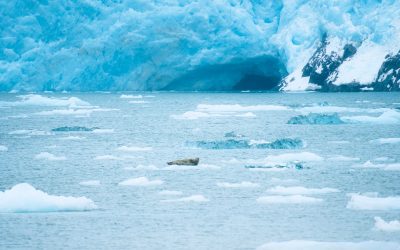
The Most Important Climate Change Reports You Need to Know About
So, what are the most important climate change reports you actually need to know about? In a nutshell, it comes down to a few key players: the Intergovernmental Panel on Climate Change (IPCC) reports are the gold standard for scientific consensus, national assessments give you the local picture, and then there are in-depth reports from specific organisations focusing on particular impacts or solutions. Let’s break down which ones are likely to be most relevant to you. This is where you go for the most comprehensive and authoritative overview of climate change science. Produced by the Intergovernmental Panel on Climate Change, these reports are essentially encyclopaedias of what we know about climate change, its impacts, and potential solutions. They are the result of thousands of scientists from around the world reviewing vast amounts of peer-reviewed literature. Why the IPCC Matters Think of the IPCC reports as the definitive guide. Governments and policymakers worldwide rely on them to understand the scale of the problem and inform their decisions. They don’t conduct their own research; instead, they synthesise existing scientific knowledge. This means they represent the closest thing we have to a global scientific consensus on climate change. The Different IPCC Assessment Reports There have been several comprehensive assessment reports (ARs) published over the years, each building on the last. The most recent ones are particularly crucial: AR6: The Latest Word The Sixth Assessment Report (AR6) is the most up-to-date and comprehensive. It’s broken down into several working group contributions: Working Group I: The Physical Science Basis: This report deals with the fundamental science – how the climate system works, how human...
The Cold War Explained: Russia vs the United States
So, what was the Cold War all about? In a nutshell, it was a decades-long, high-stakes standoff between the United States and the Soviet Union. Think of it as a massive, international game of chess, played out on a global scale, but with the potential for things to go catastrophically wrong. There wasn’t any direct, all-out fighting between the two superpowers, but they were constantly at each other’s throats through proxy wars, espionage, an arms race, and a whole lot of propaganda. It shaped the world we live in today in more ways than you might realise. After the dust settled from World War II, the global landscape looked a lot different. The old European powers, battered and bruised by years of conflict, were significantly weakened. This left a massive power vacuum, and into this void stepped two new giants: the United States and the Soviet Union. They emerged from the war victorious, but also with fundamentally different ideas about how the world should be run. The Ideological Divide At its heart, the Cold War was an ideological battle. Capitalism vs. Communism The US championed democracy and capitalism, advocating for free markets, individual liberties, and elected governments. They believed this system fostered prosperity and freedom. The Soviet Union, on the other hand, was a communist state. Their ideology, based on Marxist principles, promoted a classless society, state ownership of the means of production, and a single-party political system. They viewed capitalism as exploitative and inherently unjust. These were not just abstract philosophical differences; they were two entirely opposing visions for societal organisation, and each side was convinced that their...
The Future of Europe: What Will the Continent Look Like by 2030?
Right, let’s talk about what Europe might look like by 2030. It’s a big question, and the simple answer is: a continent in constant flux, shaped by current challenges and emerging opportunities. We’re not talking about a sci-fi dystopia or utopia here, but a continuation of trends we’re already seeing, with some new twists thrown in. Think more integration in some areas, more fragmentation in others, and a whole lot of adaptation. The Political Landscape: Shifting Sands Europe’s political scenery is rarely static, and the next few years promise even more change. We’re grappling with a mix of national interests, supranational ambitions, and a populace increasingly vocal about their concerns. The EU’s Evolving Role The European Union, for all its complexities, remains a central player. By 2030, we’ll likely see a more streamlined, perhaps even multi-speed, EU. The idea of closer integration for some members, while others opt for a more transactional relationship, isn’t new, but it could become the norm. The pressure to adapt to global power shifts, particularly with the rise of Asia and the continued influence of the US, will push the EU to find a more defined voice on the world stage. Think less about endless expansion and more about deepening existing ties and making the current machinery work more efficiently. National Sovereignty vs. EU Integration This is the perennial debate, isn’t it? By 2030, expect this tension to remain a core feature. While the EU will push for common policies on issues like climate, defence, and digital regulation, national governments will continue to assert their prerogatives, particularly on matters of social policy, taxation, and...
Ukraine’s Role in World War 2 Explained
Ukraine’s experience in the Second World War was complex and devastating, fundamentally shaped by its geographical position as a battleground between Nazi Germany and the Soviet Union. Far from being a passive observer, Ukraine was a crucial theatre of war, its people caught in a brutal struggle that involved intense fighting, occupation, collaboration, and resistance. Understanding Ukraine’s role means acknowledging the immense suffering and the diverse, often conflicting, actions taken by its population under crushing external pressures. Before the war even began, Ukraine was already a fragmented entity, its territories split between the burgeoning Soviet Union and interwar Poland. This division, a legacy of post-World War I instability, meant that Ukrainian aspirations for a unified, independent state were severely thwarted. Soviet Ukraine: Industrial Heart and Agricultural Breadbasket In the east, Soviet Ukraine had been integrated into the USSR since the early 1920s. This region held significant strategic and economic importance for Moscow. Industrial Powerhouse: The Donbas region, rich in coal and iron ore, was a vital industrial centre. Factories churned out materials crucial for the Soviet military machine, making it a prime target for any aggressor. Agricultural Wealth: Ukraine’s fertile black soil, known as ‘chernozem’, made it the “breadbasket of Europe.” Grain production was massive, a key resource for feeding the Soviet population and its army. However, this abundance was often exploited. Policies like collectivisation under Stalin had already inflicted immense hardship on the peasantry, culminating in the Holodomor, a man-made famine in the early 1930s that killed millions of Ukrainians. This history of Soviet oppression deeply informed the Ukrainian mindset as the war approached. Western Ukraine: Under Polish...
How AI Is Transforming Scientific Research Faster Than Ever Before
AI is definitely speeding up scientific research, and it’s not some far-off future thing – it’s happening right now. Think of it like giving researchers superpowers, allowing them to sift through mountains of data, spot patterns we’d miss, and even design experiments far quicker than before. This isn’t just about making things marginally faster; it’s fundamentally changing how science gets done, pushing the boundaries of what we thought was possible and opening doors to discoveries we haven’t even dreamt of yet. Science, especially in fields like biology, astronomy, and particle physics, generates an absurd amount of data. We’re talking petabytes – that’s a million gigabytes – of information from genome sequencers, telescopes, and high-energy colliders. For humans to even begin to make sense of this, it would take lifetimes. That’s where AI comes in. Machine Learning for Pattern Recognition The core of AI’s impact here is machine learning. These algorithms can be trained on enormous datasets to identify subtle patterns, anomalies, and correlations that would be invisible to the human eye. Spotting Drug Candidates in Millions of Molecules In drug discovery, for instance, AI can screen millions of potential drug compounds against specific disease targets in a fraction of the time it used to take. These systems learn the molecular structures that are likely to bind effectively, drastically narrowing down the candidates for laboratory testing. Identifying Exoplanets in Telescope Data Astronomers use AI to sift through the light curves from telescopes like Kepler and TESS. These light curves show tiny dips in a star’s brightness as a planet passes in front of it. AI can pick out these faint...
The Second Intifada and the Escalation of Violence
The Second Intifada, erupting in late September 2000, marked a dramatic and tragic escalation in the Israeli-Palestinian conflict. It wasn’t a sudden spark but rather the culmination of simmering frustrations, dashed hopes, and a breakdown in the peace process that had shown promise just a few years prior. At its heart, the question of “how did it escalate?” is about a complex interplay of political missteps, security failures, and a deepening sense of grievance on both sides, leading to a sustained period of intense and often brutal violence that reshaped the region. The immediate catalyst for the Second Intifada is FAQs What was the Second Intifada? The Second Intifada was a period of intensified Israeli-Palestinian violence that began in September 2000 and lasted until around 2005. It was characterized by a series of Palestinian uprisings, protests, and acts of violence against Israeli military and civilian targets. What were the main causes of the Second Intifada? The Second Intifada was sparked by a number of factors, including the failure of the 2000 Camp David Summit to reach a final peace agreement, the visit of Ariel Sharon to the Temple Mount in Jerusalem, and the ongoing Israeli occupation of Palestinian territories. How did the violence escalate during the Second Intifada? The violence during the Second Intifada escalated through a series of suicide bombings, shootings, and other attacks carried out by Palestinian militants against Israeli civilians and military targets. In response, Israel launched military operations and airstrikes in Palestinian territories. What were the consequences of the Second Intifada? The Second Intifada resulted in significant loss of life on both sides, with thousands...
Borders and Barriers: Geography and Security in the Israeli–Palestinian Conflict
The geography of the Israeli-Palestinian conflict isn’t just about lines on a map; it’s a fundamental, deeply ingrained aspect of nearly every challenge and conversation surrounding security. From ancient trade routes to modern-day checkpoints, the physical landscape has always played a critical role in shaping strategies, fears, and daily realities for both Israelis and Palestinians. Understanding these geographical elements is key to grasping the complexities of the conflict, as they directly influence everything from military defence to civilian movement and resource allocation. It’s not just a backdrop; it’s an active participant. When we talk about the geography of this region, we’re discussing a surprisingly diverse and strategically significant area packed into a relatively small space. This isn’t just flat desert; it’s a mix of fertile plains, rugged mountains, arid valleys, and coastal strips, each presenting its own challenges and opportunities, particularly when it comes to security. Historical Crossroads and Strategic Chokepoints This land has historically been a critical nexus between three continents: Africa, Asia, and Europe. This has meant countless invasions, trade routes, and empire-building efforts, all of which left their mark. The same geographical features that once made it a hub for commerce now make it a focal point for conflict. Think of the coastal plain, relatively flat and easy to traverse, a natural route for armies and merchants alike. Then contrast that with the mountainous spine, offering natural defences but also creating isolated communities. Water: A Precious and Contested Resource The semi-arid climate of the region means water is, and always has been, a hot commodity. The Jordan River, the Sea of Galilee (also known as Lake...
The Hardest Borders Karl Bushby Has Faced During His Global Walk
So, you’re curious about the toughest bits Karl Bushby’s encountered on his epic walk around the world? It’s a question many people ask when they hear about his incredible journey. The short answer is, it’s rarely just one single border. It’s usually a confluence of factors: political instability, geographical challenges, visa complexities, and sometimes, just plain bad luck or difficult personalities. While every border presents its own set of hurdles, some have stood out as particularly demanding, forcing Karl to dig deep and draw on every ounce of his resilience. When Karl talks about the Russian border, it’s not just a single point. It’s the entirety of that vast frontier, particularly the experience of crossing from Kazakhstan into Russia. This wasn’t a simple stamp-and-go situation. The sheer bureaucracy involved was legendary, and the attitude on the other side often felt like navigating a minefield. Visa Nightmares and Bureaucratic Hurdles Getting the correct visa for Russia, especially for someone undertaking such an unconventional journey, was a significant undertaking. It involved extensive paperwork, applications submitted months in advance, and a constant nervous wait to see if it would be approved. Even with the right visas, the border officials themselves often seemed suspicious of Karl’s motives. Why would someone walk across their country? It didn’t fit neatly into their preconceived notions. This suspicion could translate into endless questioning, meticulous inspections of his gear, and sometimes, a general unwelcoming atmosphere. The Chiviling Crossing: A Test of Patience The actual crossing at Chiviling, a significant point of entry, proved to be a particularly drawn-out affair. Karl recounts experiences where he spent hours, sometimes even...
The Roman Army Explained: Tactics, Weapons, and Discipline
Right, let’s cut to the chase: how did the Roman army get so good, and why did they dominate for so long? It boils down to a brilliant combination of adaptable tactics, effective if straightforward weaponry, and an iron-clad discipline that was both brutal and highly effective. They weren’t always the biggest, but they were often the smartest and toughest on the battlefield. They learned from their mistakes, innovated, and were incredibly well-organised, which, frankly, most of their opponents weren’t. It wasn’t just about big legions marching around; there was a deep-seated military culture and structure that supported everything. This wasn’t a part-time gig; it was a professional, highly trained force. Citizen-Soldiers to Professional Legions In the early days, the Roman army was largely a militia of citizen-farmers. They’d turn up for a campaign, fight, and then go home to tend their fields. This worked fine for local squabbles, but as Rome expanded, it simply wasn’t sustainable. Marius’ Reforms in the late 2nd century BC were a game-changer. He opened up military service to all citizens, regardless of land ownership, and crucially, made it a professional career. Soldiers signed up for long terms, were paid, and expected retirement benefits (often land). This created a highly motivated, career-oriented army rather than a seasonal one. These weren’t just men fighting for their home; they were fighting for their livelihood and their future. The Legionary: A Highly Trained Machine A Roman legionary wasn’t just handed a spear and pushed into battle. He underwent rigorous, constant training. This wasn’t just about physical fitness – though they were incredibly fit, marching miles with heavy...
The Collapse of Communist Albania and the Chaos of the 1990s
The 1990s in Albania were a whirlwind, a chaotic and often brutal transformation from one of the world’s most isolated communist states to a nascent democracy grappling with the harsh realities of the free market. It wasn’t a smooth transition; instead, it was marked by widespread social unrest, economic collapse, and a terrifying descent into anarchy at times. For many Albanians, the decade was less about liberation and more about survival. This period, often overlooked in the broader narratives of post-communist transition, offers a stark example of what happens when decades of state control are suddenly lifted without a robust framework for what comes next. Albania’s communist regime, led by Enver Hoxha for over four decades and then by Ramiz Alia, was genuinely unique in its isolationism and extreme repression. Unlike other Eastern Bloc nations, Albania pursued a policy of self-reliance, cutting ties even with its Soviet and then Chinese allies. Hoxha’s Legacy: A Hermit Kingdom Hoxha’s rule was characterised by an intense cult of personality, pervasive paranoia, and a system built on fear. Borders were sealed, information was tightly controlled, and any dissent was met with brutal force. Bunkers, built across the country to ward off imaginary invasions, stand today as a physical testament to this period of extreme isolation. By the time Hoxha died in 1985, Albania was one of the poorest and most backward nations in Europe, completely insulated from the outside world and utterly unprepared for change. The Winds of Change: Glasnost and Perestroika’s Ripple Effect While other communist regimes in Eastern Europe began to wobble under the influence of Gorbachev’s reforms, Albania clung stubbornly...